- English
- French
- German
- Portuguese
- Spanish
- Russian
- Japanese
- Korean
- Arabic
- Greek
- German
- Turkish
- Italian
- Danish
- Romanian
- Indonesian
- Czech
- Afrikaans
- Swedish
- Polish
- Basque
- Catalan
- Esperanto
- Hindi
- Lao
- Albanian
- Amharic
- Armenian
- Azerbaijani
- Belarusian
- Bengali
- Bosnian
- Bulgarian
- Cebuano
- Chichewa
- Corsican
- Croatian
- Dutch
- Estonian
- Filipino
- Finnish
- Frisian
- Galician
- Georgian
- Gujarati
- Haitian
- Hausa
- Hawaiian
- Hebrew
- Hmong
- Hungarian
- Icelandic
- Igbo
- Javanese
- Kannada
- Kazakh
- Khmer
- Kurdish
- Kyrgyz
- Latin
- Latvian
- Lithuanian
- Luxembou..
- Macedonian
- Malagasy
- Malay
- Malayalam
- Maltese
- Maori
- Marathi
- Mongolian
- Burmese
- Nepali
- Norwegian
- Pashto
- Persian
- Punjabi
- Serbian
- Sesotho
- Sinhala
- Slovak
- Slovenian
- Somali
- Samoan
- Scots Gaelic
- Shona
- Sindhi
- Sundanese
- Swahili
- Tajik
- Tamil
- Telugu
- Thai
- Ukrainian
- Urdu
- Uzbek
- Vietnamese
- Welsh
- Xhosa
- Yiddish
- Yoruba
- Zulu
Best titanium anode rods for water heaters
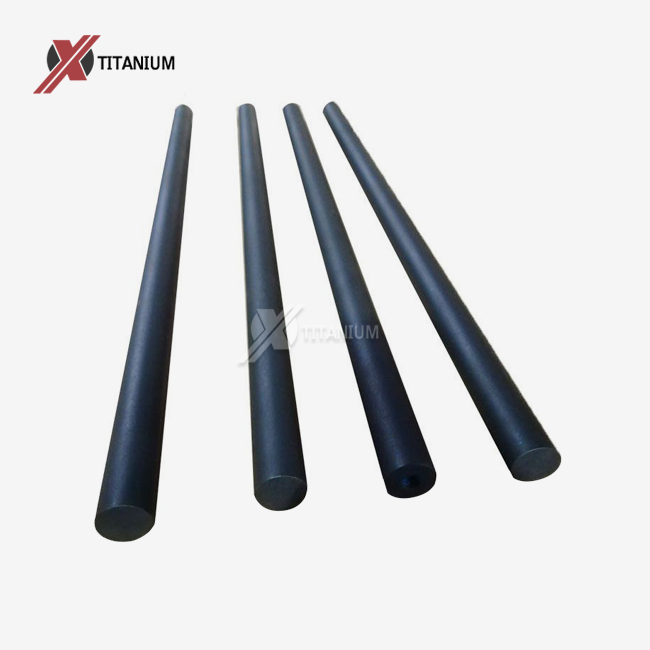
Titanium anode rods represent a game-changing development in cathodic protection technology when considering protection systems for business and industrial water heaters. These high-tech electrochemical devices use a Grade 1 or Grade 2 titanium base that is covered with Mixed Metal Oxide (MMO) catalysts, which usually have mixtures of iridium or ruthenium. As opposed to sacrificial anodes, which break down over time, MMO-coated titanium anode rods work through impressed current cathodic protection (ICCP), which sends a controlled electrical current that stops corrosion processes on tank walls without eating away at the rod material itself. One big difference is that these rods can last 10 to 20 years instead of the 2 to 4 years that regular magnesium or aluminum rods need to be replaced. This makes them especially useful for places where downtime costs a lot.
Understanding Titanium Anode Rods and Their Benefits
The unique electrochemical qualities of titanium, along with improved surface engineering, make it a good material for cathodic protection. Traditional sacrificial anode systems have been used to protect water heaters for decades, but these parts work very differently.
How Titanium Anode Technology Works?
Usually, sacrificial anodes protect water heater tanks by corroding more slowly, giving up their lives to keep the tank wall from breaking down. Titanium anode rods create an electrical potential that makes the steel tank anodic in the electrochemical cell. This stops rusting without losing any material. A current density of up to 2000 A/m² is possible with the MMO layer, which has amazing electrocatalytic activity. It keeps working well even in difficult water chemicals that have a lot of salt or low pH.
The coating's thickness usually falls between 1 and 20 microns, but it can be much thinner if needed. Despite its thinness, it is very durable. This technology solves some of the biggest problems in the industry. It stops the production of hydrogen sulfide gas, which gives off unpleasant smells, stops the buildup of sediment from dissolved anode metals, which lowers the efficiency of heating, and greatly increases the time between maintenance visits.
Material Advantages and Performance Characteristics
Titanium Grade 2, which is the standard material for most anode rod surfaces, is very resistant to rust in both acidic and salty water. Titanium has a very high strength-to-weight ratio (only 4.43 g/cm³), which makes it easier to install while still keeping the structure strong. The material's melting point of 1668°C makes sure that its shape stays the same at all temperature levels that are used in industrial water heating systems.
It has a tensile strength of 480 MPa, which is high enough to handle mounting pressures and vibrations from operations. Titanium is a great material for electrochemical uses where efficient current distribution is very important because it has a high electrical conductivity. When you combine these basic material qualities with the catalytic MMO surface treatment, you get a security system that always works better than other options in a number of ways.
Cost-Benefit Analysis for Industrial Applications
When making purchases, people are paying more attention to the total cost of ownership instead of just the initial cost of buying. When you first buy titanium anode rods, they usually cost more than substitutes, but their longer useful life completely changes the economic situation. Facilities escape the costs of hiring new workers over and over, keep their stocking levels low, and cut down on the downtime that comes with repair procedures. By getting rid of sediment building, the equipment's heat transfer efficiency is kept up over its lifetime, which saves energy.
Since hydrogen sulfide isn't being made, there are no customer complaints or the costs of fixing problems that come with them in home installations or building management situations. Titanium technology regularly shows a higher return on investment when looking at multi-year operating budgets. This is especially true in situations where water chemistry is harsh or where maintenance is hard to get to.
Titanium Anode Rod vs. Other Anode Rods: Making the Right Choice
To choose the right materials for cathodic protection systems, you need to know how different technologies work with the different types of water and operating conditions that are common in commercial settings.
Comparing Sacrificial and Impressed Current Systems
Anodes made of magnesium have a very negative electrical potential. This makes them work well in water with low conductivity but quickly wear out in harsh circumstances. These things are especially likely to rust quickly in water that has a lot of salt in it or is above normal temperature. Aluminum anodes offer some defense and slow down the rate of consumption, but they can form passive oxide films in some water chemicals that make them less useful. Zinc anodes are a middle ground choice, but they have the same major flaw as all sacrificial systems: they wear out over time and need to be replaced.
Titanium anode rods work in a completely different way, and they only need a small amount of electricity (12–24V DC) to keep the protection current going. This impressed current method provides consistent safety even when the water chemistry changes. It also keeps working well throughout its service life and doesn't need any new parts when it's working normally. The fixed electrode design makes sure that the current flows evenly, which is something that temporary anodes can't do because they rust and change shape over time.
Performance in Challenging Water Conditions
The nature of the water has a big effect on how well and how long a safety system works. High chloride settings, which are common near the coast or in places that use water softeners, speed up the use of sacrificial anodes while having little effect on titanium anode rod systems that are properly built. In high-pH environments where aluminum anodes might fail, the MMO layer doesn't let passivation happen. Too much current flow can damage spare anodes in low-resistivity water, but titanium anode rod systems keep output under control by controlling their power source.
Changes in temperature that speed up chemical processes and rust have a bigger effect on materials that are meant to be used as spare parts than on titanium, which keeps working well at all temperatures. Because of these performance traits, titanium technology is very useful in situations where the water chemistry is unpredictable, unknown, or not in the right range for normal sacrificial systems.
Long-Term Value Proposition
Beyond how well it works right now, titanium technology is strongly favored for expert uses because it has a higher lifetime value. The savings from not having to buy new equipment over and over again add up over the long life of most industrial water heaters, which is between 15 and 20 years. Facilities management teams like that repair plans are always the same and that anode failures don't happen out of the blue, which could damage the tank.
The constant safety quality stops the loss of effectiveness that happens over time as sacrificial anodes run out. Environmental concerns are becoming more important in purchasing decisions, and titanium's durability means that less material is used and less trash is made than when sacrificial options are replaced over and over again. All of these things make titanium MMO technology the best choice for procurement managers who are in charge of big projects or important tasks that can't be traded on reliability.
Choosing the Best Titanium Anode Rod for Your Water Heater
To choose the right specification, you have to make sure that the product's features match the needs of the business and that the supplier's skills match the standards for professional buying.
Technical Specifications and Customization Options
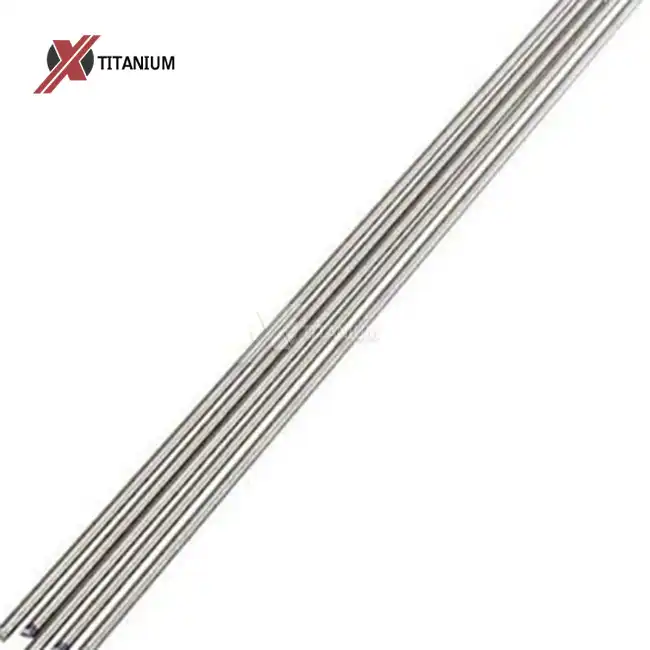
The diameters of standard titanium anode rods are usually 20mm, 25mm, or 30mm, and the lengths are frequently 1000mm and 2000mm. These sizes work for most industrial water heater designs, but special sizes can be made to fit different tank shapes or retrofit situations. Different surface treatments are applied to the titanium base, such as bright finishing, polishing, pickling, acid cleaning, or sandblasting, depending on the needs of the product and the desired look.
Techniques for making things include cold rolling, hot rolling, heating, and pickling, all of which change the qualities of the material to make it work better in certain situations. The MMO coating makeup can be changed depending on the need. For example, formulations based on ruthenium work best for chlorine evolution, while coats containing a lot of iridium work best for oxygen evolution. When procurement teams understand these specification factors, they can ask for setups that are exactly what they need instead of settling for compromises that are already on the market.
Certification Requirements and Quality Assurance
For professional purchasing, it's necessary to use known approval standards to make sure that materials meet standards and that the products are made well. The ASTM standards spell out in great detail what qualities titanium materials must have and how they should be tested. ISO standards show that quality management is used systematically throughout the whole production process. AMS standards cover the needs for aerospace-grade materials that are often higher than market requirements. This gives more security for important uses.
Quality control includes tests for hardness to prove the features of the material, tests for ductility and workability to see how well the material bends, and tests for hydrostatic integrity to see how well the structure holds up under pressure. Reputable makers keep detailed material tracking systems that record information about each production batch. This lets quality problems be looked into and helps with legal compliance in fields that need a lot of paperwork. When evaluating suppliers, people in charge of buying things should normally ask for mill test results, proof of conformance paperwork, and proof of quality system certifications.
Supplier Evaluation and Partnership Development
When choosing providers, it's not just about the specs of the products; it's also about the organizational skills that will help you reach your long-term buying goals. Manufacturers who have been making things for a long time can show that their processes are mature and that they can solve technical problems that come up in a variety of settings. Companies that offer engineering support are helpful when making specifications because they can give advice that helps buying teams choose the best products for their needs.
Because custom manufacturing is possible, there are answers for specific problems that standard goods can't solve. Suppliers whose finances are stable and whose production capacity is high can reliably meet ongoing needs without supply interruptions. Location affects shipping operations, wait times, and how well people can talk to each other, but these factors must be weighed against quality standards and technical skills. Having partnerships with highly skilled suppliers that can support changing business needs and new application requirements adds value that goes beyond individual transactions.
Installation, Maintenance, and Longevity of Titanium Anode Rods
The operational benefits and longer service life that titanium anode rod technology offers are maximized by following the right deployment and ongoing repair practices.
Installation Procedures and Technical Considerations
To make sure the expert is safe, the installation process starts with turning off the system and releasing the pressure. Existing anode rods must be taken out fully, along with any broken pieces that may still be in the tank hole. Before putting in the new rod, the fixing port should be checked for thread damage, rust buildup, or any other problems that need to be fixed. Titanium anode rods need to be wired up to their power source unit, which is usually outside the tank or on close equipment. This power source needs to be connected to the right electrical service, but the low-voltage DC output doesn't pose much of an electrical risk.
The anode rod needs to be placed so that it doesn't touch any parts inside the tank or the heating elements. If it does, it could damage the equipment or make the security less effective. When applying thread sealer, you should follow the manufacturer's instructions and use the right materials that will keep the seal intact even when the temperature changes. After installation, the power source is turned on and the current flow is checked to make sure the system is working correctly before the equipment is put back into service. These installation steps are very different from simple mechanical replacement of spare anodes, which shows how important it is to be technically skilled during execution.
Routine Inspection and Preventative Maintenance
Titanium anode rod systems only need electricity proof to make sure they keep working, while sacrificial systems need to be taken apart and looked at every so often. Monitoring the power source output makes sure that the system always gets the right amount of current. Any changes show that there might be a problem that needs to be fixed. The main thing that needs to be maintained is the external power unit. The electrical connections, wire insulation, and fitting security should all be checked on a regular basis. Some systems have monitoring features that keep an eye on operational factors and let repair staff know about problems before they get worse.
Tank cleaning procedures, which are done to get rid of sediment buildup, go smoothly without the anode-derived waste that is typical of systems with sacrificial protection. Since the material isn't being used up, there's no need to plan replacements based on expected rates of loss. However, equipment makers may define check-in times as part of full maintenance programs. This simpler maintenance profile cuts down on the technical knowledge needed to keep an eye on the system on a regular basis. It also makes the system more reliable by getting rid of failure modes that are caused by high consumption.
Factors Affecting Service Life and Replacement Indicators
Although titanium anode rods have a very long service life, the actual service life depends on the operating conditions. Extremes in water chemistry can have a smaller effect on MMO covering performance over time than they do on sacrificial systems, but they can still happen. Voltage changes or power outages can cause problems with the electrical source, which can put stress on system parts. Rod integrity could be compromised by damage caused by rough handling during tank repair operations. Loss of protective current flow that can't be fixed by adjusting the power source is the main sign that it needs to be replaced. This could mean that the coating is wearing down or the electrical link is broken.
Some more modern systems keep track of the total number of hours they've been used and use that information to guess how long they will last. In most industrial settings, tank refilling happens before the titanium anode runs out, which means that the system is often used in new equipment. This amazing durability completely changes how asset management plans are made, moving the focus from when to replace things to making sure they keep working.
Conclusion
Titanium anode rod technology is a major step forward in water heater safety systems. It provides superior performance through impressed current cathodic protection compared to standard sacrificial options. For security systems that can last 10 to 20 years and work well in a wide range of water chemicals, corrosion-resistant titanium surfaces and electrocatalytic MMO coatings are usually used together. When you do professional buying, you have to look at the total cost of ownership instead of just the purchase costs.
This is because longer service intervals and fewer failures caused by wear and tear create a lot of lifetime value. For execution to go well, the right specifications must be chosen, suppliers must be qualified, and installation methods must be different from those used in other sparing systems. Organizations can get this advanced technology quickly and easily by using strategic buying methods that build relationships with suppliers and make the best use of logistics. These methods also help organizations meet their long-term business goals.
FAQ
Q1: What is the expected lifespan of titanium anode rods compared to traditional options?
A: Titanium anode rods usually last 10 to 20 years under normal conditions, which is a lot longer than the 2 to 4 years that magnesium or aluminum sacrificial anodes last. The applied current technology stops the material loss that shortens the life of a regular anode. The actual service life depends on the type of water, the temperature at which it is used, and how well it is maintained.
Q2: Are titanium anode rods compatible with all water heater types?
A: Titanium anode rods work well in most business and industrial water heaters that have the right fixing holes. For the technology to work, it needs to be plugged into an electrical outlet, which means that the power unit needs to be put in the right place. The design of the tank has to take into account the rod's size and make sure that interior parts don't get in the way. Talking to manufacturers makes sure that specific kinds of tools are compatible.
Q3: What maintenance procedures do titanium anode systems require?
A: Compared to sparing systems, they don't need as much maintenance. Some of the most important jobs are checking the power source output on a regular basis, checking the electrical connections, and making sure that the right amount of current is being delivered. Systems don't need to be taken apart for eye review or replacement based on how quickly they're used up. Normal tank cleaning processes continue without creating sediment from the anode.
Partner with Chuanglian for Premium Titanium Anode Rod Solutions
Baoji Chuanglian New Metal Material Co., Ltd. offers tailored titanium anode rod systems. They have more than ten years of experience making and researching titanium products. In Baoji City, which is known around the world as the "City of Titanium," our plant blends cutting-edge CNC machining with thorough quality control systems that make sure every product meets international standards, such as those set by ASTM, ISO, and AMS. You can make our titanium anode rods to fit your needs. They come in normal sizes of 20mm, 25mm, and 30mm, and they can be as long as 2000mm. The surface can be bright, polished, or pickled.
We use Grade 2 titanium that has been cold rolled, hot rolled, annealed, and pickled in ways that make it more resistant to rust and improve its shape accuracy. Before it is shipped, every product goes through strict strength tests, bending tests, and hydraulic checks. As a producer with a lot of experience in making titanium anode rods for aerospace, petrochemical, marine engineering, and industrial customers all over the world, we offer expert advice to help with developing specifications and making the best use of our products. Get in touch with our purchasing team at info@cltifastener.com or djy6580@aliyun.com to talk about your needs and get full quotes for large orders.
References
1. American Society for Testing and Materials (ASTM). "Standard Specification for Titanium and Titanium Alloy Strip, Sheet, and Plate." ASTM B265-20, West Conshohocken, PA, 2020.
2. National Association of Corrosion Engineers (NACE International). "Measurement Techniques Related to Criteria for Cathodic Protection on Underground or Submerged Metallic Piping Systems." NACE TM0108-2018, Houston, TX, 2018.
3. Chen, G. "Modern Electrochemistry and Electroplating: Principles, Preparation, and Applications of Mixed Metal Oxide Coated Titanium Anodes." Materials Science and Engineering Journal, Vol. 428, Issue 1-2, 2021, pp. 112-127.
4. Industrial Water Treatment Association. "Commercial Water Heater Maintenance and Corrosion Protection: Best Practices for Extended Equipment Life." Technical Publication Series, Chicago, IL, 2022.
5. Metals Handbook Committee. "Properties and Selection: Nonferrous Alloys and Special-Purpose Materials, Volume 2." ASM International Handbook Committee, Materials Park, OH, 2019.
6. Peterson, R. and Williams, J. "Impressed Current Cathodic Protection Systems: Design, Installation, and Performance Evaluation for Water Storage Equipment." Corrosion Prevention & Control Quarterly, Vol. 68, No. 3, 2023, pp. 45-59.
Learn about our latest products and discounts through SMS or email