- English
- French
- German
- Portuguese
- Spanish
- Russian
- Japanese
- Korean
- Arabic
- Greek
- German
- Turkish
- Italian
- Danish
- Romanian
- Indonesian
- Czech
- Afrikaans
- Swedish
- Polish
- Basque
- Catalan
- Esperanto
- Hindi
- Lao
- Albanian
- Amharic
- Armenian
- Azerbaijani
- Belarusian
- Bengali
- Bosnian
- Bulgarian
- Cebuano
- Chichewa
- Corsican
- Croatian
- Dutch
- Estonian
- Filipino
- Finnish
- Frisian
- Galician
- Georgian
- Gujarati
- Haitian
- Hausa
- Hawaiian
- Hebrew
- Hmong
- Hungarian
- Icelandic
- Igbo
- Javanese
- Kannada
- Kazakh
- Khmer
- Kurdish
- Kyrgyz
- Latin
- Latvian
- Lithuanian
- Luxembou..
- Macedonian
- Malagasy
- Malay
- Malayalam
- Maltese
- Maori
- Marathi
- Mongolian
- Burmese
- Nepali
- Norwegian
- Pashto
- Persian
- Punjabi
- Serbian
- Sesotho
- Sinhala
- Slovak
- Slovenian
- Somali
- Samoan
- Scots Gaelic
- Shona
- Sindhi
- Sundanese
- Swahili
- Tajik
- Tamil
- Telugu
- Thai
- Ukrainian
- Urdu
- Uzbek
- Vietnamese
- Welsh
- Xhosa
- Yiddish
- Yoruba
- Zulu
Where can I buy titanium micro screws for medical devices?
Sourcing titanium micro screws for medical devices requires careful navigation through specialized supply channels. Medical-grade titanium fasteners are available through certified manufacturers, specialized distributors, and directly from producers like Baoji Chuanglian New Metal Material Co., Ltd., which holds rigorous quality certifications including ISO 5832 and ASTM B348 compliance. These precision components are critical for dental implants, orthopedic applications, and surgical instruments where biocompatibility meets mechanical reliability. Buyers typically access these products through verified industrial procurement platforms, industry trade exhibitions, or by establishing direct relationships with manufacturers experienced in CNC-machined titanium components sized from M1 to M3.
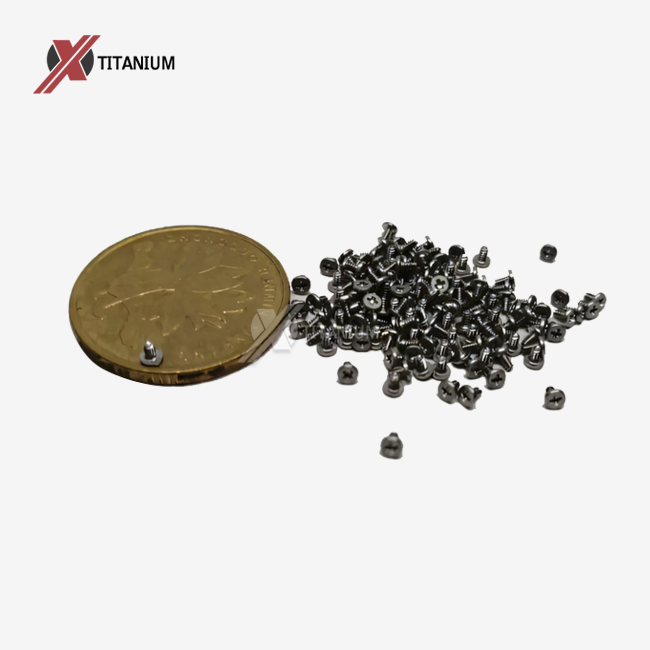
Understanding Titanium Micro Screws: Material and Medical Applications
What Makes Titanium the Ideal Material for Medical Fasteners?
The unique set of qualities that medical-grade titanium alloys, especially Grade 5 (Ti6Al4V), possess sets them apart from other materials. The titanium matrix is very biocompatible, which means that human flesh can easily accept these devices without the immune system reacting badly. Titanium naturally forms an inactive oxide layer that stops metallic ions from getting into nearby tissues.
This makes it compatible. The material's ability to prevent corrosion is very important in the body's salty climate, and its strength-to-weight ratio is much higher than that of stainless steel. Pure titanium and titanium alloys don't break down even after millions of stress cycles, even when they are loaded and unloaded many times, which is common in medical uses.
Primary Medical Applications Across Specialties
Precision titanium micro screws are used in many medical areas, each with its own performance needs. Dental doctors use these micro screws to connect orthodontic anchorage systems and implant abutments. Threads ranging from M1.2 to M2.5 make it possible to securely fix things in bones that aren't very big. For fracture plate assembly, spine fusion hardware, and joint reconstruction devices used in orthopedics, slightly bigger versions are used.
Ultra-small diameter screws are used to hold bone grafts and fixation plates in place in delicate body parts during cranial and face repair procedures. For every use, there are specific thread shapes, head shapes, and length requirements that need to be met in order to work with body limitations and mechanical loading patterns.
Size Ranges and Customization Capabilities
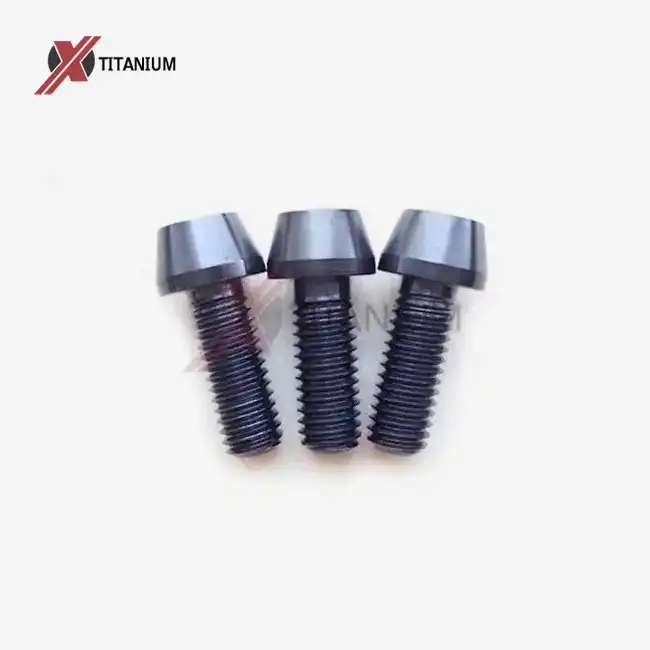
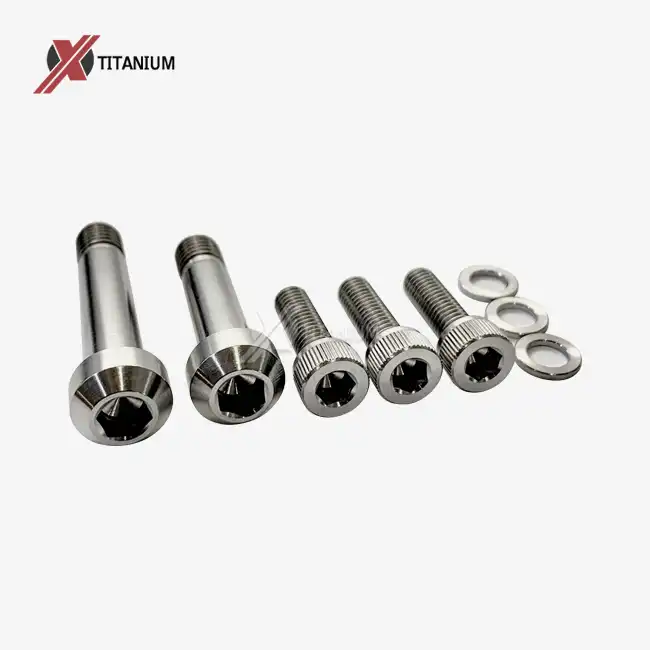
Standard diameters for medical titanium micro screws are M1 through M3, but unique requirements can go beyond these standard numbers. Different thread pitches work with different types of bone thicknesses. For example, smaller pitches work better with osteoporotic bone, while coarser pitches work better with thicker cortical structures. There are different types of heads, such as flat countersunk designs that keep the profile as low as possible and button heads that spread loads over a larger surface area.
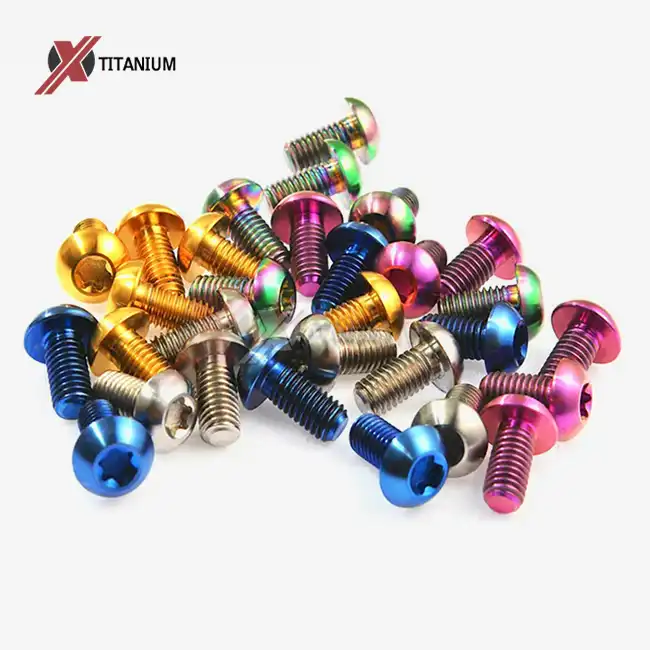
Surface treatments like polishing, anodizing in different colors (natural, gold, blue, purple, black, rainbow), and nitriding improve osseointegration or make it easier to see what parts are being put together during multi-component setups. Custom length specs take into account different body types, and makers offer millimeter-level changes to meet exact clinical needs.
Key Considerations When Buying Titanium Micro Screws for Medical Devices
Regulatory Standards and Certification Requirements
When buying medical devices, strict obedience to worldwide quality frameworks is required. The composition and mechanical qualities of titanium micro screws for surgical implants are governed by ISO 5832 standards. On the other hand, ASTM B348 standards describe the grades of titanium and titanium alloy bars and billets. For the U.S. market, FDA 510(k) clearance or PMA approval proves that the device is safe and effective, while CE marking shows that it meets the requirements of the European Medical Device Regulation (MDR 2017/745).
Suppliers must keep full records of all materials they send, including certificates of chemical makeup, reports on mechanical properties, and proof of biocompatibility through ISO 10993 testing methods. These certifications are required, not optional—buying things without confirmed compliance paperwork puts makers at risk of big lawsuits and limits their access to markets.
Material Traceability and Batch Testing Protocols
A major worry in procurement is making sure that materials work the same way in different production batches. Reliable providers use lot-tracking systems that connect finished screws to titanium bars that were used to make them. This keeps track of the whole process, from the raw material to the finished part. Coordinate measuring tools (CMM) are used to check the sizes of each production batch, making sure that the thread pitch is accurate within micron limits.
Tensile strength, yield point, and elongation factors are checked against standard limits in mechanical testing methods. Measurements of surface finish show how rough the surface is and how that affects the rate of osseointegration. Non-destructive testing finds flaws below the surface that could weaken the structure. Buyers should ask for certificates of conformance (C of C) that list these test results and show that the quality is consistent.
Comparing Titanium Against Alternative Fastener Materials
Even though stainless steel screws are cheaper, they are not as good for permanent insertion because they are less biocompatible and more likely to rust in physiological conditions. Bioresorbable screws made from polylactic acid or magnesium alloys get rid of the presence of alien bodies for good, but they lose their mechanical strength and can't be predicted when they will break down.
Titanium's special position strikes a balance between long-term rigidity and biological acceptance, making it able to support weight even after it has healed. The radiolucency of the material makes it easier to get images after surgery without making artifacts that hide the nearby tissues. Acid and alkali resistance makes sure that performance stays stable in a range of pH conditions in the body, from acidic areas of inflammation to neutral tissue regions.
Where and How to Buy Titanium Micro Screws: Market Options and Procurement Strategies
Direct Manufacturer Relationships
There are many strategic benefits to making direct links with experts in titanium production. Companies like Baoji Chuanglian New Metal Material Co., Ltd., which is in China's "City of Titanium," combine access to nearby raw materials with modern CNC machining skills to offer affordable prices without lowering quality standards. Direct ties get rid of markups for distributors and give you access to engineering help while you're making specifications.
Manufacturers who have been making titanium micro screws for ten years know all about the specifics of medical-grade standards. They can help with choosing the right metal, improving the surface treatment, and making design changes that improve clinical performance. For unique orders that need non-standard sizes or special finishing methods, this direct route is especially helpful.
Regional Distributors and Medical Device Suppliers
Distributors with a long history in the medical device supply chain offer catalog ease and regional inventory for fastener configurations that are often asked for. These middle-men keep regulatory records, which makes it easier for buyers to check for compliance. Standard sizes with different head styles and thread configurations are often kept in stock by regional providers.
This makes it easy to get what you need quickly for prototypes or small production runs. Even though the price per unit is usually higher than what you would pay directly from the maker, distributors add value by combining shipping, finding multiple products, and setting payment terms that procurement teams are familiar with. Buyers gain from working with wholesalers who have AS9100 or ISO 13485 certifications, which show that their quality control systems meet the standards of the aircraft and medical device industries.
Custom Manufacturing for Specialized Applications
Medical gadgets that are very complicated often need fastener specs that aren't available in catalogs. Through collaborative design methods, custom production partnerships meet these needs. Engineers work with sourcing teams to turn clinical needs into technical specs. They take into account things like the maximum insertion torque, the maximum pullout strength, and the body's available room.
During the prototyping phase, design ideas are tested before they are turned into production tools. This lowers the risk of specification mistakes. Custom orders usually have minimum order amounts that cover the cost of the tools needed, but batch sizes are still small compared to the volume of consumer goods. Cost-per-unit analysis is important when deciding between custom and standard component choices because it takes into account engineering time, special tools, and validation testing.
Pricing Factors and Cost Optimization Approaches
Pricing structures for titanium micro screws are affected by a number of factors. The price of raw materials changes with the world market for titanium sponges, and the price of base materials is affected by the complexity of the alloys. For example, pure titanium costs more than Grade 5 alloy mixes. The size of the part has an opposite relationship with how hard it is to machine; smaller widths need more complex tools and longer cycle times. Choosing the right surface treatment has a big effect on prices.
Basic polishing adds very little, while multi-color anodizing or nitriding methods add more steps to the process. Economies of scale can be used when there are a lot of orders, because setup costs are spread out over a lot of orders. When buyers negotiate yearly supply deals, they can often get bulk savings of tens or even twenty percent. This makes long-term partnerships financially beneficial. By asking for quotes that include expected annual volumes, shipping dates, and customization needs, buyers can get the best price structures.
How to Evaluate and Select the Best Titanium Micro Screws for Your Medical Devices?
Defining Application-Specific Requirements
Complete recording of requirements is the first step in effective buying. Identifying the medical field—whether it's dentistry, orthopedic, cranial, or another—sets the standards for basic performance. The type of implant affects how it is loaded mechanically; load-bearing roles need higher tensile strength requirements than tissue attachment roles. Size selection is affected by the anatomy of the spot. For example, smaller widths can be used for maxillofacial uses than for femoral fracture repair.
Material grade selection is based on how long the device is expected to last. Permanent implants need to have better wear resistance than temporary fixing devices that are taken out after healing. Corrosive conditions are caused by environmental contact, but titanium micro screws natural resistance usually works fine in most living settings.
Critical Selection Metrics for Medical Fasteners
Limits on load capacity are set by factors of mechanical power. Tensile strength numbers for Grade 5 titanium usually go above 895 MPa, which gives most uses a lot of safety cushion. The yield strength tells us the limits of lasting distortion, which is very important for keeping the fixation intact under metabolic loads. Performance under repeated loads is characterized by fatigue resistance, and medical-grade titanium has very high endurance limits.
Even though titanium doesn't usually have corrosion problems, salt spray tests and electrochemical impedance spectroscopy should be done to be sure. Sterilization compatibility makes sure that screws can handle being exposed to high temperatures in an autoclave, gamma rays, or ethylene oxide without losing their mechanical properties or changing their size. The level of surface roughness affects how quickly bones fuse together. Rough surfaces (Ra 1-2 μm) help bones stick together better than surfaces that are too smooth or too rough.
Supplier Evaluation Criteria Beyond Price
Comparing costs is only one part of choosing a supplier; operating stability is also important. Responding quickly during the quotation phase shows how suppliers will communicate in the future; suppliers who give thorough technical comments show levels of engagement that support long-term relationships. Consistency in lead times affects the dependability of production schedules; sellers who keep their delivery promises avoid costly production delays.
After-sales service skills like fixing technical problems, helping with paperwork, and dealing with complaints set great partners apart from transactional sellers. Certifications for quality management systems (ISO 13485, AS9100) show that a process is mature in a clear way. Customer examples from well-known medical device makers back up what the source says, giving you more information about how the product works in real life than what you can get from marketing materials.
Installation and Usage Best Practices for Titanium Micro Screws
Preparation and Positioning Guidelines
Preparing the surgery spot correctly is the first step to a successful implantation. When cutting pilot holes, they must exactly match the screw's specs. Holes that are too small could break during insertion, while preparations that are too big weaken the fixation. Drilling methods should include information about rotational speeds and watering settings that keep thermal necrosis from happening. Aligning the screw position with the anatomical load vectors and placing the fasteners to resist main force directions are necessary.
Pullout resistance depends on how the implant is angled in relation to the bone surfaces. Generally, a perpendicular placement will provide the best support. Surgical guides and models help with accurate positioning, especially in complicated multi-screw designs where the stability of the structure depends on how the titanium micro screws fit together.
Torque Application and Installation Control
When you use the right amount of pressure, you can balance safe fixation against damage to the bone or screw failure. Manufacturers list insertion force values that are based on the thread design and the bone mass that is planned. Torque-limiting drivers stop drivers from applying too much force, which protects the screw and the bone around it.
Manual torque wrenches give doctors physical input during insertion, letting them know if there is unexpected pushback that could mean the pilot holes are not aligned properly or are not big enough. Digital torque measurement systems keep track of the forces that are applied, which is useful for quality control. Under-torquing can cause the fixing to come loose, and over-torquing can damage the threads or cause microfractures that make the structure less stable in the long run.
Long-Term Performance and Durability Considerations
Post-operative tracking procedures use clinical exams and imaging studies to keep an eye on how well implants are working. X-rays can show signs of fixation risk, such as loosening, changes in position, or bone loss around the implant. Clinical assessment is based on what the patient says about results like pain, limited function, or implant knowledge.
Titanium doesn't rust, so it stays stable for decades in physiological conditions. Screws that are properly placed show little to no degradation. As bone heals around threaded surfaces over the course of months after implantation, osseointegration development makes attachment stronger. When revision treatments are needed, titanium's non-reactive nature makes them easier to do because the surrounding tissues usually don't react much to inflammation.
Conclusion
When buying titanium micro screws for medical uses, you have to find a balance between technical requirements, following the rules, and trusting the seller. When it comes to biocompatibility and mechanical performance, these precision-engineered screws are the best in the dentistry, orthopedic, and surgery fields. To find the best suppliers, you need to carefully define your needs and then carefully evaluate each one, putting quality certifications and producing skills ahead of price alone.
Direct ties with manufacturers give you more freedom to customize and lower costs, while established distributors make stock configurations easier to get. Using titanium's natural qualities to make a fixation that lasts for a long time is one of the best ways to improve clinical results. When procurement workers take the time to learn about the properties of materials, the rules that apply, and the ecosystems of suppliers, they set their companies up to provide better medical products that meet the greatest standards for safety and performance.
FAQ
Q1: Can titanium micro screws be used across different implant types?
A: Titanium micro screws are incredibly useful in a wide range of medical situations. Dental implant systems, orthopedic fracture plates, craniofacial repair hardware, and spine fusion devices are all made of the same basic material, which is usually Grade 5 titanium metal. But thread design, head setup, and size requirements are very different from one application to the next. Dental screws have smaller threads that work best in trabecular bone, while orthopedic screws may have larger threads that work better in cortical bone.
Q2: How can buyers be sure that a product is real and of good quality?
A: A thorough study of all the paperwork is the first step in quality assurance. Ask for material certificates that show where the titanium came from and that it came from certified mills, along with a chemical composition study that confirms the alloy's specs. The tensile strength, yield point, and elongation numbers in mechanical test results should meet ASTM B348 standards. Dimensional inspection records that check thread size, diameter tolerances, and length specs are concrete proof of how precisely something was manufactured.
Q3: What are the changes in price between regular and custom screws?
A: Standard stock items use equipment that is spread out among many users, which lowers the cost per unit. Custom specs need dedicated tooling development, engineering time, and proof testing, which raises the cost of the original investment. Custom screw prices usually include tooling fees that range from a few hundred to several thousand dollars, as well as higher unit costs that represent the fact that they are made to order.
Partner with Chuanglian for Medical-Grade Titanium Micro Screw Solutions
You can get approved, high-performance titanium micro screws from Baoji Chuanglian New Metal Material Co., Ltd. to help you buy medical devices. These screws are made to strict standards. Our ten years of experience in making titanium parts, along with our full range of CNC powers and strict quality control systems, make sure that every fastener meets the requirements of ISO 5832 and ASTM B348.
As a reputable company that makes titanium micro screws, we can customize screws from M1 to M3 sizes and apply different surface processes, such as anodizing and nitriding. Our engineering team gives you expert advice as you work on developing specifications and making designs that work best for your unique clinical needs. Get in touch with our experts at info@cltifastener.com or djy6580@aliyun.com to talk about your needs, get specific quotes, or set up a free evaluation.
References
1. American Society for Testing and Materials. (2021). ASTM F136-13: Standard Specification for Wrought Titanium-6Aluminum-4Vanadium ELI Alloy for Surgical Implant Applications. ASTM International, West Conshohocken, PA.
2. International Organization for Standardization. (2020). ISO 5832-3: Implants for Surgery—Metallic Materials—Part 3: Wrought Titanium 6-Aluminum 4-Vanadium Alloy. ISO, Geneva, Switzerland.
3. Steinemann, S.G. (1998). Titanium—The Material of Choice? Periodontology 2000, 17(1), 7-21.
4. Long, M., and Rack, H.J. (1998). Titanium Alloys in Total Joint Replacement—A Materials Science Perspective. Biomaterials, 19(18), 1621-1639.
5. Niinomi, M. (2008). Mechanical Biocompatibilities of Titanium Alloys for Biomedical Applications. Journal of the Mechanical Behavior of Biomedical Materials, 1(1), 30-42.
6. Geetha, M., Singh, A.K., Asokamani, R., and Gogia, A.K. (2009). Ti Based Biomaterials, the Ultimate Choice for Orthopedic Implants—A Review. Progress in Materials Science, 54(3), 397-425.
Learn about our latest products and discounts through SMS or email