- English
- French
- German
- Portuguese
- Spanish
- Russian
- Japanese
- Korean
- Arabic
- Greek
- German
- Turkish
- Italian
- Danish
- Romanian
- Indonesian
- Czech
- Afrikaans
- Swedish
- Polish
- Basque
- Catalan
- Esperanto
- Hindi
- Lao
- Albanian
- Amharic
- Armenian
- Azerbaijani
- Belarusian
- Bengali
- Bosnian
- Bulgarian
- Cebuano
- Chichewa
- Corsican
- Croatian
- Dutch
- Estonian
- Filipino
- Finnish
- Frisian
- Galician
- Georgian
- Gujarati
- Haitian
- Hausa
- Hawaiian
- Hebrew
- Hmong
- Hungarian
- Icelandic
- Igbo
- Javanese
- Kannada
- Kazakh
- Khmer
- Kurdish
- Kyrgyz
- Latin
- Latvian
- Lithuanian
- Luxembou..
- Macedonian
- Malagasy
- Malay
- Malayalam
- Maltese
- Maori
- Marathi
- Mongolian
- Burmese
- Nepali
- Norwegian
- Pashto
- Persian
- Punjabi
- Serbian
- Sesotho
- Sinhala
- Slovak
- Slovenian
- Somali
- Samoan
- Scots Gaelic
- Shona
- Sindhi
- Sundanese
- Swahili
- Tajik
- Tamil
- Telugu
- Thai
- Ukrainian
- Urdu
- Uzbek
- Vietnamese
- Welsh
- Xhosa
- Yiddish
- Yoruba
- Zulu
Best Titanium Headset Cap and Bolt for Lightweight Bike Builds
A CNC-machined Grade 5 (Ti-6Al-4V) set with an M6 x 1.0 mm thread, a clean finish, and a fit that matches your steerer and headset is the best titanium headset cap and bolt for building a light bike. The cap and bolt in our standard set weigh about 5 grams together. Even when it's under a lot of stress, it stays strong. It can handle sweat, rain, and road salt. A good set also stays the same color from batch to batch and has its threads checked before it ships. This guide was written to help bike shops, online stores, and brands pick out, test, and buy the right set with fewer fit issues.
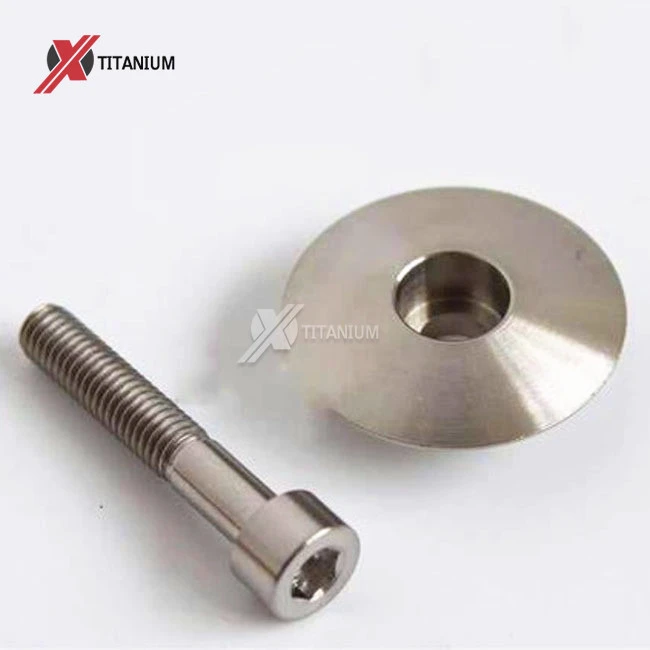
What Is a Titanium Headset Cap and Bolt?
How the Set Works in a Threadless Steering System?
On a threadless headset, the bearing preload can be changed with a titanium headset cap and bolt set. The bolt presses on the stem after going through the top cap. Inside the steerer tube, it pulls against a star nut or expander plug. This pull takes the play out of the headset bearings. People who buy this set are always told that it doesn't clamp the stem. Once you set the preload, the stem bolts will do that. The cap shapes the front end because it sits in the middle of the cockpit. This is the reason why a lot of brands see it as a basic cosmetic upgrade.
What a Complete Set Includes?
Most sets come with a top cap and a threaded bolt. Some buyers might also want a washer or spacer, so I think you should draw all of the parts. Gr5 titanium alloy is used to make our caps and bolts. We don't force you to buy a catalog size because the standard is customized, which means we build to your exact measurements. Some surface treatments are nitriding, polishing, and anodizing. Ti nature, gold, blue, green, purple, black, and rainbow are some of the colors. Parts in a batch are more likely to match if they get the cap, bolt, and finish from the same machine shop.
Specifications Worth Checking Before You Order
Check the numbers below against your own list of parts before you ask for a quote. They explain what our standard Gr5 set is.
| Parameter | Specification |
|---|---|
| Material | Grade 5 titanium (Ti-6Al-4V) |
| Weight | About 5 g (cap and bolt) |
| Thread | M6 x 1.0 mm |
| Cap diameter | 32 mm |
| Bolt length | 15–20 mm |
| Tensile strength | Above 950 MPa |
| Yield strength | Above 880 MPa |
| Hardness | Rockwell C 36 |
| Surface treatment | Polishing, anodizing, nitriding |
The standard coarse pitch for M6 is 1.0, but I never assume a match until I've checked the whole headset. Make sure that the 32 mm cap fits your stem and that a 15–20 mm bolt can reach your plug or star nut.
Benefits of Titanium Hardware and How It Compares
Weight, Strength, and Corrosion Resistance
A titanium headset cap and bolt benefits from titanium's density of 4.43 g/cm³, which is about 44% less than steel's 7.85 g/cm³. Titanium creates a stable oxide film that can stand up to water, sweat, and road salt. It can also handle being exposed to acids and bases. A single cap and bolt won't make a big difference in the reading on your scale. Still, when you swap out a few parts on the same bike, the small savings add up. One thing is wrong with titanium. It can gall, which means the threads can cold weld while under pressure. It's important to have clean threads and the right assembly compound.
Titanium vs. Aluminum
Aluminum is less dense than titanium, so it weighs less. It's about 2.70 g/cm³ dense, and caps made of aluminum are cheaper and come in bright colors. In exchange, it's soft. When aluminum bolts are over-tightened or serviced over and over, the threads and hex sockets can deform. As per our standards, Gr5 titanium has a yield strength above 880 MPa, which means it can hold its shape after being bent or shaped many times. People who only care about weight might choose aluminum. Titanium is better than steel if they want a long-lasting, high-quality part that is also lighter.
Titanium vs. Stainless Steel
Stainless steel doesn't rust and usually costs less. Also, it's heavy—about 8 g/cm³—while a titanium part of the same size weighs only about half that much. Stainless steel bolts can also gall, so you still need anti-seize for both types. When I help buyers compare quotes, I tell them to look at more than just unit price. They should also look at material, weight, thread durability, finish options, and lifetime value. To be sure of the Gr5 grade before mass production, ask for a certificate of material and an approved sample.
How to Choose the Best Titanium Headset Cap and Bolt?
Confirm Headset and Steerer Compatibility
Start with the rider for a titanium headset cap and bolt. Most tubes are 1-1/8 in (28.6 mm) in diameter, but there are also tapered and integrated styles. Next, find the part that's inside the tube. On many aluminum steerers, it's a star nut, and on carbon ones, it's an expander plug. Check the thread because M6 is common but not always the case. Then, find the bolt length by measuring the height of the stem and the stack of spacers. The stem should have a flat cap that doesn't rock back and forth. Send me a picture or drawing of any of these numbers that aren't clear, and I'll help you figure them out before you place your order.
Match the Set to the Bike Type and Finish
It is common for road builds to need a light weight, a tight cap, and a clean finish. Gravel and mountain bikes get dirty, wet, and washed a lot, so thread engagement and corrosion resistance are more important than weight. Color sells too. Anodized titanium's color comes from a thin oxide layer that bends light. There is no dye involved, and the shade is determined by the thickness of the layer. Now you see why batch control is important. If a brand sells rainbow, blue, gold, or purple sets, they should make a master sample and check each batch against it.
Review Supplier Capability
If a supplier wants to get your business, they should show more than just a price. Ask about CNC equipment, thread gages, ways of finishing, packaging, minimum order quantity (MOQ), lead time, and help with exporting. The Baoji Chuanglian New Metal Material Co., Ltd. is in Baoji, which is also known as the "City of Titanium." We've been working with titanium for more than ten years, have twelve CNC machines, and check every step of the process, from the raw stone to the finished product. Many other industries use our titanium products, such as the petrochemical, marine, racing, medical, and aerospace industries. This helps us understand how to handle tolerances on small bike parts.
Installation, Torque, and Maintenance Guide
Step-by-Step Installation
First, set up the headset. The steerer should be a few millimeters below the stem's top. Next, put on the star nut or expander plug. It's time to put the top cap on and thread the bolt in by hand. First, slide the spacers and stem into place. Slowly tighten until there is no more bearing play. Hold the front brake and rock the bike back and forth to test. Then, make sure the handlebars can turn freely. Align the stem with the front wheel, and then tighten the stem bolts to the torque value given by the stem provider. If you use the wrong spacer stack, the cap bolt should never fix it.
Torque and Preload
There is no one torque value that works for all titanium headset bolts. The right number depends on the type of bolt, the condition of the threads, and the system used for compression. The bolt shouldn't be cranked down all the way, because preload only needs to get rid of play. It is possible to damage a carbon steerer or its plug by overtightening. I suggest that you use a calibrated torque tool and follow the instructions that came with the headset and steerer. You can also check the headset adjustment in the Park Tool Big Blue Book of Bicycle Repair. Stop and look at the parts if the bolt head feels soft or the tool slips.
Anti-Seize and Routine Checks
I recommend using a good anti-seize compound on the bolt threads of a titanium headset cap and bolt because titanium can gall when it threads into metals that are not the same. Clean the threads before each use, and keep dirt away from the plug or star nut. After the first ride and then at regular service times, check the headset again. Check for burrs, sockets that are stripped, threads that are stretched, or a cap that doesn't fit properly. Instead of forcing a broken piece to work, replace it. With a little care at each service, the set will still be easy to take off years from now.
Quality Checks, Custom Orders, and Final Selection
Quality Verification Checklist
Both the part and the whole should be checked for quality. Use a go/no-go gage to check the part's thread pitch and measure the cap's diameter, the length of the bolt, how flat it is, and the head's dimensions. Check for flaws like burrs, cracks, missing threads, tool marks, and color that isn't even. Hand-thread the bolt into the star nut or plug you want to use, and make sure the cap fits evenly. ASTM B348 talks about Ti-6Al-4V bar, and ISO 4762 talks about hexagon socket head cap screws. Both can be used as guides. At Chuanglian, everything is inspected, from the raw materials to the finished goods.
Custom, Wholesale, and OEM Orders
Standard kits are a good way to get replacement parts quickly and for common needs. For new models, limited editions, and private-label lines, custom orders work well. Our customized standard includes the color, surface treatment, cap shape, and bolt lengths between 15 and 20 mm. A full request should include samples or drawings, the material grade, thread details, finish, color, target quantity, expected yearly volume, and the market where the product will be sold. I always say that you should approve a sample first. You can check the fit, finish, and color of a sample before you decide to make the whole thing.
Which Set Is Best?
The job will tell you which set is best. For a light road build, pick a small, precisely machined Gr5 set with a smooth finish and a known plug match. Mountain bikes and bikes that will get wet should have threads that are strong, won't rust, and a strong tool interface. People who sell things should look for an M6 set with a stable finish, a steady supply, and clear instructions on how to package it. OEM buyers should choose a supplier that can work from drawings, inspect documents, and keep an eye on finishing. The best option strikes a good balance between fit, quality, service life, customization, and supply continuity.
Conclusion
A titanium headset cap and bolt set the bearing preload on a headset that doesn't have threads. The stem bolts hold the stem in place. Gr5 (Ti-6Al-4V) has a density of 4.43 g/cm³, a tensile strength of over 950 MPa, and a high resistance to corrosion. It's cheaper to use stainless steel, but it's heavier and lighter than aluminum. This set is best for a certain type of bike, steerer size, bolt length, star nut or plug thread, and finish. For proper installation, you need gradual preload, the manufacturer's torque guidance, and anti-seize to keep the screws from galling. Thread gaging, color approval, and sample testing help buyers avoid problems with fit and finish before mass production.
FAQ
Q1: Does the headset cap and bolt clamp the stem?
A: No, the set only changes the preload on the bearings. Once the play is gone, the stem bolts hold the stem to the steerer.
Q2: Why choose Gr5 over commercially pure titanium?
A: We need Gr5 (Ti-6Al-4V) to have a tensile strength of more than 950 MPa and a yield strength of more than 880 MPa. That works for a bolt with preload. Since grades that are sold as pure are softer, I suggest Gr5 for this part.
Q3: Do I need anti-seize?
A: Yes. Titanium can gall when it threads into metals that are not the same, and anti-seize makes it easy to take off later.
Q4: Can you make custom colors and shapes?
A: Yes. With polishing, anodizing, and nitriding, our standard is made to order. It comes in many colors, from nature to rainbow. Send sketches or samples along with your order number.
Request a Titanium Headset Cap and Bolt Specification or OEM Quote
With CNC machining, Gr5 material, and custom designs, Chuanglian is a titanium headset cap and bolt supplier based in Baoji, also known as the "City of Titanium." Send your drawings, colors, and desired quantity to info@cltifastener.com or djy6580@aliyun.com, and I'll get back to you with a sample and a quote.
References
1. ASTM International, ASTM B348/B348M Standard Specification for Titanium and Titanium Alloy Bars and Billets, 2019
2. International Organization for Standardization, ISO 4762 Hexagon Socket Head Cap Screws, 2004
3. Park Tool, Big Blue Book of Bicycle Repair, 2019
4. Leyens, C. and Peters, M., Titanium and Titanium Alloys: Fundamentals and Applications, Wiley-VCH, 2003
5. Donachie, M. J., Titanium: A Technical Guide, ASM International, 2000
6. Boyer, R., Welsch, G., and Collings, E. W., Materials Properties Handbook: Titanium Alloys, ASM International, 1994
Learn about our latest products and discounts through SMS or email