- English
- French
- German
- Portuguese
- Spanish
- Russian
- Japanese
- Korean
- Arabic
- Greek
- German
- Turkish
- Italian
- Danish
- Romanian
- Indonesian
- Czech
- Afrikaans
- Swedish
- Polish
- Basque
- Catalan
- Esperanto
- Hindi
- Lao
- Albanian
- Amharic
- Armenian
- Azerbaijani
- Belarusian
- Bengali
- Bosnian
- Bulgarian
- Cebuano
- Chichewa
- Corsican
- Croatian
- Dutch
- Estonian
- Filipino
- Finnish
- Frisian
- Galician
- Georgian
- Gujarati
- Haitian
- Hausa
- Hawaiian
- Hebrew
- Hmong
- Hungarian
- Icelandic
- Igbo
- Javanese
- Kannada
- Kazakh
- Khmer
- Kurdish
- Kyrgyz
- Latin
- Latvian
- Lithuanian
- Luxembou..
- Macedonian
- Malagasy
- Malay
- Malayalam
- Maltese
- Maori
- Marathi
- Mongolian
- Burmese
- Nepali
- Norwegian
- Pashto
- Persian
- Punjabi
- Serbian
- Sesotho
- Sinhala
- Slovak
- Slovenian
- Somali
- Samoan
- Scots Gaelic
- Shona
- Sindhi
- Sundanese
- Swahili
- Tajik
- Tamil
- Telugu
- Thai
- Ukrainian
- Urdu
- Uzbek
- Vietnamese
- Welsh
- Xhosa
- Yiddish
- Yoruba
- Zulu
Best Titanium Self-Tapping Screws for Motorcycle Fairing Repairs
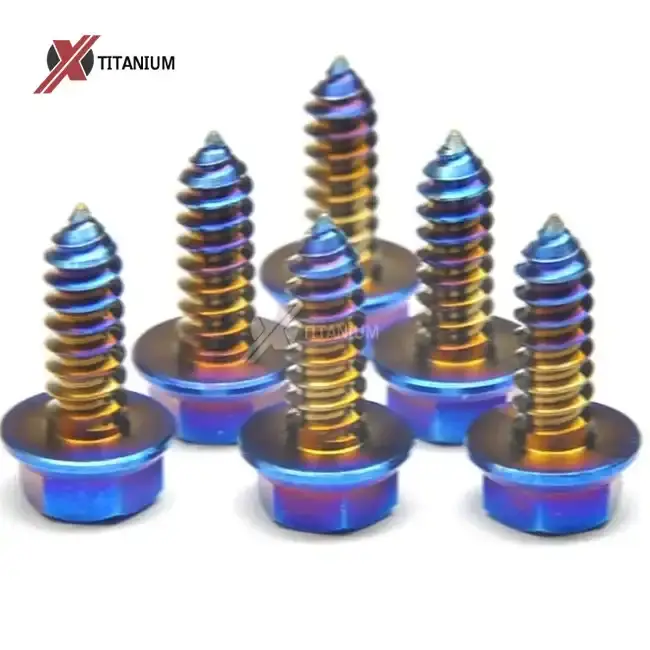
When it comes to securing motorcycle fairings — cowlings, mudguards, side panels — the fastener you choose matters more than most people realize. A titanium self tapping screw for motorcycle applications delivers a rare combination: roughly 45% lighter than steel, tensile strength reaching 950 MPa, and a passive oxide layer that resists saltwater, road grime, and UV exposure without coatings wearing through. At Baoji Chuanglian New Metal Material Co., Ltd., we manufacture Grade 5 (Ti-6Al-4V) titanium fairing screws to DIN7981/DIN7982 and ASTM B348 standards, supplying distributors, OEM fabricators, and aftermarket dealers across Southeast Asia, South America, and the United States.
Understanding Titanium Self-Tapping Screws for Motorcycles
How They Work in Fairing Materials?
A titanium self-tapping fastener moves into ABS plastic bosses, carbon fiber panels, or aluminum speed clips and makes threads right there—no need for a pre-tapped hole. The thread architecture has a larger pitch and a sharper flank angle than machine screws. This makes the pull-out strength higher and lasts longer than standard zinc-plated OEM hardware. Because Grade 5 titanium is 36 HRC hard, the screw's thread-cutting integrity stays the same even after multiple removal rounds. This is an important property for repair shops that do a lot of fairing changes.
Why Grade 5 (Ti-6Al-4V) Is Non-Negotiable?
Grade 2 titanium that is sold in stores is too soft to be used for self-tapping because it breaks when the pressure is applied to cut threads. Grade 5's aluminum-vanadium alloying (Al 5.5–6.75%, V 3.5–4.5%) gives it the shear strength it needs while keeping its density low at 4.43 g/cm³. Because of this, the aerospace, motorsport, and medical industries all use Ti-6Al-4V for load-bearing fasteners that work in places with a lot of vibration.
Titanium vs. Other Materials: Making the Right Choice
Purchasing managers often compare the cost per piece of titanium self tapping screw for motorcycle to those made of stainless steel or zinc alloy screws. There is no lifecycle value in that comparison. After 12 to 18 months of all-weather riding, stainless steel fender screws start to show rust spots. Titanium, on the other hand, makes an oxide layer that is resistant to corrosion from the air and road salts. In the humid, tropical climates of Thailand, Indonesia, and Vietnam, zinc-plated screws break down even faster.
Here is a straight comparison of materials that is useful for buying covering fasteners:
- Grade 5 Titanium vs. 304 Stainless Steel: Titanium is 43% lighter (4.43 g/cm³ vs. 7.93 g/cm³), delivers comparable tensile strength (950 MPa vs. ~515 MPa for 304), and resists acid/alkali environments that corrode stainless over time. For motorcycle bodywork exposed to road chemicals and rain, the performance gap is substantial.
- Grade 5 Titanium vs. Aluminum Screws: Aluminum fairing bolts are light but lack torsional shear strength for repeated self-tapping cycles. They strip plastic bosses faster and are prone to cold-welding on aluminum mounts. Titanium avoids both failure modes.
- Grade 5 Titanium vs. Zinc-Plated Steel (OEM Standard): OEM zinc screws cost less upfront but require more frequent replacement. In a busy repair shop processing 200+ fairings monthly, switching to titanium fasteners reduces rust-related rework and customer callbacks — a measurable operational saving.
These important differences have a direct effect on how things are bought. The higher cost of the unit at first is balanced by fewer warranty claims and replacements, which is an important factor for distributors who sell to expert repair shops.
How to Choose and Install Titanium Fairing Screws Correctly?
Selecting the Right Specification
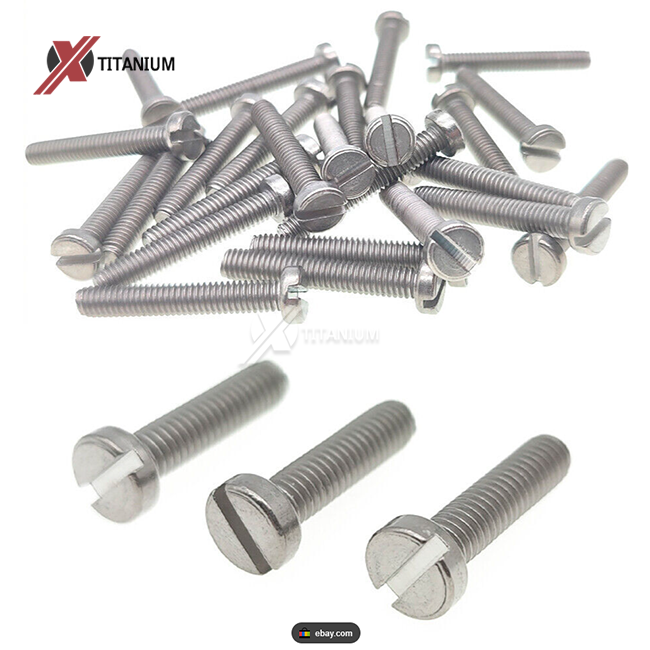
Chuanglian's titanium fairing screws come in sizes ranging from M4 to M12 in diameter and 10 mm to 50 mm in length. Custom sizes are also possible. For fairing work, the most common shapes are 4x12, 5x16, and 6x20, which are in line with DIN7981 (pan head) and DIN7982 (countersunk head) standards. Checking these measurements against the OEM fairing boss limits before placing a large order stops fitment problems and lowers the number of samples that are sent back.
Installation Best Practices
Titanium self tapping screw for motorcycle doesn't stretch as much as steel does, so if you over-torque it, you'll break heads or strip plastic bosses before you even realize you're making resistance. Manufacturers of fairings usually say that plastic-mount screws need to be torqued between 2 and 5 Nm. It is important to use a measured torque wrench instead of an impact driver. Using a non-metallic anti-seize paste during installation stops galling between titanium threads and aluminum clips, which makes it easier to remove them for future maintenance.
Procurement Insights: Finding Reliable Titanium Fastener Suppliers
What B2B Buyers Should Verify?
There aren't many suppliers of titanium self tapping screws. Most regular fastener companies don't have the CNC thread-rolling and tip-forming tools needed to make sure that Grade 5 self-tapping shape is always the same. Before placing a large order, procurement teams should ask for metallurgical composition certificates (to make sure the steel is Ti-6Al-4V according to ASTM B348), torque-to-failure test data, and dimensional inspection reports (according to ISO 4759). Spectrographic alloy analysis, Vickers/Rockwell hardness testing, dimensional laser profiling of thread geometry, and salt spray testing (ASTM B117) for colored PVD or anodized surface variants are all quality control checks that you should make with any supplier. Before being sent out, every batch of goods made at Chuanglian goes through these five checks.
Managing Lead Times and MOQ at Scale
Demand for titanium self tapping screw for motorcycle frame repairs ranges from 5,000 to 20,000 pieces per month, with a wide range of requirements. Reliable providers should be able to handle orders with different specifications in the same shipment, offer different price levels for big purchases, and keep lead times stable even during busy times. Chuanglian can package bulk orders in a variety of ways, including loose bulk or boxes. They can also use private-label packaging for distributors who are building their own product lines.
Real-World Applications: Where These Screws Perform?
Titanium fairing fasteners have been shown to be useful in three different motorbike uses. Vibration-resistant thread engagement keeps the fairing and bodywork assembly on ABS and carbon fiber panels from coming loose from engine harmonics, which is a common problem with zinc OEM hardware. Exhaust heat shield mounting is a tough thermal environment, but titanium screws keep their thread integrity through repeated heat cycles, while steel screws seize and break when they try to be taken out. Fixing the instrument cluster and dashboard to the car adds an esthetic touch. Titanium screws with Gold, Blue, Black, or Rainbow finishes that have been polished or anodized get rid of the rust stains that make uncovered cabin hardware look bad.
When professional service shops in Southeast Asia switched from selling aftermarket parts to titanium hardware in fairing kits, the number of screw-related callbacks went down by a measured amount. The screws are about 45% lighter than steel versions, which also appeals to customers who are making performance-focused setups for track days or races.
Conclusion
Titanium self tapping screw for motorcycle are a better choice than traditional steel or zinc hardware from a technical point of view, especially for wholesalers and repair shops that value long service intervals, resistance to rust, and lighter weight. Grade 5 Ti-6Al-4V has the right amount of hardness for self-tapping in ABS plastic, aluminum, and composite materials. These screws are compatible with ASTM B348 and ISO 5832-3 and come in normal DIN sizes, so they can be used right away in current fairing repair processes. Titanium is the best long-term choice for B2B buyers who need to meet monthly volume requirements because it consistently performs and needs to be replaced less often.
FAQ
Q1: Can titanium fairing screws replace all bolts on a motorcycle?
A: No, these fasteners are made to work with plastic bosses that don't have threads, fiberglass panels, and sheet metal clips for things like fairings, mudguards, and side covers. They shouldn't be pushed into threaded holes that have already been cut in engine blocks or frame parts.
Q2: Will titanium cause galvanic corrosion with aluminum clips?
A: Titanium and aluminum don't have a big enough galvanic potential difference for everyday use on the road. Using a non-metallic anti-seize paste during installation is a useful way to protect against galling or cold-welding.
Q3: Why does Grade 5 matter specifically for self-tapping applications?
A: Grade 2 titanium often breaks because it doesn't have the shear strength to cut threads when installed with a lot of torque. It is possible to make clean, long-lasting threads in plastic and soft metal with Grade 5 (Ti-6Al-4V), which has a tensile strength of 950 MPa and a hardness of 36 HRC.
Q4: Do the colored finishes last outdoors?
A: Under normal riding conditions, PVD coatings don't fade or scratch and last a very long time. Anodized finishes are bright, but they may fade over time if they are exposed to direct sunlight for a long time.
Partner With Chuanglian — Your Trusted Titanium Self Tapping Screw Manufacturer
Distributors and OEM fabricators all over the world can order Grade 5 titanium self tapping screws from Chuanglian for use in motorcycle fairings. Our CNC-machined fasteners are made to ASTM B348 and ISO 5832-3 standards and come in unique packages with full material certification. They can fit holes sizes M4 to M12. It comes in natural Ti, gold, blue, black, and rainbow colors. Contact us today at info@cltifastener.com or djy6580@aliyun.com to get bulk prices or a trial set.
References
1. ASM Handbook, Volume 2: Properties and Selection — Nonferrous Alloys and Special-Purpose Materials. ASM International, 1990.
2. Titanium: A Technical Guide. Donachie, M.J. ASM International, 2000.
3. Fastener Design Manual. NASA Reference Publication 1228. National Aeronautics and Space Administration, 1990.
4. ASTM B348: Standard Specification for Titanium and Titanium Alloy Strip, Sheet, and Plate. ASTM International, 2019.
5. ISO 5832-3: Implants for Surgery — Metallic Materials — Part 3: Wrought Titanium 6-Aluminium 4-Vanadium Alloy. International Organization for Standardization, 2021.
6. Corrosion Engineering: Principles and Practice. Roberge, P.R. McGraw-Hill, 2008.
Learn about our latest products and discounts through SMS or email