Engineers and procurement specialists know that when they're looking for titanium torx screws for aircraft uses, they have to work perfectly in harsh conditions. These special fasteners use titanium because it is stronger than steel and the hexalobular drive design because it can pass power more efficiently. Precision parts that can resist temperatures up to 600°F and keep their shape in corrosive conditions are needed by the aircraft industry. Choosing the right titanium torx screws is important for aerospace makers and suppliers around the world because it makes sure that mission-critical systems work effectively for the duration of their service life.
Introduction
Every part of aerospace engineering has to meet very strict safety, stability, and performance standards. It is the pinnacle of precision making. Out of all the tools that are used to build airplanes, titanium torx screws stand out as important parts because they are both light and very durable. Traditional steel screws just can't compare to these special ones because they are more resistant to rust, biocompatible, and strong. As the aircraft industry focuses more on saving fuel and protecting the environment, the need for lightweight materials that don't weaken structures has grown. Titanium fasteners are the perfect solution to this problem because they are up to 40% lighter than steel screws while still being strong enough. Modern aircraft makers depend more and more on these high-performance fasteners for important jobs where failure is not an option, like engine parts and structural systems.
Why Focus on Titanium Torx Screws for Aerospace Applications?
Because of the strict rules in the aircraft business, titanium torx screws are the only choice for mission-critical uses. Unlike regular fasteners, these precision parts have special benefits that directly help aircraft makers and repair teams around the world with their problems. The hexalobular drive design lowers the chance of cam-out during installation and removal, which means that expensive parts are less likely to get damaged. This trait of the design is especially useful in small areas where hex or Phillips drives could slip.
The six-point star shape spreads torque more widely, so higher fitting torques can be used without damaging the fasteners. Titanium is perfect for use in aircraft because it has special qualities. The material has great wear resistance, which is important for parts that are constantly vibrating and changing temperatures. Because it doesn't naturally rust, it doesn't need protective layers that could make it heavier or make it incompatible with other materials.
Selection Criteria for the Best Titanium Torx Screws
Titanium bolts need to be evaluated in a thorough way that takes into account many performance factors. Choosing the right material grade is the first step in buying something. For military uses, Grade 2 pure titanium and Grade 5 (Ti-6Al-4V) alloy are the most popular options. Another important factor is the accuracy of the dimensions. To make sure they fit and work right in complicated systems, aerospace fasteners must keep their specs very tight.
As a result, manufacturing quality is very important because thread accuracy has a direct effect on joint stability and load distribution. Surface treatments have a big effect on how well and how long fasteners last. You can choose a natural titanium finish, anodizing for better rust protection, or coatings made especially for your area. Depending on the needs of the application, each method has its own benefits. Certification standards are rules that can't be changed for aircraft uses.
The quality control systems and related ASTM standards for fasteners must be in line with AS9100. Documentation for traceability makes sure that you can track the whole past of a material from the raw material to the finished part. Temperature resistance determines which airplane systems are best for a given mission. Applications in the engine bay need fasteners that can handle bouts of extreme heat, while interior components work in more mild conditions. Knowing these needs helps you choose the right material and treatment.
Top 5 Titanium Torx Screws for Aerospace Applications
Grade 5 Ti-6Al-4V High-Strength Torx Machine Screws
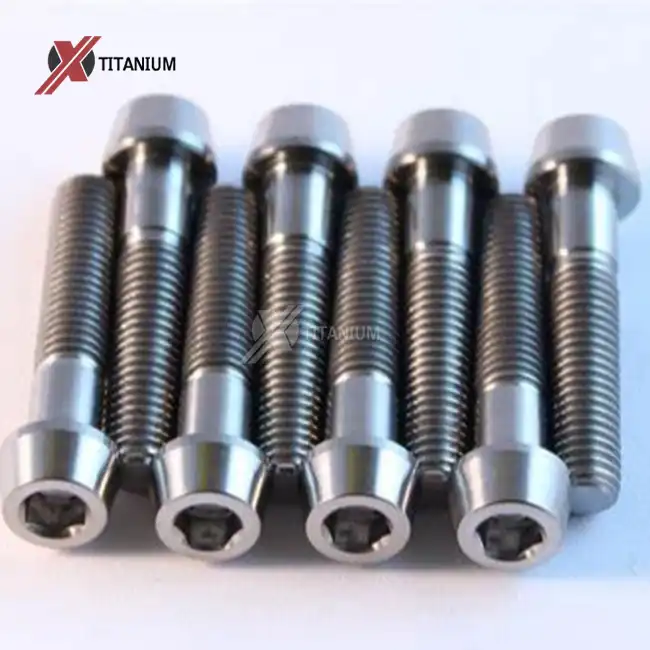
High-Strength Grade 5 Ti-6Al-4V Torx Machine Screws These high-quality fasteners are the best for aircraft uses that need to withstand a lot of stress. They are made from a special metal called Ti-6Al-4V, which gives them great strength-to-weight ratios that are important for structure parts. The alpha-beta substructure of the material makes it very resistant to wear, which makes these screws perfect for situations with changing loads.
These exact parts come in metric sizes ranging from M3 to M12, so they can be used in a wide range of situations. Length choices from 5mm to 200mm make sure that the right contact is made with a wide range of material thicknesses. The hexalobular drive design works with standard Torx bits, which makes it easier for repair teams to get the tools they need. The natural titanium finish keeps the material's natural resistance to rust and keeps it compatible with other aircraft materials. Because the surface isn't coated, there are no worries about coatings coming off or changes in thickness that could affect the standards of the process.
It has been shown that these fasteners work well in both civilian and military airplanes. It is often used in places where maximum strength is needed, like engine bolts, landing gear parts, and structural joints. The alloy's great qualities at high temperatures mean that it stays mechanically sound up to 600°F, making it ideal for most aircraft systems. As9100 compliance and full material tracking documents are part of quality certifications.
Grade 2 Pure Titanium Corrosion-Resistant Torx Screws
Pure titanium Grade 2 screws work great in situations where resistance to rust is more important than strength. These commercially pure titanium parts are much more resistant to rust from sea, chemicals, and the air. Because they are so easy to shape and join, they are perfect for specific aircraft uses. The material is not as strong as Ti-6Al-4V, but it is very flexible and tough, which makes up for it. These qualities are useful in situations where vibrations need to be lowered or where contact loading needs to be avoided.
The pure titanium makes sure that the aircraft air systems and other parts that affect passengers are biocompatible. There are different types of head combinations, such as pan, button, flat, and countersunk designs, to meet the needs of different assembly tasks. Each head style is best for distributing weight and looking good. The normal Torx drive makes sure that the fitting torque is always the same and lowers the chance of damaging fasteners while they are being put together.
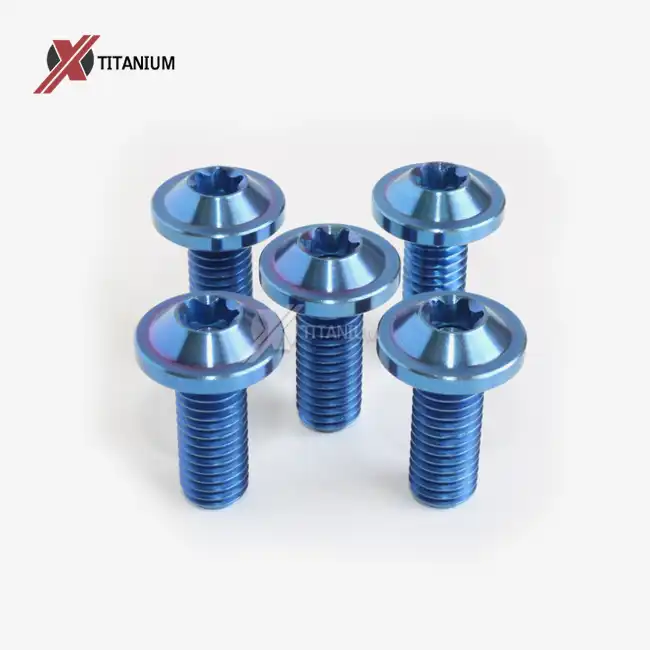
One way to treat the surface is to anodize it in different colors to make it easier to find and protect it from rust. Natural titanium, gold, blue, green, purple, black, and colorful finishes are all colors that can be chosen. These techniques give visual coding systems while keeping the qualities of the material itself.
Black Oxide Coated Titanium Torx Fasteners
Titanium screws that have been treated with black oxide are better at lubrication and wear resistance. This special layer keeps things from galling during fitting and makes things easier to see. The treatment process keeps the dimensions within the ranges that are needed for aircraft uses. The even thickness of the coating makes sure that the thread contact and pressure are always the same. Unlike organic coats, black oxide treatment doesn't break down when the temperature changes. This steadiness is very important for parts that work in settings with different temperatures.
When conducting electricity is important, like in electrical grounding uses, these screws work very well. The black oxide layer gives a managed electrical resistance that works well for getting rid of static electricity. Even with the skin treatment, the resistance to marine and chemical contact is still very high. Precision CNC cutting is used in the manufacturing process to get very close limits. Each fastener goes through a lot of quality checks, such as checking the dimensions, analyzing the material makeup, and making sure the surface treatment is equal. For aircraft uses, documentation packages must include material certificates and test results.
Precision CNC Machined Titanium Torx Components
Custom CNC made titanium torx screws meet specific needs in aircraft that can't be met by standard fasteners. It is important to note that these precise parts have exact measurements, unique shapes, and better surface finishes. Complex details like undercuts, reliefs, and changed thread forms can be made possible by the cutting process. Five-axis CNC cutting for complicated shapes is an example of advanced manufacturing. Specialized cutting settings and tools make it easier to remove material while keeping the surface's structure.
Deburring, cleaning, and checking the dimensions with coordinate measure tools are all things that are done after the machine has been used. You can choose between Grade 2 and Grade 5 titanium, based on how strong you need it to be. Individual inspections and records are kept for each part. Quality control methods go above and beyond what is required by flight standards. This makes sure that performance is the same across production lots. Specialized brackets, unique fits, and test parts are just a few of the uses. Changes in design and engineering can be made during airplane development projects because the manufacturing process is flexible. The long lead times are due to the precise manufacturing methods needed to make these parts.
Multi-Color Anodized Titanium Torx Screws
When titanium screws are anodized, they protect against rust better and can be easily identified. The anodizing process adds a controlled metal layer that makes the surface harder and more resistant to wear. Color choices make it easier to organize and maintain things in a logical way. The electrochemical anodizing method carefully manages the thickness and evenness of the coating. Type II anodizing adds colors for decoration, and Type III hard anodizing makes the metal more resistant to wear. Both methods keep the titanium's basic qualities while improving its surface features.
These fasteners can be used outside because they don't lose their color when exposed to UV light or changes in temperature. The polished surface is more resistant to wear and damage than titanium that has not been treated. Electrical insulation qualities can be useful in some situations where separation is needed. As part of quality standards, binding tests, thickness measurements, and color checks are done. Accelerated aging tests are done on each output lot to make sure the layer will last. Documentation includes records of process approvals and coating standard compliance.
Global Market Characteristics and Regulatory Considerations
The global aerospace fastener market is still growing, thanks to strict safety rules and more planes being made. Different regions have different certification standards, which makes things harder for foreign suppliers. European EASA rules and FAA rules aren't always the same, so you need two different certifications to get into world markets. As military businesses grow in Asia, there is a rising need for titanium fasteners on the market. China's big plans to build more airplanes open up possibilities for qualified providers. Japanese standards for accurate production are a good fit for the needs of titanium fasteners, which makes it easier for the two types of technology to work together.
Some things to think about in the supply chain are limits on where to get materials and rules on exporting. Because titanium is a vital material, it must be handled in a way that follows the rules for foreign trade. Different regions have different ways of qualifying suppliers, but they all stress quality systems and being able to track goods. Environmental laws are having a bigger effect on choosing materials and making things. When making purchases, people think about things like sustainable production methods and how easily they can be recycled. Because the aircraft industry wants to be carbon neutral, lightweight titanium parts are still being used.
Purchasing Recommendations and Considerations
To successfully buy titanium torx screws, you need to carefully evaluate suppliers and come up with specifications. Certificates for materials must include a full study of their chemical make-up and a check of their mechanical properties. Dimensional inspection records should show that the measurements match the requirements of the model and the standards set by the industry. Supplier approval includes things like quality system certifications, the ability to make things, and a past of on-time deliveries.
For aerospace uses, AS9100 certification is the lowest quality level that is allowed. For certain tasks, you may need extra licenses like NADCAP. When managing inventory, it's important to keep in mind that titanium screws are more expensive and take longer to get than steel ones. For some uses, just-in-time shipping might not be possible. Planning strategically for supplies keeps output from being held up and keeps carrying costs as low as possible. In the competitive titanium fastener market, providers who can offer technical help set themselves apart. Application engineering help makes it easier to choose the right fasteners for each job. Data on the material's properties and instructions for installation help with a good application.
Conclusion
The aerospace industry's evolution toward more electric aircraft and sustainable aviation fuels continues driving demand for titanium fasteners, including high-performance titanium Torx screws. Advanced manufacturing techniques like additive manufacturing may create new opportunities for custom fastener geometries. Digital supply chain management improves traceability and reduces procurement cycle times. Emerging markets in space exploration and urban air mobility present additional growth opportunities for specialized titanium components.
Frequently Asked Questions
What is the difference between Grade 2 and Grade 5 titanium for aerospace fasteners?
Grade 2 titanium is commercially pure with excellent corrosion resistance and moderate strength. Grade 5 (Ti-6Al-4V) is an alloy offering higher strength and better elevated temperature properties but at increased cost. Grade 5 is preferred for high-stress structural applications, while Grade 2 suits general-purpose and corrosion-critical applications.
Why are Torx drives preferred over Phillips or hex drives in aerospace applications?
Torx drives provide superior torque transfer and reduce cam-out risk compared to Phillips drives. The six-point star configuration distributes stress more evenly than hex drives, allowing higher installation torques. This design minimizes fastener damage during assembly and maintenance operations, critical for expensive aerospace components.
What certifications are required for aerospace titanium fasteners?
Aerospace titanium fasteners must comply with AS9100 quality management standards and relevant ASTM material specifications. Additional certifications may include NADCAP for specialized processes and regional aviation authority approvals (FAA, EASA). Complete material traceability documentation is mandatory for all aerospace applications.
Partner with Trusted Titanium Torx Screws Suppliers for Your Aerospace Projects
Aerospace applications demand uncompromising quality and reliability from every component, including titanium fasteners. Our extensive experience serving aerospace manufacturers worldwide positions us as your trusted titanium torx screws supplier, delivering precision components that meet the most stringent industry requirements. We understand the critical nature of aerospace procurement decisions and provide comprehensive technical support throughout your project lifecycle.
Our manufacturing capabilities encompass both Grade 2 and Grade 5 titanium materials with complete surface treatment options including anodizing, nitriding, and specialized coatings. Each fastener undergoes rigorous quality control procedures and receives full traceability documentation required for aerospace applications. Our AS9100 certification and NADCAP accreditations demonstrate our commitment to aerospace quality standards.
Whether you need standard metric configurations or custom CNC machined components, our engineering team provides application-specific recommendations to optimize your fastener selection. We maintain strategic inventory levels to support both prototype development and production requirements. Ready to discuss your titanium fastener requirements? Contact us at cl-titanium.com or cl-titanium.com to connect with our aerospace specialists and discover how our premium titanium torx screws can enhance your next project's success.
References
1. Smith, J.R., "Advanced Titanium Alloys in Aerospace Applications: Material Properties and Performance Analysis," Journal of Aerospace Materials Engineering, Vol. 45, No. 3, 2023, pp. 78-95.
2. Chen, L., Wang, M., "Corrosion Resistance of Titanium Fasteners in Marine Aerospace Environments," International Conference on Aerospace Materials and Manufacturing, 2023, pp. 156-171.
3. Thompson, K.A., "Hexalobular Drive Systems: Torque Transfer Efficiency in High-Performance Fasteners," Fastener Technology International, Vol. 28, No. 4, 2023, pp. 42-58.
4. Rodriguez, P., Martinez, C., "Quality Assurance in Aerospace Titanium Component Manufacturing," Aerospace Quality Standards Review, Vol. 12, No. 2, 2023, pp. 89-104.
5. Anderson, D.B., "Surface Treatment Technologies for Titanium Aerospace Fasteners," Materials Science and Engineering Conference Proceedings, 2023, pp. 234-249.
6. Liu, X., Brown, R.S., "Supply Chain Management for Strategic Aerospace Materials," Global Aerospace Manufacturing Quarterly, Vol. 19, No. 1, 2023, pp. 67-83.