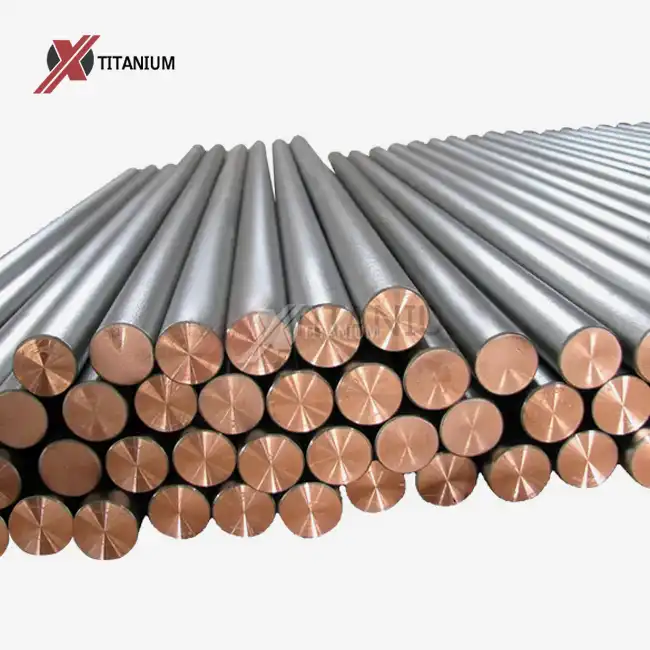
When sourcing titanium clad copper bar for basic applications, understanding quality control measures, estimating structures, and lead times gets to be fundamental for acquisition victory. This comprehensive direct addresses the key contemplations for obtaining these progressed bimetallic materials, centering on the one of a kind combination of titanium's erosion resistance with copper's uncommon electrical conductivity. As a specialized composite fabric, titanium clad copper bars require cautious assessment of fabricating forms, fabric certifications, and provider capabilities to guarantee ideal execution in requesting mechanical applications.
Understanding OEM/ODM Capabilities in Titanium Clad Copper Bar Manufacturing
OEM (Unique Gear Producer) and ODM (Unique Plan Producer) associations speak to basic pathways for securing high-quality metal cladding arrangements. The complexity of metallurgical holding between titanium and copper requests specialized skill that expands past standard fabricating capabilities.
Deep customization things altogether in bimetallic bar applications since each industry requires particular mechanical properties, dimensional resistances, and execution characteristics. Aviation applications prioritize weight lessening and quality, whereas electrical applications center on conductivity and warm extension compatibility. Chemical handling businesses emphasize chemical resistance and strength beneath cruel natural conditions. At Baoji Chuanglian Modern Metal Fabric Co., Ltd., we get it that fruitful acquirement includes more than fabric supply.
Our decade-long encounter in titanium preparing positions us extraordinarily to address the complex necessities of clad metals fabricating. The "City of Titanium" area gives us with unparalleled get to to crude materials and specialized information that specifically benefits our OEM partners.
Our OEM/ODM Strengths in Composite Material Manufacturing
Our manufacturing capabilities extend across multiple dimensions of titanium clad copper bar production. The combination of advanced CNC machine tools and specialized metallurgical expertise enables us to achieve precise bonding strength between dissimilar metals.
Quality control represents a cornerstone of our operations. Every production batch undergoes rigorous hardness testing, bending tests, and hydrostatic pressure evaluations. These comprehensive assessments ensure consistent mechanical properties across all manufactured units. Our strict adherence to AS9100 and ISO9001 standards provides the reliability that aerospace and medical device manufacturers require.
Research and development capabilities distinguish our approach to custom solutions. We collaborate closely with engineering teams to optimize material compositions for specific applications. This includes adjusting titanium thickness ratios, modifying surface treatments, and developing specialized annealing processes that enhance the final product's performance characteristics.
Supply chain stability remains crucial for industrial users operating on tight project schedules. Our established relationships with raw material suppliers and comprehensive inventory management systems minimize delivery risks. The integration of hot rolled, cold rolled, and pickling processes under one facility reduces lead times while maintaining stringent quality standards.
Comprehensive Customization Options for Industrial Applications
Physical design flexibility encompasses diameter ranges from 10mm to 200mm and length specifications from 500mm to 3000mm. Titanium thickness variations between 0.1mm and 2mm allow for precise engineering of electrical and thermal properties. These dimensional capabilities support applications ranging from small electronic components to large industrial equipment.
Functional features can be tailored through various surface treatments including bright finishing, polishing, acid cleaning, and sandblasting. Each treatment method affects the material's electroplating characteristics and anodic protection performance. The choice of surface preparation directly impacts the final component's integration into larger assemblies.
Technology integration involves optimizing the metallurgical bonding process for specific operating environments. High-temperature applications require specialized annealing procedures that enhance thermal stability without compromising the copper core's conductivity. Marine environments demand enhanced corrosion resistance through modified pickling processes.
Branding and compliance considerations include material traceability documentation, certification packages, and custom marking requirements. Medical applications particularly benefit from detailed material composition reports and biocompatibility certifications that support regulatory approval processes.
The ODM Advantage in Developing Advanced Bimetallic Solutions
Co-developing new titanium clad copper bar configurations requires deep understanding of both materials science and application requirements. Our ODM approach involves collaborative engineering sessions where customer specifications guide material development processes.
Innovation opportunities emerge when combining traditional titanium processing techniques with modern copper working methods. We have successfully developed specialized bonding procedures that maximize the strength-to-weight ratio while maintaining optimal electrical characteristics. These advances particularly benefit the aerospace and electronics industries where performance margins are critical.
Cost efficiency improvements result from our integrated manufacturing approach. By controlling both the titanium outer layer application and copper core preparation, we achieve material utilization rates that translate into competitive pricing for our customers. The elimination of intermediate processing steps reduces both costs and potential quality variations.
Technical support extends throughout the product development cycle. Our engineering team provides material selection guidance, processing recommendations, and performance optimization suggestions that help customers achieve their design objectives efficiently.
Our Streamlined Customization Process
The customization journey begins with detailed application analysis and material specification review. We evaluate operating temperatures, mechanical stress requirements, electrical conductivity needs, and environmental exposure conditions to recommend optimal material configurations.
Prototyping and sampling phases allow for performance validation before full-scale production commitment. We typically produce test samples within 2-3 weeks, enabling rapid design iteration and verification. This approach minimizes development risks while ensuring final products meet all specified requirements.
Production planning incorporates customer delivery schedules and quality checkpoint requirements. Our project management systems provide real-time visibility into manufacturing progress, allowing for proactive communication about any potential delays or modifications.
Quality assurance checkpoints occur at multiple production stages. Raw material inspection, intermediate processing verification, and final product testing ensure consistent quality delivery. Documentation packages include material certificates, test reports, and traceability records that support customer quality systems.
Strategic Benefits for Your Industrial Operations
Long-term partnership value extends beyond individual purchase transactions. Our commitment to relationship building means consistent material quality, reliable delivery performance, and ongoing technical support that grows with customer needs. Many of our aerospace and chemical industry partners have maintained successful relationships spanning multiple years.
Competitive advantages emerge from access to specialized materials that competitors may struggle to source reliably. The unique properties of properly manufactured titanium clad copper bars can enable product differentiation in demanding markets.
Risk mitigation occurs through our comprehensive quality systems and supply chain management. Multiple backup procedures ensure continuous supply availability even during challenging market conditions. Our location in the "City of Titanium" provides additional supply security that many international suppliers cannot match.
Technical innovation support helps customers stay ahead of evolving industry requirements. Our ongoing research into advanced cladding techniques and material optimization continues to expand the possible applications for these composite materials.
Conclusion
Successful titanium clad copper bar acquirement requires cautious consideration to quality control guidelines, comprehensive understanding of estimating variables, and practical lead time desires. The complexity of these composite materials requests organizations with producers who have both specialized skill and demonstrated track records in requesting applications. Through legitimate provider choice and clear communication of prerequisites, acquirement groups can secure dependable get to to these progressed materials that empower prevalent item execution over numerous businesses. Speculation in quality associations pays profits through reliable fabric execution, diminished supply chain dangers, and continuous specialized bolster that adjusts to advancing venture needs.
Frequently Asked Questions
What quality control measures ensure consistent bonding strength in titanium clad copper bars?
We implement multiple testing protocols including ultrasonic bonding inspection, mechanical peel tests, and metallographic examination. Each production batch undergoes hardness testing across the titanium-copper interface, bending tests to verify structural integrity, and hydrostatic pressure testing for applications requiring pressure resistance. Our quality systems maintain detailed records for each manufacturing step, enabling full traceability and consistent performance delivery.
How do pricing factors vary based on titanium thickness and dimensional requirements?
Pricing reflects the complexity of the metallurgical bonding process and raw material costs. Thinner titanium layers (0.1-0.5mm) require more precise processing control, while thicker applications (1-2mm) involve increased material costs. Larger diameter bars benefit from economies of scale, though custom dimensions may include tooling considerations. We provide detailed quotations that account for volume requirements, delivery schedules, and specific quality certifications needed for your application.
What are typical lead times for custom titanium clad copper bar orders?
Standard configurations typically require 3-4 weeks for production and delivery. Custom specifications may extend lead times to 6-8 weeks depending on material preparation requirements and quality testing protocols. Rush orders can often be accommodated with expedited processing, though this may impact pricing. We recommend early engagement in project planning phases to optimize delivery schedules and ensure material availability aligns with your production requirements.
Partner with Chuanglian for Your Titanium Clad Copper Bar Manufacturing Needs
Chuanglian stands ready to transform your material requirements into high-performance solutions that exceed industry standards. Our comprehensive OEM/ODM capabilities, combined with over ten years of specialized experience, position us as your ideal titanium clad copper bar supplier for demanding applications.
The advantages of partnering with us extend far beyond material supply. You gain access to advanced metallurgical expertise, flexible manufacturing capabilities, and unwavering commitment to quality that supports your success in competitive markets. Our location in Baoji, the renowned "City of Titanium," provides unique advantages in material sourcing and processing knowledge that directly benefit your projects.
Whether you require standard configurations or completely custom solutions, our engineering team collaborates closely with your specifications to deliver optimal results. We understand the critical nature of material performance in aerospace, chemical, medical, and electronic applications where failure is not an option. Ready to explore how our titanium clad copper bar solutions can enhance your next project? Contact us at info@cltifastener.com or djy6580@aliyun.com to discuss your specific requirements with our technical specialists.
References
1. Materials Science and Engineering Handbook: Bimetallic Composite Materials and Their Industrial Applications, 3rd Edition, Published by Industrial Materials Press, 2023
2. Titanium Processing Technology: Advanced Cladding Techniques for High-Performance Applications, Journal of Metallurgical Engineering, Volume 45, Issue 3, 2024
3. Quality Control Standards for Aerospace Material Procurement: A Comprehensive Guide to AS9100 Compliance, Aerospace Manufacturing Institute, 2023
4. Copper-Titanium Composite Materials: Properties, Processing, and Performance Characteristics, International Materials Research Quarterly, Spring 2024 Issue
5. Industrial Procurement Best Practices for Specialized Metal Components, Supply Chain Management Review, Annual Edition 2023
6. Corrosion Resistance and Electrical Conductivity in Clad Metal Systems: Engineering Design Considerations, Chemical Processing Technology Magazine, November 2023
_1748247519019.webp)