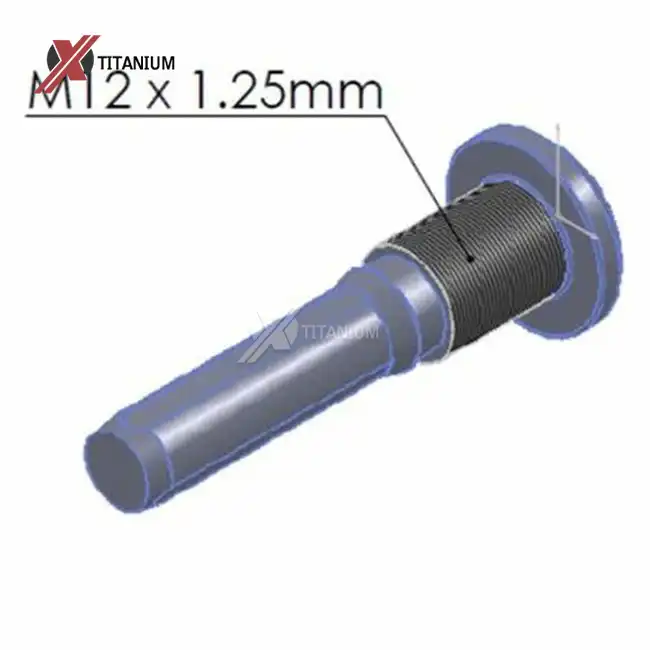
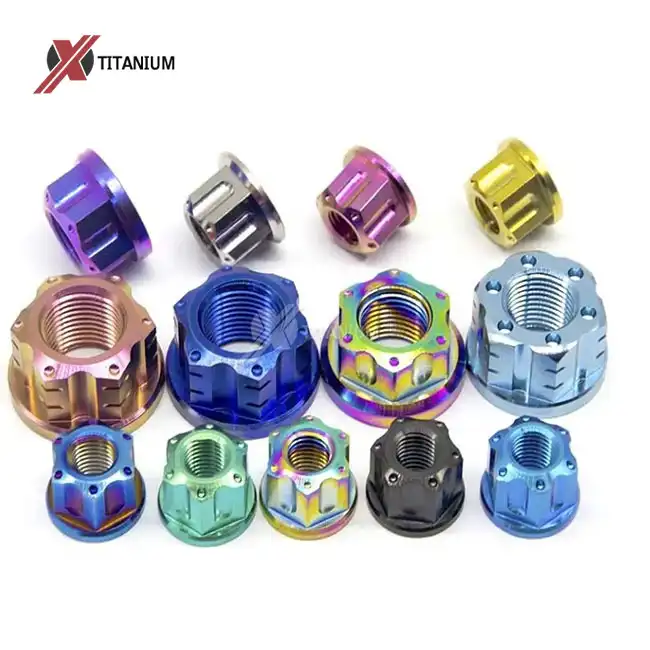
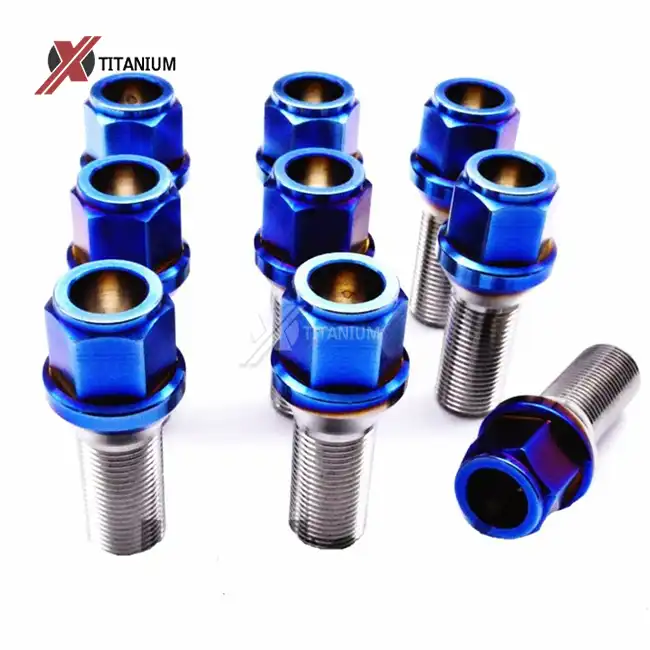
When buying titanium fairing bolts for high-performance uses, it's important to know about material grades, strength ratings, and production standards to make sure you get the right ones. These particular fasteners are very strong for their weight and resist corrosion, which makes them essential in the aerospace, marine, and automotive sectors. This detailed guide looks at important criteria including Grade 5 titanium specs, surface treatments, and supplier certifications to assist engineering teams make smart choices that meet their technical needs and quality standards.
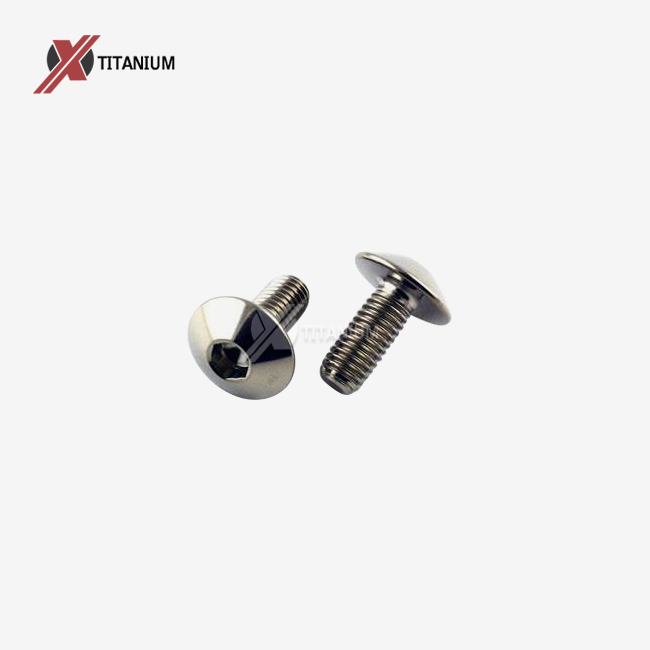
Comprehending Titanium Fairing Bolt Materials and Grades
Choosing the right materials is the most important part of buying titanium bolts. Grade 5 titanium (Ti-6Al-4V) is the most common alloy used for high-performance titanium fasteners because it has the best mechanical qualities for tough jobs. This alpha-beta alloy has 6% aluminum and 4% vanadium in it, which gives it a tensile strength of 130,000 psi and keeps it from becoming tired.
Distinct grades of pure titanium have distinct properties that make them better for certain situations. For chemical processing, commercial pure titanium is great since it doesn't corrode easily, but it's not as strong as alloyed versions. Grade 2 titanium has moderate strength and can be shaped easily. Grade 4 titanium has more strength, almost as much as Grade 5.
Knowing the differences between these materials helps procurement teams choose the right grades depending on what they need to do. Grade 5 is usually needed for structural parts in aerospace applications, however marine conditions could be better off with pure titanium grades, where corrosion resistance is more important than strength.
Critical Performance Specifications for High-Performance Applications
The strength of titanium fairing bolts directly affects how well they work in applications and how long they last. Grade 5 titanium bolts can hold at least 130,000 psi of tensile strength and up to 120,000 psi of yield strength. These characteristics let engineers make bolts smaller while still being able to hold the same amount of weight, which helps with weight loss plans.
When dealing with titanium aviation fasteners, you need to pay close attention to the torque parameters. The material's lower modulus of elasticity than steel changes how preload is calculated and how it is installed. To avoid galling and make sure the joint works as well as possible, proper torque levels are usually 15–20% lower than those of steel fasteners.
Quality titanium hardware is better than cheap alternatives since it can handle fatigue better. Grade 5 bolts that are made correctly have a high-cycle fatigue strength of around 65,000 psi, which is strong enough for important uses where loads are repeated. The quality of the surface finish has a big effect on fatigue life, thus precise manufacturing is important for racing and aerospace applications.
Surface Treatment Options and Their Applications
Anodizing is the most frequent way to treat the surface of titanium bolts. It makes them look better and protects them from rust. Type II anodizing produces thin oxide layers that make the surface more resistant to wear. Type III anodizing makes thicker coatings that can handle hostile environments.
Coating choices improve performance in a wide range of operating circumstances. Physical Vapor Deposition (PVD) coatings make things harder and lower friction, which is very helpful for applications that need to be put together and taken apart quickly. Nitriding treatments go deeper than the surface and create very hard layers that don't get stuck or gall.
Polished finishes are useful and look good at the same time. Mirror polishing lowers the number of stress concentration sites, making the material more resistant to fatigue and giving it a high-quality look that is good for visible uses. Different grades of polish may meet different needs, from utilitarian smoothness to show-quality finishes.
Industry-Specific Requirements and Standards Compliance
Aerospace titanium fairing bolts must meet strict material standards, such as AMS 4928 for Grade 5 titanium and AS9100 quality control systems. These standards make guarantee that the material qualities are always the same, that the materials can be traced, and that the production is controlled, which are all important for flight-critical applications. You need to have material certifications, dimensional reports, and process verification records as part of the documentation requirements.
Testing for corrosion resistance is the most important part of marine engineering applications, according to ASTM standards. Materials that satisfy ASTM B348 standards and have been shown to be resistant to chloride conditions are needed for exposure to seawater. Testing techniques confirm functionality under accelerated corrosion settings that mimic prolonged maritime service.
According to ASTM F136 regulations, medical devices must be certified as biocompatible. Surgical-grade titanium is compatible with human tissue and has the mechanical qualities needed for use in implants. Material purity standards get rid of things that might be hazardous in biological contexts.
Manufacturing Process Considerations
CNC machining is the best way to make precise titanium fasteners. Advanced tools and cutting settings are necessary to operate with titanium since it has certain unusual machining properties, such as limited heat conductivity and the ability to harden when worked. Programming correctly prevents performance from being affected by dimensional variation and surface imperfections.
Heat treatment techniques improve the mechanical characteristics of the whole cross-section of the fastener. Solution treatment and aging cycles build up the strength levels you want while keeping the ductility you need to install without breaking. Keeping the temperature within a restricted range makes sure that the qualities stay the same from batch to batch.
Quality inspection processes make sure that the size and material qualities are correct. Coordinate measuring machines check the size of the head and the parameters for the thread. Mechanical testing checks the strength and hardness requirements. Non-destructive testing procedures find internal flaws that might affect how well the service works.
Supplier Evaluation and Quality Assurance
When choosing a titanium bolt provider, you need to look at more than just the price. The level of complexity of the equipment, the process control systems, and the quality certifications all have a direct effect on how consistent the products are and how reliable the supply is. Most established vendors keep their ISO 9001 certification and add industry-specific ones, such AS9100 for aerospace applications.
The ability to give technical help sets better vendors apart from those that just sell goods. Consulting with engineers when choosing materials, making bespoke dimensions, and giving application-specific advice all contribute a lot of value to the procurement process. Suppliers that know a lot about metallurgy may assist improve standards for certain operating circumstances.
As it is harder to get titanium raw materials, supply chain stability becomes more critical. Suppliers that have enough inventory on hand and have good connections with material manufacturers lower the risks of supply delays caused by changes in the market. Geographic diversity and backup sourcing techniques make important applications even safer.
Cost Considerations and Value Engineering
The price of titanium fairing bolts depends on the cost of the raw materials, how hard they are to make, and how many orders there are. Initial prices are usually 3 to 5 times more than those of steel competitors, but titanium frequently has a higher lifespan value since it requires less maintenance, is lighter, and lasts longer. When doing a total cost study, you should think about the cost of installation, how often you will need to replace it, and the advantages of better performance.
Pricing structures are greatly affected by the amount of anything. Minimum order numbers take into account the expenses of setting up a factory and the savings that come from buying materials in bulk. To prevent having too much inventory while still meeting supplier minimums, you need to carefully estimate demand and work with suppliers.
Optimizing specifications opens up chances for value engineering. To combine performance needs with cost-effectiveness, you may lower unneeded tolerances, make sure that dimensions are the same across applications, and choose the right surface treatments. Supplier collaborations can provide other ways to address technical objectives at lower prices.
Installation Best Practices and Technical Considerations
The best way to install titanium bolts is to use the right tools and procedures. The kind of lubrication you choose will effect both the torque needed to install it and its long-term resistance to corrosion. Anti-seize additives made for titanium prevent galling from happening while maintaining the right preload levels during service exposure.
Because titanium is a different kind of material than steel, the criteria for thread engagement are different. Minimum engagement lengths make sure that the installation is strong enough without making it harder by becoming too involved. Choosing the right tap drill and following the right thread cutting steps keep the size and surface polish of the parts accurate.
When titanium touches other metals, it may cause galvanic corrosion, which is one of the things that has to be taken into account when choosing environmentally friendly materials. Using non-conductive gaskets or coatings to isolate parts inhibits electrochemical processes that speed up corrosion in marine or chemical environments. Choosing the right materials for mating parts needs significant thought to make sure they will work together.
Conclusion
To buy titanium fairing bolts successfully, you need to know about material grades, performance parameters, and supplier capabilities that match the needs of your application. For tough jobs, grade 5 titanium has the best strength-to-weight ratio. With the right surface treatments, it can last longer in a wide range of operating conditions. When choosing a supplier, pricing should not be the only thing that matters. Technical knowledge, quality systems, and a stable supply chain should all be more important. Working with experienced manufacturers makes sure that you can get engineering help and that the quality of the products stays the same, which is important for crucial applications. Investing in high-quality titanium fasteners pays off in the long run by lowering maintenance costs, conserving weight, and making performance more reliable.
Partner with Chuanglian for Premium Titanium Fastener Solutions
Chuanglian makes lightweight titanium hardware with accuracy and has more than 10 years of experience in specialty manufacturing. Our powerful CNC capabilities and rigorous quality processes make sure that your important applications always work the same way. We are a reputable provider of titanium fairing bolts and offer full technical help from choosing the right material to delivery. Contact us at info@cltifastener.com and djy6580@aliyun.com to discuss your specific requirements.
References
1. Boyer, R. R., & Briggs, R. D. (2013). "The Use of β Titanium Alloys in the Aerospace Industry." Journal of Materials Engineering and Performance, 22(10), 2916-2920.
2. Lutjering, G., & Williams, J. C. (2007). "Titanium: Engineering Materials and Processes." Springer Science & Business Media, 2nd Edition.
3. Peters, M., Kumpfert, J., Ward, C. H., & Leyens, C. (2003). "Titanium Alloys for Aerospace Applications." Advanced Engineering Materials, 5(6), 419-427.
4. Donachie, M. J. (2000). "Titanium: A Technical Guide, 2nd Edition." ASM International, Materials Park, OH.
5. Rack, H. J., & Qazi, J. I. (2006). "Titanium Alloys for Biomedical Applications." Materials Science and Engineering: C, 26(8), 1269-1277.
6. Froes, F. H., & Eylon, D. (1990). "Powder Metallurgy of Titanium Alloys." International Materials Reviews, 35(1), 162-182.