- English
- French
- German
- Portuguese
- Spanish
- Russian
- Japanese
- Korean
- Arabic
- Greek
- German
- Turkish
- Italian
- Danish
- Romanian
- Indonesian
- Czech
- Afrikaans
- Swedish
- Polish
- Basque
- Catalan
- Esperanto
- Hindi
- Lao
- Albanian
- Amharic
- Armenian
- Azerbaijani
- Belarusian
- Bengali
- Bosnian
- Bulgarian
- Cebuano
- Chichewa
- Corsican
- Croatian
- Dutch
- Estonian
- Filipino
- Finnish
- Frisian
- Galician
- Georgian
- Gujarati
- Haitian
- Hausa
- Hawaiian
- Hebrew
- Hmong
- Hungarian
- Icelandic
- Igbo
- Javanese
- Kannada
- Kazakh
- Khmer
- Kurdish
- Kyrgyz
- Latin
- Latvian
- Lithuanian
- Luxembou..
- Macedonian
- Malagasy
- Malay
- Malayalam
- Maltese
- Maori
- Marathi
- Mongolian
- Burmese
- Nepali
- Norwegian
- Pashto
- Persian
- Punjabi
- Serbian
- Sesotho
- Sinhala
- Slovak
- Slovenian
- Somali
- Samoan
- Scots Gaelic
- Shona
- Sindhi
- Sundanese
- Swahili
- Tajik
- Tamil
- Telugu
- Thai
- Ukrainian
- Urdu
- Uzbek
- Vietnamese
- Welsh
- Xhosa
- Yiddish
- Yoruba
- Zulu
Can GR5 titanium bolts improve the performance or weight of my bicycle?
There is, of course. There is a big difference between Gr5 titanium bicycle bolts and other bolts. A metal mix called Ti-6Al-4V is used to make these aerospace-grade screws. These are about 45% lighter than steel ones, but they still have the same tensile strength of over 900 MPa. When used with aluminum parts, the Gr5 titanium bicycle bolt stops galvanic reactions and stops rust problems that happen with steel. It also lowers rotational mass in key areas like stems, brake calipers, and cranksets. Elite riders and OEM manufacturers who want stable, high-performance solutions for tough uses really value these benefits. They mean better handling response, better acceleration efficiency, and longer component lifespan.
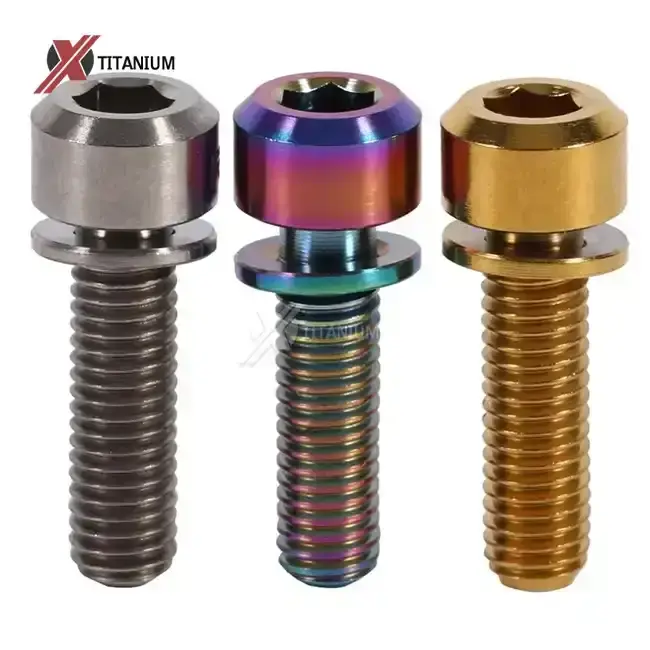
Understanding GR5 Titanium Bicycle Bolts: Specifications and Benefits
Metallurgical Composition and Material Properties
Ti-6Al-4V is the titanium metal that is most often used in the military, science, and high-performance sports. Titanium makes up 90% of the metal, aluminum 6%, and vanadium 4%. It has great dynamic properties because of its alpha-beta phase architecture. This metal is 7.85 g/cm³ lighter than steel (4.43 g/cm³ lighter), but it doesn't lose any of its power. You can pull on this material with 900 to 1,050 MPa of force, and it will give way. Its yield strength is about 880 MPa. It's a good option to Grade 10.9 steel screws, which are used a lot in cars and tools.
Corrosion Resistance and Environmental Durability
When Gr5 titanium is introduced to oxygen, it forms a passive oxide layer (TiO2) that keeps screws from rusting in air, sweat, road chemicals, and salty seas. Titanium screws have a smooth surface that doesn't change over time, while stainless steel bolts can get surface flaking or cavity rust after being wet for a long time. Bicycle business owners who want to sell their goods near the coast or in wet places will find this feature very helpful. Because it keeps the parts looking good for longer, warranty claims about fastener wear are no longer valid.
Comparative Advantages Over Alternative Titanium Grades
Commercially pure Grade 2 titanium doesn't rust very well, but it's not strong enough for bicycle parts that are meant to hold things together because the screws are under a lot of stress. Grade 9 (Ti-3Al-2.5V) is a middle ground option that is easier to make but doesn't meet the mechanical performance standards of grade 5. Ti-6Al-4V is the strongest material in its class, so it is best used for fixing spots where safety is very important, like brake rotor attachments, suspension links, and handlebar clamps. A broken bolt could cause a lot of damage in these places. When the most stability is needed for structural loads, tech teams that make parts for high-end bikes always choose Gr5 over other types.
Comparative Analysis: GR5 Titanium Bolts Versus Alternative Materials
Stainless Steel: Traditional Reliability with Weight Penalties
Industrial standards call for stainless steel screws, especially those made from grades 316 and 304, because they don't rust and work the same way every time. Grade 8.8 steel bolts can pull at least 800 MPa, and they are much less expensive to make than Gr5 titanium bicycle bolt components. But when you add up all the parts that make up a bike, the weight difference is big. Most road bikes have 40 to 60 bolts. Changing the bolts from steel to titanium can remove 150 to 200 grams of weight that isn't needed. When procurement managers look at lifetime costs, they need to know that titanium fittings usually last longer than the parts they hold in place, while stainless screws need to be changed more often in tough environments.
Aluminum Alloys: Lightweight but Structurally Compromised
Aluminum 7075 fasteners made for aircraft use are very light, but they don't work well when there is a lot of pressure on them. The threads might come off during installation or servicing because aluminum doesn't have as much shear strength as steel. This is especially likely for safety-critical parts that need to be torqued to the manufacturer's specs. It's important to be careful with anti-seize and torque control because the material likes to gall when put into metal frames. Titanium is being used more and more by tech teams at high-end bicycle makers for parts that carry weight. Aluminum bolts are only used for looks or to fit bottle lids, where stress levels are low.
Material Selection Across Bicycle Categories
Screws used on mountain bikes need to be strong enough to handle shaking, knocks, and mud damage. Ti is 113 GPa elastic, while steel is 210 GPa elastic. So titanium screws can bend a little. This helps keep the preload tension even when they're moving around all the time. This makes it less likely that the steel screws will come loose. The goal is to cut down on weight as much as possible when used in road races. Titanium is great for stems, seatposts, and brake systems because it has a higher density. Titanium is good for track racing and time trials because it has better aerodynamics. This is because it has smaller fastener head forms and no surface roughness caused by rust, which can slightly raise drag coefficients.
How GR5 Titanium Bolts Improve Bicycle Performance and Weight?
Quantifiable Weight Reduction and Its Cascade Effects
The bike usually weighs 180 to 250 grams less when titanium screws are used instead of steel ones. This depends on the parts and the amount of fixings that are used. When you look at how much the bike weighs all together, this number may not seem like much. But how the weight loss is spread out is important. Rotational inertia is changed by fasteners like chainring nuts, brake rotor mountings, and hub systems that hold parts that spin in place. Lessening mass has a bigger effect on speed than on the resistance to spinning. Competitive riders know that taking 200 grams off the frame and dropping the weight of the wheels by 100 grams both make acceleration better. In other words, changes for smart fasteners are one of the cheapest ways to make things work better.
Structural Integrity Under Cyclical Loading
When metals like those in Gr5 titanium bicycle bolt fasteners are put through the regular changes in stress that happen when you ride a bike, they hold up better than steel. The lab tests show that Ti-6Al-4V keeps its shape after 10 million load cycles at stress levels that would cause wear cracks in steel nuts of the same type. Because they last so long, there are safety holes in places like stem faceplate bolts, where a broken fastener could make the driver lose control of the steering. Good titanium screws are made with rolled threads, which line up the grain structure along the thread lines. This gives engineering teams confidence in the long-term stability and makes the fatigue life over 30% longer than with cut-thread choices.
Real-World Performance Validation
Bicycle teams that fight in the Grand Tour have shown that using titanium screws in their whole bikes makes them perform better. Labs in the cycling business have shown that replacing all of a normal road race bike's fasteners with titanium ones makes it 220 grams lighter while still meeting or exceeding the safety standards set by ISO 4210 for bikes. An OEM that sells high-end goods says that the titanium pin standard is now something that makes their products stick out. Data on purchases shows that customers actively look for this change when they compare models with similar prices.
Procurement Considerations for GR5 Titanium Bicycle Bolts
Quality Certification and Material Traceability Requirements
When procurement managers buy titanium screws to use in bikes, they need to make sure that the sellers keep a lot of quality records. For example, they should keep material test reports (MTRs) that can be traced back to the original mill approvals. The basic standard is to meet ASTM B348 Grade 5. It's also important to check the chemical make-up, mechanical qualities, and size limits against DIN 912, ISO 7380, or the maker's plans. The AS9100 airplane approval lets you know that a supplier has good process controls for uses that need to be safe. Being certified by ISO 9001 means that a supplier does simple checks on quality management. A lot of the time, companies that make medical equipment need extra proof that the material is safe. On the other hand, materials used in bicycles usually need to be industrial-grade and not have to meet any extra cleanliness standards.
Supplier Reliability and Lead Time Management
For a small group of providers, making titanium screws is all they do. This is because making them is so specialized. Because of this, managing relationships with sellers is very important for keeping production going. It takes about 8 to 12 weeks from the time an order is made until the titanium fasteners are delivered. So, procurement teams need to either keep strategic inventory backups or make framework deals with clear dates for when they need to be paid. Adding value to goods through PVD finishing, different head styles, and faster production is something that suppliers can do. This helps businesses when they are making new products or responding to quick changes in demand.
Cost-Benefit Analysis and Pricing Frameworks
Titanium screws are 300% to 600% more expensive than stainless steel ones, so they need to be placed carefully in product placement plans so that they make the most money. Total cost of ownership studies that include longer service life, fewer insurance claims, and no more repairs due to rust, on the other hand, often show a better total cost of ownership. This is especially true for high-end product lines. People who make things can get unit costs that are about 40% lower than small-batch prices when they buy more than 5,000 of a certain item. This makes pricing methods based on numbers look better. If you want to get the best deal, you should work with Gr5 titanium bicycle bolt makers. Their scalable manufacturing infrastructure lets them handle both small runs of samples and large amounts of production.
Maintenance and Longevity of GR5 Titanium Bicycle Bolts
Corrosion Resistance in Harsh Operating Environments
Since air corrosion doesn't affect titanium, steel nuts don't need to be changed as often near the ocean or where salts are used to melt snow. If you break the surface, the inactive oxide layer grows back right away. This stops rust from starting, even if screws get little scrapes or scratches while they are being put in. Marine uses and bicycles that are cleaned often keep their original look and full mechanical qualities between service rounds that last more than one year. This longevity is very helpful for fleet owners and hire services, since the cost of maintenance has a direct effect on how much money the business makes.
Installation Best Practices and Torque Management
If you want to use titanium, it is still very important to make sure you fit it correctly. If you thread titanium against stainless steel or itself, it will tend to gall, so you need to use anti-seize chemicals on all threaded surfaces. Most of the time, recipes without copper are used to avoid electrical problems. Titanium fasteners usually need 10 to 15 percent less force than steel fasteners of the same size. This is because the two materials have different friction coefficients and other properties. Maintenance teams shouldn't use natural torque values made for steel fasteners. Instead, they should use measured torque tools and look at the maker's specs. Thread-locking products that are allowed to work with titanium make it safer in settings with a lot of vibration without making it harder to take apart later.
Inspection Protocols and Service Life Extension
As part of professional repair plans, titanium screws should be visually checked on a regular basis, based on how often they are used. This means checking the contact between the head and the thread and looking for signs of a bad fit, such as thread damage or head deformation. Titanium usually breaks down because of damage from mechanical forces rather than chemical attack. Steel nuts, on the other hand, show clear signs of rust. If they are put together properly, titanium fasteners can last longer than the parts they hold together, and they can be used after many rounds of updates to the parts they hold together. By making them last longer, the total cost of ownership goes down, and people who own a lot of bikes will find it easier to keep them in good shape.
Conclusion
That being said, Gr5 titanium bicycle bolt components are a big step forward for bicycle uses that need to reduce weight, prevent rust, and last a long time. Ti-6Al-4V is 45% lighter than steel, has a tensile strength of over 900 MPa, and can last in almost any setting. This makes it the best material for bolts in high-performance riding. When buying managers think about titanium integration, they should consider how much it will cost over the life of the product, what suppliers need to be able to do, and how valuable it is to have a different product in places where there is a lot of competition. It has been noted by manufacturers and experienced racers that titanium fasteners have technical advantages that make them work better and need less upkeep over time. This keeps guarantees valid.
FAQ
Q1: Are GR5 titanium bolts compatible with all bicycle components?
A: Standard Gr5 titanium bicycle bolts made to DIN 912, ISO 7380, and DIN 7991 can be used with standard steel-fixed bicycle parts because they are the same size. In this business, the thread pitch, head size, and drive sets are all standard, so they can be changed out without any problems. But the torque specs for steel and aluminum are different, so make sure you follow the manufacturer's directions to avoid over-tightening or not having enough preload.
Q2: How much weight can I actually save on a complete bicycle build?
A: Using titanium screws can cut the weight of a bike by 180 to 250 grams, depending on the type of bike and the parts that are used. Top-of-the-line road bikes with about 50 fasteners are lighter, but mountain bikes with suspension links and extra fastening points may weigh more than 250 grams. For better efficiency, lowering the weight of the chainring nuts and rotor bolts that rotate is better than lowering the weight of those that are stationary.
Q3: What certifications should I verify when sourcing titanium bolts?
A: Material compliance to ASTM B348 Grade 5 standards, physical conformance to appropriate DIN or ISO standards, and source quality management certifications like ISO 9001 or AS9100 are some of the most important certifications. If the material test results show what chemicals are in it and how strong it is, you can be sure that it is real Ti-6Al-4V and not a lower-grade copy. Traceability paperwork that links finished screws to their original mill certifications gives even more quality assurance for uses that need it for safety.
Partner with Chuanglian for Premium Titanium Fastener Solutions
When it comes to aerospace-grade Gr5 titanium bicycle bolts, Baoji Chuanglian New Metal Material Co., Ltd. is the best. They have been working with titanium for over ten years. There are strict quality control systems in our plant in Baoji City, which is known all over the world as the "City of Titanium." These systems make sure that every pin meets ASTM B348 Grade 5 standards and keep track of all the materials at all times. OEM bicycle builders, component suppliers, and distributors come to us when they need solid material qualities, predictable lead times, and quick expert help to make new goods and boost production.
The tech team at our company can help you pick out the best fixings for your needs and figure out the best ways to add them to your system. When you need a few samples for testing or a lot of production units for just-in-time manufacturing, you can count on Chuanglian to be your reliable partner. Email our expert sales team at info@cltifastener.com or djy6580@aliyun.com to talk to a skilled Gr5 titanium bicycle bolt person.
References
1. Boyer, R., Welsch, G., and Collings, E.W. (1994). Materials Properties Handbook: Titanium Alloys. ASM International, Materials Park, Ohio.
2. Donachie, Matthew J. (2000). Titanium: A Technical Guide, 2nd Edition. ASM International, Materials Park, Ohio.
3. Schutz, R.W. and Thomas, D.E. (1987). "Corrosion of Titanium and Titanium Alloys." Metals Handbook, Volume 13: Corrosion, ASM International.
4. Lutjering, G. and Williams, J.C. (2007). Titanium, 2nd Edition. Springer-Verlag, Berlin, Germany.
5. American Society for Testing and Materials (2020). ASTM B348-20: Standard Specification for Titanium and Titanium Alloy Bars and Billets. ASTM International, West Conshohocken, Pennsylvania.
6. International Organization for Standardization (2012). ISO 4210-6:2012 Cycles — Safety requirements for bicycles — Part 6: Frame and fork test methods. ISO, Geneva, Switzerland.
Learn about our latest products and discounts through SMS or email