- English
- French
- German
- Portuguese
- Spanish
- Russian
- Japanese
- Korean
- Arabic
- Greek
- German
- Turkish
- Italian
- Danish
- Romanian
- Indonesian
- Czech
- Afrikaans
- Swedish
- Polish
- Basque
- Catalan
- Esperanto
- Hindi
- Lao
- Albanian
- Amharic
- Armenian
- Azerbaijani
- Belarusian
- Bengali
- Bosnian
- Bulgarian
- Cebuano
- Chichewa
- Corsican
- Croatian
- Dutch
- Estonian
- Filipino
- Finnish
- Frisian
- Galician
- Georgian
- Gujarati
- Haitian
- Hausa
- Hawaiian
- Hebrew
- Hmong
- Hungarian
- Icelandic
- Igbo
- Javanese
- Kannada
- Kazakh
- Khmer
- Kurdish
- Kyrgyz
- Latin
- Latvian
- Lithuanian
- Luxembou..
- Macedonian
- Malagasy
- Malay
- Malayalam
- Maltese
- Maori
- Marathi
- Mongolian
- Burmese
- Nepali
- Norwegian
- Pashto
- Persian
- Punjabi
- Serbian
- Sesotho
- Sinhala
- Slovak
- Slovenian
- Somali
- Samoan
- Scots Gaelic
- Shona
- Sindhi
- Sundanese
- Swahili
- Tajik
- Tamil
- Telugu
- Thai
- Ukrainian
- Urdu
- Uzbek
- Vietnamese
- Welsh
- Xhosa
- Yiddish
- Yoruba
- Zulu
How does a high-performance rear axle nut contribute to improved vehicle handling?
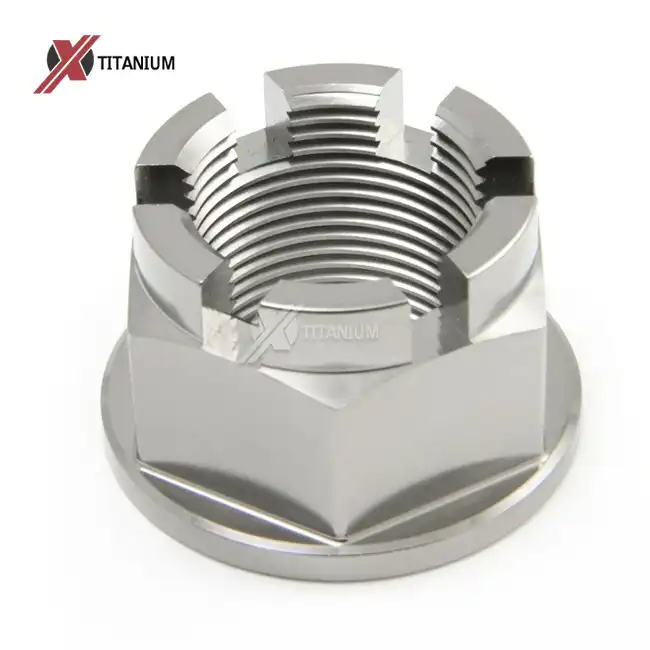
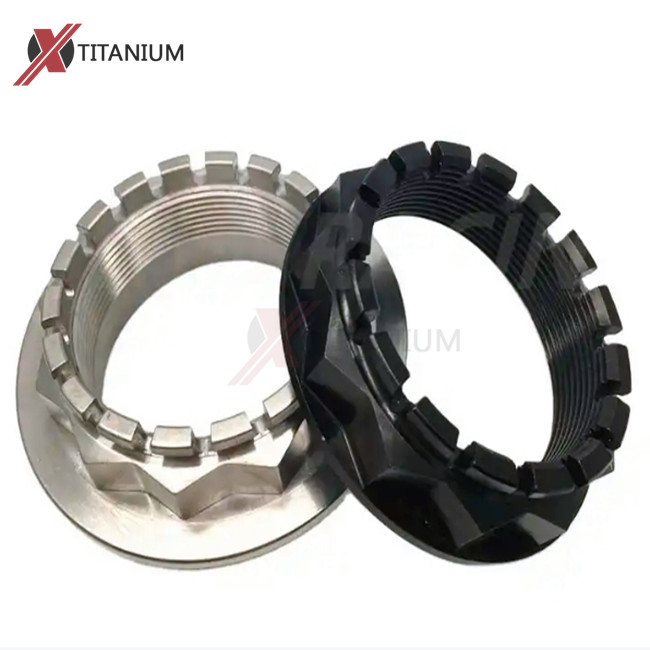
A high-performance rear axle nut contributes to improved vehicle handling by maintaining precise wheel alignment, reducing unsprung mass, and ensuring consistent bearing preload under dynamic loads. The Gr5 Titanium Rear Axle Nut, engineered from Ti-6Al-4V alloy, delivers superior mechanical strength while saving approximately 45% weight compared to steel alternatives. This mass reduction enhances suspension responsiveness, allowing the system to react faster to road imperfections and improving overall stability during cornering and acceleration. Additionally, titanium's exceptional corrosion resistance prevents thread seizure, maintaining torque specifications over extended service intervals.
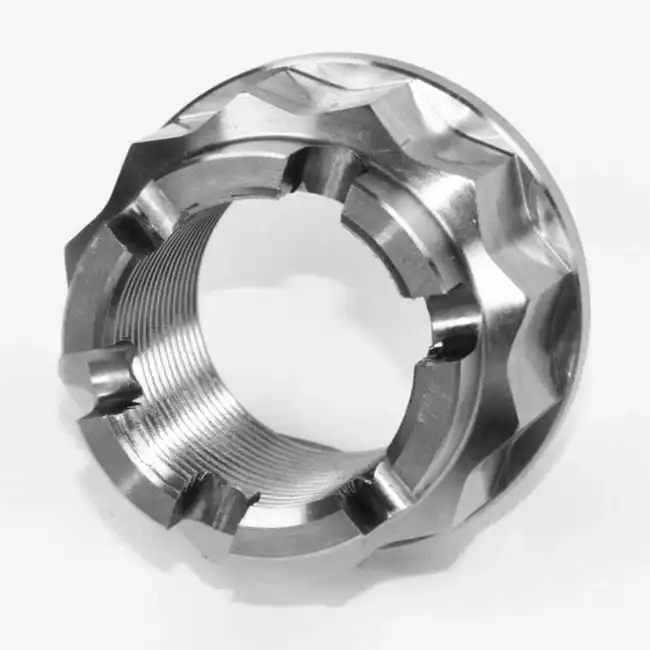
Understanding High-Performance Rear Axle Nuts and Vehicle Handling
Once you know about high-performance rear axle nuts, you'll be able to handle your car better. Putting together a car is already scary, and the rear axle nut keeps the wheel hub in place and makes sure the joints stay healthy. Different types of loads are put on the axle when cars go around turns or on uneven ground. These loads come from shear forces, twisting, and shaking. This much pressure won't bend or come loose on a bolt that is the right size.
The Role of Material Selection in Handling Performance
If you put force on a rear axle nut, the type of material it is made of will affect how well it works. The unsprung mass is the part of the car that isn't supported by the chassis. Traditional steel nuts are strong, but they add extra weight to it. For every gram of extra weight that is added, the suspension has to work harder to keep the tires on the road. Metals made of titanium are a great choice. Titanium, aluminum, and vanadium make up 90% of the formula Ti-6Al-4V. A nanoscale with a tensile strength of at least 895 MPa and a mass of only 4.43 g/cm³ is formed. There is about the same amount of strength to weight as high-grade steel screws, but they weigh about half as much.
How Weight Reduction Enhances Suspension Dynamics?
If you lower the spinning mass at the wheel hub, you can measure that it drives better. There are smaller parts of the suspension that let the car's body move more quickly when it hits a bump or dip. To make sure the car can turn and stop reliably, this keeps the tire contact pressure steady. One of the best ways to get more performance for your money has been known for a long time by racing teams and people who are interested in performance. It takes less time for the axle nut to turn when it is made of precision-machined titanium instead of heavy steel. This makes it easier for the wheel to speed up and slow down when it is moving quickly.
Key Benefits and Specifications of Gr5 Titanium Rear Axle Nuts
Titanium screws that are made to Grade 5 standards have a unique set of properties that make them good for a lot of different tasks. When buying teams are looking for parts that will be used in tough situations, these technological advantages help them make smart decisions.
Superior Mechanical Properties
When it comes to strength, the Gr5 Titanium Rear Axle Nut is as good as or better than many high-strength steel nuts. It is possible for these nuts to handle a lot of pressure without breaking the threads or deforming because they are at least 830 MPa strong and 36 HRC hard. The material stays stable even when it's very cold outside or when it's working at high temperatures. In other words, it can be used in many places. When things are made, CNC cutting is used to get exact thread specs that work with both metric and English units. Instead of cut threads, rolled threads make the material stronger and get rid of stress places where the thread root is. Things that are made this way last longer and don't wear down as easily, which is helpful when they are loaded and moved a lot.
Corrosion Resistance and Longevity
When titanium is in air with oxygen, it makes a steady oxide layer on its own. This passive film doesn't react well with chlorides, road salts, or water, which are all outside forces that can weaken steel rivets and lock them onto threads. With coated or zinc-plated steel nuts, the cover wears off over time, but titanium nuts don't. This is because titanium doesn't rust by nature. Titanium parts can be used for a very long time in military building and places by the sea where they are always exposed to saltwater. It needs less maintenance and service because it lasts longer, so no screws need to be changed.
Surface Treatment Options
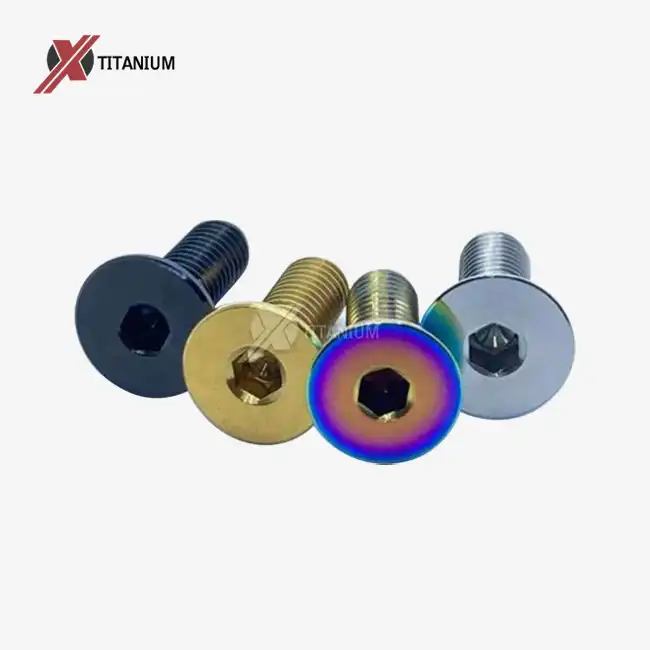
There are different surface treatments that manufacturers give that can make the product look better and work better. When you anodize metal, you make the layer thicker so that you can paint it different colors, like rainbow, blue, purple, gold, and black. The process makes the surface harder, to about 60–70 HV. This makes it less likely to wear down or blister. Nitrogen is spread into the top layer by the nitriding process. This creates titanium nitride molecules that make the material even stronger and less likely to wear down. It's easier to put on and take off things with polished edges because they have a lower coefficient of friction. Tech teams can pick the surface techniques that work best for them with these customization options.
Comparing Gr5 Titanium Rear Axle Nuts with Other Materials
Finding the right material means balancing a lot of things, like how well it works mechanically, how heavy it is, how resistant it is to rust, and how much it will cost over its lifetime. A thorough study explains why titanium metals are becoming more and more popular in places where they are used for performance.
Steel vs. Titanium Performance Analysis
Most of the time, Grade 8.8 or 10.9 common steel nuts are strong enough to pull apart. But steel nuts are almost 80% heavier than titanium nuts because steel has a mass of 7.85 g/cm³. This extra weight changes how the car moves, especially when there are a lot of screws that add to the unsprung mass. Steel needs layers of protection, like zinc plating or cadmium plating, because it rusts quickly. Because they are used in tough conditions, these coats wear off over time, letting rust form that can stop threads and make maintenance harder. The cost savings aren't as big when you think about how often you have to replace steel nuts and how much work it is to take out rusted parts.
Aluminum Alloys: The Lightweight Alternative
The mass of aluminum is about 2.7 g/cm³, which makes it a good choice for cutting weight. The tensile strength of bolts like the Gr5 Titanium Rear Axle Nut, on the other hand, is much smaller, generally topping out at 400–500 MPa. Because of this drawback, fastereners need to be bigger to have the same binding force, which takes out some of the weight savings. If you put aluminum against steel or other aluminum parts, it will rust, which is another problem. It also grows bigger when hot than steel or titanium, which might make it harder to keep the force even when the temperature changes. Even though it is lighter, metal is not as good for improving things that need to be safe because of these reasons.
Lifecycle Value Consideration
The cost of getting something is only a small part of the total cost of owning it. When looking at the costs of different fasteners for production cars or fleet use, lifelong research shows that titanium is the best choice. The higher cost at first is usually worth it because fixes caused by rust are avoided, maintenance work is cut down, and performance stays the same over longer service intervals. Automobile brands that cater to wealthy people know that titanium parts help their names stand out. When something works well and looks good, especially with a metal finish, it backs up claims of advanced engineering and attention to detail in marketing.
Procurement Guide: Sourcing Quality Gr5 Titanium Rear Axle Nuts
To find titanium screws, you need to know both what the seller can do and what the screws are made of. Getting titanium processed in a certain way means picking the right service. This is because the quality of the parts and the security of the supply chain depend on it.
Evaluating Manufacturer Credentials
Titanium part makers have a history of being very good at working with titanium metals and making them precisely. Suppliers should at least be qualified to meet ISO 9001 quality control standards. People who want to buy should look for sellers who have other certifications that are important to their business. For military applications, AS9100 approval may be needed. Medical device companies, on the other hand, need sources that have been checked out by ISO 13485 or FDA rules. It's very important to be able to track the materials used when buying safety-critical screws. Material Test Reports (MTRs) from reliable manufacturers show what chemicals were used, how the product works, and how it was heated in the past for each production lot. This paper work lets buyers make sure the item meets the standards set by ASTM B348 and keeps quality records that meet government requirements.
Customization Capabilities and Production Capacity
Engineers can change the thread specs, measures, and surface processes on parts to make them work better for certain tasks. Manufacturers who use modern CNC machining centers can work with both metric and imperial thread types and keep measurements like hexagonal wrench flats and bearing surface smoothness very close to the truth. Depending on how many sales there are, different things affect how much can be made. Custom motorbike builders might be able to get a few parts with different anodized finishes, but automakers need to be able to get a lot of stock parts all the time. Making it clear about lead times, minimum order amounts, and options for faster production helps providers match the time they can make things with the dates for projects.
Pricing Structure and Long-Term Partnership
It's easier to plan when there are clear price models that take into account things like the number of sales, the cost of supplies, and how hard the process is. People who want to buy something should get detailed prices that include the base material, the methods used to make it, how it will be finished, how it will be tested for quality, and how it will be packed. If you know about these cost drivers, you can bargain better and look for ways to save money. Being able to count on reliable Gr5 Titanium Rear Axle Nut sellers for a long time helps keep supply lines stable and often leads to better prices as order volumes rise. In order for the partnership to work, suppliers may offer technical help during the planning phase and suggest changes that make the product easier to make without lowering its quality.
Installation and Maintenance Best Practices for Optimal Performance
Still, even the best screws need to be put in place and taken care of properly for them to work at their best. By making clear rules, you can stop common problems before they happen and make things last longer.
Proper Installation Procedures
To get the right preload on titanium rear axle nuts, you need to pay attention to how they are put and how much force they need. The OEM torque settings are usually what you should use, but because titanium has a different friction coefficient than steel, you need to use a good anti-seize powder or copper paste on the threads. Galling is a type of cold welding that can happen when titanium hits steel or other titanium surfaces. This grease stops galling and makes sure that the torque-to-preload ratio is right. You must use a torque wrench that has been adjusted for a secure fit. Techs should clean the threads really well before putting something together. They should get rid of any dirt or old oil that might make them fit together less easily. If you use torque in a steady, smooth motion instead of quick jerks, you can get better thread contact and the right loading on the bearing.
Inspection and Maintenance Schedule
When you do regular checks, you can find problems early, before they get worse and put safety or performance at risk. You should visually check the angled wrench flats for signs of damage, wear, or coming loose. If you are doing maintenance, you can tell what state a thread is in by how simple it is to set up. There might be a problem with the thread if there is too much pushback. Stretch bolts only work once, but titanium screws can be used more than once. However, things that lock with nylon elements should be checked often to make sure they are still working right. If you notice a drop in resistance while installing, you can keep the right retaining qualities by changing the locking element.
Addressing Common Installation Challenges
Problems with thread galling happen most often when titanium screws are being put in. When rough surfaces cold-weld under pressure, they cause too much friction, which can damage the thread. If you carefully follow the rules for anti-seize applications, this risk is almost totally eliminated. Two thin, even layers of tape should be put over both the male and female threads before the parts are put together. You should also think about how accurate the force reading is. Since torque tools measure how hard something is to move instead of how much force it holds, changes in friction have a big impact on the results. Using regular ways to lubricate and good torque measuring tools can keep this difference to a minimum. This will also make sure that the bearing setting stays the same across multiple installations.
Conclusion
High-performance rear axle nuts made from Grade 5 titanium, specifically the Gr5 Titanium Rear Axle Nut, make it easier to drive by keeping the car lighter, protecting it from rust, and making sure it always works right. It has the best strength-to-weight ratio when it has a minimum tensile strength of 895 MPa and a mass of 4.43 g/cm³. This makes the suspension more active and lowers the spinning inertia. When put together properly with the right anti-seize compounds and maintained according to the rules, these parts work well for a long time in a lot of tough situations, from professional racing to military engineering. It costs more to buy high-quality titanium screws at first, but they last longer and don't need as much maintenance, so the original cost is worth it. They also keep working well, which makes the car safer and the drive more precise.
FAQ
Q1: What are the torque settings for a Gr5 Titanium Rear Axle Nut?
A: To begin, you should follow the OEM torque guidelines that were set by the car manufacturer. But titanium doesn't stick to steel as well as steel does, so threads need to be cleaned with copper paste or a good anti-seize solution. This grease makes sure that the pressure is changed properly and stops the titanium and steel surfaces from getting galling. If you don't grease properly, the torque numbers might be off. This could mean that there is either too little tightening force or too much torque, both of which are bad for the threads.
Q2: Is the Gr5 Titanium Rear Axle Nut stronger than stock steel nuts?
A: The tensile strength of Titanium Grade 5 is the same as that of Grade 10.9 high-tensile steel bolts, which is between 895 and 1050 MPa. However, it is only half as heavy. Now it's strong enough to be used as an axle in any way in cars and bikes, even when there is a lot of power, like in racing and heavy-duty vehicles. It doesn't wear down easily, so it works well even after being loaded and removed many times, which is how wheel assemblies usually work.
Q3: Will the titanium nut gall or seize onto the steel axle?
A: Titanium can cold join or gall when it is pressed dry against steel or other titanium threads. There is too much friction on the surface, so rough spots stick together when they are pressed together. When you use anti-seize material, it creates a buffer lubricant that stops metal from hitting metal. This keeps galling from happening. This easy safety measure makes sure the fitting goes well and that it's simple to take off to fix.
Q4: Can I reuse the Gr5 Titanium Rear Axle Nut?
A: Stretch bolts are only good for one use, but titanium axle nuts can be used again and again as long as the holes are not broken. If the fitting has a nylon locking ring, you should check the strength of the locking part every so often. If the resistance to installation goes down, the nylon part may need to be changed so that it keeps its strong holding power. If you take good care of titanium screws, you can use them over and over again without losing their strength.
Q5: How does weight saving affect vehicle performance?
A: Unsprung weight is made up of parts that aren't supported by the frame. Getting rid of it is the best way to save weight and improve control. By replacing the big steel nut with a titanium one, the wheel system has less mass that needs to be turned. This lets the suspension parts respond more quickly to road bumps. This extra flexibility keeps the tire contact pressure steady, which makes the car easier to turn, more stable on the brakes, and more fun to drive in general.
Partner with Chuanglian for Premium Titanium Fastener Solutions
As a reliable company that makes Gr5 Titanium Rear Axle Nuts, Baoji Chuanglian New Metal Material Co., Ltd. has been making precision-machined titanium parts for over ten years and has a lot of experience with metals in the "City of Titanium." We have strict quality control measures in place, from checking the raw materials to the final inspection, to make sure that every part meets international standards like ASTM B348. Our many CNC machining services let you choose from different thread sizes, surface finishes, and anodizing options that are made to fit your needs. We want buying managers, study teams, and OEM leaders to get in touch with us to talk about how our titanium fastener choices can make your product work better. You can email our experts at info@cltifastener.com or djy6580@aliyun.com to get Material Test Reports, talk about how to make changes, or arrange for a sample to be looked over.
References
1. Davis, J.R. (2006). Titanium: A Technical Guide, 2nd Edition. ASM International, Materials Park, OH.
2. Boyer, R., Welsch, G., and Collings, E.W. (1994). Materials Properties Handbook: Titanium Alloys. ASM International, Materials Park, OH.
3. Gillespie, L.K. (1999). Troubleshooting Manufacturing Processes, Fourth Edition. SME, Dearborn, MI.
4. Bickford, J.H. (2007). Introduction to the Design and Behavior of Bolted Joints: Non-Gasketed Joints, Fourth Edition. CRC Press, Boca Raton, FL.
5. Schutz, R.W. and Watkins, H.B. (1998). "Recent Developments in Titanium Alloy Application in the Energy Industry," Materials Science and Engineering A, Vol. 243, pp. 305-315.
6. Budinski, K.G. (1991). "Tribological Properties of Titanium Alloys," Wear, Vol. 151, No. 2, pp. 203-217.
Learn about our latest products and discounts through SMS or email