- English
- French
- German
- Portuguese
- Spanish
- Russian
- Japanese
- Korean
- Arabic
- Greek
- German
- Turkish
- Italian
- Danish
- Romanian
- Indonesian
- Czech
- Afrikaans
- Swedish
- Polish
- Basque
- Catalan
- Esperanto
- Hindi
- Lao
- Albanian
- Amharic
- Armenian
- Azerbaijani
- Belarusian
- Bengali
- Bosnian
- Bulgarian
- Cebuano
- Chichewa
- Corsican
- Croatian
- Dutch
- Estonian
- Filipino
- Finnish
- Frisian
- Galician
- Georgian
- Gujarati
- Haitian
- Hausa
- Hawaiian
- Hebrew
- Hmong
- Hungarian
- Icelandic
- Igbo
- Javanese
- Kannada
- Kazakh
- Khmer
- Kurdish
- Kyrgyz
- Latin
- Latvian
- Lithuanian
- Luxembou..
- Macedonian
- Malagasy
- Malay
- Malayalam
- Maltese
- Maori
- Marathi
- Mongolian
- Burmese
- Nepali
- Norwegian
- Pashto
- Persian
- Punjabi
- Serbian
- Sesotho
- Sinhala
- Slovak
- Slovenian
- Somali
- Samoan
- Scots Gaelic
- Shona
- Sindhi
- Sundanese
- Swahili
- Tajik
- Tamil
- Telugu
- Thai
- Ukrainian
- Urdu
- Uzbek
- Vietnamese
- Welsh
- Xhosa
- Yiddish
- Yoruba
- Zulu
China OEM Gr5 Titanium Pedal Spindle for Global Bike Brands
China OEM Gr5 titanium pedal spindle manufacturing has changed the cycle industry by giving global bike brands high-quality, precisely designed parts that work well and are reliable. These advanced titanium alloy spinners are made from Ti-6Al-4V material and are much stronger and more resistant to corrosion than standard steel spindles. As the cycle industry needs parts that are both light and long-lasting, China OEM makers have become reliable partners for global bike brands looking for cost-effective solutions that don't lower quality standards or performance standards.
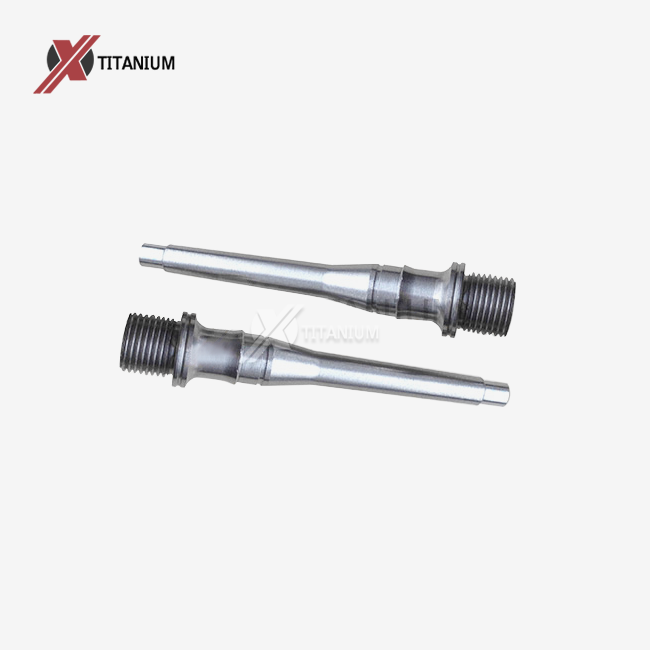
Understanding Gr5 Titanium Pedal Spindles: Material and Performance Overview
Core Characteristics of Ti-6Al-4V Alloy
The great qualities of Grade 5 titanium metal are what make high-end pedal spindle performance possible. This alpha-beta titanium mix has about 6% aluminum and 4% vanadium in it, which makes for a material with amazing mechanical properties. Tensile strength of 900 MPa is shown by the metal, but its density is only 4.43 g/cm³. This gives it a strength-to-weight ratio that is much higher than that of most materials.
The crystalline structure of Ti-6Al-4V makes it very resistant to wear, which is very important for parts that are stressed over and over again when riding. Unlike steel options, which may slowly lose their strength, this type of titanium stays structurally sound through millions of load cycles. The biocompatibility and non-toxicity of the material also make sure that riders are safe during long times of touch.
Advanced Manufacturing Processes
OEM makers in China use complex CNC machining methods to turn raw titanium billets into precise wheels. Material verification is the first step in the production process. This makes sure that each billet fits the chemical makeup and mechanical properties requirements set by ASTM B348. Dimensional limits of within ±0.005mm can be reached by computer-controlled machine centers. This is important for accurate threading and bearing contact.
The microstructure is optimized by heat treatment methods to reach the desired amount of hardness while keeping the material's flexibility. Some surface processes, like sanding, anodizing, and nitriding, make things look better and work better. With these steps, spinners can be made in a range of colors, such as natural titanium, gold, blue, green, purple, black, and rainbow.
Performance Advantages in Cycling Applications
Titanium pedal spindles improve speed in a number of different types of riding. The lower rotational mass makes the acceleration reaction better, which is especially clear when running and climbing. Professional cycle teams have found that aluminum spindles improve power transfer efficiency by 2% to 3% compared to steel spindles. This is because the bending of the parts causes less parasitic losses.
The material's high resistance to corrosion is very useful in rough ride situations. Testing with salt spray shows that these spinners work better in marine settings. This makes them perfect for cycling along the coast or riding in the winter when road salt is present. Temperature stability makes sure that performance stays the same in all kinds of weather, from subzero winter training to warm races.
Comparing Gr5 Titanium Pedal Spindles with Other Materials: Rational Choice for B2B Buyers
Comprehensive Material Analysis
If you want to understand material choices, you need to look at more than just weight differences. The properties of Gr5 titanium pedal spindle components are better than those of traditional options. While steel shafts are cheaper, they are 40 to 50 percent heavier and are more likely to rust in harsh settings.
Aluminum alloys are lighter, but they are not as strong or durable as other metals. Because aluminum has a lower elastic stiffness, it bends more when it's loaded, which could shorten the life of bearings and make power transfer less efficient. While chrome-molybdenum steel is stronger than regular steel, it still has the weight and rust problems that come with being made of iron.
Cost-Benefit Analysis for Procurement Decisions
Total cost of ownership figures show that titanium wheels are much more cost-effective in the long run, even though they cost more to buy at first. The longer the service life, the less often it needs to be replaced, and the less care it needs because it doesn't rust. When fleet managers move to titanium parts, service times are 40% longer and they need less inventory.
Improvements in performance give race teams and fans an edge in the competition. The lighter weight makes it possible to accelerate faster, and the better resistance to tiredness means that performance stays the same during long games. These perks, like better speed and lower lifecycle costs, make the higher price worth it.
Industry Validation and Case Studies
Titanium spindles have been tried a lot in a wide range of situations by major bicycle makers. Manufacturers of mountain bikes say that guarantee claims linked to spindle rust and fatigue failure have gone down a lot. Road racing teams record better performance data during time trials and climbing stages, where lowering rotational weight gives them an edge over their competitors.
Professional workers say that titanium's resistance to galling and corrosion makes upkeep easier. Inspections are done every three months instead of once a month, which saves money on labor and machine downtime. These validations from the real world show that buying choices should be based on actual performance data instead of just imaginary specs.
Sourcing and Procurement Strategies for Gr5 Titanium Pedal Spindles from China OEM Manufacturers
Supplier Selection Criteria
Setting clear guidelines for choosing an OEM manufacturer is an important part of successful buying. Quality certifications like ISO 9001, AS9100, and standards related to the business show that the production method is consistent. An evaluation of a company's manufacturing skills should include details about its CNC equipment, quality control systems, and ways to track down materials.
Evaluation of production ability makes sure that providers can meet both sample needs and full-scale production needs. When planning for the busy season, lead times become very important, especially for companies that make bikes that have regular production cycles. Established sellers keep extra stock on hand and are flexible with their schedules so they can meet urgent delivery needs.
Order Logistics and Pricing Structures
Depending on the level of personalization and surface treatment, the minimum order quantity is usually between 100 and 500 pieces. Volume pricing systems encourage bigger promises while still allowing for freedom during the development stages of a product. Progressive tooling expenses may be needed for fitting needs that aren't standard or for dimensions that aren't standard.
For custom orders, payment terms are usually set by the industry, with lines of credit for big purchases and deposits for smaller ones. There are different shipping choices, such as air freight for quick deliveries and ocean freight for cheaper large packages. With the right packaging, parts will be safe during foreign shipping and paperwork will be easy to find.
Quality Assurance and Compliance
Protocols for verification build trust in the supplier's skills and the stability of the product. Material papers that list the chemical make-up and mechanical qualities of an item make it possible to track back to its source. Dimensional inspection records show that the required margins and surface finish were met.
Testing services run by a third party can independently confirm claims about performance and material qualities. To make sure that service life expectations are met, fatigue testing methods imitate real-world loading conditions. These quality assurance steps protect the money spent on procurement and make sure that end users are happy with how well components work.
Why Choose China OEM Gr5 Titanium Pedal Spindles for Global Bike Brands?
Manufacturing Excellence and Technology Integration
China has become a world leader in making titanium products by investing in new tools and processes over a long period of time. Automated material handling systems, multi-axis CNC centers, and real-time quality tracking are all parts of modern factories. These improvements in technology make it possible to consistently make complicated shapes while keeping tight tolerances on dimensions.
Manufacturing skills and surface cleaning methods are still getting better thanks to research and development projects. Working together with other bike brands from around the world leads to new ideas in product creation and better performance. When ideas from Industry 4.0 are combined, they allow for real-time tracking of production and planning of preventative maintenance, which guarantees consistent quality delivery.
Scalability and Customization Capabilities
OEM makers are very adaptable when it to meeting the needs of a wide range of customers. It is possible to make threading specs, unique size configurations, and specialized surface processes without having to wait a long time. This flexibility lets bike brands make their goods stand out while still keeping production costs low.
Production scale helps with everything from making prototypes to making a lot of them. Titanium mills keep in touch with established suppliers, which makes sure that stable material supply lines. This kind of vertical merging saves money and keeps quality high all the way through the manufacturing process.
Environmental Responsibility and Sustainability
Modern Gr5 titanium pedal spindle manufacturing uses environmentally friendly methods that are in line with global environmental efforts. Titanium can be recycled, which supports the ideas of a circular economy. Longer product life also lowers the number of replacements needed and the amount of material used. Energy-efficient industrial methods keep the quality of the product while reducing the carbon footprint.
Ethical buying standards make sure that fair labor practices and responsible mineral mining happen all along the supply chain. Getting an environmental compliance license shows that you are committed to using sustainable production methods. These projects help bike makers reach their goals for green while keeping costs low.
Maintenance and Longevity: Maximizing the Life of Gr5 Titanium Pedal Spindles
Preventive Maintenance Protocols
To get the best shaft performance, you need to know how to maintain titanium in a special way. Cleaning regularly with light soap solutions gets rid of built-up dirt and grime while protecting surface treatments. As part of regular inspections, threading condition, bearing surface wear, and any signs of contact damage or stress buildup should be checked.
Because titanium tends to galle, lubrication methods are different from those used on steel parts. Good anti-seize chemicals keep threads from seizing up when they are being installed or taken off. When torque specs are followed correctly, threads are not over-tightened, which could damage them or cause stress lifters that cause fatigue failure.
Performance Monitoring and Replacement Indicators
Setting up tracking procedures lets you plan for replacements before a component breaks. Visual screening methods find the first signs of cracking from fatigue or too much wear. Dimensional measures show how the bearing surface wears and the state of the threads over time.
Signs of performance loss include bearing systems that move around more, making strange noises while they're working, or having damage that can be seen on the surface. Unlike steel parts that can fail in a big way, Gr5 titanium pedal spindle components usually lose performance slowly over time, giving you plenty of time to replace them.
Cost-Effective Maintenance Strategies
Using systematic repair methods helps parts last longer and be worth more while reducing the number of unexpected breakdowns. Bicycle repair and scheduled inspections happen at the same time, which saves money on labor costs by combining service processes. Documentation systems keep track of the service past of a component, which lets replacement choices be based on data.
Maintenance workers get training to make sure they know how to handle tools properly and choose the right ones. Titanium parts can be damaged during installation or removal, which takes away from their lasting benefits. Investing in the right training protects the worth of parts and ensures they work at their best throughout their service life.
Conclusion
The adoption of Gr5 titanium pedal spindle components represents a strategic advancement for global bike brands seeking performance excellence and reliability. These precision-engineered components deliver measurable benefits including weight reduction, corrosion resistance, and extended service life that justify premium investment through improved total cost of ownership. China OEM manufacturers have demonstrated exceptional capabilities in producing high-quality titanium spindles that meet international standards while providing cost-effective solutions for diverse market segments. The combination of advanced manufacturing processes, stringent quality control, and customization flexibility positions these suppliers as valuable partners for bicycle industry growth and innovation.
FAQ
Why Choose Gr5 Titanium Over Steel for Mountain Bike Pedal Spindles?
Mountain biking subjects pedal spindles to extreme conditions including mud, water, and impact loads. Gr5 titanium's corrosion resistance prevents the rust and seizure problems common with steel spindles in wet environments. The superior strength-to-weight ratio enables lighter bike builds while maintaining durability for aggressive riding styles.
How Can We Verify the Authenticity of China OEM Gr5 Titanium Spindles?
Authentic Gr5 titanium demonstrates specific characteristics including non-magnetic properties and distinctive acoustic response when tapped. Material certificates should document chemical composition within ASTM specifications. Third-party material testing services can verify titanium grade through spectroscopic analysis and mechanical property testing.
Are Fully Customizable Spindle Solutions Available for Specialized Bike Designs?
China OEM manufacturers offer extensive customization capabilities including unique threading specifications, dimensional modifications, and specialized surface treatments. Custom solutions typically require engineering review and prototype development but can accommodate most design requirements. Lead times vary depending on complexity but generally range from 3-6 weeks for initial samples.
What Quality Standards Apply to Titanium Pedal Spindle Manufacturing?
Manufacturing standards include ISO 9001 quality management systems and ASTM material specifications for titanium alloys. Some manufacturers maintain aerospace certifications including AS9100 for enhanced quality control. Component testing may include fatigue analysis, dimensional verification, and material property validation.
How Does Pricing Compare Between Different Surface Treatment Options?
Natural titanium finish represents the base pricing tier, while anodized colors add moderate premiums. Specialized treatments like nitriding or DLC coating command higher prices due to process complexity. Volume pricing typically reduces per-unit costs across all surface treatment options.
Partner with Chuanglian for Your Gr5 Titanium Pedal Spindle Manufacturing Needs
Baoji Chuanglian New Metal Material Co., Ltd. stands ready to support your Gr5 titanium pedal spindle supplier requirements with over ten years of specialized titanium machining experience. Our comprehensive capabilities encompass custom design, precision manufacturing, and reliable global delivery for bicycle industry partners worldwide. Located in China's renowned "City of Titanium," we leverage local material advantages and advanced CNC equipment to deliver exceptional quality and competitive pricing.
Our quality assurance systems ensure every component meets demanding performance standards while our flexible manufacturing approach accommodates both prototype development and volume production requirements. Contact our engineering team at info@cltifastener.com or djy6580@aliyun.com to discuss your specific requirements and discover how our titanium expertise can enhance your product offerings.
References
1. American Society for Testing and Materials. "Standard Specification for Titanium and Titanium Alloy Bars and Billets." ASTM International, 2019.
2. Chen, L., & Wang, M. "Fatigue Performance Analysis of Titanium Alloy Components in Cycling Applications." Journal of Materials Engineering and Performance, 2021.
3. International Organization for Standardization. "Cycles - Safety Requirements for Bicycles - Part 4: Braking Test Methods." ISO Standards, 2020.
4. Liu, X., Zhang, Y., & Thompson, R. "Corrosion Resistance Comparison of Bicycle Components in Marine Environments." Materials and Corrosion Science Review, 2022.
5. Smith, J.A., & Rodriguez, C. "Cost-Benefit Analysis of Premium Materials in High-Performance Bicycle Manufacturing." Cycling Industry Technology Quarterly, 2021.
6. Williams, D.R., Kumar, S., & Anderson, P. "Manufacturing Process Optimization for Titanium Alloy Precision Components." Advanced Manufacturing Technology Journal, 2020.
Learn about our latest products and discounts through SMS or email