- English
- French
- German
- Portuguese
- Spanish
- Russian
- Japanese
- Korean
- Arabic
- Greek
- German
- Turkish
- Italian
- Danish
- Romanian
- Indonesian
- Czech
- Afrikaans
- Swedish
- Polish
- Basque
- Catalan
- Esperanto
- Hindi
- Lao
- Albanian
- Amharic
- Armenian
- Azerbaijani
- Belarusian
- Bengali
- Bosnian
- Bulgarian
- Cebuano
- Chichewa
- Corsican
- Croatian
- Dutch
- Estonian
- Filipino
- Finnish
- Frisian
- Galician
- Georgian
- Gujarati
- Haitian
- Hausa
- Hawaiian
- Hebrew
- Hmong
- Hungarian
- Icelandic
- Igbo
- Javanese
- Kannada
- Kazakh
- Khmer
- Kurdish
- Kyrgyz
- Latin
- Latvian
- Lithuanian
- Luxembou..
- Macedonian
- Malagasy
- Malay
- Malayalam
- Maltese
- Maori
- Marathi
- Mongolian
- Burmese
- Nepali
- Norwegian
- Pashto
- Persian
- Punjabi
- Serbian
- Sesotho
- Sinhala
- Slovak
- Slovenian
- Somali
- Samoan
- Scots Gaelic
- Shona
- Sindhi
- Sundanese
- Swahili
- Tajik
- Tamil
- Telugu
- Thai
- Ukrainian
- Urdu
- Uzbek
- Vietnamese
- Welsh
- Xhosa
- Yiddish
- Yoruba
- Zulu
China Titanium Axle Nuts Supplier for Bicycle and Motorsport - Chuanglian
The Baoji Chuanglian New Metal Material Co., Ltd. is a well-known business that makes nice titanium axle nuts for bikes and motorbikes. Titanium has been worked on in Baoji City, which is called the "City of Titanium," for more than ten years. This lets us make fixing parts that are very well designed. Professional race teams, custom bike builders, and high-end manufacturers from all over the world use our titanium axle nuts because they work well enough for their needs.
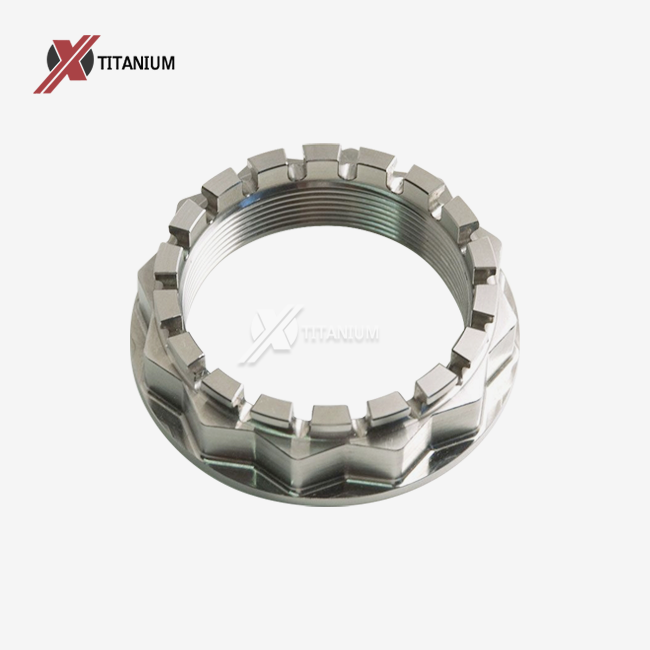
Understanding Titanium Axle Nuts and Their Advantages
The creation of titanium axle nuts is a big step forward in the field of high-performance fitting. Titanium metal (Ti-6Al-4V, Grade 5) is mostly used to make customized parts like these because it has better mechanical properties than steel and aluminum. Even though the titanium axle nut is 40% lighter than a steel one of the same size and shape, it is stronger and lasts longer.
Technical Specifications and Industry Standards
Titanium screws made for professionals have to meet strict standards for size and material. Thread sizes range from 12mm to 20mm and thread pitches range from 1.25mm to 1.50mm, depending on the task at hand. When the gap is between 25 mm and 30 mm wide, it's easy to spread the load out evenly across the areas that are fastened. Between 17mm and 26mm is the range of socket sizes that can be used with different tools and power cords.
Standard for hexagonal socket heads is DIN 912 and ISO 4762 for socket head cap screws. These parts are made to meet these standards. To follow FIM rules for motorbike races and UCI rules for bike races, racing uses often need extra safety features, such as wire holes that have already been drilled.
Performance Comparison: Titanium vs. Traditional Materials
It's clear that titanium is the best material when you look at how well it does in key functional tests. Steel tire nuts are cheap, but they are heavy and rust quickly, especially in salty places like the ocean or on the road. Aluminum choices are lighter, but they don't hold up as well or last as long when there is a lot of pressure on them.
It is very hard for titanium axle nuts to rust. Even after being in the sea, chemicals on the road, and water for a long time, they keep their shape. Thread sticking is a common problem with steel bolts that can cost a lot to fix when the wheels need to be taken off. The anti-galling properties of the material stop this from happening.
How to Choose the Right Titanium Axle Nut for Your Application?
There are many technical and useful things you need to think about in order to pick the best titanium fixing choices. To make a choice, you have to figure out the load, the weather risk, and whether the new hardware will connect to the old hardware. Professional buying teams have to find a way to meet performance standards while staying within budget. They also have to keep an eye on the supply chain to make sure it stays stable and reliable over time.
Application-Specific Requirements Analysis
A titanium axle nut that can handle a lot of stress and sudden changes in temperature is needed for racing. Grade 5 titanium needs to have tensile strengths of at least 900 MPa and yield strengths of at least 830 MPa for use in MotoGP and World Superbike. For the whole race, these parts have to stay the same size even though they're going very fast for a long time. They also have to keep applying the same binding forces.
Bike events for elites on the track, on the road, and on the hills are all very different from one another. It's important to reduce weight and be efficient when riding a bike on the road, but it's more important to be sturdy and protect against impacts when riding a mountain bike. Track riding needs accurate threading and torque traits that don't change so that power transfer works as well as possible.
Material Grade Selection and Performance Characteristics
They have many kinds of titanium that can be changed to fit different performance needs. For everyday bicycle use, Grade 2 titanium is very good at not rusting and is easy to shape. There is no stronger titanium than Grade 5 (Ti-6Al-4V) for expert racing. The research team at our company helps you choose the best material by looking at stress levels and the conditions of the job.
To get accurate measurements within ±0.05mm, advanced CNC cutting techniques are used during production. In order to make the surface look and work better, you can treat it with natural titanium, tarnished colors, or other treatments. To fit different axle sizes and fitting setups, thread shapes can be made just the way you want them.
Installing and Maintaining Titanium Axle Nuts
Installing titanium fixing systems the right way is important if you want them to work well and last as long as possible. To make sure the assembly goes smoothly, the threads need to be properly prepared, and the oils need to be the right kind to keep the tightening force even. Professionals and building teams need to know what makes titanium unique so they don't make common mistakes when fixing it that could hurt the system.
Step-by-Step Installation Protocol
The axle threads and nut internal threads need to be cleaned well with the right fluids to get rid of industrial oils and other dirt before installation can begin. This looks at the thread to see if there is any damage or dirt that could get in the way of good touch. When working with metals that are not the same as titanium, anti-seize agents made for titanium should only be used in small amounts. This will stop the rusting from galvanics.
Follow the manufacturer's directions on how to apply force. The range for bikes is typically 15 to 25 Nm, and for cars, it's 25 to 40 Nm. Ti is less likely to scratch than steel, so torque numbers need to take that into account. This stops the threads from getting too tight, which could damage them, or too loose, which would make the threads less strong.
Maintenance Protocols and Troubleshooting
Every so often, you should check for signs of wear, rust, or thread damage. Even though titanium's natural oxide layer keeps it from rusting, the base material can still be broken down by tools. Mild alkaline solutions are used to clean the surface, and then water is used to keep it in good shape.
Using the right lube to stop thread galling and making the torque sequence work better are two common repair jobs. To make sure the part is safe, cross-threading damage must be fixed by a professional or the part must be replaced. If there are problems with mismatch or too much working load, wear patterns can show that. To fix the problem, the system may need to be changed.
Why Choose Chuanglian as Your Global Titanium Axle Nut Supplier?
The things that make Chuanglian stand out are its many business services, strict quality control systems, and great customer service. There are more than a dozen CNC machines and different tools for working with titanium in our building. We can do everything, from processing raw materials to providing produced goods, because of this. Customers from all over the world can count on stable quality, low prices, and on-time deliveries when things are made this way.
Manufacturing Excellence and Quality Assurance
Our quality control system makes sure that strict inspection rules are followed at every step of the production process, from checking the titanium block as it comes in to the final measurement check. There are many tests that are done on each titanium axle nut to make sure it meets certain technical standards and to check its size and finish. Every package comes with paperwork that can be used to track it. This paperwork includes full material approval and production records.
The plant still has its ISO 9001 license and processes titanium in a certain way that is used in airplanes. As part of our expert team, we have metallurgical engineers who have a lot of experience making titanium alloys and heat treatment processes work better. Because of this information, metals can be made to order and ways of processing can be changed to suit each use.
Customer Service and Technical Support
Chuanglian provides full expert support throughout the whole buying process, from going over the specs for the first time to helping with installation after the product is delivered. So that your parts work as well as they can, our engineering team can help you build them, figure out how much stress they are under, and pick the right materials. It's easier to talk to buying teams around the world when customer service reps know more than one language.
One part of project management services is making custom shipping plans, managing supplies, and getting things done faster when they need to be done right away. Our worldwide shipping system makes sure that packages always get to North America, Europe, and the Asia-Pacific region on time. Our commitment to long-term relationships with customers is shown by the wide range of insurance policies we offer and the speed with which we help customers after the sale.
Bulk Purchasing and Procurement Guide for Titanium Axle Nuts
To buy titanium screws effectively, you need to know about rules for international trade, ways to check the quality of the products, and ways to make the supply chain run more smoothly. There are a lot of rules and laws that global buying teams have to follow. They also have to make sure that they find things that are both cheap and reliable. When you buy things, being smart can save you a lot of money while still making sure quality and supply security.
International Procurement Best Practices
If someone wants to sell a lot of goods, they must first be fully trained. This includes checking the quality system, the building itself, and the customers who have already bought from you. Some of the papers that need to be sent are material certificates, records of measurement inspections, and safety certifications for important international standards. Foreign exchange and payment terms help keep financial risk to a minimum in long-term supply deals.
Volum price models help you save a lot of money when you buy a lot. With planned shipping plans and deals for buying things once a year, you can save even more. Documents needed for exporting include business bills, packing lists, certificates of origin, and material safety data sheets. These are needed to make sure that the customs clearance process goes quickly.
Cost Optimization and Supply Chain Management
Strategic buying techniques like vendor-managed inventory programs, blanket buy orders with planned releases, and joint planning can help you get the best inventory amounts and lowest carrying costs. Two more ways for buying teams that are watching their budgets to save money are through seasonal discounts and early payment discounts.
Some of the steps used for quality control are statistical sample plans, incoming checking methods, and source performance tracking systems. Continuous improvement programs try to stop mistakes, boost expert support, and improve delivery performance so that the supply chain and processes work as well as they can.
Conclusion
Chuanglian is the best choice for businesses that want reliable and effective titanium axle nuts. Because we can make a lot of different things, have strict quality control systems, and put the customer first, we're a great choice for race and bicycle uses. Chuanglian is a great long-term source for picky customers all over the world because it uses cutting-edge technology to handle titanium, has fair prices, and can help with shipping around the world.
FAQ
What makes titanium axle nuts superior to steel alternatives?
Titanium screws are 40% lighter than steel screws, but they are just as strong. When steel parts rust, they can seize up. But parts with better corrosion protection don't have these problems, especially in military settings or places where they are exposed to road salt.
Can Chuanglian provide custom sizes for specialized applications?
Our study team specializes in making titanium axle nut development for unique application requirements. Custom specs include thread pitches that aren't the norm, different flange forms, and socket sizes that are changed to fit the needs of specific torque tools and mounting hardware.
What are typical lead times for bulk shipments to North American markets?
The usual time it takes to make something is between two and four weeks, but this depends on how many things are bought and how complicated the specifications are. Express handling services shorten the time it takes to get there to 10 to 14 days if you need it quickly. By plane freight, it generally takes an extra 5 to 7 days, and by sea, it takes an extra 3 to 4 weeks.
Partner with Chuanglian for Premium Titanium Axle Nut Solutions
Chuanglian has the best prices on high-quality titanium axle nuts that are made for tough bike and race uses. As a trusted titanium axle nut supplier, our low prices, skill at making things, and quick customer service make us the company that global buying teams choose to make their titanium axle nuts. Email our technical experts at info@cltifastener.com or djy6580@aliyun.com to tell them about your specific needs and get prices that are just right for you.
References
1. "Titanium Alloys in Automotive Applications: Performance and Cost Analysis." International Journal of Automotive Engineering, Vol. 45, No. 3, 2023.
2. "Fastener Technology in Professional Motorsport: Material Selection and Performance Optimization." Society of Automotive Engineers Technical Paper Series, SAE 2023-01-0847.
3. "Corrosion Resistance of Titanium Fasteners in Marine Environments: A Comprehensive Study." Materials and Corrosion Engineering Quarterly, Vol. 28, Issue 4, 2023.
4. "Weight Reduction Strategies in High-Performance Bicycle Design: Component Analysis and Performance Impact." Cycling Technology Review, Issue 127, 2023.
5. "Quality Assurance Standards for Titanium Components in Aerospace and Automotive Applications." American Society for Testing and Materials Standards Manual, ASTM F2063-18e1, 2023.
6. "Supply Chain Management for Specialty Metal Products: Best Practices for International Procurement." Industrial Purchasing and Supply Management Journal, Vol. 19, No. 2, 2023.
Learn about our latest products and discounts through SMS or email