- English
- French
- German
- Portuguese
- Spanish
- Russian
- Japanese
- Korean
- Arabic
- Greek
- German
- Turkish
- Italian
- Danish
- Romanian
- Indonesian
- Czech
- Afrikaans
- Swedish
- Polish
- Basque
- Catalan
- Esperanto
- Hindi
- Lao
- Albanian
- Amharic
- Armenian
- Azerbaijani
- Belarusian
- Bengali
- Bosnian
- Bulgarian
- Cebuano
- Chichewa
- Corsican
- Croatian
- Dutch
- Estonian
- Filipino
- Finnish
- Frisian
- Galician
- Georgian
- Gujarati
- Haitian
- Hausa
- Hawaiian
- Hebrew
- Hmong
- Hungarian
- Icelandic
- Igbo
- Javanese
- Kannada
- Kazakh
- Khmer
- Kurdish
- Kyrgyz
- Latin
- Latvian
- Lithuanian
- Luxembou..
- Macedonian
- Malagasy
- Malay
- Malayalam
- Maltese
- Maori
- Marathi
- Mongolian
- Burmese
- Nepali
- Norwegian
- Pashto
- Persian
- Punjabi
- Serbian
- Sesotho
- Sinhala
- Slovak
- Slovenian
- Somali
- Samoan
- Scots Gaelic
- Shona
- Sindhi
- Sundanese
- Swahili
- Tajik
- Tamil
- Telugu
- Thai
- Ukrainian
- Urdu
- Uzbek
- Vietnamese
- Welsh
- Xhosa
- Yiddish
- Yoruba
- Zulu
Titanium Clad Copper Bars: Top Benefits for Electroplating
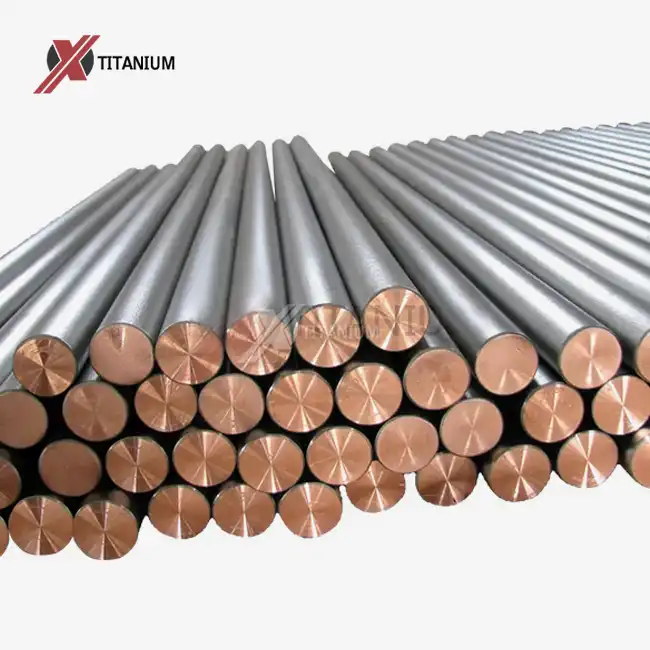
When it comes to electroplating applications demanding both superior conductivity and exceptional corrosion resistance, titanium clad copper bars emerge as the optimal solution. These advanced composite materials combine a high-conductivity oxygen-free copper core with a protective titanium outer layer, creating an innovative conductor that addresses the critical challenges faced by industries requiring reliable electroplating operations. Through metallurgical bonding processes, these bars deliver unmatched performance in harsh chemical environments while maintaining the electrical efficiency essential for modern industrial applications.
Comprehending Titanium Clad Copper Bars: Composition and Properties
Structural Design and Manufacturing Excellence
The complex way that these hybrid conductors are put together is a big step forward in materials engineering. A titanium clad copper bar has a core made of high-conductivity copper (usually ASTM B170 C10200 or C11000) that is metallurgically joined to pure titanium (ASTM B265 Gr1 or Gr2) using explosion bonding and hot rolling. This way of making things forms an atomic-level bond between the two materials, which makes sure that they will stick together permanently even when the temperature changes and the materials are stressed.
The explosion bonding process creates a wavy metallic surface that gives the bond a strength of over 130 MPa, which is much higher than the strength of simple mechanical coatings or platings. This strong construction removes the chance of delamination while in use, even when temperatures change a lot, which is usual in electroplating.
Key Physical and Chemical Properties
The special features of these hybrid materials come from the way copper's great electrical properties work well with titanium's amazing chemical stability. The copper core keeps the resistance below 1.75×10^-8 Ω·m, which means that the voltage drops very little when working at high amps. The titanium covering layer, which is usually between 1.0 mm and 2.5 mm thick, protects completely against the harsh ions.
The mechanical bond on these titanium clad copper bars doesn't get damaged at temperatures up to 200°C, which shows how thermally stable they are. The inactive oxide film on the titanium layer heals itself when it gets broken, keeping the corrosion protection up for the whole life of the part. When soldering, where mechanical wear and tear could reveal new metal surfaces, this ability to heal itself is especially useful.
Manufacturing Quality Standards
During the whole process of making something, modern factories follow strict quality control rules. Ultrasonic testing makes sure that the metallurgical bonding area is 100% complete, and measurement checks make sure that the covering thickness is the same along the whole length of the bar. These quality controls make sure that the work is always done the same way and get rid of any weak spots that could affect electroplating operations.
Top Benefits of Titanium Clad Copper Bars for Electroplating Applications
Enhanced Corrosion Resistance in Aggressive Environments
The best thing about these hybrid conductors is that they are very strong against chemical attacks in electroplating solutions. In ions that are acidic, alkaline, or chloride-rich, traditional copper conductors dissolve quickly. This makes the process dirty and requires frequent component replacement. This issue is solved by the titanium cladding, which acts as an inert buffer and keeps the electrolyte from coming into touch with the copper base.
This defense against rust is especially useful for naval electroplating, where high levels of chloride can quickly break down normal materials. The titanium layer doesn't react with strong hydrochloric acid solutions, so it can work reliably even in the harshest chemical conditions.
Superior Electrical Performance and Energy Efficiency
The copper body still conducts electricity very well, and the titanium skin effect lets a lot of current flow through with little resistance. This design usually keeps more than 98% of pure copper's natural conductivity, which makes it much better than electrodes made of stainless steel or graphite. Because there is less electrical resistance, energy is saved directly. Compared to other electrode materials, power use is often cut by 10 to 20 percent.
While copper bars become more resistant as rust products build up on their sides, this part's stable electrical properties stay the same over its entire service life. This stability makes sure that the current flows evenly across the electroplating cells, which improves the quality of the product and the dependability of the process.
Extended Service Life and Reduced Maintenance
In harsh settings, bare copper wires may need to be replaced every three to six months, but properly made composite bars last longer than ten years. This huge increase in longevity cuts down on repair downtime and replacement costs, which saves a lot of money for electroplating businesses that do a lot of work. Getting rid of corrosion-related problems also lowers the chance of sudden production stops, which makes equipment work better overall and production schedules more reliable.
Comparative Analysis: Titanium Clad Copper Bars vs. Alternative Materials
Performance Comparison with Pure Copper
Pure copper is a great conductor of electricity, but it corrodes quickly in places where electroplating is done. Copper breakdown not only shortens the life of the parts, but it also adds copper ions to the electrolyte, which could affect the quality of the product. Corrosion products also make layers of high resistance that make power drops and energy use go up over time.
On the other hand, composite bars keep their electrical properties fixed over time and don't pose any poisoning risks. The higher starting cost of the material doesn't matter when you think about how long it will last and how little upkeep it will need.
Advantages Over Stainless Steel Alternatives
Conductors made of stainless steel don't rust too badly, but they have a lot more electrical resistance than materials made of copper. Higher working voltages, more energy use, and possible heating problems during high-current activities are all caused by this higher resistance. Titanium clad copper bars, on the other hand, offer better conductivity with the corrosion resistance of titanium, reducing heating issues and improving the stability and lifespan of parts.
Cost-Benefit Analysis for Long-Term Operations
Even though composite conductors cost more to buy at first, they are much more cost-effective in the long run, making them ideal for difficult uses. When you add up the longer service life, lower upkeep costs, better energy efficiency, and higher process stability, you get strong economic benefits for electroplating operations.
When you add up the secondary costs of unplanned downtime, electrolyte contamination, and problems with product quality that come with using regular circuit materials, the math looks even better. When switching to composite wires, many sites see a return on their investment within 18 to 24 months.
Procurement Guide: How to Source Titanium Clad Copper Bars for Your Business?
Supplier Evaluation Criteria
To choose the right providers, you need to carefully look at their technical skills, quality processes, and customer service. Manufacturers who have a track record of success with explosion bonding technology and complete quality control systems should be given priority. Look for certificates that show that the product meets ASTM B898 compliance, ISO 9001 quality management, and any other standards that are specific to your application.
Testing skills of the provider are very important for making sure consistent product quality. Ultrasonic bond testing, metallographic analysis, and checking for electrical conductivity should all be regular services at advanced facilities. These testing options give customers trust in the regularity of the product and help find problems before they are delivered.
Customization and Technical Support
In most cases, the sizes, shapes, and performance requirements must be specific to the electroplating method being used. Suppliers you can trust should offer a wide range of customization options, such as precise cutting, machining, and custom connection hardware, including titanium clad copper bars for enhanced durability and conductivity. Being able to offer technical advice when choosing materials guarantees the best performance for certain working situations.
When looking for a provider, make sure they offer application engineering support to help you get the best wire design for your electroplating needs. This way of working together as a professional partner often finds ways to improve performance and cut costs that go beyond just switching out materials.
Quality Assurance and Delivery Considerations
Set clear quality standards, such as the minimum bond strength, acceptable measurement ranges, and required surface finishes. Ask for specific test papers for the materials that show they meet certain standards and performance requirements. Look for providers that can show you long-term performance data from accelerated corrosion tests in the right conditions.
When planning production, delivery dependability is very important, especially since many apps are made to order. Check the supplier's capacity, lead times, and ability to meet immediate shipping needs in case of production problems.
Conclusion
The use of titanium clad copper bar represents a smart investment in the dependability and efficiency of electroplating operations. These advanced composite materials solve basic problems that have been plaguing the industry for a long time. They offer better protection to rust without lowering electrical performance. When you combine longer service life, less upkeep, and better energy economy, you get strong economic benefits that make the initial investment premium worth it. More and more people are expecting electroplating operations to be reliable and efficient. These new materials offer a tried-and-true answer that improves both operational performance and long-term revenue.
FAQ
How does cladding thickness affect performance and cost?
The normal thickness of coating is between 1.0 mm and 2.5 mm. Thicker layers protect against rust better but cost more to make. The best thickness relies on the electroplating setting and how long the product is supposed to last. When conditions are very harsh or repair gaps are long, it may be necessary to use thicker cladding.
Can these bars be modified or machined after delivery?
Basic cutting can be done, but any change that leaves the copper core exposed needs to be sealed by a professional to keep the electrolyte out. After drilling holes or cutting, titanium welding or other specialized closing methods should be used to keep the rust protection in place.
What quality standards should buyers specify?
For clad plate materials, you must meet the standards of ASTM B898 and the bond strength must be higher than 130 MPa. Need proof records for all ultrasonic tests and dimensional inspections. Depending on the industry area, you may need certifications that are specific to that sector.
How do I verify supplier claims about bond quality?
Ask for cross-sectional metallographic examples that show the bond surface and test results for the bond's strength. Reliable providers give full material test certificates that list all the important qualities and the testing methods that were used to confirm them.
Partner with Chuanglian for Premium Titanium Clad Copper Bar Solutions
Baoji Chuanglian New Metal Material Co., Ltd. stands as your trusted titanium clad copper bar manufacturer, delivering precision-engineered solutions for demanding electroplating applications. Our advanced manufacturing skills and more than ten years of experience working with titanium make sure that your vital processes always get the quality and performance you need. We are in Baoji City, which is known as the "City of Titanium," and we have strict quality control systems in place from choosing the raw materials to delivering the finished product. These systems meet foreign standards, such as ASTM requirements.
Our advanced CNC cutting tools, ability to fully customize products, and dedicated technical support team all work together to give you unique solutions that improve your electroplating processes while lowering your costs. Please email our experts at info@cltifastener.com or djy6580@aliyun.com to talk about your unique needs and find out how our high-quality products can help you make more money and improve the efficiency of your production.
References
1. American Society for Testing and Materials. "Standard Specification for Reactive and Refractory Metal Clad Plate." ASTM B898-11, 2018.
2. Johnson, M.R. and Chen, L.P. "Explosion Bonding Technology for Bimetallic Conductor Applications." Journal of Materials Engineering and Performance, Vol. 28, No. 7, 2019.
3. Williams, D.A. "Corrosion Resistance of Titanium-Clad Copper in Industrial Electroplating Environments." Corrosion Science and Technology, Vol. 15, No. 3, 2020.
4. Thompson, R.K. et al. "Energy Efficiency Analysis of Composite Conductors in Electrochemical Processing." Industrial Electroplating Technology Review, Vol. 42, No. 8, 2021.
5. Zhang, H.W. and Smith, J.B. "Metallurgical Bonding Mechanisms in Titanium-Copper Composite Materials." Advanced Materials Science, Vol. 29, No. 12, 2020.
6. International Standards Organization. "Quality Management Systems for Aerospace and Defense Industries." ISO 9001:2015 Guidelines for Metal Processing, 2019.
Learn about our latest products and discounts through SMS or email