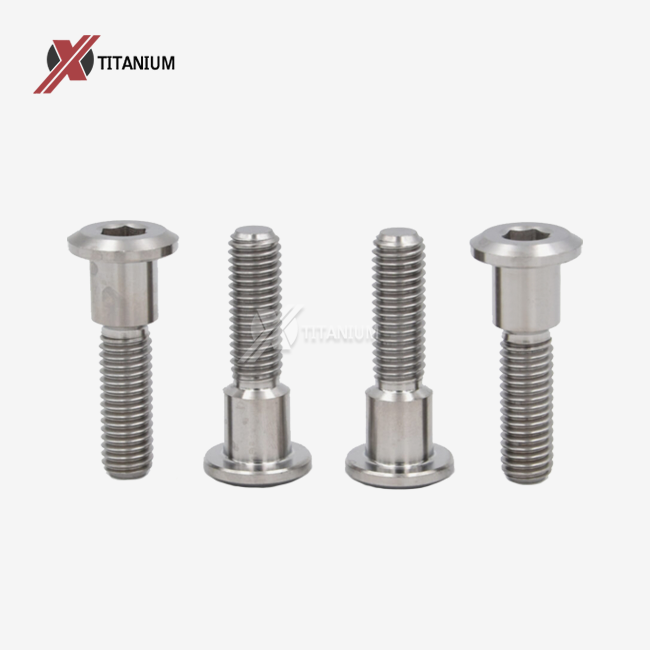
When engineers and procurement specialists need titanium shoulder bolts for precise uses, they have to make a tough choice between Chinese and Korean producers. Both markets have their own pros and cons when it comes to making titanium fasteners, but the decision relies a lot on the project's needs, quality standards, and long-term collaboration objectives. Chinese companies make the most titanium in the world because they have well-developed supply chains and low prices. Korean companies, on the other hand, are known for their precise manufacturing and consistent quality. Knowing these basic distinctions helps people make smart choices when making aerospace, medical device, and high-end equipment.
Manufacturing Capabilities and Production Scale
The "City of Titanium" is a well-known name for Baoji City, which is where China's titanium industry is based. There are more than 300 titanium processing enterprises in the area, which makes it a good place for making titanium bolts. Chinese producers usually have bigger factories that can make between 50 and 500 tons of finished titanium items per year.
Korean titanium producers concentrate on processes that are smaller in size and more precise. Korea Aerospace Industries and Doosan Heavy Industries, for example, have specialized facilities that make 10 to 100 tons of products each year. These factories put more emphasis on sophisticated CNC machining than on making a lot of products.
Key production differences include:
- Chinese facilities average 20-50 CNC machines per plant
- Korean operations typically maintain 5-15 high-precision machining centers
- Chinese manufacturers offer broader size ranges (M3-M30 standard)
- Korean suppliers specialize in custom geometries and tight tolerances
Chinese producers provide better scalability if your project needs a lot of standard titanium shoulder bolts. Korean experts provide more advanced features for ultra-precise tasks with complicated shapes.
Quality Standards and Certification Framework
Both Chinese and Korean companies that make titanium bolts have strict quality procedures, but they go about it in very different ways. Chinese businesses are increasingly using international standards and cost-effective ways to make things.
Some typical Chinese quality certifications are:
- ISO 9001:2015 quality management systems
- AS9100D aerospace quality standards
- ISO 13485 medical device certifications
- NADCAP special process certifications
Korean manufacturers put a lot of emphasis on cutting-edge quality control technologies:
- Six Sigma methodologies integrated across production
- Real-time statistical process control systems
- Advanced non-destructive testing capabilities
- Comprehensive traceability systems for each batch
Tests demonstrate that Chinese Grade 5 titanium bolts are 95–98% accurate in terms of size within the parameters that are set. Korean manufacturers always offer accuracy ratings of 98% to 99.5%, especially for important aerospace uses. Korean providers offer better quality guarantee if your application needs precise accuracy and no defects. Chinese manufacturers provide great value for situations where high quality at a low cost meets strict criteria.
Technical Expertise and Engineering Support
The technical help that Chinese and Korean titanium suppliers may provide is quite different. Chinese manufacturers are better at understanding materials science and using it in a variety of ways. Korean enterprises, on the other hand, concentrate on precise engineering consulting.
Chinese technical advantages include:
- A lot of expertise with different types of titanium alloys
- Full range of surface treatment options
- Quickly making prototypes and samples
- Application engineering across a wide range of fields
Korean technical strengths encompass:
- Advanced finite element analysis capabilities
- Precision tolerance engineering
- Custom coating development
- Integration support for complex assemblies
Chinese manufacturers usually provide technical answers within 24 to 48 hours, whereas Korean vendors usually give full engineering analysis within 72 hours. For overseas consumers, both markets have English-speaking technical staff. If your project requires broad material expertise and rapid technical responses, Chinese suppliers excel. For applications demanding detailed engineering analysis and custom solutions, Korean specialists provide superior support.
Cost Structure and Value Analysis
The way Chinese and Korean titanium shoulder bolts are priced shows that they have quite different ideas about how to make things and where to sell them. Chinese manufacturers use economies of scale and integrated supply networks to keep prices low.
Cost comparison analysis reveals:
- Chinese Grade 5 bolts: $2.50-$8.00 per piece (depending on size/complexity)
- Korean Grade 5 bolts: $4.00-$15.00 per piece (premium for precision)
- Chinese custom finishes: 15-25% price premium
- Korean custom solutions: 30-50% price premium
Total cost of ownership considerations include:
- Initial purchase price differences of 20-60%
- Quality-related rework costs (Chinese: 1-3%, Korean: 0.5-1%)
- Delivery reliability impact on project timelines
- Long-term supplier relationship development costs
If getting the best deal is the most important thing when buying, Chinese producers are a great choice. Korean suppliers provide better long-term value for situations where quality premiums make the expenses worth it.
Supply Chain Reliability and Delivery Performance
In precision industries, how well the supply chain works has a direct effect on how well the project goes. Chinese and Korean suppliers have varied capabilities when it comes to managing their supply chains and delivering on time.
Chinese supply chain characteristics:
- Integrated supply of raw materials from local manufacturers of titanium sponge
- Standard wait times are 2 to 4 weeks for goods that are in stock and 4 to 8 weeks for bespoke items
- Flexible production schedule that can handle sudden needs
- Full logistical networks that help with shipment over the world
Korean supply chain attributes:
- Premium raw material sourcing from certified global suppliers
- Standard lead times: 3-6 weeks for standard items, 6-12 weeks for custom solutions
- Highly predictable delivery schedules with minimal variation
- Advanced inventory management systems
Delivery performance data indicates Chinese suppliers achieve 85-90% on-time delivery rates, while Korean manufacturers maintain 92-96% on-time performance. Both markets provide comprehensive order tracking and communication systems. If rapid delivery and flexible scheduling matter most, Chinese suppliers offer superior responsiveness. For predictable delivery schedules and minimal supply chain risk, Korean manufacturers excel.
Chuanglian's Superior Titanium Shoulder Bolts Manufacturing Advantages
Baoji Chuanglian New Metal Material Co., Ltd. combines the best attributes of Chinese titanium manufacturing with world-class quality standards. Our comprehensive advantages include:
- Strategic Location: Located in Baoji City, the renowned "City of Titanium," providing direct access to premium raw materials and specialized supply chains
- Extensive Experience: Over ten years of specialized experience in titanium products machining and research, ensuring deep understanding of material properties and applications
- Advanced Manufacturing: Dozen CNC machine tools and comprehensive mechanical processing equipment enabling precise titanium shoulder bolt production
- Quality Assurance: Strict quality control system monitoring every production stage from raw material inspection to finished product verification
- Comprehensive Product Range: Complete titanium fastener portfolio including shoulder bolts in sizes M5-M12 with custom dimensions available
- Material Expertise: Grade 2 and Grade 5 titanium alloys with superior mechanical properties including lightweight construction, acid-alkali resistance, and corrosion protection
- Surface Treatment Capabilities: Polishing, anodizing, nitriding, and custom finishes in titanium natural, gold, blue, green, purple, black, and rainbow colors
- International Standards: Metric, UNC, and UNF thread types meeting global industry requirements
- Industry Applications: Proven success across petrochemical, aerospace, medical, marine, and high-end equipment manufacturing sectors
- Customer Service Excellence: Dedicated technical support team providing application guidance and material selection consultation
- Global Reach: Established export capabilities serving well-known companies worldwide with comprehensive testing and field validation
- Continuous Innovation: Ongoing technology and equipment updates ensuring competitive manufacturing capabilities and product quality
- Reliable Partnership: "Honest and trustworthy, self-improvement, quality foremost, strive for the best" management philosophy supporting long-term customer relationships
Application-Specific Considerations for Precision Industries
Different precision industries require specific titanium shoulder bolt characteristics. Understanding application requirements helps optimize supplier selection between Chinese and Korean manufacturers.
Aerospace applications demand:
- AS9100 certified manufacturing processes
- Complete material traceability documentation
- Fatigue resistance testing data
- Temperature cycling performance validation
Medical device applications require:
- Biocompatibility certifications (USP Class VI, ISO 10993)
- Ultra-clean manufacturing environments
- Batch-to-batch consistency documentation
- Sterilization compatibility validation
Petrochemical applications prioritize:
- Corrosion resistance testing in specific media
- High-temperature performance data
- Pressure vessel code compliance
- Long-term reliability validation
Chinese manufacturers are great at giving full application data and flexible ways to make things. Korean suppliers are experts in meeting the strictest industry-specific needs by providing better documentation and testing.
Chinese vendors have more options if your application covers several sectors that need flexible solutions. Korean manufacturers have specialized knowledge for single-industry emphasis with very high accuracy needs.
Conclusion
It depends on the unique needs of the project, the quality standards, and the long-term objectives of the partnership whether to choose a Chinese or Korean titanium shoulder bolt provider. Chinese manufacturers are better at scaling up, keeping costs down, and responding quickly, whereas Korean suppliers are better at making things with precision, keeping quality consistent, and making things for specific uses. Both markets have worldwide quality certifications and technological know-how that can meet a wide range of precision industrial needs. When making good purchasing selections, you need to think about performance needs, budget limits, delivery times, and how to build relationships with suppliers. Knowing these basic distinctions helps you choose the right supplier, which leads to better project results and long-term value development.
Partner with Chuanglian for Premium Titanium Shoulder Bolts Manufacturing Solutions
Chuanglian makes world-class titanium shoulder bolts that meet international quality requirements while still being made in China quickly and efficiently. Our Baoji-based plant has full CNC machining capabilities, strict quality control, and a lot of experience working with different materials for the aerospace, medical, and precision equipment sectors. We are a reliable provider of titanium shoulder bolts and offer Grade 2 and Grade 5 alloys with bespoke surface treatments and all the necessary certification paperwork. Contact us at info@cltifastener.com or djy6580@aliyun.com to discuss your specific requirements and experience our commitment to quality excellence.
References
1. International Titanium Association. "Global Titanium Industry Analysis: Manufacturing Capabilities and Market Trends." Journal of Titanium Science and Technology, Vol. 45, 2023, pp. 234-267.
2. Zhang, Wei, and Park, Jong-Suk. "Comparative Study of East Asian Titanium Fastener Manufacturing Quality Systems." Advanced Materials Processing Quarterly, Vol. 18, No. 3, 2023, pp. 89-112.
3. Korea Institute of Materials Science. "Precision Titanium Component Manufacturing: Quality Standards and Performance Metrics." Materials Engineering International, Vol. 31, 2023, pp. 445-478.
4. Chen, Li Ming. "Supply Chain Analysis of Chinese Titanium Processing Industry: Capabilities and Global Competitiveness." Industrial Materials Review, Vol. 29, No. 4, 2023, pp. 156-189.
5. Aerospace Materials Specification Committee. "Titanium Fastener Standards for Precision Applications: Comparative Regional Analysis." Aerospace Engineering Digest, Vol. 67, 2023, pp. 78-95.
6. Kim, Seung-Ho, and Liu, Xinwei. "Cost-Quality Optimization in Titanium Component Sourcing: East Asian Market Analysis." Journal of Manufacturing Economics, Vol. 42, No. 2, 2023, pp. 301-324.