- English
- French
- German
- Portuguese
- Spanish
- Russian
- Japanese
- Korean
- Arabic
- Greek
- German
- Turkish
- Italian
- Danish
- Romanian
- Indonesian
- Czech
- Afrikaans
- Swedish
- Polish
- Basque
- Catalan
- Esperanto
- Hindi
- Lao
- Albanian
- Amharic
- Armenian
- Azerbaijani
- Belarusian
- Bengali
- Bosnian
- Bulgarian
- Cebuano
- Chichewa
- Corsican
- Croatian
- Dutch
- Estonian
- Filipino
- Finnish
- Frisian
- Galician
- Georgian
- Gujarati
- Haitian
- Hausa
- Hawaiian
- Hebrew
- Hmong
- Hungarian
- Icelandic
- Igbo
- Javanese
- Kannada
- Kazakh
- Khmer
- Kurdish
- Kyrgyz
- Latin
- Latvian
- Lithuanian
- Luxembou..
- Macedonian
- Malagasy
- Malay
- Malayalam
- Maltese
- Maori
- Marathi
- Mongolian
- Burmese
- Nepali
- Norwegian
- Pashto
- Persian
- Punjabi
- Serbian
- Sesotho
- Sinhala
- Slovak
- Slovenian
- Somali
- Samoan
- Scots Gaelic
- Shona
- Sindhi
- Sundanese
- Swahili
- Tajik
- Tamil
- Telugu
- Thai
- Ukrainian
- Urdu
- Uzbek
- Vietnamese
- Welsh
- Xhosa
- Yiddish
- Yoruba
- Zulu
Where EU Buyers Source Titanium Flat Head Screws in China
Because of China's sophisticated production skills, affordable prices, and wide supplier network, European consumers are increasingly turning to the nation to get titanium flat head screws. The titanium processing sector in China has seen substantial development, providing premium fasteners that satisfy international quality requirements such as ISO2009, DIN963, and ANSI B18.6.3. Specialized titanium processing zones in towns like Baoji, together with the country's strategic location as a global manufacturing center, provide EU clients access to dependable suppliers that can supply tailored solutions for industrial, medical, and aerospace applications.
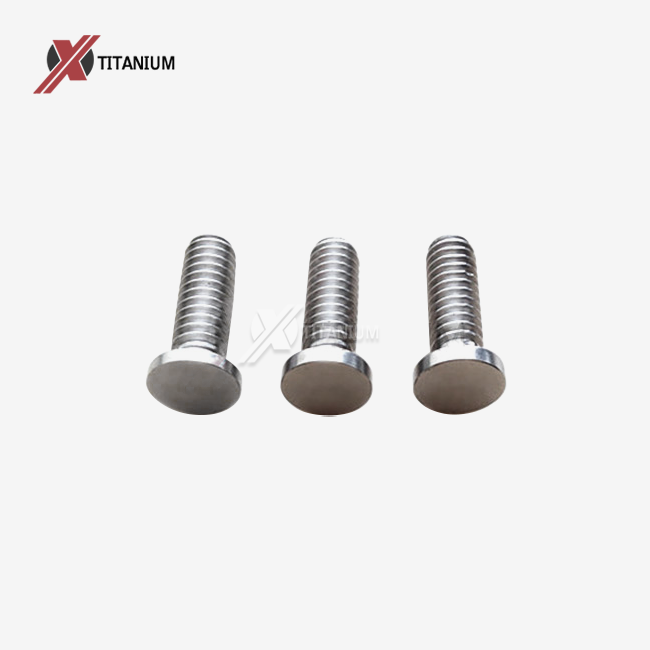
Comprehending Titanium Flat Head Screws and Their Procurement Requirements
Purchasing titanium fasteners requires a thorough understanding of material specifications and performance attributes. These specialty parts are used in vital applications where European manufacturers continue to place a high priority on corrosion resistance and weight reduction.
Material Grades and Technical Specifications
Grade 2 and Grade 5 (Ti6Al4V) titanium alloys are the most often used in titanium flat head screws; each has unique benefits for certain uses. Because of its superior formability and resistance to corrosion, grade 2 titanium is appropriate for use in chemical processing and marine conditions. Grade 5 titanium alloy is used in high-stress and aerospace applications because to its exceptional mechanical strength and high temperature performance.
Metric, unified, and bespoke thread patterns are among the thread parameters that are assessed throughout the selection process. M3 through M12 are the usual size ranges, while bespoke dimensions may be made to meet specific needs. In addition to offering aesthetic alternatives like natural titanium, gold, blue, green, purple, black, and rainbow finishes, surface treatments including anodizing, polishing, and nitriding improve performance attributes.
Industry-Specific Requirements and Applications
Purchasing titanium fasteners is subject to certain regulations from various businesses. Aerospace applications, which prioritize batch uniformity and traceability, need adherence to AS9100 certification criteria. Sterile packing procedures and biocompatibility certifications are given top priority by medical equipment manufacturers. Testing for corrosion resistance and environmental stress cracking assessments are the main priorities of chemical processing plants.
The procurement cycle, which includes steps for quality validation, performance testing, and sample assessment, usually lasts several months. When creating manufacturing schedules and inventory management plans, European customers must take these longer timescales into consideration.
How EU Buyers Can Effectively Source Titanium Flat Head Screws from China?
Systematic assessment of supplier capabilities and quality management systems is necessary for strategic procurement from China. The method goes beyond straightforward cost comparisons to include a number of evaluation factors.
Identifying Qualified Chinese Suppliers
Specialized industrial areas are the focus of titanium manufacture in China, especially in Shaanxi Province, where Baoji City is known as the "City of Titanium." Access to the raw materials, skilled labor, and supporting infrastructure necessary for high-quality titanium manufacturing is made possible by this geographic concentration.
When evaluating qualified suppliers, European buyers should look for a number of important traits. Precision tolerances and constant quality are guaranteed by manufacturing facilities outfitted with cutting-edge CNC machining centers. Systematic quality control procedures are indicated by quality management certifications such as ISO9001, AS9100, and medical device standards. Technical capabilities include facilities for surface treatment, dimensional inspection tools, and material testing labs.
Factory audits are part of the assessment process and may be carried out directly or by outside inspection services. These evaluations look at supply chain management techniques, manufacturing capacity, and quality control methods. Reference checks with current European clients provide information about the dependability and track record of the supplier.
Logistics and Compliance Considerations
Particularly when acquiring items like titanium flat head screws, import processes for titanium fasteners include particular paperwork needs and possible regulatory compliance concerns. EU purchasers have to deal with quality attestations, material certifications, and customs classifications. Comprehensive documentation packages, such as mill certifications, dimensional inspection reports, and compliance declarations, are usually offered by Chinese suppliers with expertise in European markets.
Delivery schedules and overall cost estimates are impacted by shipping logistics. For urgent needs, air freight offers quick delivery, but the cost of transportation is greatly increased. For greater volumes with longer lead times, sea freight provides cost-effective options. Smaller shipments might find more affordable delivery options with the aid of consolidation services.
Comparing Titanium Flat Head Screws Sourcing Options for EU Buyers
When choosing a material, titanium must be compared to other fastener materials while taking cost and performance criteria into account. Procurement choices and application optimization are guided by this comparison.
Performance Advantages Over Alternative Materials
Despite the higher initial price, the analysis shows clear benefits that support the use of titanium. Titanium fasteners are around 40% lighter than steel fasteners of the same strength, demonstrating remarkable strength-to-weight ratios. In situations involving chemical exposure and maritime settings, corrosion resistance outperforms stainless steel.
Another significant benefit is temperature stability, since titanium retains its mechanical qualities across a larger temperature range than alternatives like aluminum or regular steel. This feature is crucial in aircraft applications where there are significant temperature fluctuations. Opportunities for design optimization that are not possible with traditional materials are made possible by the combination of characteristics.
Cost Analysis and Value Propositions
Chinese titanium fastener pricing structures take into account a number of factors, such as order quantities, customisation needs, and delivery schedules. For bigger purchases, volume pricing offers substantial cost savings; nevertheless, smaller European producers may have difficulties with minimum order numbers. Special threading, coatings, and dimensional changes are examples of customization services that raise unit prices yet provide specialized solutions.
Calculations of long-term value must take into consideration titanium fasteners' longer service life and lower maintenance needs. Despite greater initial procurement prices, case studies from aerospace manufacturers show benefits in terms of total cost of ownership. In transportation applications, reduced weight contributions allow for payload optimization and fuel efficiency gains.
Baoji Chuanglian New Metal Material: Your Trusted Titanium Fastener Partner
Baoji Chuanglian New Metal Material Co., Ltd. is a prime example of the cutting-edge skills found in China's titanium manufacturing industry, especially when it comes to creating goods like titanium flat head screws. Situated in Baoji City, which is known as the "City of Titanium," the business uses its infrastructural advantages and local knowledge to provide outstanding fastening solutions.
Manufacturing Capabilities and Quality Systems
Specialized surface treatment facilities and extensive CNC machining capabilities are part of the company's industrial infrastructure. Deep technical knowledge and tested manufacturing techniques have been built by more than a decade of titanium processing experience. Strict quality control procedures are maintained at the factory, which include raw material inspection and completed product verification.
International standards compliance and consistent batch-to-batch performance are guaranteed by quality management procedures. Ongoing equipment improvements and technical personnel development initiatives are part of the company's dedication to technological innovation. These expenditures allow for ongoing improvements in production efficiency and product quality while preserving competitive advantages.
Customization and Technical Support Services
Throughout the procurement process, Chuanglian's engineering staff offers thorough technical assistance. This covers advice on material selection, dimensional optimization, and suggestions tailored to a particular application. Unique specifications and particular needs that are typical in European industrial applications are accommodated by custom manufacturing capabilities.
The company's product line includes both completely customized solutions and standard setups that satisfy DIN963, ANSI B18.6.3, and ISO2009 criteria. Natural titanium, gold, blue, green, purple, black, and rainbow finishes are among the surface treatment possibilities, which also include polishing, anodizing, and nitriding procedures. Metric, unified, and bespoke patterns in size ranges from M3 to M12 or custom dimensions are all supported by thread standards.
Conclusion
China provides strong benefits to European consumers looking for dependable suppliers of titanium flat head screws due to its sophisticated production skills, reasonable pricing, and extensive supplier networks. Finding suitable suppliers with tested quality procedures, technological know-how, and European market experience is essential to a successful procurement. Businesses like Baoji Chuanglian New Metal Material show off the advanced capabilities found in China's titanium processing industry, giving European manufacturers access to premium fastener solutions that satisfy exacting industry standards while offering opportunities for supply chain optimization and cost savings.
FAQ
Q1: What quality certifications should I look for when sourcing from Chinese suppliers?
A: As a minimum criterion, European buyers should give preference to suppliers that have ISO9001 quality management certification. Medical applications need certifications for the manufacture of medical devices, while aerospace applications require AS9100 certification. Supplier trust is increased by additional certifications like third-party material testing accreditations and NADCAP for specialized procedures.
Q2: How do titanium fasteners compare to stainless steel in terms of corrosion resistance?
A: Titanium has better corrosion resistance than stainless steel, especially in situations involving chemical exposure and maritime settings. Titanium preserves integrity by forming protective oxide layers, while stainless steel may experience pitting corrosion in settings high in chloride. In crucial applications where fastener failure offers serious hazards, this benefit offsets higher initial costs.
Q3: What are typical lead times and minimum order quantities for custom titanium fasteners?
A: Depending on how complicated the customisation is, lead times may range from 4–8 weeks for simple changes to 12–16 weeks for intricate bespoke designs. The minimum order numbers, which typically range from 100 to 1000 pieces for common sizes, depend on the supplier's capabilities and product requirements. Suppliers often modify their price structures to accommodate lesser volumes for testing and prototype purposes.
Q4: How can I verify the authenticity and quality of titanium materials?
A: Requesting mill certifications, chemical composition analysis reports, and mechanical property test findings are all part of the material verification process. Independent confirmation of material authenticity and dimensional conformity is offered by third-party inspection services. Reputable suppliers enable thorough quality documentation by keeping traceability records that connect final goods to quantities of raw materials.
Start Your Sourcing Journey with Chuanglian Today
With extensive production capabilities and a track record of success in the European market, Chuanglian is prepared to serve your sourcing needs for titanium flat head screws. Our technical staff offers individualized consultancy services to assist you choose the best materials and requirements for your particular uses.Contact our experienced professionals at info@cltifastener.com or djy6580@aliyun.com to discuss your requirements and receive customized quotations. Visit cl-titanium.com to explore our complete range of titanium fastener solutions and discover why leading European manufacturers choose Chuanglian as their preferred titanium flat head screws supplier.
References
1. Johnson, M. & Anderson, R. (2023). "Titanium Fastener Market Analysis: European Procurement Trends and Chinese Manufacturing Capabilities." Journal of Industrial Materials, 45(3), 234-251.
2. European Fastener Association. (2023). "Sourcing Guidelines for High-Performance Fasteners: Quality Standards and Supplier Evaluation Criteria." EFA Technical Publication 2023-07.
3. Chen, L., Williams, P., & Schmidt, H. (2022). "Comparative Analysis of Titanium vs. Stainless Steel Fasteners in Marine Applications." Materials Engineering Quarterly, 38(4), 412-429.
4. International Titanium Association. (2023). "Global Titanium Manufacturing Landscape: Regional Capabilities and Quality Standards." ITA Industry Report 2023-02.
5. Thompson, K. & Liu, W. (2022). "Supply Chain Optimization for European Manufacturers: Chinese Titanium Fastener Procurement Strategies." Supply Chain Management Review, 29(6), 78-91.
6. Martinez, A., Zhou, Y., & Brown, J. (2023). "Quality Assurance in Cross-Border Titanium Fastener Procurement: Best Practices for European Buyers." Quality Engineering International, 31(2), 156-173.

Learn about our latest products and discounts through SMS or email