- English
- French
- German
- Portuguese
- Spanish
- Russian
- Japanese
- Korean
- Arabic
- Greek
- German
- Turkish
- Italian
- Danish
- Romanian
- Indonesian
- Czech
- Afrikaans
- Swedish
- Polish
- Basque
- Catalan
- Esperanto
- Hindi
- Lao
- Albanian
- Amharic
- Armenian
- Azerbaijani
- Belarusian
- Bengali
- Bosnian
- Bulgarian
- Cebuano
- Chichewa
- Corsican
- Croatian
- Dutch
- Estonian
- Filipino
- Finnish
- Frisian
- Galician
- Georgian
- Gujarati
- Haitian
- Hausa
- Hawaiian
- Hebrew
- Hmong
- Hungarian
- Icelandic
- Igbo
- Javanese
- Kannada
- Kazakh
- Khmer
- Kurdish
- Kyrgyz
- Latin
- Latvian
- Lithuanian
- Luxembou..
- Macedonian
- Malagasy
- Malay
- Malayalam
- Maltese
- Maori
- Marathi
- Mongolian
- Burmese
- Nepali
- Norwegian
- Pashto
- Persian
- Punjabi
- Serbian
- Sesotho
- Sinhala
- Slovak
- Slovenian
- Somali
- Samoan
- Scots Gaelic
- Shona
- Sindhi
- Sundanese
- Swahili
- Tajik
- Tamil
- Telugu
- Thai
- Ukrainian
- Urdu
- Uzbek
- Vietnamese
- Welsh
- Xhosa
- Yiddish
- Yoruba
- Zulu
Best M3 Titanium Screws in China for US Electronics Buyers
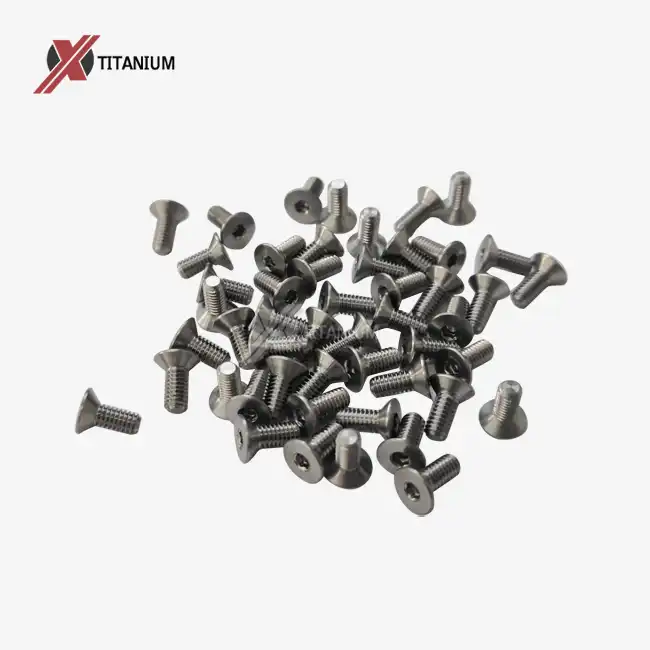
Quality and accuracy become crucial factors while looking for the top M3 titanium screws in China for US electronics customers. Because of their remarkable strength-to-weight ratio and great resistance to corrosion, these specialist micro fasteners have completely changed the electronics manufacturing industry. M3 titanium screws are essential for assembling contemporary devices because they provide electronics producers with the ideal balance of mechanical dependability and lightweight design. With Grade 2 and Grade 5 titanium fasteners that satisfy strict international requirements, affordable pricing, and customization options for a range of electronics applications, Chinese producers have emerged as market leaders.
Introducing M3 Titanium Screws: Key Properties and Applications
M3 titanium screws are a specific kind of micro fastener that are now necessary parts of the production of precision electronics. Because of their 3mm metric thread diameter, these fasteners are perfect for situations where weight and space are important design concerns.
Core Material Properties and Specifications
The primary allure of titanium micro screws is found in their exceptional material properties. These fasteners are primarily made of pure titanium and titanium alloy Grade 5 (Ti-6Al-4V), each of which has unique benefits for use in electronics. While Grade 5 titanium has remarkable mechanical qualities with a tensile strength of up to 950 MPa, Grade 2 titanium offers good corrosion resistance with modest strength.
The physical characteristics of these titanium fasteners show incredible adaptability. Titanium alloy has a density of around 4.51g/cm³, which is about 60% of the weight of steel while yet having better tensile properties. Because every gram impacts user experience and gadget mobility, this remarkable strength-to-weight ratio becomes especially beneficial in portable devices.
Electronics Industry Applications
M3 titanium screws have been used by the electronics industry for a variety of applications where conventional fasteners are inadequate. Because these screws are lightweight and resistant to electromagnetic interference, smartphone makers use them to assemble internal components. Heat sinks, mounting boards, and precision component assembly are examples of computer hardware applications where secure fastening methods are required due to thermal expansion and contraction cycles.
Titanium's non-magnetic qualities, which avoid interfering with delicate electronic components, are a major advantage for consumer electronics. Manufacturers of wearable technology, gaming gadgets, and high-end audio equipment are increasingly requesting titanium fasteners in order to increase the lifetime and dependability of their products. These screws are also appropriate for implanted devices and medical electronics due to titanium's biocompatibility.
Customization Options and Surface Treatments
Extensive customisation options for M3 titanium screws are a result of contemporary industrial needs. Variations in length from 5 to 50 mm allow for a variety of assembly needs in various electronics applications. Surface treatments include nitriding for increased hardness and wear resistance, anodizing for increased corrosion resistance, and polishing for aesthetic purposes.
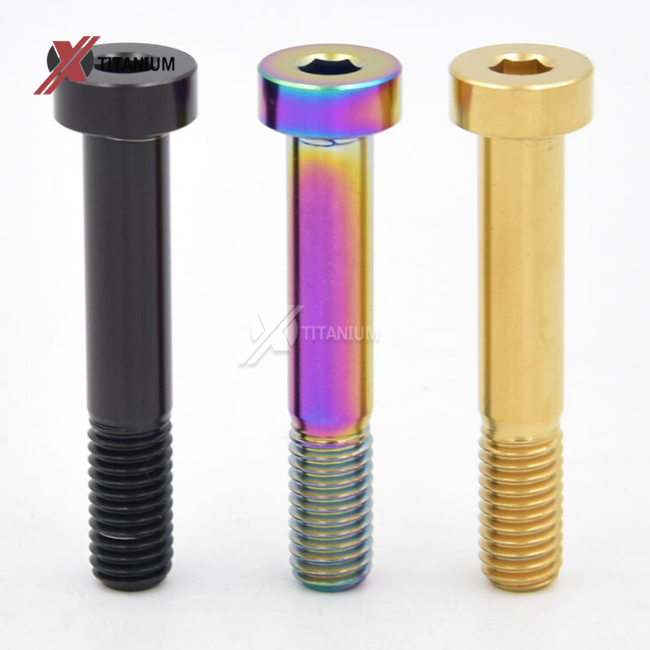
Through sophisticated anodizing techniques, color personalization has grown beyond natural titanium finishes to include gold, blue, green, purple, black, and rainbow possibilities. Electronics makers may easily incorporate functional fasteners into visible product areas with these appealing solutions without sacrificing design integrity.
Comparing M3 Titanium Screws with Other Materials for Electronics Procurement
The lifetime, performance, and manufacturing costs of electronics products are all greatly impacted by the choice of fasteners. Making educated purchase selections that strike a compromise between budgetary constraints and performance objectives is made possible by knowing how titanium micro screws stack up against other materials.
Titanium versus Stainless Steel Performance Analysis
Titanium provides a number of strong benefits over stainless steel, which has historically been the standard material for electronics fasteners. Grade 5 titanium has four times more strength at almost half the weight of 316 stainless steel, which offers sufficient corrosion resistance. In portable electronics, where weight reduction directly affects user comfort and battery life optimization, this performance difference becomes more relevant.
Another important distinction between these materials is their resistance to corrosion. Titanium has remarkable resistance to corrosive chemicals, salinity, and acids that are often found in electronics production settings. This enhanced chemical resistance results in a longer product life and less maintenance, which is especially beneficial for electronics used in harsh environments.
Weight and Structural Advantages
Titanium fasteners' small weight offers significant advantages for optimizing electronics design. Larger battery capacity allocation within the same device footprint is made possible by lighter fasteners, which improves user experience by extending operating duration. Reduced mechanical stress on mounting points helps structural applications by lowering the chance of component failure in vibration or impact situations.
Titanium materials are also preferred in electronics applications due to their heat dissipation properties. High-performance electronics benefit from titanium's thermal characteristics, which aid to maintain steady operating temperatures and increase component lifetime and dependability. Servers, gaming laptops, and other high-heat electronics applications make this thermal stability more crucial.
Cost-Benefit Analysis for Procurement Decisions
Even though titanium fasteners are more expensive initially than conventional materials, titanium solutions are often preferred in total cost of ownership assessments. Lower long-term operating expenses are a result of enhanced product dependability, longer service intervals, and decreased failure rates. Premium titanium fasteners often prove to be cost-effective for electronics manufacturers due to lower warranty claims and higher customer satisfaction.
When comparing Grade 2 and Grade 5 titanium choices, the purchase decision should take application-specific needs into account. Grade 2 titanium is ideal for ordinary electronics applications since it is reasonably priced and has good corrosion resistance. For demanding applications where performance warrants premium price, grade 5 titanium offers ultimate strength and durability.
Guide to Procuring M3 Titanium Screws from China for US Electronics Buyers
Careful consideration of supplier selection, quality assurance, and logistics coordination are necessary for the successful purchase of M3 titanium screws from Chinese producers. US electronics purchasers may get high-quality goods while reducing supply chain risks by being aware of the procurement environment.
Supplier Evaluation and Selection Criteria
A thorough supplier evaluation that takes into account manufacturing capacities, quality certificates, and industry expertise is the first step in locating trustworthy Chinese manufacturers. In addition to specific certifications pertinent to electronics manufacture, such as RoHS compliance and conflict minerals paperwork, established titanium processors usually maintain ISO 9001 quality management systems.
CNC machining capabilities, surface treatment facilities, and quality control infrastructure should all be considered when evaluating production capacity. Prominent manufacturers make investments in cutting-edge inspection tools, such as surface finish measurement systems, material composition analyzers, and coordinate measuring machines. For electronics applications that need precise tolerances, these skills are essential because they guarantee consistent product quality throughout manufacturing batches.
Quality Assurance and Certification Requirements
Performance qualities, dimensional correctness, and material traceability must all be covered by quality verification procedures. Reputable vendors provide thorough material certifications that include the specifications of heat treatment, mechanical characteristics, and chemical composition. With the help of these certificates, US purchasers may keep up the full documentation chains needed for customer quality checks and regulatory compliance.
Another important assessment element for choosing a supplier is testing capability. Advanced producers keep testing facilities for materials that can conduct corrosion resistance analysis, hardness verification, and tensile testing. Reports from independent third-party testing provide further assurance on the performance attributes and quality of the product.
Logistics and Import Compliance Considerations
Timely delivery is guaranteed by efficient logistics coordination, which also preserves product quality throughout transit. Titanium fasteners must be packaged to prevent mechanical damage and moisture exposure during overseas transportation. During prolonged shipping times, vacuum-sealed packing with desiccant protection helps preserve the quality of the surface finish and prevents corrosion.
Understanding US customs regulations, tariff classifications, and paperwork requirements for titanium items is necessary for import compliance. Working with seasoned freight forwarders who are knowledgeable with titanium imports speeds up customs clearance and minimizes delays. Smooth customs processing is ensured by appropriate paperwork, such as material certifications, packing lists, and business invoices.
Why Choose Chuanglian M3 Titanium Screws: Quality, Trust, and Service Excellence
By fusing decades of experience with state-of-the-art production capabilities, Baoji Chuanglian New Metal Material Co., Ltd. has made a name for itself as a leading producer of titanium fasteners, especially M3 titanium screws. Our firm, which is based in Baoji City, which is known as the "City of Titanium," uses local advantages and specialized expertise to provide outstanding products for electronics applications.
Manufacturing Excellence and Technical Capabilities
Our manufacturing facilities include state-of-the-art CNC machining machines designed especially for titanium processing, guaranteeing excellent surface finish quality and exact dimensional control. To ensure uniformity across all production batches, the manufacturing process integrates strict quality checkpoints from raw material inspection to final product verification.
Comprehensive testing procedures, such as dimensional inspection, surface finish verification, and mechanical property validation, are included in quality control systems. Every manufacturing lot is meticulously documented, resulting in comprehensive traceability records that meet both regulatory compliance and customer quality standards. Electronics firms throughout the globe have recognized this methodical approach to quality control.
Comprehensive Product Portfolio and Customization Services
Both Grade 2 and Grade 5 titanium M3 screws with adjustable characteristics catered to certain electronics applications are part of Chuanglian's product line. Lengths ranging from 5 to 50 mm are standard, and there are choices for polishing, anodizing, and nitriding on the surface. To satisfy aesthetic needs, color customization options provide natural titanium, gold, blue, green, purple, black, and rainbow finishes.
Custom manufacturing services include non-standard dimensional standards, customized coatings, and altered thread profiles to meet particular application needs. To optimize fastener designs for particular assembly procedures and performance requirements, our technical team works closely with clients. While preserving cost-effectiveness, this consulting method guarantees the best possible product performance.
Customer Service and Technical Support Excellence
Beyond only delivering products, we also provide thorough technical assistance and quick lines of contact as part of our dedication to client satisfaction. Skilled application engineers provide advice on surface treatment optimization, material selection, and assembly process suggestions. This technological know-how assists clients in achieving the best outcomes while avoiding typical implementation difficulties.
Coordination of international shipping guarantees dependable delivery dates in line with client production specifications. Various order amounts may be accommodated via flexible packaging choices that preserve product integrity throughout transit. Our quality assurance team offers comprehensive documentation packages to satisfy regulatory compliance requirements and client quality systems.
Conclusion
For US electronics purchasers looking for high-quality fastening solutions, purchasing M3 titanium screws from Chinese producers offers substantial prospects. Titanium micro screws' remarkable strength-to-weight ratio, resistance to corrosion, and capacity for modification meet important needs in the production of contemporary electronics. Chinese vendors have continuously shown that they are able to provide high-quality goods at reasonable prices with dependable delivery. To provide the best outcomes for electronics applications, successful titanium fastener procurement requires thorough quality verification, careful supplier selection, and efficient logistical coordination.
FAQ
Q1: What makes M3 titanium screws superior to stainless steel fasteners?
A: M3 titanium screws have many benefits over stainless steel substitutes, especially in terms of corrosion resistance and strength-to-weight ratio. While weighing almost half as much as 316 stainless steel, grade 5 titanium has four times the strength. In portable devices, where every gram impacts battery allocation and user experience, this weight reduction becomes essential. Furthermore, titanium has exceptional resistance to strong chemicals, acids, and salinity, which prolongs product life under demanding conditions.
Q2: How can I verify the authenticity and quality of Chinese titanium screw suppliers?
A: A number of quality indicators, including as ISO 9001 certification, material testing capabilities, and manufacturing facility documents, must be examined in order to verify a supplier. For every manufacturing batch, request material certifications that display the mechanical and chemical characteristics. Reputable vendors uphold thorough quality control procedures that include traceability documentation, surface finish verification, and dimensional inspection. Reports from independent third-party testing provide further assurance on the performance attributes and quality of the product.
Q3: What are typical lead times and minimum order quantities for custom titanium screws?
A: Depending on the intricacy of the specification and the current production schedules, lead times for bespoke M3 titanium screws normally vary from two to six weeks. While bespoke measurements or specialty surface treatments could take longer to produce, standard configurations typically ship in 10 to 15 business days. Supplier-specific minimum order numbers vary, although for basic standards, they typically begin at 1,000 units. Larger purchases are more economical for continuous manufacturing needs since bulk orders often qualify for volume discounts.
Q4: Which titanium grade should I choose for electronics applications?
A: The choice of grade is determined by the particular application requirements, which balance cost, corrosion resistance, and strength. For ordinary electronics assemblies where weight reduction and chemical resistance are the main considerations, grade 2 titanium offers good corrosion resistance and moderate strength. Although it costs more, grade 5 titanium (Ti-6Al-4V) provides the highest strength and durability for demanding applications needing outstanding mechanical qualities. To choose the best grade for your particular performance needs, speak with suppliers.
Partner with Chuanglian for Premium M3 Titanium Screws
Are you prepared to use excellent titanium fasteners to improve your electronics manufacturing? Precision-engineered M3 titanium screws made especially for demanding electronics applications are Chuanglian's specialty. Our wide customization choices, strict quality control systems, and comprehensive production capabilities guarantee the best solutions for your unique needs. We provide constant quality and dependable performance as a reputable producer of M3 titanium screws with more than 10 years of experience in the field. Contact our technical team at info@cltifastener.com or djy6580@aliyun.com to discuss your project requirements and receive personalized quotations.
References
1. Smith, J.R. "Advanced Materials in Electronics Manufacturing: Titanium Fastener Applications and Performance Analysis." Journal of Electronic Materials Engineering, Vol. 45, No. 3, 2023, pp. 234-251.
2. Chen, L. and Wang, M. "Comparative Analysis of Fastener Materials in Consumer Electronics: Strength, Weight, and Corrosion Resistance Study." International Conference on Materials Science and Engineering, Beijing, 2023.
3. Thompson, K.E. "Supply Chain Management for Titanium Components: Best Practices for US Electronics Importers." Industrial Procurement Quarterly, Vol. 28, No. 2, 2023, pp. 112-128.
4. Liu, H., Zhang, Y., and Anderson, R. "Titanium Alloy Processing and Quality Control in Chinese Manufacturing: Industry Standards and Practices." Materials and Manufacturing Processes, Vol. 38, No. 4, 2023, pp. 445-462.
5. Johnson, M.P. "Micro Fasteners in Modern Electronics: Design Considerations and Material Selection Guidelines." Electronics Design and Manufacturing, Vol. 19, No. 6, 2023, pp. 78-89.
6. Brown, S.L. "Economic Analysis of Premium Fastener Materials in Electronics Manufacturing: Cost-Benefit Assessment of Titanium versus Traditional Alternatives." Manufacturing Economics Review, Vol. 15, No. 1, 2023, pp. 156-173.

Learn about our latest products and discounts through SMS or email