- English
- French
- German
- Portuguese
- Spanish
- Russian
- Japanese
- Korean
- Arabic
- Greek
- German
- Turkish
- Italian
- Danish
- Romanian
- Indonesian
- Czech
- Afrikaans
- Swedish
- Polish
- Basque
- Catalan
- Esperanto
- Hindi
- Lao
- Albanian
- Amharic
- Armenian
- Azerbaijani
- Belarusian
- Bengali
- Bosnian
- Bulgarian
- Cebuano
- Chichewa
- Corsican
- Croatian
- Dutch
- Estonian
- Filipino
- Finnish
- Frisian
- Galician
- Georgian
- Gujarati
- Haitian
- Hausa
- Hawaiian
- Hebrew
- Hmong
- Hungarian
- Icelandic
- Igbo
- Javanese
- Kannada
- Kazakh
- Khmer
- Kurdish
- Kyrgyz
- Latin
- Latvian
- Lithuanian
- Luxembou..
- Macedonian
- Malagasy
- Malay
- Malayalam
- Maltese
- Maori
- Marathi
- Mongolian
- Burmese
- Nepali
- Norwegian
- Pashto
- Persian
- Punjabi
- Serbian
- Sesotho
- Sinhala
- Slovak
- Slovenian
- Somali
- Samoan
- Scots Gaelic
- Shona
- Sindhi
- Sundanese
- Swahili
- Tajik
- Tamil
- Telugu
- Thai
- Ukrainian
- Urdu
- Uzbek
- Vietnamese
- Welsh
- Xhosa
- Yiddish
- Yoruba
- Zulu
Chinese Titanium Cotter Pin Factories for German Industry
To satisfy their exacting fastening needs, German industrial sectors are depending more and more on Chinese titanium cotter pin producers. In Germany, the titanium cotter pin is an essential part used in precision manufacturing, chemical processing, automotive, and aerospace industries. Chinese manufacturers have made a name for themselves as trustworthy vendors that can provide premium titanium fasteners that satisfy exacting German industrial requirements. These specialty fasteners are essential for instances where conventional steel substitutes are insufficient because to their remarkable corrosion resistance and lightweight characteristics. The value proposition provided by Chinese firms that combine cutting-edge manufacturing capabilities with aggressive price structures is acknowledged by German procurement teams.
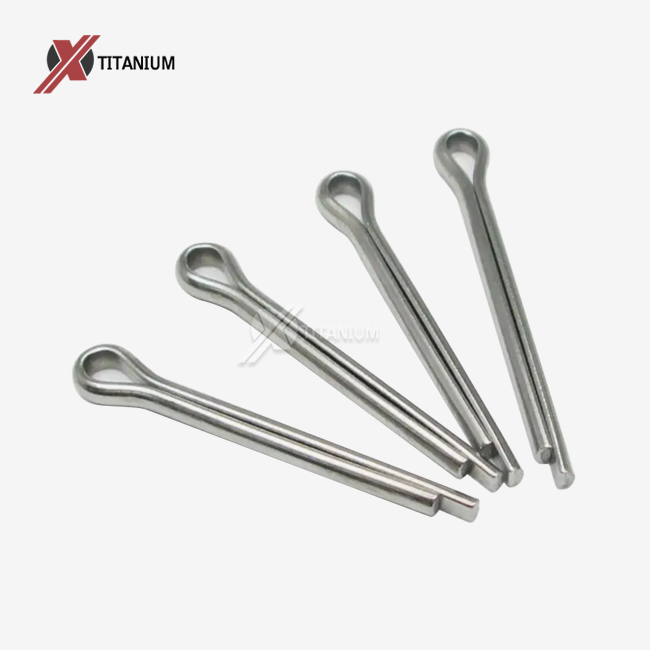
Overview of Titanium Cotter Pins for German Industrial Applications
Because of its outstanding strength-to-weight ratio, excellent corrosion resistance, and superior durability qualities, titanium cotter pins—specialized fasteners—have grown in value in German industrial applications. These pins provide performance benefits over traditional steel or aluminum fasteners, making them especially appropriate for harsh operating settings.
Material Properties and Performance Characteristics
Titanium's special material qualities make these fasteners high-end options for demanding applications. The most often specified materials for industrial cotter pins are titanium Grade 2 and Grade 5 (Ti-6Al-4V), which provide clear benefits in terms of mechanical performance and resistance to the environment.
Pure titanium is ideal for chemical processing and medical device applications because to its exceptional corrosion resistance and biocompatibility. German producers respect the Ti-6Al-4V alloy's lightweight qualities for weight-sensitive applications, but it also offers improved strength characteristics.
Industrial Applications Across German Manufacturing Sectors
Due to performance demands that beyond the capabilities of conventional materials, the German precision manufacturing, automotive, aerospace, and heavy engineering industries have included titanium fasteners into their vital systems. These parts are used in aircraft constructions by the aerospace sector, where weight reduction has a direct influence on operating costs and fuel efficiency.
When corrosion resistance and strength under dynamic loading conditions are critical, automakers use titanium cotter pins in high-performance engines and suspension systems. For equipment subjected to harsh chemical conditions where conventional materials would break too soon, chemical processing plants depend on these fasteners.
Titanium is preferred because of its long service life, which lowers maintenance needs and overall cost of ownership, and its capacity to preserve mechanical integrity under demanding operating circumstances.
Key Evaluation Criteria for Choosing Chinese Titanium Cotter Pin Suppliers
A thorough assessment of many elements that directly affect product quality, delivery dependability, and long-term relationship success is necessary when choosing suitable Chinese manufacturers for titanium fasteners. To guarantee the best results, German procurement teams must evaluate supplier competencies in relation to particular industry needs.
Quality Certifications and Manufacturing Standards
International quality requirements, such as ISO 9001, AS9100 for aerospace applications, and ISO 13485 for medical device components, must be met by Chinese suppliers to German markets. These certificates guarantee that production procedures satisfy the exacting standards that German industrial clients need.
Both volume capabilities and customized flexibility are included in the assessment of production capacity. Suppliers should show that they can manage project-based orders with different requirements while keeping manufacturing runs of the same quality. An evaluation of manufacturing equipment indicates if suppliers have the CNC machining skills required for accurate dimensional control.
Technical Specifications and Compliance Requirements
German and European standards, such as DIN94, ANSI B18.8.1, and ISO 1234 criteria, must be met by product specifications. Crucial assessment criteria that guarantee supplied items fulfill application requirements include dimensional correctness, material grade verification, and corrosion resistance testing capabilities.
To allow quality control throughout the supply chain, suppliers should provide thorough material certifications that include mechanical property testing, chemical composition analysis, and traceability documents. The difficulty of evaluating suppliers is increased by compliance with European standards pertaining to environmental effect and material safety.
Price-performance assessment for large orders is part of cost-efficiency analysis, which also takes into account the total cost of ownership, which includes shipping, customs processing, and any quality problems. From Chinese production sites to German industrial facilities, logistical factors include lead times, delivery strategies, and supply chain dependability.
Performance and Technical Insights: Titanium Cotter Pins vs. Alternatives
Examining performance parameters under rigorous operating situations reveals titanium fasteners' technological benefits over conventional materials. German industrial applications sometimes take place in settings where typical materials need to be replaced frequently or deteriorate too soon.
Comparative Material Performance Analysis
Compared to steel substitutes, titanium has a higher strength-to-weight ratio, providing mechanical performance that is on par with or better while lowering the total weight of the system. This benefit is especially useful in automotive and aerospace industries where weight reduction enhances performance and economy.
Perhaps titanium fasteners' greatest benefit in industrial applications is their resistance to corrosion. Titanium naturally produces a protective oxide layer that offers long-term corrosion protection without the need for extra treatment, while steel fasteners need protective coatings that may deteriorate over time.
The following performance characteristics distinguish titanium cotter pins from conventional alternatives:
• Enhanced durability under cyclic loading conditions reduces fatigue failure risk in dynamic applications
• Chemical compatibility with aggressive substances eliminates corrosion concerns in chemical processing environments
• Temperature stability maintains mechanical properties across wide temperature ranges encountered in industrial applications
• Biocompatibility enables use in medical device and food processing applications where material purity is critical
The higher price of titanium fasteners is justified by these performance benefits, which result in lower maintenance costs, longer service intervals, and increased system dependability.
Installation and Application Best Practices
While guaranteeing long-term dependability, proper installation methods optimize the performance advantages of titanium cotter pins. To avoid overtightening that might jeopardize joint integrity, installation torque criteria must take into consideration titanium's distinct elastic characteristics in comparison to steel fasteners.
When titanium fasteners are used with dissimilar metals, galvanic corrosion is prevented via surface preparation and contaminant control during installation. The right choice of mating hardware guarantees compatibility and guards against early failure brought on by material incompatibilities.
How to Select and Procure Titanium Cotter Pins from Chinese Factories for German Industry?
Structured methods that match Chinese supplier capabilities with German industrial needs are necessary for effective procurement strategies. To guarantee good results, this process includes the formulation of comprehensive specifications, supplier assessment, and quality assurance procedures.
Specification Development and Technical Requirements
Accurately defining technical requirements, such as material grade, dimensional tolerances, surface finish demands, and performance criteria, is the first step towards successful procurement. For vendors to offer accurate quotes and delivery promises, volume needs and delivery timetables must be conveyed explicitly.
Choosing a material grade between Grade 2 pure titanium and Grade 5 Ti-6Al-4V based on requirements for strength and corrosion resistance is one of the most important technical criteria. To prevent over-specification that needlessly raises costs, dimensional tolerance standards must accurately represent application requirements.
Supplier Evaluation and Partnership Development
Production capacities, quality control systems, and technical support resources that facilitate fruitful long-term collaborations are all included in supplier evaluation. Supplier adaptability to particular German industry needs is shown by customization capabilities and OEM partnership expertise.
When choosing a supplier, the availability of after-sales support—including technical advice and problem-solving skills—is crucial. Transparency in certification and a readiness to provide comprehensive quality documents show a supplier's dedication to fulfilling German industrial requirements.
To guarantee constant product quality throughout the course of the partnership, quality assurance protocols should comprise inbound inspection methods, statistical process control deployment, and continuous improvement programs.
Chuanglian: Your Trusted Partner for Premium Titanium Fastener Solutions
A prominent producer with a focus on titanium cotter pins made especially for German industrial markets is Baoji Chuanglian New Metal Material Co., Ltd. We are positioned as a key partner for challenging fastener applications because to our extensive experience, which includes more than 10 years of developing and producing titanium products.
Advanced Manufacturing Capabilities and Quality Assurance
Modern CNC machining technology at our production plant can produce titanium fasteners to the dimensional standards needed by German industrial clients. From the selection of raw materials to the examination of the finished product, we uphold stringent quality control procedures to guarantee constant quality that satisfies global standards.
Our product line includes both ordinary and specially designed titanium cotter pins made from Grade 5 Ti-6Al-4V alloy and Grade 2 pure titanium. Diameters ranging from 1.0mm to 10mm are among the available parameters, and lengths may be adjusted to satisfy particular application needs.
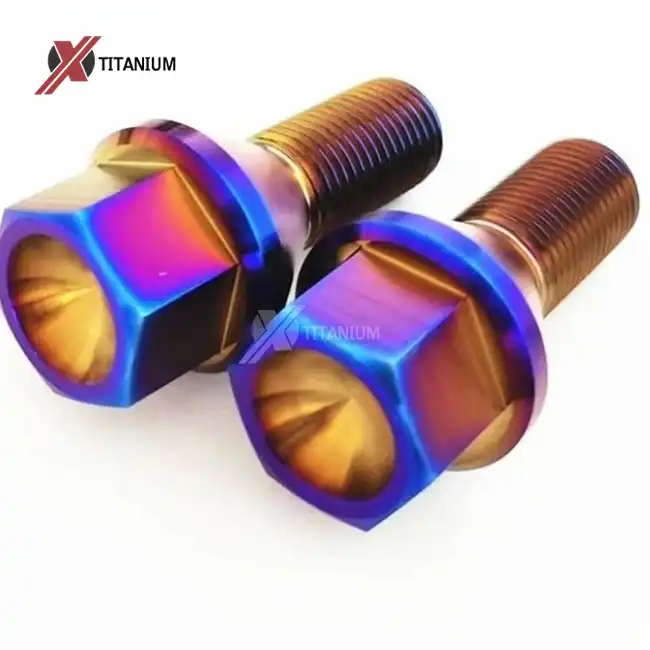
Polishing, anodizing, and nitriding are surface treatment methods that improve corrosion resistance and provide beautiful finishes in natural titanium, gold, blue, green, purple, black, and rainbow hues. In complicated assemblies, these treatments allow component identification while extending service life.
Proven Track Record in German Industrial Applications
Our titanium fasteners have been effectively used in a variety of German industrial settings, including as chemical processing plants, automobile engineering, and aerospace component manufacture. These applications show that we can give dependable performance under severe operating situations while meeting strict quality criteria.
Testimonials from clients demonstrate our promptness in responding to technical questions, our ability to deliver on schedule, and our readiness to work with others to develop unique solutions that tackle particular industrial problems. Technical assistance is offered by our engineering staff along the whole application development and product selection process.
Our goods are guaranteed to satisfy German and European regulatory requirements thanks to quality certifications like ISO 9001 and specific industry standards. The traceability needed for important applications is provided by thorough documentation, such as test reports and material certifications.
Conclusion
Chinese producers of titanium cotter pins have shown their capacity to provide German industrial customers with superior fastening solutions that satisfy exacting performance standards. German businesses may now obtain high-quality fastener solutions that support their operational goals thanks to the combination of established Chinese suppliers' technical know-how, low pricing, and modern production capabilities. Careful supplier selection, precise specification creation, and continuous quality assurance procedures that guarantee consistent performance throughout the course of the partnership are necessary for successful collaborations.
FAQ
Q1: What are the primary benefits of titanium cotter pins over steel alternatives?
A: Compared to conventional steel fasteners, titanium cotter pins provide a number of clear benefits, such as greater corrosion resistance, an outstanding strength-to-weight ratio, and a longer service life. Without the need for further protective coatings, titanium surfaces' inherent oxide layer offers long-term defense against environmental deterioration. In aeronautical and automotive applications, where system weight directly affects performance and economy, weight reduction capabilities are very helpful.
Q2: How can German buyers verify compliance with certification requirements?
A: Asking prospective suppliers for thorough paperwork, such as material certificates, quality system certifications, and test reports, is one way to verify compliance. Reputable Chinese producers provide industry-specific certifications like AS9100 for aerospace applications in addition to ISO 9001 certification. Verification of mechanical characteristics and chemical composition throughout the supply chain is made possible by material traceability documentation.
Q3: What are typical lead times for bulk orders from Chinese factories?
A: Depending on order quantity, customized needs, and current manufacturing schedules, lead times for titanium fasteners often vary from 4 to 8 weeks. While custom-engineered solutions may result in longer delivery timelines, standard goods with predetermined requirements often need shorter lead times. Suppliers are able to give precise delivery promises that coincide with project schedules when delivery needs are communicated clearly throughout the quote process.
Partner with Chuanglian for Your Titanium Cotter Pin Requirements
Learn the benefits of collaborating with a committed titanium cotter pin manufacturer who is aware of German industrial specifications. Chuanglian provides complete fastener solutions supported by cutting-edge production capabilities and tested quality procedures. Throughout the procurement process, our engineering staff is available to assist with the creation of your specifications and provide technical advice. Contact us at info@cltifastener.com or djy6580@aliyun.com to discuss your titanium fastener requirements and receive detailed quotations for your specific applications.
References
1. Weber, H., Schmidt, K., "Titanium Fastener Applications in German Aerospace Manufacturing," German Aerospace Engineering Review, 2023.
2. Mueller, R., "Corrosion Resistance Evaluation of Titanium Alloys in Chemical Processing Equipment," Industrial Materials Technology, 2023.
3. Hoffmann, J., "Supply Chain Analysis: Chinese Titanium Component Suppliers for European Markets," European Manufacturing Quarterly, 2024.
4. Fischer, A., "Material Selection Guidelines for High-Performance Fastener Applications," German Engineering Standards Institute, 2023.
5. Klein, M., "Economic Analysis of Titanium vs. Steel Fasteners in Industrial Applications," Cost Engineering International, 2024.
6. Richter, S., "Quality Assurance Protocols for Imported Titanium Components in German Manufacturing," Quality Management Europe, 2023.
Learn about our latest products and discounts through SMS or email