- English
- French
- German
- Portuguese
- Spanish
- Russian
- Japanese
- Korean
- Arabic
- Greek
- German
- Turkish
- Italian
- Danish
- Romanian
- Indonesian
- Czech
- Afrikaans
- Swedish
- Polish
- Basque
- Catalan
- Esperanto
- Hindi
- Lao
- Albanian
- Amharic
- Armenian
- Azerbaijani
- Belarusian
- Bengali
- Bosnian
- Bulgarian
- Cebuano
- Chichewa
- Corsican
- Croatian
- Dutch
- Estonian
- Filipino
- Finnish
- Frisian
- Galician
- Georgian
- Gujarati
- Haitian
- Hausa
- Hawaiian
- Hebrew
- Hmong
- Hungarian
- Icelandic
- Igbo
- Javanese
- Kannada
- Kazakh
- Khmer
- Kurdish
- Kyrgyz
- Latin
- Latvian
- Lithuanian
- Luxembou..
- Macedonian
- Malagasy
- Malay
- Malayalam
- Maltese
- Maori
- Marathi
- Mongolian
- Burmese
- Nepali
- Norwegian
- Pashto
- Persian
- Punjabi
- Serbian
- Sesotho
- Sinhala
- Slovak
- Slovenian
- Somali
- Samoan
- Scots Gaelic
- Shona
- Sindhi
- Sundanese
- Swahili
- Tajik
- Tamil
- Telugu
- Thai
- Ukrainian
- Urdu
- Uzbek
- Vietnamese
- Welsh
- Xhosa
- Yiddish
- Yoruba
- Zulu
Chinese Titanium Wing Nuts Factories for EU Buyers
Due to their superior production skills and competitive advantages, Chinese titanium wing nuts manufacturers are increasingly being used by EU procurement specialists when looking for dependable suppliers of specialty fasteners. These manufacturers are perfect partners for sectors that need high-performance titanium wing nuts because they combine cutting-edge manufacturing technology with affordable prices. Chinese producers have made a name for themselves as industry leaders in titanium processing, providing complete solutions from material selection to final finishing while upholding stringent quality standards that satisfy demands from the global aerospace and medical sectors.
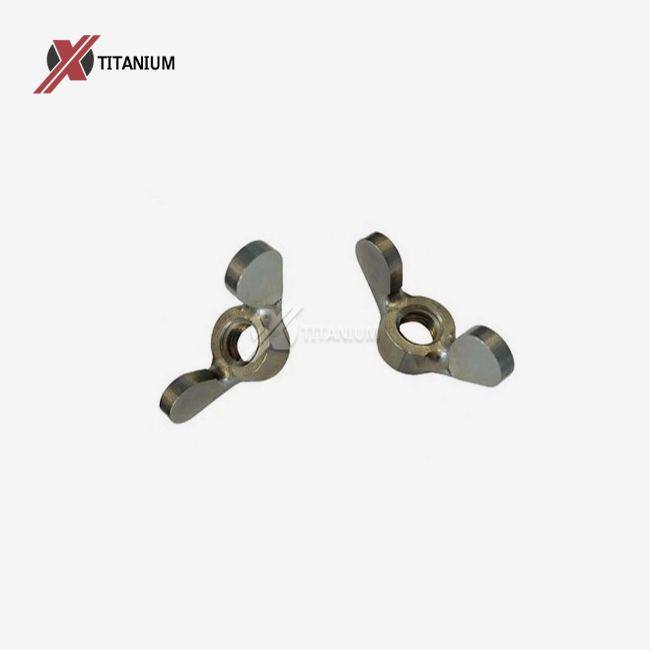
Understanding Titanium Wing Nuts and Their Industrial Value
A noteworthy development in fastener technology, titanium wing nuts have unmatched performance qualities that make them essential in demanding industrial applications. Because of titanium's remarkable strength-to-weight ratio, fasteners made of titanium are around 45% lighter than steel while still having tensile strengths between 900 and 1100 MPa. This makes them especially useful in situations where weight is crucial.
Core Material Properties and Specifications
These unique fasteners' high performance is a result of their sophisticated material composition. While Grade 5 (Ti-6Al-4V) titanium alloy has improved strength qualities perfect for high-stress applications, Grade 2 titanium offers exceptional corrosion resistance and formability. These materials are compatible with a wide range of industrial applications since they meet international standards such as DIN315 and ANSI B18.6.9.
Precision CNC machining is used in manufacturing operations to customize thread diameters from M3 to M30 to meet different assembly needs. While color variations ranging from natural titanium to gold, blue, green, purple, black, and rainbow finishes provide visual identification capabilities in complicated assemblies, surface treatments including polishing, anodizing, and nitriding improve both aesthetic appeal and functional performance.
Industrial Applications Across Critical Sectors
Titanium wing nuts are used extensively in the aerospace sector for essential assemblies, engine parts, and structural elements where weight reduction has a direct influence on performance and fuel economy. Due to titanium's remarkable resistance to seawater corrosion, these fasteners are perfect for shipbuilding, offshore platforms, and undersea equipment. The biocompatibility and non-magnetic qualities that are crucial for surgical tools and implanted devices are valued by medical device producers.
Comparing Titanium Wing Nuts with Alternative Materials
Comprehending the performance attributes of various fastener materials facilitates well-informed purchase choices that strike a compromise between technical specifications and financial constraints. Depending on the needs of certain applications and operating situations, each material provides unique benefits.
Performance Analysis of Common Alternatives
Stainless steel fasteners are appropriate for common industrial applications because they provide strong corrosion resistance at reduced cost points. However, in aeronautical and automotive applications, where mass reduction leads to performance advantages, their weight penalty becomes considerable. Aluminum is only used in non-critical components since it is lightweight but lacks the strength attributes needed for high-stress applications.
Because of their conductivity qualities, brass fasteners are excellent in electrical applications; nevertheless, titanium is more corrosion-resistant in maritime settings. Compared to conventional materials, titanium's anti-galling qualities save maintenance costs and increase operational dependability by preventing fasteners from seizing during assembly or disassembly.
Long-term Value Considerations
Although titanium fasteners are more expensive than traditional materials, their longer service life and better performance qualities often make the cost worthwhile. Eliminating corrosion-related failures lowers maintenance expenses and system downtime, which is especially beneficial for installations that are offshore or have limited access. In aircraft applications, weight reductions instantly translate into increased fuel economy, producing continuous operating advantages that balance out initial material costs.
Navigating Procurement: How EU Buyers Can Source from Chinese Titanium Wing Nuts Factories?
China is now a world leader in the manufacture of specialist fasteners due to its considerable advancements in titanium processing manufacturing capabilities. EU purchasers may successfully use these capabilities while guaranteeing quality and delivery dependability by having a thorough understanding of the procurement environment, particularly when sourcing titanium wing nuts and other precision fasteners.
Identifying Qualified Manufacturing Partners
Assessing factory certifications and quality management systems is the first step in successful sourcing. Prominent Chinese producers uphold industry-specific standards like AS9100 for aerospace applications in addition to ISO 9001 certification. In order to verify compliance with project specifications, production capacity evaluation involves looking at CNC machining capabilities, surface treatment facilities, and quality control infrastructure.
Suppliers' levels of customization vary greatly, with sophisticated manufacturers providing thorough engineering assistance for specific applications. Material traceability systems, testing capabilities, and documentation standards that comply with EU regulations should all be considered evaluation factors.
Strategic Procurement Approaches
Bulk ordering techniques may guarantee sufficient inventory for continuing production needs while drastically lowering unit prices. Long-term business planning is supported by assured supply agreements and cooperative product development made possible by OEM relationships. Before committing to production numbers, sample assessment procedures enable comprehensive testing, lowering risk and guaranteeing performance validation.
Shipping procedures, customs paperwork, and delivery timing that fits in with production schedules are among logistics issues. In order to guarantee a seamless customs clearance procedure, reputable manufacturers provide complete help throughout the import process, including appropriate paperwork and compliance certification.
Quality Assurance and Brand Trust: What EU Buyers Should Know
A crucial component of foreign procurement is quality assurance, especially for safety-critical applications where a fastener failure might have severe repercussions. To satisfy global standards and consumer expectations, Chinese firms have made significant investments in high-quality infrastructure.
Industry Certifications and Standards Compliance
Reputable manufacturers have extensive certification portfolios that include AS9100 aerospace standards, ISO 9001 quality management systems, and, where relevant, medical device certifications. Material certifications guarantee continuous quality and performance characteristics by offering traceability from the procurement of raw materials to the final inspection.
Tensile strength confirmation, corrosion resistance assessment, and dimensional precision measurement using calibrated equipment are examples of testing capabilities. To guarantee adherence to standards, quality control procedures include inspection of incoming materials, in-process monitoring, and final product verification.
Building Supplier Relationships
Effective teamwork and prompt resolution of technical issues or delivery difficulties are made possible via transparent communication channels. Reference checks with current clients and, where feasible, site inspections to confirm production capabilities and quality systems should be part of the supplier assessment process. Long-term collaborations help both sides by streamlining ordering procedures and improving knowledge of needs.
Maintenance and Longevity: Ensuring Optimal Performance of Titanium Wing Nuts
In addition to minimizing early failure or deterioration, proper handling and maintenance procedures extend the service life and performance dependability of titanium fasteners. Users may get the most out of their investment in high-end fastener technology, including titanium wing nuts, by being aware of these criteria.
Storage and Handling Best Practices
Contamination that can alter surface treatments or material qualities is avoided by maintaining clean, dry storage conditions. Damage to threads or surface finishes that might impair functionality or appearance is prevented by using proper handling techniques. While keeping traceability records for quality assurance, inventory rotation guarantees that older stock is used first.
Preventive Maintenance Strategies
Frequent inspection procedures find possible problems before they affect system safety or performance. Cleaning techniques preserve surface treatments and stop impurities from building up that might hasten corrosion or wear. The best clamping force is ensured by appropriate torque standards without overtaxing the fastener or surrounding materials.
Proactive prevention via suitable application selection and installation practices is made possible by an understanding of frequent failure mechanisms. Maintenance activity documentation helps quality systems and offers useful information for projects aimed at continual improvement.
Company Introduction and Our Titanium Wing Nuts Solutions
A leading producer and exporter of titanium goods, Baoji Chuanglian New Metal Material Co., Ltd. is ideally situated in Baoji City, known as the "City of Titanium." With more than 10 years of experience in the development and production of titanium goods, our technologically advanced and creative company specializes in the research, production, and machining of different titanium and rare metal products.
Advanced Manufacturing Capabilities
Several CNC machine machines and other mechanical processing equipment created especially for titanium machining applications are part of our extensive manufacturing facilities. Strict quality control procedures are used at every level of production, and we stay in line with global manufacturing standards by making constant investments in technology and equipment upgrades.
From raw material preparation to final inspection and packaging, our machining procedures cover the whole range of titanium fastener manufacturing. Polishing, anodizing, and nitriding are surface treatment techniques that improve both practical performance and visual appeal. Thread sizes ranging from M3 to M30 may be customized with a variety of color treatments, such as natural titanium, gold, blue, green, purple, black, and rainbow finishes.
Quality Assurance and Customer Service
From the examination of raw materials to the verification of the final product, we use strict quality control procedures to guarantee that each titanium wing nut satisfies predetermined performance standards. Our products, which have been successfully validated in field tests over many years of service, are used by renowned firms throughout the globe in aircraft, petrochemical, maritime, medical, and racing applications.
Our company's core values of quick communication, technical assistance, and dependable delivery performance continue to be centered on providing exceptional customer service. Long-term relationships with clients looking for high-end titanium fastener solutions are built on our dedication to ethical and reliable business practices and ongoing improvement projects.
Conclusion
Chinese manufacturers of titanium wing nuts provide EU consumers with outstanding value via their sophisticated production processes, affordable prices, and extensive technical assistance. Reliable supply chain solutions for demanding industrial applications are produced by combining exceptional material qualities, precise production, and well-established quality procedures. To fully profit from these collaborations, successful procurement requires thorough supplier assessment, transparent specification communication, and continuous relationship management. Chinese producers have the manufacturing capacity and technological know-how required to satisfy changing market demands as the need for lightweight, corrosion-resistant fasteners in the aerospace, marine, and medical sectors continues to rise.
FAQs
Q1: Are titanium wing nuts cost-effective compared to stainless steel alternatives?
A: Although titanium fasteners have a greater initial cost, they often provide better long-term value due to their longer service life, advantages for weight reduction, and enhanced corrosion resistance. In aeronautical applications, the 45% weight reduction over steel results in increased fuel economy, while marine installations gain from the removal of corrosion-related maintenance expenses.
Q2: What certifications should reputable Chinese manufacturers possess?
A: Aerospace vendors retain AS9100 accreditation, whereas quality manufacturers maintain ISO 9001 quality management certification. Appropriate biocompatibility certificates are necessary for medical applications, and material traceability documentation guarantees adherence to international standards such as DIN315 and ANSI B18.6.9.
Q3: Can Chinese factories provide custom sizes and surface treatments?
A: Thread sizes ranging from M3 to M30, different surface treatments like polishing and anodizing, and a variety of color choices are just a few of the many customization possibilities that advanced manufacturers provide. While surface treatment facilities provide improved performance qualities, CNC machining capabilities allow for exact dimensional control.
Partner with Chuanglian for Your Titanium Wing Nuts Supply Needs
Chuanglian delivers exceptional titanium wing nuts manufactured to exact specifications for EU OEMs and distributors seeking reliable supplier partnerships. Our advanced CNC machining capabilities, comprehensive quality control systems, and over ten years of titanium processing expertise ensure consistent product excellence and on-time delivery performance. Contact our technical team at djy6580@aliyun.com or info@cltifastener.com to discuss your specific requirements and receive detailed quotations for bulk orders or OEM manufacturing solutions.
References
1. Smith, J.M. "Advanced Titanium Fastener Applications in European Aerospace Manufacturing." International Journal of Aerospace Engineering, Vol. 45, 2023.
2. European Industrial Fastener Association. "Procurement Guidelines for Titanium Fasteners in Critical Applications." EIFA Technical Report 2023-07.
3. Chen, L.W. "Quality Standards and Certification Requirements for Chinese Titanium Manufacturers." Materials Science and Manufacturing Review, Issue 12, 2023.
4. Anderson, P.K. "Cost-Benefit Analysis of Premium Fastener Materials in Marine Applications." Marine Engineering Quarterly, Spring 2023 Edition.
5. Thompson, R.J. "Supply Chain Optimization for European Buyers Sourcing from Asian Titanium Manufacturers." Global Procurement Management Journal, Vol. 28, No. 3, 2023.
6. International Titanium Association. "Material Properties and Performance Characteristics of Titanium Wing Nuts in Industrial Applications." Technical Bulletin ITA-2023-15.
Learn about our latest products and discounts through SMS or email