- English
- French
- German
- Portuguese
- Spanish
- Russian
- Japanese
- Korean
- Arabic
- Greek
- German
- Turkish
- Italian
- Danish
- Romanian
- Indonesian
- Czech
- Afrikaans
- Swedish
- Polish
- Basque
- Catalan
- Esperanto
- Hindi
- Lao
- Albanian
- Amharic
- Armenian
- Azerbaijani
- Belarusian
- Bengali
- Bosnian
- Bulgarian
- Cebuano
- Chichewa
- Corsican
- Croatian
- Dutch
- Estonian
- Filipino
- Finnish
- Frisian
- Galician
- Georgian
- Gujarati
- Haitian
- Hausa
- Hawaiian
- Hebrew
- Hmong
- Hungarian
- Icelandic
- Igbo
- Javanese
- Kannada
- Kazakh
- Khmer
- Kurdish
- Kyrgyz
- Latin
- Latvian
- Lithuanian
- Luxembou..
- Macedonian
- Malagasy
- Malay
- Malayalam
- Maltese
- Maori
- Marathi
- Mongolian
- Burmese
- Nepali
- Norwegian
- Pashto
- Persian
- Punjabi
- Serbian
- Sesotho
- Sinhala
- Slovak
- Slovenian
- Somali
- Samoan
- Scots Gaelic
- Shona
- Sindhi
- Sundanese
- Swahili
- Tajik
- Tamil
- Telugu
- Thai
- Ukrainian
- Urdu
- Uzbek
- Vietnamese
- Welsh
- Xhosa
- Yiddish
- Yoruba
- Zulu
Custom grade 5 titanium fairing bolts for motorcycles – where to order
You can find more than just tools when you search for Gr5 Titanium Fairing Bolts For Motorcycle uses. You're also putting money into speed engineering. Ti-6Al-4V metal, which is used to make aerospace-grade fender nuts of grade 5, gives high-performance bikes the strength-to-weight edge they need. OEM builders and aftermarket sellers have very high standards for these carefully made parts. The people who make them need to know how to meet those standards for material consistency, dimensional accuracy, and other things. Whether you're making racing bikes or high-end handmade bikes, you need to know where to order to make sure you get accepted goods that can be tracked and meet your technical needs and delivery dates.
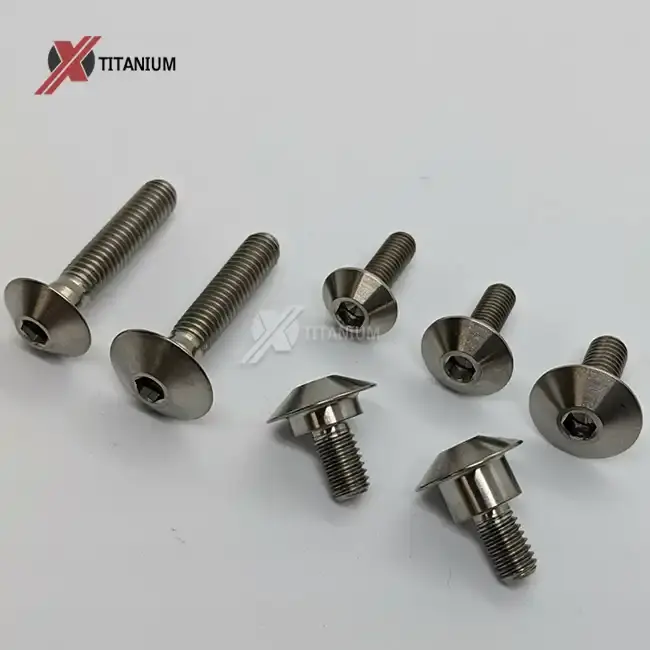
Understanding Grade 5 Titanium Fairing Bolts for Motorcycles
The most common type of titanium metal used in business and racing is grade 5, which is also written as Ti-6Al-4V. It is made up of about 90% titanium, 6% aluminum, and 4% vanadium. The structure of this metal is known as alpha-beta phase titanium. The vanadium raises the beta phase, which makes the whole thing stronger, and the aluminum stabilizes the alpha phase, which makes it easier to shape and join. Bolts made from this material work better than regular ones in a number of ways.
Mechanical Superiority Over Standard Fasteners
It is the same amount of strength as Grade 10.9 hardened steel bolts that fairing bolts made of Ti-6Al-4V have (at least 1,200 MPa or 175,000 psi). Tin is still only 4.43 g/cm³ dense, which is about 45% lighter than steel (7.8 g/cm³ dense). If race teams change the whole windshield gear, they can get rid of 150 to 200 grams of unsprung mass. This is a big change that makes the bike easier to control by lowering its center of gravity. Aside from being lighter, grade 5 titanium can keep its form at temperatures up to 500°C (932°F). This is much higher than the highest temperature at which aluminum metals will soften and lose their strength.
Corrosion Resistance in Real-World Environments
Ti surfaces are very well protected from damage from the surroundings by the oxide layer that forms on them naturally. People who ride motorcycles near the coast are constantly hit with salt spray. People who ride motorcycles in the winter are hit with chemicals that are used to break ice and clean the roads. Standard bolts made of zinc-plated steel rust quickly in these conditions, locking up and ruining costly protective plates while they are being maintained. Because of this, grade 5 titanium doesn't change chemically, so it doesn't rust while it's being used. Companies that work with chemicals and naval engineering choose Ti-6Al-4V because its passive oxide film fixes itself when it gets scratched, keeping it from rusting.
Manufacturing Standards and Thread Integrity
CNC tools with rolled threads instead of cut threads are used to make titanium shield nuts for pros. Instead of cutting a thread, rolling it through a piece of metal cools it and lines up the grain flow with the thread shape. When things are made this way, they have about 30% more wear resistance than when they are cut. This is important for screws that are always moving and being loaded and emptied. Companies that make good bolts follow the rules set by DIN 912 for socket head cap screws, ISO 7380 for button head bolts, or special flange head designs. Most of the time, thread specs meet 6g class standards for metric screws or Class 2A standards for UNC threads. You can be sure that they will work with steel captive nuts or aluminum threaded plugs that are common in systems for fixing fairings.
How to Choose the Right Titanium Fairing Bolts for Your Motorcycle Needs?
In order to pick the right titanium screws, you need to make sure that the screw's properties match the task at hand. When deciding what to buy, you should think about how the item looks, how resistant it is to weather, and how much it weighs. Knowing these things will help you stay away from both over-specification and under-specification, which can cause parts to fail or cause prices to go up.
Comparing Material Alternatives
Gr5 Titanium Fairing Bolts For Motorcycle are in a unique group with screws made of aluminum and steel. Aluminum 7075-T6 nuts are not as dense (2.81 g/cm³), but they are not as strong physically. Their tear strength is only 570 MPa, which is not even half as high as Ti-6Al-4V's. Hex bolts are more likely to strip when they are torqued because metal is not very hard. This is especially true after rust has made the surface rough. 316 or 304 grade stainless steel screws don't rust and cost less than titanium ones, but they are 75% heavier and don't help you save weight. A-286 steel is a precipitation-hardened metal used in aircraft. It is almost as strong as Ti-6Al-4V, but it costs a lot more and is a lot heavier. Grade 5 titanium is best for race bikes, military parts, or special builds that need to be light because less weight directly improves performance.
Size Range and Thread Type Considerations
There are different lengths of M5 and M6 nuts that can be used in motorcycle fairings. The length depends on the thickness of the panel and the shape of the mounting bracket. People who make special parts might need M4 fasteners for light race fairings and M8 nuts for strong mounting points. If you pick the right thread type, it will work with the tools you already have. Metric threads are used on most bikes in Japan and Europe. UNC threads are used on some American motorcycles. When you buy custom bolts, making sure you give exact measurement plans helps the manufacturer avoid mistakes that cost a lot of money. Companies like Chuanglian can use CNC cutting to make parts with specific lengths, head styles, or flange shapes that work with OEM mounting systems.
Surface Treatment Options and Functional Benefits
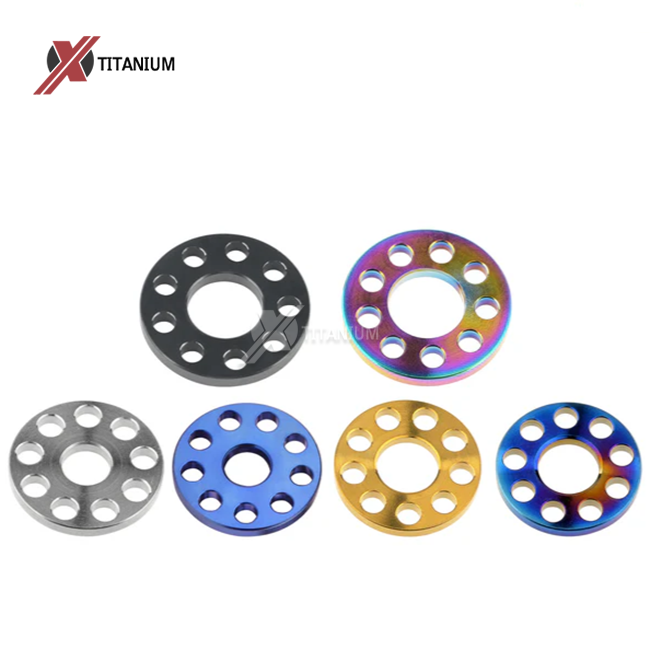
The silvery-gray shine of the material is brought out by the natural titanium finish, which also keeps its best rust resistance. If you want jewelry-quality looks, custom builders like to polish the surface until it's as smooth as a mirror. Anodizing uses controlled oxidation to make bright colors like gold, blue, purple, green, black, or rainbow finishes. The thickness of the oxide layer is changed. They become part of the metal they're on, not paint, so they don't flake or peel like paint does. The artistic layers get thinner with Type II anodizing, and the surface hardness goes up to about 70 HRC with Type III anodizing. This makes it easier to thread into metals that are not the same. The process of nitriding adds nitrogen to the titanium surface, creating a titanium nitride layer that is even harder and lasts longer when used a lot. The specs for things you buy should meet both your needs for good looks and long-lasting usefulness.
Procuring Custom Grade 5 Titanium Fairing Bolts – What You Need to Know?
Things are very different when you buy titanium screws for business versus when you buy them for yourself. Industrial buyers don't just compare unit prices; they also look at how well suppliers can do their jobs, their quality systems, how easy it is to keep track of goods, and how stable the supply chain is. Getting to know qualified makers lowers the chance of buying from them for a long time and ensures that the quality of the products will stay the same.
Supplier Qualification and Certification Requirements
Companies that make real titanium screws have strict ways of checking the quality of their products. The AS9100D certification, which is the airplane quality standard, shows more advanced skills that can be used in important situations. The ISO 9001:2015 certification shows basic quality control methods. Medical device makers may need to check that their goods follow ISO 13485 rules. This is especially important if the nuts they use can also be used to put together surgical tools or make orthopedic device prototypes.
Optical emission spectrometry should be used to check the chemical makeup of the material on the certificate to show that it is made of Ti-6Al-4V in line with ASTM B348 or AMS 4928 standards. On papers used for mechanical tests, the tensile strength, yield strength, and stretch numbers are written. For each product lot, you can find sources that let you trace the material back to the titanium mill, where it came from. Make sure you ask for sample certifications and check to see if measurement inspection records are sent with orders when you look at different manufacturers.
Validating Product Authenticity
When you look for Gr5 Titanium Fairing Bolts For Motorcycle, there are fakes out there. Commercial Grade 2 titanium that is sold as Grade 5 or steel nuts that have been treated in titanium are most often used. Grade 2 titanium is cheaper but not as strong. Because titanium isn't magnetic, it's easy to tell the difference between real steel and fake steel. X-ray fluorescence (XRF) spectroscopy is used in chemistry to show how elements are put together without hurting any of the parts.
Using the Rockwell C scale to check how hard something is, Ti-6Al-4V that has been heated correctly should give results between 32 and 38 HRC. If you check grade 2 titanium, it normally comes back below 20 HRC. Checking something's weight is another way to show it. A Grade 5 M6x20mm bolt is about 1.8 grams heavy, and a steel one is about 3.2 grams heavy. Verification of the materials by a third party before agreeing to big orders keeps expensive quality problems from being found during installation or field service.
Bulk Ordering and Custom Specification Advantages
Most of the time, you can get better deals when you buy more. However, because titanium is a precious metal, discounts aren't as deep as they are for other screws. The lowest amount you can buy from each company is different. For normal setups, some only need 100 pieces, but for special needs, they may need at least 500 to 1,000 pieces to support CNC programming and machine setup. When you use custom nuts, you can get the best results. Racing teams may ask for versions with a shorter shank that keep the full thread contact power but are lighter.
OEM manufacturers can ask for unique head styles with marking elements or covers that can't be taken off without permission. Heavy loads are spread out over thin carbon fiber walls by long-flanged button head bolts. This way, stress doesn't build up in one spot. When talking about unique needs, it's best to give makers detailed technical models and a list of material certifications, surface treatments, and packing needs. This way, they can fully understand the scope of the project.
Installation and Maintenance Tips for Titanium Fairing Bolts
When the best titanium nuts are put together properly, they work best and damage is avoided during assembly. It is made in a way that makes it very strong, but it needs to be treated differently than steel screws because of how it is made.
Essential Tools and Torque Specifications
It is possible to damage threads or break flimsy fairing materials if you over-tighten, which can cause fasteners to come loose when the car shakes. However, if you use measured torque tools, you can avoid both of these problems. It's usually between 4-6 Nm (35–53 lb-in) for M5 screws and 6–8 Nm (53–71 lb-in) for M6 bolts, but each manufacturer has their own rules. If you need exact numbers, you should always look in the motorcycle service instructions. It should be easy to use hex bits or holes. When tools get worn, the socket heads round off. This is especially bad for anodised finishes that aren't very hard.
Titanium doesn't move heat around as well as steel does, so during fitting, contact heats up certain areas. When titanium surfaces stick together during cold welding because of pressure and contact, this is called galling. You can stop this from happening by adding a copper or clay anti-seize part. Put a thin layer of anti-seize on the threads. When there is too much anti-seize, the friction factors drop below what is expected in torque specs. This can cause the bolts to be over-torqued.
Step-by-Step Installation Protocol
First, make sure that all of the fastening surfaces are very clean. This will get rid of old thread-locking chemicals, rust, and other junk. Check the holes for threads for harm. Even if the titanium bolts are made of good material, they will break if they are pulled through metal plugs. Before you put any force on nuts, turn them by hand three times to make sure they are in tight. For example, when fixing a windshield, you would tighten several bolts in a pattern. To do this, tighten each one by 50% at a time in a cross-pattern sequence. The panel won't bend because the pushing loads are spread out correctly with this method. Stop installing right away if the resistance goes up quickly. Cross-threading does damage that can't be fixed. Carefully start up again after taking the bolt off and checking the threads. Titanium is not as flexible as steel, which makes it harder to fix mistakes in the way it fits. Steel screws can bend or stretch without breaking.
Periodic Inspection and Maintenance
Gr5 Titanium Fairing Bolts For Motorcycle don't break down over time like steel screws do, but it's still important to check them often. As part of regular maintenance, check the heads of the bolts for signs of odd wear, socket rounding, or anodizing damage. These could mean that the tool is too tight or is moving. Look for clues that the screws are coming loose. Steel is stiffer than titanium, so the clamp load can be kept well. In places with a lot of shaking, though, important screws may still need chemicals to lock the threads.
If you ride your bike in bad weather, you should take the nuts off and check the threads every year to make sure they stay clean. Tin nuts don't rust like steel nuts do, which is a sign of early danger. If fatigue cracks aren't found, they can lead to catastrophic failure, which doesn't happen often and doesn't show any evidence. If you repair nuts that are warped, have broken threads, or look worn out, you can stop them from breaking before they cause an accident or damage expensive fairings.
Why Choose Chuanglian for Custom Grade 5 Titanium Fairing Bolts?
The Baoji Chuanglian New Metal Material Co., Ltd. is based in Baoji City, which is known all over the world as the "City of Titanium" because it has a lot of people who know how to make titanium goods and raw materials are easy to get. We've been making titanium fasteners for over ten years. The people who hire us need consistent materials, exact measures, and a supply chain that they can count on to meet their high standards.
With CNC cutting, we can make fasteners from M4 to M12, and we can work with both standard sets and custom specs. Every time something is made, it goes through strict quality control checks. We use laser measurement systems and thread gauges to check the dimensions of the Ti-6Al-4V alloy and make sure it meets ASTM B348 standards. We also test it for tensile strength to make sure it meets the minimum requirement of 1,200 MPa and check the surface finish to make sure the coating is even and won't rust. Because of this thorough testing process, there is no difference from batch to batch, which can cause problems in the field and false warranty claims.
Each package comes with tracking papers that shows the whole chain of custody, from where the titanium came from in the mill to where it was checked at the end. We are certified to ISO 9001:2015, which means that we handle quality in a structured way. We can also provide other certifications to meet the needs of sales of military or medical devices. We can nitride, shine, or anodize the surface to make it look gold, blue, green, purple, black, or rainbow-colored. All of these things are done in controlled ways that keep the base metal pure.
Not only can we make things, we also know what B2B buyers want. For buying managers, it's important that supply plans stay the same. Our ways of keeping track of production capacity and stocks mean that wait times are always the same, even when demand changes. When tech teams are making specs, they like to get help from experts. We come up with new designs together and give DFM (Design for Manufacturing) feedback that makes the designs better and the production process more efficient. To help your new inspection processes, we give you material licenses, dimensional records, and test data. This is because quality teams need a lot of paperwork.
In our business plan, long-term relationships are more important to us than one-time sales. Chuanglian titanium fasteners have been used for years by racing teams, motorcycle OEMs, and aftermarket part makers. The goods have been tested in harsh conditions and have been shown to work well. Having a reliable supply chain can affect your production plans and consistent quality can affect how people see your brand. Working with a well-known titanium fastener maker can give your company the peace of mind it needs.
Conclusion
Custom grade 5 titanium shield nuts, such as Gr5 Titanium Fairing Bolts For Motorcycle, are highly precise parts whose performance is directly related to the science behind the materials, the quality of production, and how reliable the provider is. The Ti-6Al-4V metal is worth the extra cost when economy is important because it has the best strength-to-weight ratio, doesn't rust, and stays stable at high temperatures. To find the best supplier, you should look at more than just their unit price. You should also see how many certifications they have, how well their quality system works, and how well they can help with technical problems. Installing and taking care of expensive motorcycle parts the right way will make them last as long as possible. A stable supply chain is important for business-to-business operations, and building relationships with reliable manufacturers makes sure that you can get consistent material quality and meet specific needs.
FAQ
Q1: Can grade 5 titanium bolts be torqued to the same specifications as OEM steel fasteners?
A: Ti-6Al-4V is as strong as Grade 8.8 or 10.9 steel, so it can handle the same amount of force. 4-6 Nm is a usual range for M5 and M6 nuts used on motorcycle fairings. Always use torque tools that have been adjusted and read the repair directions that came with the item. It is more likely to crack panels when you over-tighten than to break screws. This is because you are squeezing plastic fairings instead of joining them structurally.
Q2: How do I verify I'm receiving authentic grade 5 titanium rather than lower-grade material?
A: Since titanium doesn't have a magnetic pull, magnetic tests can easily tell the difference between real steel and fake steel. Aluminum weighs about 2.7 g/cm³, steel weighs about 7.8 g/cm³, and Ti-6Al-4V weighs about 4.43 g/cm³. This makes it easy to be sure. Yes, XRF spectroscopy does check the chemical make-up, and hardness tests should show that grade 5 titanium that has been handled correctly has a hardness of 32 to 38 HRC. Suppliers you can trust will give you material approvals that show mechanical and chemical properties.
Q3: Is anti-seize compound necessary when installing titanium fasteners?
A: It is highly recommended that you use an anti-seize cream. Titanium tends to gall. This is a cold-welding reaction that happens when two surfaces rub against each other and stick together. Copper-based or clay anti-seize materials that don't change the strength of the force can be used to avoid this problem. If you put too much compound on the threads, the friction will drop below what is expected in the torque specs. This could cause damage from over-tightening.
Partner with Chuanglian for Premium Titanium Fastener Solutions
The only thing Chuanglian makes is Gr5 Titanium Fairing Bolts For Motorcycle. They offer CNC-machined Ti-6Al-4V screws that are perfect for business-to-business purchases. We've been making titanium parts for ten years and have detailed quality control systems, methods for tracking materials, and a lot of experience helping OEMs, distributors, and race teams that need a lot of parts to work reliably. We can meet unique needs like non-standard sizes, surface treatments, and head combinations that aren't available anywhere else. We can do this while keeping wait times low and delivery dates consistent. You can email our team at info@cltifastener.com or djy6580@aliyun.com to talk about your titanium fastener needs.
References
1. Boyer, R., Welsch, G., & Collings, E.W. (1994). Materials Properties Handbook: Titanium Alloys. ASM International, Materials Park, Ohio.
2. Donachie, Matthew J. (2000). Titanium: A Technical Guide, 2nd Edition. ASM International, Materials Park, Ohio.
3. American Society for Testing and Materials (2021). ASTM B348-21: Standard Specification for Titanium and Titanium Alloy Bars and Billets. ASTM International, West Conshohocken, Pennsylvania.
4. Lutjering, Gerd & Williams, James C. (2007). Titanium: Engineering Materials and Processes, 2nd Edition. Springer-Verlag, Berlin Heidelberg.
5. SAE International (2019). AMS 4928P: Titanium Alloy Bars, Wire, Forgings, Rings, and Drawn Shapes 6Al-4V Annealed. SAE Aerospace Material Specification, Warrendale, Pennsylvania.
6. Bania, P.J. (1994). "Beta Titanium Alloys and Their Role in the Titanium Industry." JOM: The Journal of The Minerals, Metals & Materials Society, Vol. 46, No. 7, pp. 16-19.
Learn about our latest products and discounts through SMS or email