- English
- French
- German
- Portuguese
- Spanish
- Russian
- Japanese
- Korean
- Arabic
- Greek
- German
- Turkish
- Italian
- Danish
- Romanian
- Indonesian
- Czech
- Afrikaans
- Swedish
- Polish
- Basque
- Catalan
- Esperanto
- Hindi
- Lao
- Albanian
- Amharic
- Armenian
- Azerbaijani
- Belarusian
- Bengali
- Bosnian
- Bulgarian
- Cebuano
- Chichewa
- Corsican
- Croatian
- Dutch
- Estonian
- Filipino
- Finnish
- Frisian
- Galician
- Georgian
- Gujarati
- Haitian
- Hausa
- Hawaiian
- Hebrew
- Hmong
- Hungarian
- Icelandic
- Igbo
- Javanese
- Kannada
- Kazakh
- Khmer
- Kurdish
- Kyrgyz
- Latin
- Latvian
- Lithuanian
- Luxembou..
- Macedonian
- Malagasy
- Malay
- Malayalam
- Maltese
- Maori
- Marathi
- Mongolian
- Burmese
- Nepali
- Norwegian
- Pashto
- Persian
- Punjabi
- Serbian
- Sesotho
- Sinhala
- Slovak
- Slovenian
- Somali
- Samoan
- Scots Gaelic
- Shona
- Sindhi
- Sundanese
- Swahili
- Tajik
- Tamil
- Telugu
- Thai
- Ukrainian
- Urdu
- Uzbek
- Vietnamese
- Welsh
- Xhosa
- Yiddish
- Yoruba
- Zulu
How do m8 titanium rotor bolts perform in high-temperature braking scenarios?
The high-temperature stopping ability of m8 titanium rotor bolts is excellent, mainly because they are made of Ti-6Al-4V (Grade 5). When intense braking causes brake pads to get hotter than 400°C, these rivets keep their structure and clamping force without breaking down. Their low temperature expansion rate is similar to that of many rotor materials, so differential expansion cycles don't cause them to become loose. Titanium alloy bolts keep their tensile strength of ≥950 MPa even after being exposed to high temperatures for a long time, unlike steel equivalents that can become hydrogen-weakened or oxidized. This keeps the rotor attached consistently and prevents catastrophic failure in demanding applications like motorsport, aerospace, and high-performance automotive systems.
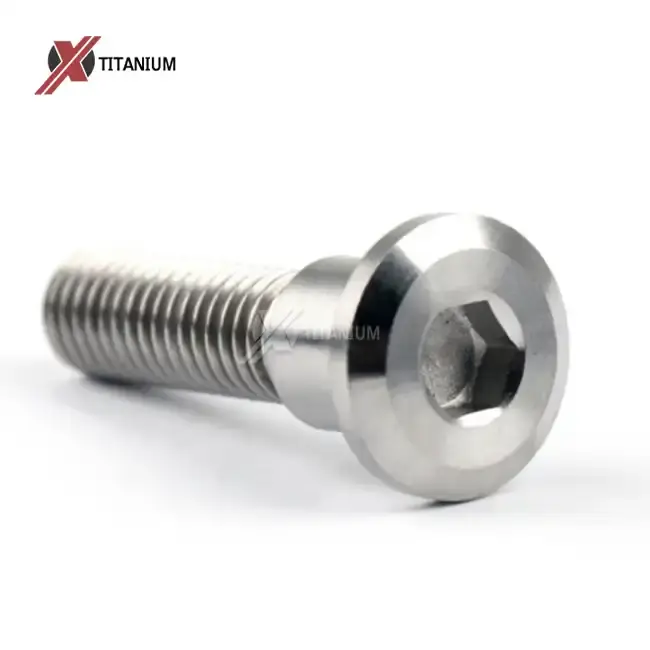
Understanding M8 Titanium Rotor Bolts in High-Temperature Environments
Choosing the right material is the first step in the tech behind titanium brake disc bolts. The melting point of Grade 5 titanium metal, which is made up of 6% aluminum and 4% vanadium, is 1660°C, which is much higher than the temperatures that brake systems have to deal with. This mix strikes a unique balance between mechanical strength and thermal resistance that solves important problems that procurement engineers in the aircraft and racing industries are having with m8 titanium rotor bolts.
Material Composition and Thermal Stability
The Ti-6Al-4V metal used in rotor bolts stays stable at temperatures where other materials start to break down. The aluminum presence makes it more resistant to rusting, and the vanadium helps to strengthen the solid solution. This metal structure makes sure that the bolt's microstructure stays stable even when it goes through repeated thermal cycles, which can happen in track racing or emergency stopping situations. About 85% of the material's strength at room temperature is still there at 400°C. Steel bolts can't match this performance without adding a lot of weight or special finishes.
Comparative Analysis with Traditional Materials
When you look at titanium next to stainless steel or carbon steel, you can see the changes right away. With the same M8 mounting, steel bolts usually weigh 70–80% more than titanium bolts of the same size. This extra weight has an effect on the rotary mechanics and unsprung mass, which are things that engineering teams carefully consider when choosing which parts to use. Steel also expands and contracts more quickly when it cools, which can cause tiny moves at the point where the rotor and hub meet when the temperature changes, which could make it harder to keep the power. Even though aluminum is light, it is not strong enough for important fastening uses where shear forces can be higher than 12 kN when stopping quickly.
Different materials react to rust in very different ways. When brake dust, water, and road salts come together, they can form oxide layers on steel bolts. These layers can seize threads, making maintenance harder and possibly hurting hubs when they are taken off. Titanium's passive oxide layer forms instantly when it comes into contact with air. This layer protects against corrosion without the need for any other surface treatments. However, anodizing is still a choice for identity or aesthetic reasons.
Performance Analysis: Strength and Durability of M8 Titanium Rotor Bolts
Before you can judge how well a fastener works in a stopping situation, you need to know how it handles multiaxial stress. When the vehicle slows down, the m8 titanium rotor bolts are put under tension preload, repetitive shear forces from the brake torque, and heat stress from changes in temperature.
Tensile and Shear Strength Under Load
Laboratory tests on Grade 5 titanium screws show that their tensile strength is always higher than 950 MPa, and their hardness is usually around 35 HRC. This amount of hardness makes titanium very resistant to galling, which is a common way for surfaces to break when they come into touch with pressure. If you place these bolts correctly and use anti-seize compounds made for titanium, you can torque them to between 22 and 28 Nm (depending on the rotor and hub design) without damaging the threads or changing the shape of the bolts permanently.
Corrosion Resistance and Lifecycle Economics
Titanium screws are better for the economy in more ways than just the cost of buying them. In naval settings or along the coast, where salt spray is common, steel fasteners may need to be replaced once a year or even yearly to keep them from seizing. On the other hand, titanium rotor bolts can be used for as long as the car or piece of equipment is in use. This means less downtime for upkeep and a lower total cost of ownership, which are two important factors for procurement managers and fleet operators when they are looking at supplier offers.
Weight Reduction and Performance Impact
Titanium bolts have a density of 4.51 g/cm³, which means they have about 40–45% less spinning mass than steel bolts. For high-performance uses, engineers figure out how this decrease will affect gyroscopic forces and the movement of the frame. The weight difference of a single bolt (maybe 8–10 grams) might not seem like much, but a full rotor mounting set (usually 6–12 bolts per rotor) makes a noticeable difference in how fast the wheels accelerate and how quick the steering is. Racing teams record changes in lap times measured in tenths of seconds, and aircraft uses gain from weight saves that add up over many assemblies.
Comparing M8 Titanium Rotor Bolts to Alternative Materials and Brands
When buying important fastening parts, you need to carefully consider the pros and cons of each material, as well as the skills of the supplier and how reliable the parts will be in the long run. Technical standards are the basis, but better sourcing tactics are made possible by knowing how different materials work in a range of operating situations involving m8 titanium rotor bolts.
Material Durability and Heat Tolerance
Stainless steel screws are better than carbon steel at resisting rust, but they still can't match the performance of titanium. According to specifications, A316 stainless steel is usually used in naval settings. It stays strong up to about 425°C before losing a lot of its yield strength. But because it is less dense and more likely to crack due to chloride-induced stress corrosion in marine uses, it is not as good for important braking systems where failure would have serious effects.
Cost-Benefit Analysis for Procurement
Titanium and steel screws usually have a 300–500% price difference up front, which makes buying teams that are focused on budgets think. Lifecycle cost study, on the other hand, shows a different view. When you add up the costs of replacements, maintenance work, possible hub damage from seized fasteners, and downtime, titanium often has a lower total cost of ownership in situations where the service life is longer than three years or where maintenance schedules limit the amount of time that can be spent on it.
Supplier Certification and Quality Assurance
In the titanium fastener market, there are both well-known companies with quality systems that meet flight standards and unknown companies selling goods that aren't sure where they came from. Material tracking is the first step in quality security. Certified providers give mill certificates that show the chemical make-up, mechanical qualities, and agreement with standards like ISO 7380 and ASTM B348. Companies with ISO 9001 certification use organized quality control methods to lower differences between batches. This is very important for engineering teams that are testing parts before they are put into production.
Installation and Usage Guidelines for M8 Titanium Rotor Bolts in High-Temperature Braking
The efficiency and service life of fasteners are directly affected by how they are installed. Titanium has special qualities that make it need to be handled in a certain way to get the best results and avoid problems during installation.
Pre-Installation Preparation
The first important step is to check the threads. The threads on both the bolt and the hub must be clean and free of any dirt, rust, or damage from before. Titanium will not cold-work broken threads back into specification during fitting like steel will. If you try to do this, you risk stripping the threads. Restoring hub threads with a thread chaser or tap before installation stops cross-threading and makes sure the threads connect properly.
Torque Application and Verification
The torque range for m8 titanium rotor bolts is usually between 22 and 28 Nm, but this can change based on the hub material, the thickness of the rotor, and the needs of the application. These numbers are different from steel bolt specs because titanium has a different friction and elastic stiffness. It is necessary to use a measured torque wrench because overtightening can exceed the bolt's yield strength, deforming it permanently, while undertightening lets it move slightly, which speeds up wear damage.
Anti-Seize Application and Thread Lubrication
Titanium tends to gall, so it's important to grease the threads properly. Before fitting, threads should be treated with anti-seize products made for titanium. These usually have copper-free formulas to stop galvanic corrosion. The substance smooths out the surface and makes a protective layer that keeps titanium from touching titanium directly. Don't use too much of the compound; too much of it can act as a hydraulic fluid while the bolt is being tightened, which can lead to wrong torque numbers and possible over-stress.
Common Installation Errors and Prevention
When nuts are started at an angle to the hub threads, this is called cross-threading. Titanium is very hard, so if you make this mistake, the threads will bind and possibly come apart instead of self-aligning like they might with softer materials. You can avoid this failure mode by starting bolts by hand for the first few turns. If you feel resistance before the bolt is finger-tight, you need to take it off and check it again.
Procurement and Supply Chain Considerations for M8 Titanium Rotor Bolts
To find high-quality titanium screws, you need to know about the supply chain, what manufacturers can do, and how to check the quality of the products. This will help you tell the difference between trustworthy sources and dishonest ones of m8 titanium rotor bolts.
Direct Manufacturer Relationships
Getting in touch directly with companies that make titanium fasteners can help you control quality, make changes, and get better prices. Vertically integrated manufacturers handle the buying of raw materials, the processing of parts, the finishing of surfaces, and quality checks. This makes the products more consistent and easier to track. Companies like Chuanglian, which is based in Baoji City (also called the "City of Titanium"), have a wide range of production tools, such as CNC machine centers, surface treatment facilities, and quality labs that are inside the company. This combination makes it easier to control the limits for dimensions (±0.05mm), the finish on the surface, and the mechanical properties.
Quality Verification and Supplier Audits
Checking the seller's qualifications and manufacturing skills should be part of your due research when choosing a supplier. Certification in ISO 9001 means that quality management is done in a planned way, and compliance with ASTM B348 means that material specs meet accepted standards. Suppliers to the aerospace or medical device industries often have AS9100 or ISO 13485 licenses, which show that they follow stricter quality standards that help buyers in all fields.
Logistics and International Sourcing
When you buy titanium fasteners from around the world, you need to pay attention to shipping codes, customs paperwork, and managing wait times. Titanium goods usually ship under normal fastener classifications, but bulk orders may need to be handled in a certain way to keep them from getting damaged in transit. Setting clear transportation terms, like FOB, CIF, or DDP, makes it clear who is responsible for shipping costs and security.
Volume Pricing and Long-Term Partnership Strategies
To get bulk deals, you need to know how manufacturers set their prices. About 40 to 50 percent of the cost of a finished bolt is the titanium itself. The rest is made up of grinding, quality control, and surface treatment. When orders get close to 5,000 to 10,000 units, specialized production runs can be justified because they lower setup costs and make the economics better per unit. Annual purchasing deals give makers a clear picture of what customers want, which helps them plan their capacity and often opens the door to lower prices.
Conclusion
In conclusion, For high-temperature braking uses in racing, aircraft, marine, and high-performance car, m8 titanium rotor bolts are an important part choice. Their better strength-to-weight ratio, thermal stability, and resistance to corrosion solve basic problems with performance and upkeep that steel options can't match without making big sacrifices. Even though titanium costs more to buy at first than other materials, it is always better in challenging situations where reliability, sturdiness, and performance make the investment worth it. To make implementation work, you need to pay attention to the right way to put things, check the quality of the suppliers, and use smart buying methods that balance low costs with long-term supply chain stability.
FAQ
Q1: What torque specifications should be used for titanium rotor fasteners?
A: Torque values between 22 and 28 Nm are common for M8 titanium rotor bolts, but they may need a different number in some situations. Always look at the bolt's manufacturer's instructions and only use torque wrenches that have been properly adjusted. Before fitting, use an anti-seize compound made for titanium to stop galling and make sure you get correct torque readings.
Q2: Can titanium bolts be reused after rotor replacement?
A: Most Grade 5 titanium screws can be used again as long as the threads are still good and the nuts haven't been over-torqued past their yield strength. Carefully check the threads, clean them well, use new anti-seize powder, and tighten them to the recommended level. Organizations with strict safety rules may require single-use screws for important tasks, no matter what material they are made of.
Q3: How do I verify authentic Grade 5 titanium versus inferior materials?
A: Ask sources for material test results that list the chemical make-up and mechanical qualities of the material. Reputable makers give batch-specific certificates that can be used to track down the sources of the raw materials. Visual inspection isn't a reliable way to tell the difference between titanium types; the best ways to be sure are to check the supplier's credentials and reputation.
Partner with Chuanglian for Reliable Titanium Rotor Bolt Supply
To find a reliable m8 titanium rotor bolts provider, you need to look at their manufacturing skills, quality control methods, and customer service. Baoji Chuanglian New Metal Material Co., Ltd. has been making titanium fasteners for over ten years and works with companies around the world in the aircraft, racing, and marine industries. Our CNC machining tools and wide range of surface treatment choices let us make M8 titanium rotor bolts that meet ISO 7380 and DIN 912 standards. You can choose from different thread lengths, head styles, and anodized finishes to make them fit your needs.
From checking the raw materials to the final review, our quality control methods make sure that the uniform performance and traceability that procurement teams need. During the whole process of sourcing, our team offers expert advice and application help, no matter how many prototypes you need or if you want to make a yearly agreement. You can reach our engineering team at info@cltifastener.com or djy6580@aliyun.com to talk about your unique needs with a reputable company that makes titanium fasteners and is dedicated to quality, on-time delivery, and service based on partnerships.
References
1. American Society for Testing and Materials. (2021). "ASTM B348: Standard Specification for Titanium and Titanium Alloy Bars and Billets." ASTM International.
2. Donachie, M.J. (2000). "Titanium: A Technical Guide, 2nd Edition." ASM International, Materials Park, Ohio.
3. International Organization for Standardization. (2019). "ISO 7380: Hexagon Socket Button Head Screws." ISO Standards Catalogue.
4. Lutjering, G., & Williams, J.C. (2007). "Titanium, 2nd Edition: Engineering Materials and Processes." Springer-Verlag Berlin Heidelberg.
5. SAE International. (2018). "Aerospace Fastener Performance and Quality Requirements." SAE Technical Standards Board.
6. Veiga, C., Davim, J.P., & Loureiro, A.J.R. (2012). "Properties and Applications of Titanium Alloys: A Brief Review." Reviews on Advanced Materials Science, 32(2), 133-148.
Learn about our latest products and discounts through SMS or email