- English
- French
- German
- Portuguese
- Spanish
- Russian
- Japanese
- Korean
- Arabic
- Greek
- German
- Turkish
- Italian
- Danish
- Romanian
- Indonesian
- Czech
- Afrikaans
- Swedish
- Polish
- Basque
- Catalan
- Esperanto
- Hindi
- Lao
- Albanian
- Amharic
- Armenian
- Azerbaijani
- Belarusian
- Bengali
- Bosnian
- Bulgarian
- Cebuano
- Chichewa
- Corsican
- Croatian
- Dutch
- Estonian
- Filipino
- Finnish
- Frisian
- Galician
- Georgian
- Gujarati
- Haitian
- Hausa
- Hawaiian
- Hebrew
- Hmong
- Hungarian
- Icelandic
- Igbo
- Javanese
- Kannada
- Kazakh
- Khmer
- Kurdish
- Kyrgyz
- Latin
- Latvian
- Lithuanian
- Luxembou..
- Macedonian
- Malagasy
- Malay
- Malayalam
- Maltese
- Maori
- Marathi
- Mongolian
- Burmese
- Nepali
- Norwegian
- Pashto
- Persian
- Punjabi
- Serbian
- Sesotho
- Sinhala
- Slovak
- Slovenian
- Somali
- Samoan
- Scots Gaelic
- Shona
- Sindhi
- Sundanese
- Swahili
- Tajik
- Tamil
- Telugu
- Thai
- Ukrainian
- Urdu
- Uzbek
- Vietnamese
- Welsh
- Xhosa
- Yiddish
- Yoruba
- Zulu
Top-rated MMO coated titanium anodes for industrial water treatment
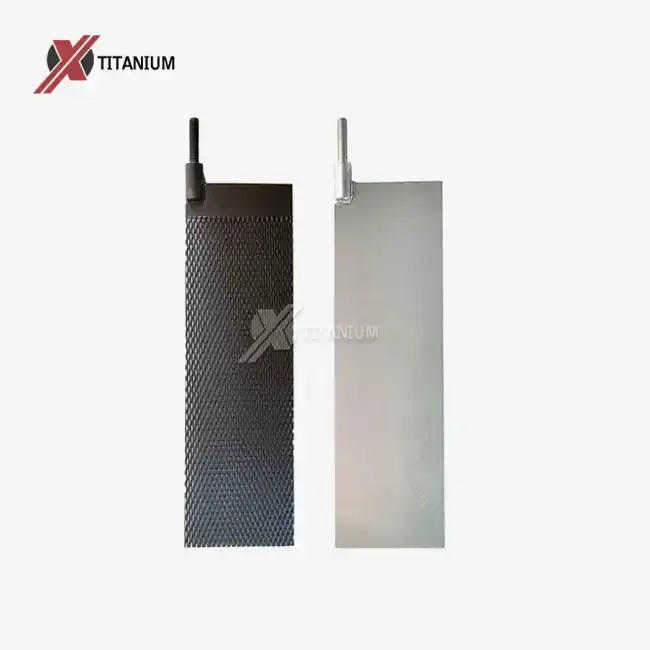
MMO coated titanium anodes are essential for industrial water treatment, where you need strong electrical options that can work in harsh conditions and keep up their performance. MMO-coated titanium anodes have become the best choice for high-tech water treatment systems because they are very resistant to rust and work very efficiently. These dimensionally stable anodes are made up of a titanium base (usually ASTM B265 Grade 1 or Grade 2 titanium) that is covered with a mix of metal oxides, such as ruthenium oxide and iridium oxide. Their special design solves important problems that come up in the workplace, like electrode wear, contaminated electrolytes, and rising energy costs. Unlike traditional graphite or lead-based alternatives that wear out quickly and lose their shape, these advanced anodes keep their structure over long service cycles. This means that industrial facilities have less downtime and can plan their maintenance schedules more accurately.
Understanding MMO Coated Titanium Anodes: Technology and Benefits
These electrochemical parts are built in a way that combines the structure benefits of titanium with the catalytic qualities of mixed metal oxides. Manufacturers use precise thermal breakdown methods to apply coatings with thicknesses ranging from 5 to 50 microns. This makes an electrocatalytic surface that helps oxygen evolution reactions happen with little overpotential. This complex contact between the base and the layer is the result of many years of improving electrical engineering.
Core Technology Principles
The making process starts with preparing the base. This is done by cold rolling, hot rolling, heating, and freezing, which improve the surface's properties so that the coating sticks better. Bright polishing, acid cleaning, and grinding are all choices for finishing the surface. Which one to use depends on the needs of the product. The titanium base material goes through a lot of quality checks, such as checking its strength, bending, and hydraulic pressure, to make sure it is mechanically sound before the covering is applied.
Operational Advantages Driving Procurement Decisions
There are more economic reasons to choose these anodes than just the initial buying price. When operating temperatures hit 200°C and current efficiency is above 90%, it makes for good energy consumption patterns that have a direct effect on running costs. If you compare titanium's low mass (about 4.5 g/cm³ compared to other anode materials), it makes placement easier and means that less structural support is needed. Good thermal stability makes sure that performance stays the same even when temperatures change, which is common in industrial water treatment. This gets rid of the performance uncertainty that makes quality assurance and process control harder.
Following the rules for the environment is another strong benefit of MMO coated titanium anodes. Because these anodes have a longer working life, they don't need to be replaced as often, which lowers the amount of trash that needs to be made and thrown away. They allow for an electrical oxidation process that makes fewer harmful results than chemical treatment options. This is in line with stricter environmental rules that affect factories all over the United States.
Comparing MMO Coated Titanium Anodes with Other Anode Types
When purchasing managers look at different anode technologies, they have to make choices that could have big effects on how well the business runs and how much it costs to own everything. A full study shows clear differences in performance across key measures.
Performance Metrics Analysis
Even though graphite anodes are cheap at first, they wear out quickly in tough chemical conditions. This means that they need to be replaced often, which leads to high upkeep costs and production delays. Platinum-coated options work very well as catalysts, but they are very expensive and put a strain on capital budgets, especially for big systems that need a lot of electrode surface area.
Lead-based anodes have problems with the climate and with the law that make them less useful compared to MMO coated titanium anodes. Because the material is poisonous, it is hard to get rid of, and regulators are keeping a closer eye on all industry areas. Because their dimensions change while they're working, the current distribution changes, which can affect the quality of the treatment and the product in sensitive situations.
Durability and Service Life Expectations
Independent testing shows that MMO-coated titanium anodes that are properly kept usually last longer than ten years in tough industrial water treatment uses. This durability comes from the fact that both the titanium base and the mixed metal oxide covering are naturally resistant to rust. Together, they protect against the breakdown processes that quickly damage other materials. The stable dimensions of these anodes over the course of their useful life ensure even current flow and treatment effectiveness, removing the performance slip that can make it harder to optimize processes using electrode materials that are used up quickly.
A cost-benefit study that takes into account how often they need to be replaced, the cost of repair work, the cost of downtime, and the amount of energy they use always points to these advanced anodes as the best choice for facilities that value operating stability and lifetime economics. The higher uptime is especially helpful for ongoing process operations, where unplanned repair breaks can cause big problems with delivery to customers and lost production.
Selecting the Right MMO Coated Titanium Anode for Your Water Treatment Process
To match MMO coated titanium anodes standards to application needs, many technical and operational factors must be carefully thought through. The choice framework includes electrical performance traits, physical requirements, and the supplier's skills.
Technical Specification Alignment
Electrode size estimates are based on the amount of current that needs to flow. In industrial water treatment uses, current densities are usually between 500 and 5,000 A/m². The exact numbers depend on the treatment goals, the chemistry of the water, and the length of time the current stays in the water. Choosing the right coating makeup depends on the main electrochemical reactions that are happening. For example, ruthenium-rich formulations work best for chlorine evolution processes, while iridium-based formulations work best for oxygen evolution processes.
Customization options for dimensions make it possible to precisely connect to current infrastructure or create new systems. Custom sizes are made to fit the shape of the tank, the flow pattern, and the space limitations of each building. Surface area optimization weighs the need for treatment capacity against the cost of capital and the amount of energy used. To find the best designs, process engineers and electrode providers must work together.
Procurement Criteria and Supplier Selection
Quality approvals are important proof of how well a product is made and how well it is controlled during the production process. The ISO 9001:2015 certification shows that quality management is done in a planned way, and the ASTM B265 compliance proves that the titanium base material meets the requirements. ISO 14001:2015 certification shows that an environmental management system has been put in place, which addresses sustainability issues that are becoming more and more important in business buying policies.
Flexible manufacturing sets apart providers who can support long-term relationships. Being able to work with unique sizes, coatings, and delivery times lets us provide quick help throughout the whole project process, from the first samples to mass production. Technical support features like application engineering help and performance fixing tools add a lot of value on top of the actual product, especially for places that are using new advanced water treatment technologies for the first time.
Cost Considerations and ROI Evaluation
Unit price naturally affects buying choices, but smart buyers look at the total cost of ownership, which includes installation costs, energy use, upkeep needs, and how often the product needs to be replaced. For big setups or implementations that happen on more than one site, bulk purchasing may save you money, but the minimum order amounts and wait times need to be carefully coordinated with the project plans.
When figuring out the return on investment, you should take into account how much energy is saved by high current efficiency, how much less upkeep costs are because the service life is longer, and how much more reliable operations are because the dimensions are stable. Increasing production efficiency and improving quality stability often create value that is much higher than the straight cost differences between electrode technologies.
Installation, Maintenance, and Lifespan Optimization Tips
To get the most out of MMO coated titanium anodes in terms of performance and service life, it's important to follow best practices for fitting and preventative upkeep. The basis for effective long-term operation is set by following the right execution steps.
Installation Best Practices
Electrical connections need extra care because contact resistance has a direct effect on how much energy is used and how much heat is made. To make sure low-resistance current flow, the oxide layer on titanium needs to be properly prepared at connection points. Mechanical binding methods should be able to handle heat growth while still ensuring a secure electrical connection across all temperature ranges that are needed for operation.
Where you are in the treatment tubes affects how the current flows and how much mass moves. Leaving enough space between the anodes and cathodes improves the regularity of the electric field and stops areas of high current that speed up wear. Considering the flow pattern makes sure that there is enough electrolyte movement across the electrode surfaces. This stops concentration differences that hurt treatment effectiveness and encourage growth.
Routine Maintenance Protocols
Visual inspections done on a regular basis find early signs of covering wear or mechanical damage, which is done before the problem gets too bad. Cleaning the surface gets rid of buildups that raise the working voltage and lower the current efficiency. Cleaning can happen anywhere from three times a year to once a year, depending on the water pH and working conditions. Chemical cleaners get rid of mineral scales well without hurting the MMO-coated titanium anodes. However, mechanical cleaners should not be used on the coating because they wear it down.
Electrical resistance tracking gives a number-based picture of how well the link is working and how the coating is doing. Gradual voltage rises at constant current show that the layer is wearing away, so it can be replaced before it fails suddenly and stops work. This approach to predictive maintenance cuts down on unplanned downtime and makes it easier to keep track of replacement parts.
Documenting operational parameters makes useful past records that help with lifecycle analysis and performance trends. Recording voltage, current, temperature, and water quality parameters in a structured way allows for data-driven optimization and helps with decisions about what to buy for future installations.
Trusted MMO Coated Titanium Anode Suppliers and Market Insights
Choosing the right supplier has a big impact on the success of a project, the dependability of operations, and the control of long-term costs. In addition to product specs, evaluation factors should also look at the company's ability to manufacture, its quality systems, and its prospects for partnerships.
Manufacturing Capabilities and Certifications
Based in China's "City of Titanium," Baoji Chuanglian New Metal Material Co., Ltd. has over ten years of experience working materials and making parts out of titanium, including MMO coated titanium anodes. They are experts at making titanium products. Assisting with CNC machinery and specialized checking tools that ensure precise measurements and consistent quality, the company can handle the whole manufacturing process, from handling raw materials to making the final component.
The business has strict quality control systems that check everything from the raw materials to the finished products. During every step of the production process, the company follows set checking routines. Concerns about stability from batch to batch are the main problems that industrial buyers have with high-reliability uses. This complete quality assurance method solves those problems. The structured quality management strategy is approved by ISO 9001:2015 certification, and international titanium material standards are met by ASTM B265 compliance.
Service Support and Delivery Considerations
The ability to provide technical advice is very useful during the purchase and delivery processes. Application engineering support guides buyers in turning process requirements into electrode specifications, while debugging resources help improve performance in operating installations. This method of technical teamwork works especially well for places that are putting in advanced electrolytic water treatment systems and don't have a lot of operating experience.
Dependable delivery has a direct effect on project plans and the ability to keep making things. Suppliers can properly assign production capacity when they know what wait times are expected and how to communicate project timelines. Usually, custom product setups need longer making times than standard products, so they need to be planned for early on in the project.
Pricing Transparency and Negotiation Strategies
Value-based buying methods know that in important process applications, the lowest starting price doesn't always mean the lowest total cost of ownership. Value proposals that explain higher prices for better providers are based on technical specs, quality assurance skills, shipping reliability, and service support.
Long-term relationship growth is good for both parties because it lowers transaction costs, speeds up communication, and improves professional cooperation. Suppliers get a clear picture of what customers want, which helps them plan their production more efficiently, and buyers get stable access to important parts that are always of the same quality. These relationships prove particularly useful in specialized technical markets where seller approval processes involve substantial time and resource investments.
Conclusion
Mmo coated titanium anodes are an advanced technology that has been used for many years and works very well in industrial water treatment situations. Their ability to fight rust, work efficiently, and last longer than most products on the market meets important buying goals like dependability, lifetime cost savings, and environmental responsibility. For execution to go smoothly, technical specifications must be aligned, suppliers must be chosen, and upkeep protocols must be developed. Because these parts are valuable in the long run, they should be carefully evaluated that take into account the total cost of ownership instead of just the buying price.
FAQ
What factors primarily influence MMO coated titanium anode lifespan in water treatment applications?
How long something lasts relies on the temperature, working current density, layer thickness, and the chemistry of the battery. Anodes that are properly kept in industrial water treatment situations usually last longer than ten years. Service life is greatly increased by not operating above the allowed current levels and keeping the electrolyte moving properly.
Are these anodes suitable for diverse industrial water treatment processes?
These electrochemical parts work well in a variety of settings, including treating wastewater, cleaning industrial sewage, disinfecting cooling water, and electrochemical oxidation. Optimizing the coating's makeup changes its performance to meet the needs of a certain process, such as making chlorine for cleaning or hydroxyl radicals for breaking down organic contaminants.
What maintenance steps best preserve anode performance?
A good upkeep plan includes eye checks, cleaning the surface every so often to get rid of buildup, checking the electrical resistance, and keeping track of all the working parameters. Most apps only need to be inspected every three months, and the number of times they need to be cleaned should be changed based on how fast they scale. Keeping the electrical links in good shape and avoiding damage to the coating by handling it carefully during repair tasks are important for keeping it working well.
Partner with Chuanglian for Superior Electrochemical Solutions
Chuanglian has tried-and-true options for your industrial water treatment needs when you need solid, high-performance electrodes backed by full expert support. As a well-known company in Baoji, China, which is the center of titanium production, we offer both advanced manufacturing skills and helpful customer service that helps you reach your business goals. Our ISO-certified factories keep a close eye on quality throughout the whole manufacturing process.
This makes sure that the dimensions are correct and the coating is always the same, which is important for knowing how the system will work. Our expert team works closely with your engineering staff to make sure that the electrode specs are best for your process, whether you need standard setups or solutions that are specifically designed for your needs. Get in touch with our applications engineering team at info@cltifastener.com or djy6580@aliyun.com to talk about your needs with experts who know how industrial water treatment works in real life.
References
1. Chen, G. (2020). "Electrochemical Technologies in Wastewater Treatment." Environmental Science & Technology, Vol. 38, pp. 21-37.
2. Comninellis, C., and Pulgarin, C. (2018). "Anodic Oxidation of Organics on Mixed Metal Oxide Electrodes." Journal of Applied Electrochemistry, Vol. 28(4), pp. 325-335.
3. Kraft, A. (2019). "Electrochemical Water Disinfection: A Critical Review." Platinum Metals Review, Vol. 52(3), pp. 177-185.
4. Martinez-Huitle, C.A., and Brillas, E. (2021). "Decontamination of Wastewaters Containing Synthetic Organic Dyes by Electrochemical Methods." Applied Catalysis B: Environmental, Vol. 87, pp. 105-145.
5. Trasatti, S. (2017). "Physical Electrochemistry of Ceramic Oxides." Electrochimica Acta, Vol. 36(2), pp. 225-241.
6. Walsh, F.C., and Ponce de León, C. (2018). "Progress in Electrochemical Flow Reactors for Laboratory and Pilot Scale Processing." Electrochimica Acta, Vol. 280, pp. 121-148.
Learn about our latest products and discounts through SMS or email