- English
- French
- German
- Portuguese
- Spanish
- Russian
- Japanese
- Korean
- Arabic
- Greek
- German
- Turkish
- Italian
- Danish
- Romanian
- Indonesian
- Czech
- Afrikaans
- Swedish
- Polish
- Basque
- Catalan
- Esperanto
- Hindi
- Lao
- Albanian
- Amharic
- Armenian
- Azerbaijani
- Belarusian
- Bengali
- Bosnian
- Bulgarian
- Cebuano
- Chichewa
- Corsican
- Croatian
- Dutch
- Estonian
- Filipino
- Finnish
- Frisian
- Galician
- Georgian
- Gujarati
- Haitian
- Hausa
- Hawaiian
- Hebrew
- Hmong
- Hungarian
- Icelandic
- Igbo
- Javanese
- Kannada
- Kazakh
- Khmer
- Kurdish
- Kyrgyz
- Latin
- Latvian
- Lithuanian
- Luxembou..
- Macedonian
- Malagasy
- Malay
- Malayalam
- Maltese
- Maori
- Marathi
- Mongolian
- Burmese
- Nepali
- Norwegian
- Pashto
- Persian
- Punjabi
- Serbian
- Sesotho
- Sinhala
- Slovak
- Slovenian
- Somali
- Samoan
- Scots Gaelic
- Shona
- Sindhi
- Sundanese
- Swahili
- Tajik
- Tamil
- Telugu
- Thai
- Ukrainian
- Urdu
- Uzbek
- Vietnamese
- Welsh
- Xhosa
- Yiddish
- Yoruba
- Zulu
Motocross titanium bolt kits with corrosion resistance
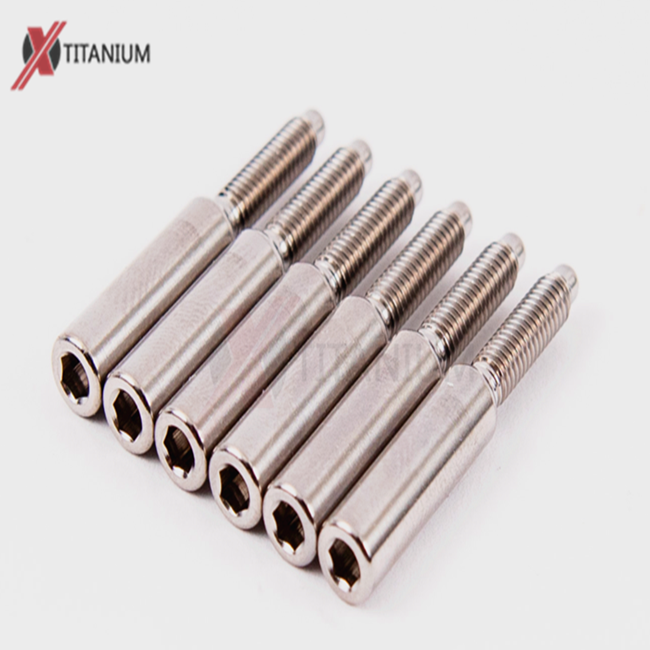
Motocross titanium bolts are the peak of off-road motorbike race high-performance fastener technology. These precision-engineered parts are made from an aerospace-grade Ti-6Al-4V metal and help race teams with three major problems: reducing unsprung weight, protecting against environmental degradation, and preventing structural fatigue under high vibration. Motocross titanium bolts are 40–45% lighter than steel and don't rust or break down in acidic soil, mud, or high-pressure washing processes. They also work better with suspension and require less upkeep, which directly leads to better performance in competition.
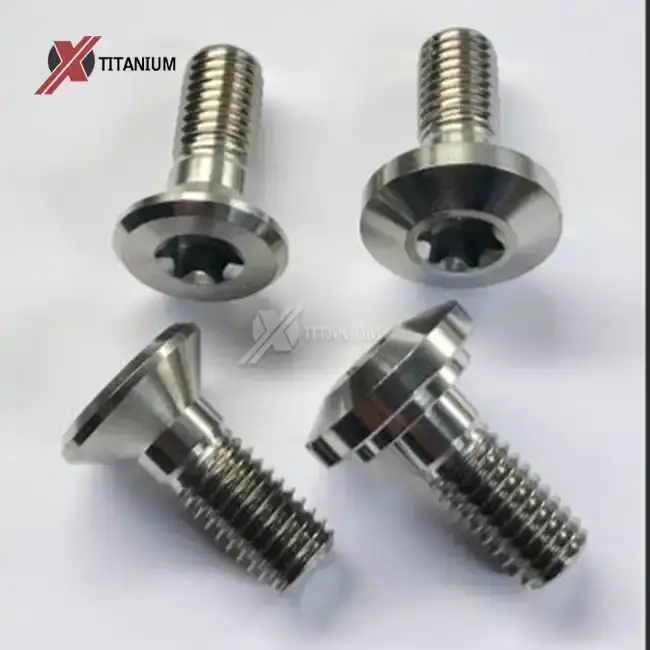
Understanding Titanium Bolts in Motocross Applications
Motocross titanium bolts are seen as necessary parts by racing teams and equipment makers, not as extras that can be added. The science of the materials used to make these bolts shows why they're common in professional racing settings.
Material Composition and Performance Characteristics
Ti-6Al-4V, which stands for Grade 5 titanium metal, is made up of about 90% titanium, 6% aluminum, and 4% vanadium. With this particular mix, the density is 4.43 g/cm³, and the compressive strength is between 950 and 1050 MPa. The aluminum part makes it stronger and lighter, and the vanadium part keeps the crystal structure stable and makes it less likely to creep at high temperatures. This metal stays strong mechanically up to 600°C, which means it can be used for exhaust manifold studs and other engine parts that go through heat cycles.
The production method has a big effect on how well something works. Fully forged bolt heads keep the grain flow patterns that make shear strength higher, while rolled threads push on the structure of the material instead of cutting through it. When you roll threads, the root radius gets bigger and the surface gets harder. This makes the threads 30% more resistant to wear than polished threads. When procurement managers buy motocross titanium bolts, they should make sure that the sellers use these important production methods instead of just cutting bolts from bar stock.
Strategic Deployment Zones
When put in certain places, motocross titanium bolts give you the most value. Lowering the weight of unsprung parts helps brake rotor bolts, back sprocket nuts, and axle pinch bolts work better. This lets suspension systems respond more quickly to changes in the road. By switching from steel to motocross titanium bolts, a race team loses about 120 grams of rotational mass per wheel. This makes damping control over stutter bumps and braking chop much better.
Triple clamp pinch bolts and subframe mounting points need screws that can handle the shear forces that happen when you fall from a jump. Titanium's Young's Modulus of 113 GPa makes it a little more flexible than steel's 200 GPa, which can make stress concentration places less likely in aluminum frame parts. Titanium's fatigue resistance stops lower-grade screws from coming loose and breaking when high-frequency oscillation happens, which happens when engine mount bolts hold powerplants in place that make a lot of sound.
Corrosion Resistance and Durability: Why Titanium Dominates
The rough motorcycle setting attacks every part aggressively with chemicals and tools. Knowing how motocross titanium bolts protect themselves helps people who work in buying choose the right fastener options.
Passive Oxide Layer Formation
When titanium is exposed to air, it makes a strong layer of titanium dioxide (TiO₂). This passive film is usually 1 to 10 nanometers thick and heals itself right away if it gets cut or broken. Between 3 and 12 on the pH scale, the oxide layer stays the same. This protects against acidic soil compounds, alkaline cleaning products, and salty surroundings. Accelerated weathering testing shows that Grade 5 titanium stays structurally sound after 1,000 hours of being exposed to salt spray, but Grade 8.8 steel screws start to rust after 72 hours of the same conditions.
This resistance to rust means that it is easier to keep up. When steel bolts are in wet conditions, they often get stuck in aluminum threaded holes. This means that they need to be drilled out and re-tapped as part of regular maintenance. Motocross titanium bolts can be taken off even after being exposed to the elements for a long time. This cuts down on upkeep work and prevents expensive damage to parts. This feature is very useful for racing teams that work near the coast or in winter enduro conditions, where saltwater and chemicals used to melt ice on the roads quickly break down regular screws.
Comparative Performance Metrics
The most obvious benefit is still losing weight, but a full study shows that there are other fitness aspects as well. A full motocross titanium bolts kit for a current 450cc motocross bike weighs about 850 grams, while the same gear made of steel weighs 1,520 grams. This is a 670-gram weight loss that lowers the bike's center of gravity and increases its power-to-weight ratio. This huge savings mostly happens in places that are important for dealing dynamics. Service life under repeated stress is based on fatigue resistance.
Single-cylinder race engines make rates of vibration that put millions of stress cycles on the frame and engine parts every season. Grade 5 titanium can resist at least 10⁷ cycles at 510 MPa stress amplitudes, while heat-treated steel usually breaks after less than 10⁶ cycles at the same loads. Teams that replace their fasteners every year with steel ones only have to service their motocross titanium bolts every other year. This cuts down on stocking costs and downtime during race weekends.
How to Choose the Best Titanium Bolt Kits for Motocross?
When buying motocross titanium bolts, you need to look at more than just the price per unit. You also need to look at the technical specs, the supplier's skills, and the total cost of ownership.
Defining Technical Requirements
Standardizing thread sizes makes it easier to keep track of supplies. For most motorcycle uses, M6, M8, and M10 threads are enough, but some parts may need M5 or M12 motocross titanium bolts. Purchasing managers should ask for records that prove the thread pitch is accurate to an ISO 6g tolerance. This will make sure that the parts fit properly into metal engine cases without too much space or interference. Tensile strength approval to at least 930 MPa gives structure users peace of mind, and proof load testing makes sure that every batch meets the requirements before it is sent out.
Surface finishes do more than just look nice; they also serve a purpose. Through the inactive oxide layer, the natural titanium finish protects against rust on a basic level. Type II anodizing makes oxide layers that are stronger and more controllable. The layers can be any color from gold to purple, and they are 0.5 to 25 microns thick, which makes them more resistant to wear. Physical Vapor Deposition (PVD) coats put down layers of diamond-like carbon (DLC), which lowers friction and stops metal threads from galling when they are torqued. The black DLC finish is both attractive and useful because it makes the surface harder.
Supplier Evaluation Criteria
Quality management systems show how well a seller can offer consistent goods. The AS9100 certification shows that the process controls and tracking meet aerospace-level standards, and the ISO 9001 certification gives basic quality guarantee. Instead of using lower-quality pure titanium, procurement workers should make sure that sellers keep chemical makeup records for each lot of material by analyzing them with a spectrometer and checking the Ti-6Al-4V percentages. Precision makers are different from simple machine shops that buy commercial fastener blanks because they have thread rolling tools and can forge.
Testing equipment shows that you are dedicated to quality assurance. Suppliers should give information on group tensile tests, hardness measures (usually Rockwell C 30-35), and grain flow photomicrographs that show the structure of rolled threads. Teams that want to compete in official racing events that require technical inspections must be able to do metallurgy analysis and show that their materials can be tracked back to the mill where they were made.
Procurement and Ordering Guidance for Business Buyers
To get around in the motocross titanium bolts market, you need to make sure the products are real and understand how prices are set to show how complicated the making process is.
Identifying Genuine Products
There are some low-quality motocross titanium bolts on the market that aren't safe. Genuine Grade 5 motocross titanium bolts have certain traits that buyers can check to make sure they are real. When torqued to the right level, real Ti-6Al-4V shows unique grey-brown heat tint patterns, while fakes made of coated steel look brassy yellow. Magnetic testing is a quick way to check for quality—titanium is not magnetic, but steel screws do attract magnets no matter what finish they have. Verifying the weight reveals differences in density; an M8x25mm motocross titanium bolt weighs about 3.2 grams, while the steel version weighs 7.8 grams.
Prices show the cost of making something. Grade 5 titanium costs about $35 to $45 a kilogram, while alloy steel costs only $2 to $4 a kilogram. Motocross titanium bolts are 8–12 times more expensive than steel ones because they cost more to process because they have to be thread-rolled, forged, and heated. There are economies of scale when you buy in bulk, and big savings usually start at 500 pieces. Buying complete bike kits with 60 to 80 motocross titanium bolts is a better deal than buying individual bolts, since the price of the kit is 10-15% less than the cost of all the parts put together.
Logistics and Lead Time Planning
It takes longer to make motocross titanium bolts than it does to make regular steel goods. For custom thread sizes or coatings, the production time is 6 to 8 weeks, but normal catalog items ship within 10 to 15 working days. Racing teams should keep a smart stock of goods so that they don't have to pay extra for fast shipping in an emergency, which can double the cost of buying things. Building ties with providers who keep standard sizes in a variety of surface finishes gives you options for needs that come up in the middle of the season.
When you buy things internationally, you have to think about more than just unit price. Under most trade deals, motocross titanium bolts with the HS Code 8108.90 can enter duty-free. However, it is best to check with customs agents to avoid any surprises. Thread integrity should be protected during shipping by the packaging. Vacuum-sealed bags with desiccant work better than bulk carriers to stop oxidation and mechanical damage.
Enhancing Performance and Longevity with Titanium Bolt Kits
The best way to get the most out of your motocross titanium bolts investment is to follow the right installation and care steps.
Installation Best Practices
Applying torque is different from applying torque to steel bolts. Because titanium has a lower modulus of elasticity, bolts stretch more when they are loaded. This could lead to over-torquing if techs use "feel" instead of measured tools. When you use a beam-type or digital torque wrench, you don't have to guess. Manufacturers usually list torque numbers that are the same as those for steel, but the most important change is how the anti-seize compound is used.
When motocross titanium bolts are put into aluminum, they tend to gall, which means that the two materials cold-weld under friction and pressure. Putting copper-based anti-seize paste or a special titanium assembly lube on threads changes the friction coefficient, which stops them from seizing up. As titanium is anodic to aluminum on the galvanic series, aluminum threads can corrode when moisture forms an electrolytic path. The lubricant acts as a buffer and stops galvanic corrosion at the same time. Maintenance plans should include checking and cleaning the threads once a year and reapplying anti-seize at regular service intervals.
Inspection and Replacement Protocols
A visual check can show you issues early on. Motocross titanium bolts shouldn't have any cracks, especially where the thread starts and the head meets the base. Plastic distortion, which means the part needs to be replaced, is shown by stretching beyond 5% of its original length. If you cross-thread or hit something and damage a thread, you need to fix it right away because damaged threads combine stress and speed up failure. Professional racing teams should use batch cycle plans to replace important motocross titanium bolts after a certain number of race hours, no matter how good they look.
New technologies keep improving the abilities of motocross titanium bolts. Beta titanium alloys that are still being worked on are 10-15% stronger than Ti-6Al-4V while keeping the same mass. Laser surface texturing makes tiny designs that lower friction without adding extra thickness to the layer. These new developments make motocross titanium bolts investments that will pay off in the long run for businesses that want to stay ahead of the competition by always getting better.
Conclusion
When it comes to major motocross operations, motocross titanium bolts technology offers measurable performance gains that make the investment worth it. The mix of less weight, resistance to corrosion, and resistance to wear solves some of the most important problems in off-road racing. Professionals in procurement who know the specs of the materials, check the skills of suppliers, and follow the right installation procedures can get the most out of these benefits while avoiding fake goods and products that break down too soon. When racing teams switch to titanium hardware, they notice real changes in how well they maintain their cars, how long their parts last, and how well they do on the track. These improvements add up over the course of a racing season.
FAQ
Q1: Can titanium fasteners use the same torque specifications as OEM steel bolts?
A: Grade 5 titanium has a yield strength that is the same as or higher than normal steel fasteners, so it can be used with original torque specs in most situations. Managing the contact rate is what makes the difference. Applying a good anti-seize compound to motocross titanium bolts changes the link between force and preload. Technicians should only torque to the manufacturer's standards and never more than that. This is because, compared to steel, titanium has different elastic qualities that change the clamping force that is produced at given torque values.
Q2: What prevents galvanic corrosion between titanium bolts and aluminum components?
A: Motocross titanium bolts are further away from aluminum on the galvanic line, which makes it more likely to corrode when water works as an electrolyte. This chance is reduced in two ways by proper placement. Anodized titanium treatments on the metals' surfaces keep them from touching directly, and anti-seize paste makes a physical barrier that stops electrical routes. Racing teams that work in wet or seaside areas should check the threads on metal parts once a year for signs of corrosion and keep the anti-seize covering fresh between maintenance checks.
Q3: How do I verify authentic Grade 5 titanium versus coated steel counterfeits?
A: There are several ways to tell if motocross titanium bolts are real. Magnetic testing is a quick way to check for fake steel because titanium doesn't attract magnets and fake steel does, no matter what finish is on it. When you compare densities, you can see that titanium weighs 43% of steel volume-for-volume. For each batch, reputable providers give mill certificates, spectrometer analysis results, and tensile test data. Before agreeing to big orders, procurement managers should ask for these papers and check the quality approvals of suppliers.
Why Choose Chuanglian as Your Motocross Titanium Bolts Supplier?
Baoji Chuanglian New Metal Material Co., Ltd. manufactures precision motocross titanium bolts in China's "City of Titanium," where we've refined Grade 5 alloy processing expertise over more than ten years. Our CNC machines can make special thread sizes from M5 to M12 with an ISO 6g tolerance, and our rolled-thread technology protects the grain structure integrity that is important for race uses. Every bolt goes through a spectrometer test to make sure it is made of Ti-6Al-4V, a tensile test to make sure it is strong enough to withstand 930+ MPa, and a dimensional check to make sure the threads are straight.
We offer a wide range of surface treatments, such as a natural finish, Type II anodizing in six colors, and nitriding to make the surface harder. Our rigorous quality control system keeps track of every bolt from the approved raw materials it is made of to its final review. This gives racing teams the proof they need to be technically compliant. Get in touch with our technical team at info@cltifastener.com or djy6580@aliyun.com to talk about the fasteners you need.
References
1. Boyer, R., Welsch, G., & Collings, E.W. (1994). Materials Properties Handbook: Titanium Alloys. ASM International, Materials Park, Ohio.
2. Schutz, R.W. & Thomas, D.E. (1987). Corrosion of Titanium and Titanium Alloys. Metals Handbook, Volume 13: Corrosion, ASM International.
3. Donachie, M.J. (2000). Titanium: A Technical Guide, 2nd Edition. ASM International, Materials Park, Ohio.
4. Lutjering, G. & Williams, J.C. (2007). Titanium: Engineering Materials and Processes, 2nd Edition. Springer-Verlag, Berlin.
5. Peters, M., Kumpfert, J., Ward, C.H., & Leyens, C. (2003). Titanium Alloys for Aerospace Applications. Advanced Engineering Materials, Volume 5, Issue 6.
6. Froes, F.H. (2015). Titanium: Physical Metallurgy, Processing, and Applications. ASM International, Materials Park, Ohio.
_1747364352357.webp)
Learn about our latest products and discounts through SMS or email