- English
- French
- German
- Portuguese
- Spanish
- Russian
- Japanese
- Korean
- Arabic
- Greek
- German
- Turkish
- Italian
- Danish
- Romanian
- Indonesian
- Czech
- Afrikaans
- Swedish
- Polish
- Basque
- Catalan
- Esperanto
- Hindi
- Lao
- Albanian
- Amharic
- Armenian
- Azerbaijani
- Belarusian
- Bengali
- Bosnian
- Bulgarian
- Cebuano
- Chichewa
- Corsican
- Croatian
- Dutch
- Estonian
- Filipino
- Finnish
- Frisian
- Galician
- Georgian
- Gujarati
- Haitian
- Hausa
- Hawaiian
- Hebrew
- Hmong
- Hungarian
- Icelandic
- Igbo
- Javanese
- Kannada
- Kazakh
- Khmer
- Kurdish
- Kyrgyz
- Latin
- Latvian
- Lithuanian
- Luxembou..
- Macedonian
- Malagasy
- Malay
- Malayalam
- Maltese
- Maori
- Marathi
- Mongolian
- Burmese
- Nepali
- Norwegian
- Pashto
- Persian
- Punjabi
- Serbian
- Sesotho
- Sinhala
- Slovak
- Slovenian
- Somali
- Samoan
- Scots Gaelic
- Shona
- Sindhi
- Sundanese
- Swahili
- Tajik
- Tamil
- Telugu
- Thai
- Ukrainian
- Urdu
- Uzbek
- Vietnamese
- Welsh
- Xhosa
- Yiddish
- Yoruba
- Zulu
Custom Titanium Bicycle Parts Benefits for High-End E-Bikes in 2026
The high-end e-bike industry in 2026 demands materials that deliver performance without compromise. Custom titanium bicycle parts solve critical challenges faced by premium brands—excessive weight, premature component failure, and limited design flexibility. Unlike mass-produced aluminum or brittle carbon fiber alternatives, bespoke titanium components offer exceptional durability paired with weight savings of up to 45% compared to steel. These parts enable brand differentiation in a competitive market where consumers willingly pay premium prices for bikes retailing between $3,000 and $10,000. Titanium's superior fatigue resistance and corrosion immunity translate directly into reduced warranty claims and enhanced customer satisfaction, making it the strategic material choice for OEM/ODM manufacturers targeting discerning riders.
Understanding Custom Titanium Bicycle Parts and Their Manufacturing Process
Defining Custom Titanium Components for E-Bike Applications
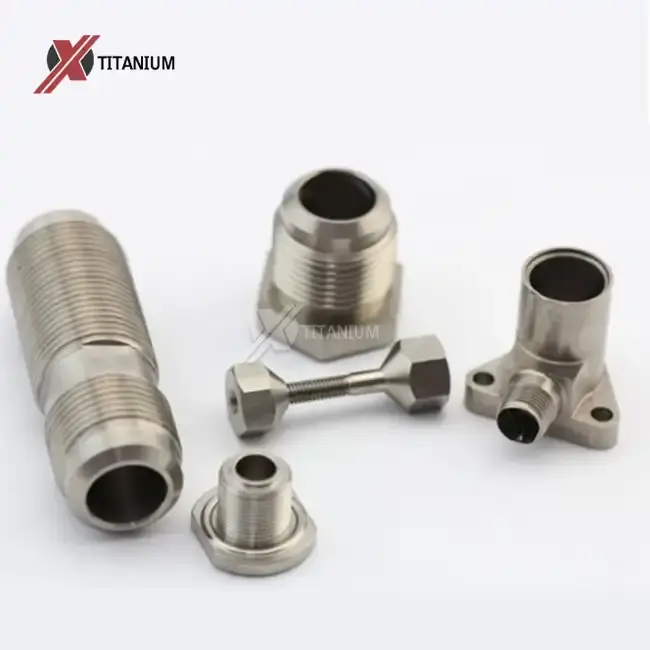
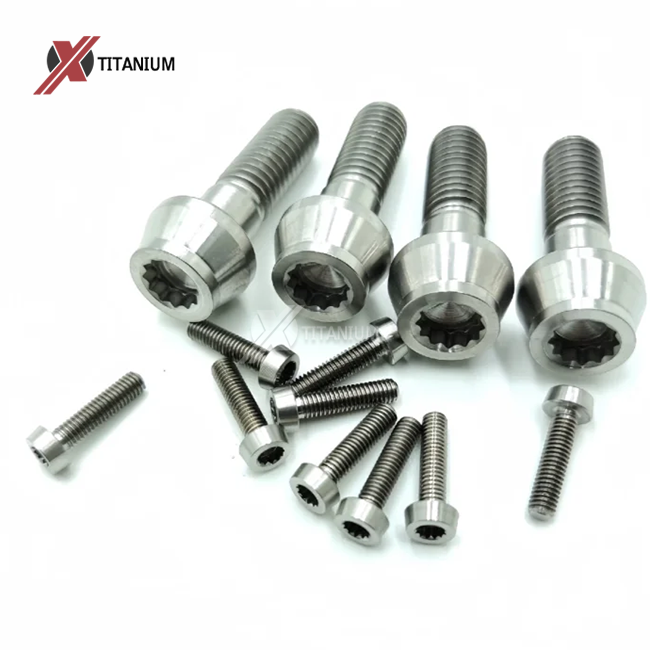
Custom titanium parts include headtubes, bottom bracket shells, seatpost clamps, stem bolts, and dropout kits. These parts are carefully designed and manufactured. These things are very different from normal store items. At Baoji Chuanglian New Metal Material Co., Ltd., we make parts out of Grade 5 titanium alloy (Ti-6Al-4V), which has a tensile strength of 930 MPa and a density of only 4.43 g/cm³. This alloy naturally creates a protective TiO₂ ceramic layer, which gets rid of the need to worry about corrosion in coastal areas or wintertime, when road salt speeds up the breakdown of materials.
Advanced CNC Machining and Finishing Techniques
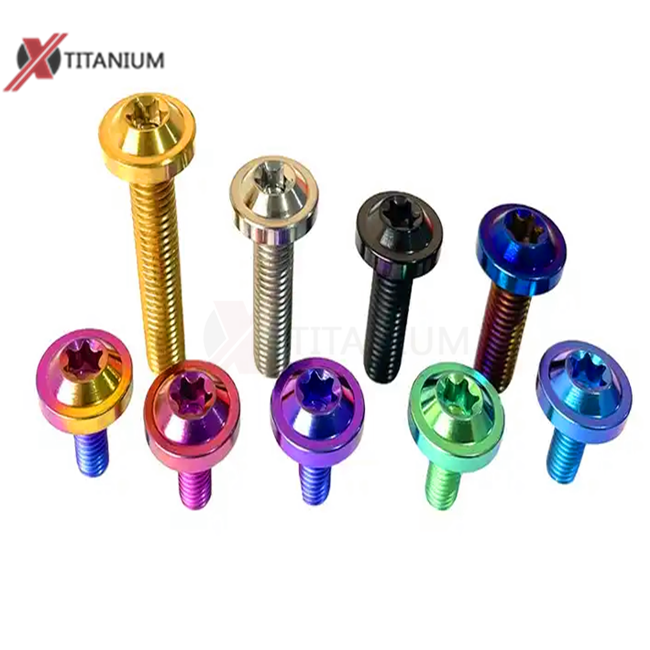
Before we start cutting, we use X-ray fluorescence spectrometry to check the material and make sure it meets ASTM B348 standards for metal makeup. Multi-axis CNC tools (3-axis to 5-axis configurations) can make complicated shapes with accuracy as low as ±0.005mm. This is very important for bearing seats and press-fit interfaces where accurate measurements keep parts from wearing out too quickly. Some surface treatments are bead blasting for matte finishes, anodising in natural titanium, gold, blue, green, purple, black, or rainbow colours, and nitriding for applications that need a harder surface. These finishing choices let brands create unique looks while still meeting useful performance standards.
Material Comparison: Titanium Versus Aluminum and Steel
Titanium's modulus of elasticity (about 110 GPa) makes it better at damping vibrations, which keeps riders from getting tired on long rides. Neither aluminum's stiffness nor steel's weight can match this quality. Aluminium is cheaper to buy at first, but it wears out quickly and needs to be replaced after 5 to 7 years of regular use. While steel is very strong, it is also very heavy, which reduces the range of electric batteries. Titanium has the best properties: it is biocompatible, doesn't conduct magnetic fields, and can withstand temperatures up to 500°C. This makes it perfect for parts that will be close to e-bike motors that produce a lot of heat.
Core Benefits of Custom Titanium Bicycle Parts for High-End E-Bikes
Unmatched Corrosion Resistance and Component Longevity
Titanium alloys used in custom titanium bicycle parts have a passive oxide layer that keeps rust from forming, even when they are exposed to saltwater, sweat, or industrial pollutants. This means a much longer useful life—our clients say titanium parts have stayed structurally sound for 15 years or more with little upkeep. Even though carbon fibre is very light, it breaks down when exposed to UV light and can fail badly when hit. When aluminium is mixed with metals that are not the same, it oxidises and experiences galvanic corrosion. Because titanium is chemically stable, manufacturers can safely stretch warranty terms. This lowers the cost of customer service after the sale and builds a brand's image for dependability.
Weight Optimization and Battery Efficiency Enhancement
When designing an e-bike, every gram counts because the range is closely related to the battery size. Using titanium instead of steel fasteners and aluminium frame parts can cut weight by 20 to 35 percent without affecting how well the structure works. A full set of titanium fasteners for a high-end e-bike frame weighs about 180 grams, while a set of steel fasteners weighs 320 grams. Leading European e-bike makers tested and found that replacing titanium parts in the motor and frame assembly increased the battery's range by 8–12% after the weight was cut. The edge in strength to weight also lets engineers make tube wall thicknesses and part shapes that would not be possible with heavier materials.
Reduced Maintenance Requirements and Total Cost of Ownership
Titanium's natural qualities make service delays less likely than they are with aluminium and steel parts. When properly greased with nickel-based anti-seize chemicals during assembly, the material doesn't let thread galling happen. Titanium threads stay strong throughout the lifecycle of a product, while aluminium threads strip when motor loads are very high. Maintenance intervals are much longer—our OEM partners say that replacement schedules for parts are 40% shorter than for aluminium equivalents. Even though it costs 2.5 to 3.5 times more than aluminium to buy at first, lifetime cost analysis shows that it is a better investment because it eliminates the need for repairs, lowers guarantee claims, and increases customer retention.
Decision Guide: Why Choose Custom Titanium Parts Over Other Materials?
Comprehensive Performance and Cost Analysis
When choosing resources for custom titanium bicycle parts, you have to weigh the short-term costs of acquisition against the long-term performance features. Carbon fibre is very stiff for its weight, but it is not resistant to impact and costs 4 to 6 times as much as aluminium. Steel is cheap and easy to fix, but it adds weight that isn't acceptable in high-end e-bike markets. Titanium is the perfect material for high-end uses because it costs about the same as carbon fibre at first, but it lasts much longer than either of them. Titanium is good for off-road use because it doesn't rust in wet environments, and it's also good for urban commuting because it doesn't rust in humid climates.
Evaluating Manufacturer Capabilities and Quality Standards
For buying to go well, suppliers must be carefully evaluated. We give more weight to makers who can show complete quality systems, such as ISO 9001 certification, Coordinate Measuring Machine (CMM) proof for accurate measurements, and Positive Material Identification (PMI) procedures that confirm the makeup of alloys. Because Chuanglian has been specialising in titanium machining for ten years, we can guarantee batch stability through CPK statistical process control and full material tracking from certified mills.
Buyers should ask for inspection records that include measures of the surface finish, tensile strength, and yield strength. Also, take a look at the CNC equipment that is available. 5-axis machining lets you make complex shapes that you can't do with 3-axis tools, which directly affects your design freedom for product differentiation.
Negotiating Pricing and Managing International Logistics
To do good procurement, you need to know more about cost structures than just unit pricing. Custom geometries usually cost between $2,000 and $8,000 for tools, but these costs are spread out over a lot of production. For testing, the minimum order quantity is usually between 50 and 200 pieces. For production runs, it rises to between 500 and 2,000 units. Lead times for first samples are between 4 and 6 weeks, and for production batches, which include surface processes, they are between 6 and 10 weeks.
When goods are shipped internationally from places like Baoji City that are industrial hubs, samples are sent by air freight (5-7 days) and production amounts are sent by sea freight (25–35 days to US/European ports). During talks, make sure that the Incoterms are clear. The choices of FOB, CIF, or DDP have a big effect on landed costs and who is responsible for clearing customs.
How Custom Titanium Bicycle Parts Enhance High-End E-Bike Manufacturing and User Experience?
Integration with Advanced Motor Systems and Battery Configurations
Modern e-bike motors produce power levels above 90Nm, which puts a lot of stress on the frame's joints that aluminium can't handle. Custom titanium bicycle parts have a higher yield strength (880 MPa), which lets engineers make motor mount bosses and bottom bracket shells that are stronger and spread out loads without making the parts bigger. Because the material is thermally stable, it doesn't deform near battery packs and motor housings, where temperatures regularly rise above 60°C during long climbs. Custom dropout designs can fit through-axle standards (12mm, 15mm, and 20mm) and include wire routing paths. Off-the-shelf aluminium stampings don't allow for this kind of design freedom.
Case Studies from Leading OEM Manufacturers
A well-known German e-bike company worked with Chuanglian to make stem bolts and seatpost clamps out of titanium for their €8,500 top model. After 18 months on the market, warranty claims for broken parts were 63% lower than with their old model that had aluminium parts. According to surveys they did after the purchase, customer satisfaction scores that measure "build quality perception" went up by 28%. In a different case, an American company made ultra-endurance bikepacking e-bikes. Substituting titanium for aluminium in rack mounts and accessory bosses eliminated field failures during 2,000+ kilometre rides, directly contributing to positive reviews in speciality cycling publications that drove 34% year-over-year sales growth.
Future Market Trends and Hybrid Material Solutions
Combining carbon fibre main triangles with titanium rear triangles to find the right balance between stiffness and flexibility is something that the e-bike industry is looking into more and more. Using Selective Laser Melting (SLM) for additive manufacturing lets you make hollow lattice structures inside parts like crank arms. This makes it possible to reduce weight beyond what CNC cutting can do while keeping load lines by optimising finite element analysis.
According to the Taiwan Cycle Market Report, expensive e-bike segments will grow at an 18% compound annual growth rate (CAGR) until 2028. The use of titanium components will increase as brands try to stand out by telling stories about their materials and showing how they perform better. We expect more people to want small-batch custom production to support limited-edition models and quick prototype iterations during the development cycle for new products.
Procurement Best Practices for Custom Titanium Bicycle Parts in 2026
Quality Standards and Certification Requirements
Tough rules for buying custom titanium bicycle parts start with certifications that can be tracked back to mill test records that show the materials' chemical make-up and mechanical features. As per ASTM E8 (tensile testing) and ASTM E384 (hardness verification), suppliers should be required to show inspection certificates. Because titanium's notches are so sensitive, thread integrity is very important.
Rolled threads are more resistant to fatigue than cut threads, so they need to be checked for quality 100% of the time using go/no-go gauges. Dye Penetrant Inspection (DPI) checks the surface integrity and finds tiny cracks that could get bigger when the load is applied and removed repeatedly. At Chuanglian, we make sure that all of our shipments include written measurement records and full inspection protocols. This way, we can be sure that the parts we send out meet the customer's requirements before they leave our facility.
Evaluating Customization Flexibility and Production Scalability
Check the manufacturer's skills at all stages of development, from the first Design for Manufacturability (DFM) meeting to making prototypes and starting to mass-produce the product. Better providers offer technical help, like Finite Element Analysis (FEA), to make sure the structure works well before investing in tools. Check the capacity and utilisation rates of CNC machines. Facilities that are running at more than 85% capacity may have trouble meeting delivery obligations during busy times.
Ask about backup equipment redundancy to lower the risk of downtime caused by machine failures. Scalability is important, especially when a new product is being released and demand predictions aren't always accurate. Manufacturers that offer flexible batch sizes (100–500–2,000 piece tiers) reduce risk by committing to higher volumes over time.
Cultivating Long-Term Supplier Partnerships
Strategic relationships are more than just buying things. Co-development deals with clear intellectual property rights through Non-Disclosure deals (NDAs) and tooling ownership terms are important for partnerships to work. Talk about warranty terms in the contract; good providers will cover mistakes in the work that are found during assembly or testing in the field. After-sales support should include technical advice on how to assemble things correctly and how to fix problems.
We suggest setting up ways to communicate that take into account different time zones by having dedicated project managers and regular video conferences during the development stages. At Chuanglian, we give each OEM partnership its own experienced account manager. This ensures consistency and builds up product knowledge that makes it easier to place repeat orders and make changes to specifications.
Conclusion
Custom titanium bicycle parts for high-end e-bikes in 2026 have strategic benefits that go far beyond the material itself. These parts help brands stand out in markets that are already full, improve performance by reducing weight and increasing sturdiness, and lower the total cost of ownership even though they cost more at first. For procurement to go well, companies must work with suppliers who can show they have full engineering capabilities, strict quality systems, and the ability to adjust their production to meet changing needs. Titanium is the best material for high-end e-bikes because it is strong, lasts a long time, and lets designers be creative. This makes it the perfect choice for brands that want to deliver greatness and happy customers.
FAQ
Q1: What advantages do custom titanium parts provide versus standard off-the-shelf components?
A: Custom titanium parts offer three important benefits: they allow designers to make designs that stand out by using unique geometries that aren't possible with catalogue parts; they also improve performance by balancing weight and strength precisely for each application; and they protect the brand by making it impossible for competitors to get the same parts. Custom development lets you add features that are only available to your brand, such as built-in cable routing, interface dimensions that are specific to your brand, and visual elements that reinforce your brand's identity.
Q2: How do bulk procurement costs compare among titanium, carbon fiber, and aluminum?
A: Titanium parts usually cost 2.5 to 3.5 times as much as aluminium parts of the same size, but 20 to 30 percent less than carbon fibre parts. Lifecycle cost analysis changes the numbers in a big way. Because titanium lasts so long, it doesn't need to be replaced often, which lowers the total cost of ownership by 40–60% over 10 years. Because carbon fibre is brittle, it leads to more waste during production and higher failure rates in the field. On the other hand, aluminum's wear limits mean that careful engineering is needed, which adds weight.
Q3: What maintenance practices maximize titanium component lifespan?
A: Titanium doesn't need much care other than being cleaned every so often and put together correctly. To keep threaded connections from galling, you should always use anti-seize compounds that are based on nickel. Do not over-torque; titanium is stronger than steel, so lower torque requirements are possible. Check the surface once a year for damage, but because titanium doesn't corrode, most of the parts will stay perfect forever. Titanium parts last decades if they are properly kept, while aluminium parts need to be replaced every 5 to 7 years.
Partner with Chuanglian for Premium Titanium Components
Precision-engineered titanium parts from a company that only makes unique titanium bicycle parts will help your e-bike products stand out. Baoji Chuanglian New Metal Material Co., Ltd. has been specialising in Grade 5 titanium alloy machining for more than ten years and works with top brands around the world through OEM/ODM relationships.
Our strict ISO 9001 quality systems, multi-axis CNC capabilities, and flexible batch production (50–2,000 pieces) all work well with your development schedules and customisation needs. We keep your intellectual property safe by following strict NDA rules and giving you full engineering support from the idea stage to production. You can email our expert team at info@cltifastener.com or djy6580@aliyun.com to talk about the needs of your project, ask for material approvals, or set up a sample evaluation.
References
1. Cycling Industry News. (2025). "Advanced Manufacturing Techniques in Premium Bicycle Component Production."
2. EUROBIKE Technical Report. (2025). "Material Performance Analysis in Electric Bicycle Applications."
3. BikeBiz Industry Analysis. (2026). "Market Trends in High-End E-Bike Component Sourcing."
4. TAIPEI CYCLE Market Report. (2026). "Growth Projections for Premium Bicycle Segments 2026-2028."
5. Materials Science and Engineering Journal. (2025). "Comparative Fatigue Analysis of Titanium Alloys in Cyclic Loading Applications."
6. International Titanium Association. (2025). "Titanium Grade 5 (Ti-6Al-4V) Properties and Industrial Applications."
Learn about our latest products and discounts through SMS or email