- English
- French
- German
- Portuguese
- Spanish
- Russian
- Japanese
- Korean
- Arabic
- Greek
- German
- Turkish
- Italian
- Danish
- Romanian
- Indonesian
- Czech
- Afrikaans
- Swedish
- Polish
- Basque
- Catalan
- Esperanto
- Hindi
- Lao
- Albanian
- Amharic
- Armenian
- Azerbaijani
- Belarusian
- Bengali
- Bosnian
- Bulgarian
- Cebuano
- Chichewa
- Corsican
- Croatian
- Dutch
- Estonian
- Filipino
- Finnish
- Frisian
- Galician
- Georgian
- Gujarati
- Haitian
- Hausa
- Hawaiian
- Hebrew
- Hmong
- Hungarian
- Icelandic
- Igbo
- Javanese
- Kannada
- Kazakh
- Khmer
- Kurdish
- Kyrgyz
- Latin
- Latvian
- Lithuanian
- Luxembou..
- Macedonian
- Malagasy
- Malay
- Malayalam
- Maltese
- Maori
- Marathi
- Mongolian
- Burmese
- Nepali
- Norwegian
- Pashto
- Persian
- Punjabi
- Serbian
- Sesotho
- Sinhala
- Slovak
- Slovenian
- Somali
- Samoan
- Scots Gaelic
- Shona
- Sindhi
- Sundanese
- Swahili
- Tajik
- Tamil
- Telugu
- Thai
- Ukrainian
- Urdu
- Uzbek
- Vietnamese
- Welsh
- Xhosa
- Yiddish
- Yoruba
- Zulu
Durability differences between titanium bolts and steel bolts for bikes
When comparing the durability of fasteners for high-performance cycling applications, understanding the fundamental material properties becomes essential. Titanium bicycle bolts, particularly those manufactured from Grade 5 Ti-6Al-4V alloy, offer distinct advantages over traditional steel alternatives in terms of corrosion immunity, fatigue life, and weight efficiency.
While steel bolts have served the industry reliably for decades, titanium's inherent resistance to environmental degradation and superior strength-to-weight ratio make it increasingly attractive for OEM manufacturers, custom bike builders, and specialty component producers seeking to enhance product longevity without compromising structural integrity or adding unnecessary mass to critical assemblies.
Understanding Durability: Titanium vs. Steel Bicycle Bolts
There is a lot more to the longevity factor for bicycle fasteners than just measuring their tensile strength. Engineers and buying specialists have to look at how well a product works mechanically under cyclic loads, how well it works in different climates, and how stable its dimensions are over time.
Material Science Behind Performance Characteristics
The matrix of Grade 5 titanium alloy is made up of about 90% titanium, 6% aluminium, and 4% vanadium. It has a tensile strength of 900 MPa and a mass of only 4.43 g/cm³. When this mixture is exposed to air for a few milliseconds, it forms a passive oxide layer that protects the surface from rusting from the air, road salts, and acidic chemicals found in sweat and cleaning products. Steel bolts are usually made from chromoly or stainless grades.
Their tensile strengths range from 800 to 1200 MPa, based on how they were heated. However, they are very dense at 7.8 g/cm³, which is almost 76% heavier than titanium. Even though some types of stainless steel don't rust as easily as plain carbon steel, they can still get pitting and crevice corrosion in chloride-rich places, like coastal areas or winter road conditions where de-icing salts are common.
Fatigue Resistance and Cyclic Loading Behavior
During their working lives, bicycle parts go through millions of stress cycles. This is especially true for brake rotors, stem clamps, and handlebar connections. Titanium bicycle bolts made with thread-rolling technology keep the material's grain flow structure, which makes them up to 30% more resistant to wear than thread-cut versions.
This way of making things presses down on the top layers, adding good leftover forces that stop cracks from starting. Even though the right heat treatment and surface hardening can make steel bolts very resistant to wear, they can still crack when they are exposed to both tension loads and corrosive media at the same time, which often happens when riding in wet conditions.
Wear Performance and Surface Durability
Surface processes have a big effect on how long both types of materials last. When titanium bicycle bolts are nitrided or treated with Physical Vapour Deposition, the surface becomes as hard as hardened steel while the toughness of the substrate is kept. These processes also lower the coefficient of friction, which lowers the risk of galling.
Galling is when titanium cold-welds to itself or to metals that are not the same under high contact pressure. Zinc plating, black oxide coating, or electroless nickel finishes are often used on steel nuts to make them more resistant to wear and rust. These coatings will always wear off due to mechanical wear and tear during installation and removal, leaving the base metal open to damage from the environment.
Key Factors Influencing Durability Differences
There are a lot of factors that affect whether titanium or steel screws will last longer in different biking situations. By knowing about these things, buying teams can choose materials that meet practical needs.
Corrosion Resistance and Environmental Stability
When titanium surfaces are scratched or abraded, the self-healing oxide layer forms back right away, protecting the metal permanently without the need for extra coatings. Having this feature is very helpful for bikes that are kept outside, ridden in water, or used for travel in the winter. Test results from accelerated salt-spray chambers show that Grade 5 titanium has no measurable corrosion after 3,000 hours of continuous exposure. In contrast, even high-grade stainless steel starts to discolour and pit within 500 hours.
To get good service intervals, steel nuts need to be carefully maintained. They need to be cleaned regularly, checked for rust, and protection compounds need to be reapplied. Manufacturers who sell to people in humid subtropical conditions, seaside markets, or places with strict winter maintenance programs say that guarantee claims are much lower when titanium bicycle bolts are used on uncovered parts.
Weight Optimization Without Strength Compromise
Getting a 40% drop in mass at connection points leads to big improvements in performance, especially for rotating parts and suspension links, where weight that isn't being sprung directly affects how the vehicle handles. A high-end mountain bike's titanium bicycle bolts kit usually weighs 80 to 120 grams less than steel equivalents. This is weight that is taken away from key areas where it affects rider fatigue and bike responsiveness.
When companies are trying to sell elite cycle gear, this weight advantage is especially useful because cyclists are willing to make small gains. Steel stays in its place in situations where maximum strength is more important than weight, like in downhill race parts that are exposed to high impact loads.
Climate, Terrain, and Usage Pattern Impacts
The riding environment has a big impact on how durable the results are. Titanium bicycle bolts work great in situations where the temperature changes, they are exposed to water, or they are contaminated with chemicals. When bikes are used in tropical areas, the high humidity and salty air along the coast speed up corrosion. In the alpine, freeze-thaw cycles and road treatment chemicals make things more difficult.
Steel bolts may last long enough in controlled indoor environments or dry areas with little rain, but they need to be protected in tougher environments. When choosing fastener materials for production runs, procurement professionals should look at the types of customers they have and how they usually use the products.
Practical Procurement Considerations for Durable Bicycle Bolts
When making strategic choices about where to get bicycle fasteners, you have to weigh performance needs against financial limits while also making sure that the supply chain is reliable and that quality standards are always met.
Cost-Quality Dynamics and Investment Analysis
Titanium bicycle bolts are usually three to five times more expensive than steel parts that are the same size and shape when bought in small amounts. This original cost premium goes down, though, when you look at the total cost of ownership, which includes warranty costs, customer happiness measures, and the value of brand identity. OEMs that are trying to reach high-end customers often find that adding titanium hardware to their products helps them stand out and lets them charge more at retail.
By working with specialised titanium processors on a regular basis, bulk purchase contracts for standard sizes from M3 to M12 can get better prices. For custom setups like exact length tolerances, coloured anodising finishes, or exclusive head styles, the minimum order quantity is usually between 500 and 1000 pieces, and the wait time for the first production runs is 8 to 12 weeks.
Sizing Standards and Application Compatibility
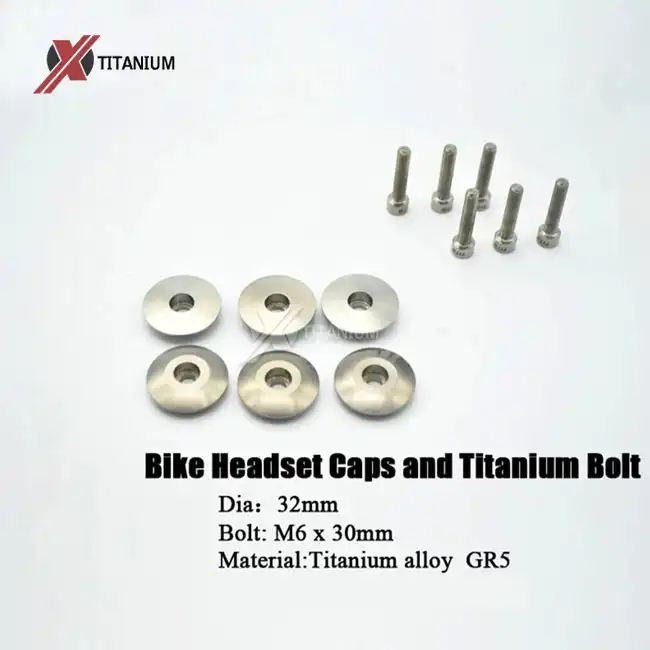
To make sure that both aluminium and steel parts fit properly, thread specifications must strictly follow ISO 965-2 standards with 6g error classes. For stem, seatpost, and brake mounting, road bikes usually use M5 and M6 fasteners. Mountain bikes, on the other hand, use M6 through M8 sizes for suspension pivots and rotor mounts. M8 bolts are often used for motor mounting mounts and battery retention systems on e-bikes because the heavy parts add to the static and dynamic loads.
Engineers need to make sure that the grip length takes into account the stacking of parts, such as washers, bearing preload spacers, and the thickness of the frame material, so that the required preload is reached without the threads bottoming out or not having enough contact length.
Supplier Qualification and Quality Assurance
Find titanium bicycle bolt suppliers with proven quality systems to tell the difference between trustworthy partners and shady sellers. Certifications like AS9100 from the aerospace industry show that there are established process controls for tracking materials, checking dimensions, and testing mechanical properties. Reliable manufacturers keep records of each batch that includes an X-ray fluorescence spectrometry analysis of the chemical composition.
This shows that the amount of aluminium and vanadium meets Grade 5 standards, not Grade 2 titanium, which is softer and doesn't have enough shear strength for structural uses. As part of quality control, thread gauge checks, loads beyond the recommended installation values for torque, and measuring surface roughness to avoid galling problems during assembly should all be part of the process.
Baoji Chuanglian New Metal Material Co., Ltd. has complete CNC machining facilities that are designed to make titanium bicycle bolts. They have been serving aerospace, medical device, and high-performance sporting goods manufacturers for over ten years. Our quality management method includes certifying incoming materials through established relationships with mills, inspecting dimensions during production using calibrated measuring tools, and checking the end product against customer requirements. This methodical approach makes sure that every package meets the exact needs of our global OEM partners, who rely on consistent material properties and precise geometrical measurements for their assembly work.
How to Maintain Titanium and Steel Bicycle Bolts for Maximum Longevity
Correct installation methods and regular maintenance schedules greatly increase the service life of fasteners, no matter what material they are made of. Knowing the specific care needs of a material keeps it from breaking down too soon and keeps safety margins intact.
Titanium Bolt Care and Installation Practices
Titanium has a lower modulus of elasticity than steel, so mounting force specs for titanium bicycle bolts need to be carefully followed. Too much torque can cause threads to bend plastically, and not enough preload lets tiny movements happen that speed up the start of stress cracks. Manufacturers should give precise torque values that take into account the thread pitch, the length of the grip, and whether anti-seize substance is used. When talking about thread lubricants, titanium-on-aluminum interfaces benefit from a thin layer of copper-based anti-seize to stop galvanic corrosion.
This happens when two different metals touch each other in an electrolyte, such as sweat or rainwater. If you want to keep the protective oxide layer on titanium bicycle bolts in good shape, you can clean them every so often with isopropyl alcohol or a light detergent solution. However, since titanium is naturally resistant to corrosion, this isn't really required. Every couple of months, a visual check is done to see if there are any signs of galling around the head-to-component interface. If the titanium fasteners are installed correctly, these problems rarely happen.
Steel Bolt Maintenance Protocols
To last as long as aluminium screws, steel ones need more care. As part of normal bike care, check the coating's integrity once a month for any chips, scratches, or changes in colour that could mean the protective layer has worn away. Use corrosion-preventing sprays or thin layers of oil on threads and bearing surfaces that will be uncovered, especially before putting them away for the winter or after being out in the rain. If you see any rust on a steel bolt right away, you should replace it because surface oxidation moves quickly once it starts and weakens the structure by decreasing the cross-sectional area.
Thread-locking compounds help keep things from coming apart when they're vibrating, but they make it harder to take apart again in the future, so choose formulations with removable strengths for parts that need to be adjusted on a regular basis. When checking the torque, steel fasteners should be checked more often because they are stiffer and can't handle being slightly under-tightened as well as titanium fasteners.
Installation Best Practices Across Materials
The right choice of washers can help with both types of materials by spreading clamping loads across the bearing areas of the parts and stopping stress from building up in one area, which could cause cracks in aluminium or carbon fibre parts. Use torque wrenches that are calibrated once a year to keep their accuracy within ±4% of the values shown. This will make sure that the preload is applied the same way every time the tool is used for production or service.
Before putting the parts together, make sure that all of the mating surfaces are clean. Get rid of any thread-locking compounds, corrosion products, or manufacturing debris that might get in the way of reaching the required clamp loads. Write down the torque steps for multi-bolt patterns like stem face plates or brake callipers to make sure that the load is spread out evenly and that odd tightening patterns don't cause distortion.
Decision Guide: Are Titanium Bicycle Bolts Worth It for Your Business?
In the end, choosing the right material means finding a balance between performance needs, market positioning, and cost limits for your particular product line and customer base.
Performance-Critical Applications Favoring Titanium
Titanium bicycle bolts are clearly worth the extra money in a number of situations. It's clear that weight reduction is useful in competitive racing, where it has a direct effect on speed, especially for parts that move with wheels or suspension systems. Titanium's constant resistance to corrosion makes it a great material for bikes that are sold to people who live near the coast, travel all year, or go on tours where the weather can be unpredictable.
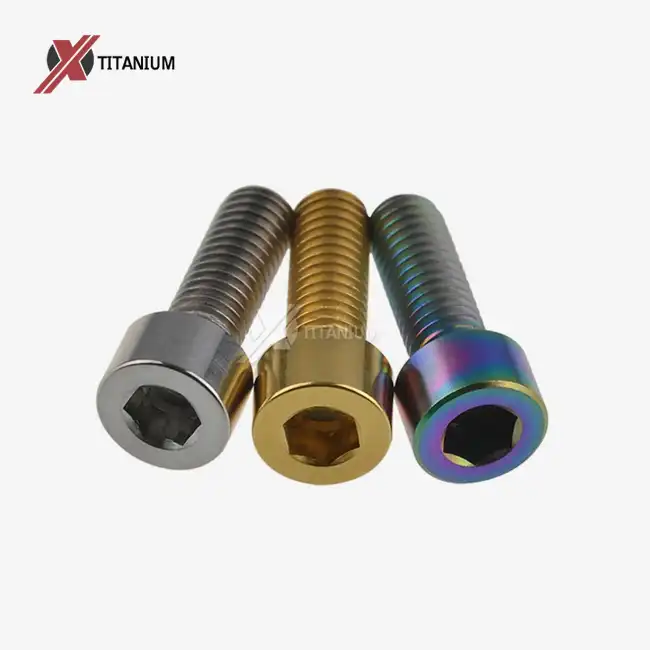
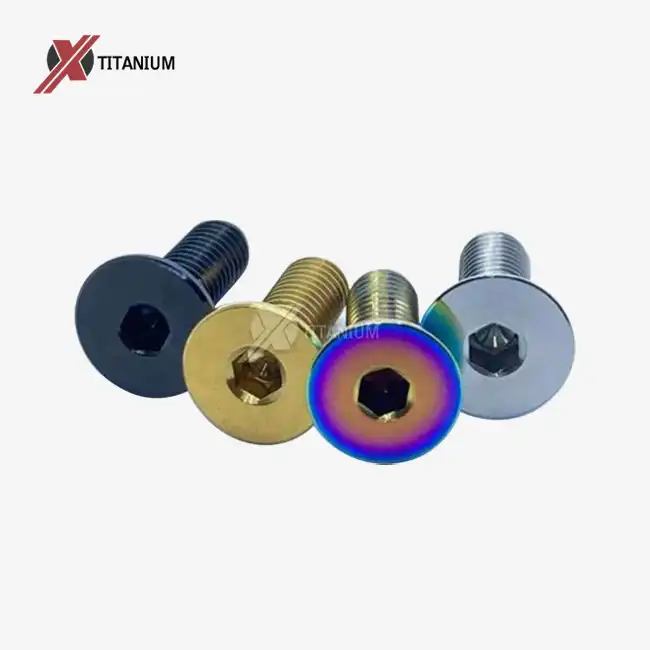
The price of titanium bicycle bolts is easily accepted by high-end custom builds aimed at picky customers who like both the practical benefits and the good looks of anodised finishes in gold, blue, or rainbow colours. Manufacturers of limited-production speciality models can set their products apart by specifying titanium bicycle bolts. This can help with marketing materials and dealer training programs by giving dealers something to talk about.
Scenarios Where Steel Remains Optimal
Product lines that are cheap and aimed at beginning or casual cyclists work just fine with high-quality steel fasteners. This is especially true when frames come with protective storage bags and customers mostly ride in dry climates. Steel may be a better choice for rental companies and shared-bike programs where bikes may be abused and put together and taken apart a lot. This is because steel has a lower repair cost.
Applications where standard steel fasteners allow for quick repairs in the field using locally available hardware should also be considered. However, this benefit decreases as more titanium bicycle bolts become available from online suppliers and speciality shops. When making mass-market models with tight profit margins, manufacturers can keep titanium bicycle bolts for certain update packages instead of base setups. This lets customers choose the performance level that best suits their needs.
Strategic Sourcing Partnership Value
Setting up relationships with dedicated titanium bicycle bolt manufacturers has benefits that go beyond just placing individual orders. Technical advice during the creation of a product helps find the best fastener specs for new frame designs, suspension connections, or problems with putting parts together. When you buy from suppliers who have a lot of quality documentation, it's easier to do your own receiving inspections and meet customer certification needs when your bikes are used in aerospace, the military, or medical rehabilitation. Your engineering teams can make the best designs possible without being limited by hardware availability because of limited production options that can handle both standard catalogue items and custom specifications.
Our facilities keep a stock of common sizes in natural, black, and blue anodised finishes so that prototype orders and emergency production needs can be met quickly. Additionally, our CNC machining capabilities allow us to make custom lengths, head styles, or thread forms that exactly match your needs. This mix of having products in stock and being able to make things to order supports both ongoing production programs and efforts to come up with new products.
Conclusion
Titanium bicycle bolts and steel bicycle bolts are not as durable as each other because of basic material properties that affect how well they resist corrosion, how long they last, and how much weight they hold. The self-healing oxide layer of Grade 5 titanium alloy makes it more stable in harsh environments. It also keeps its structure strong through millions of stress cycles thanks to optimised grain flow from rolled thread making, and it cuts the mass of its parts by 40% compared to steel versions.
Steel fasteners have lower initial costs and can still be used in controlled environments or when money is tight, but they need to be maintained and protected on a regular basis to get the same service intervals. When choosing fastener materials, procurement workers should think about the types of customers they have, where the products will be used, and how they will be positioned in the market. Investing in titanium hardware is becoming more and more worthwhile for high-end products, competitive uses, and markets where steel's limitations are tested by the elements.
FAQ
What makes titanium bolts more durable than steel in bicycle applications?
Titanium bicycle bolts form a constant passive oxide layer that protects against corrosion without any coatings or upkeep. When made properly, this layer also provides fatigue resistance that is higher than most steel types. The substance stays steady even when exposed to salt spray, sweat that is acidic, and changes in temperature that wear away steel's protective finishes.
How much weight can be saved by switching to titanium bicycle bolts?
For a full-suspension mountain bike, replacing all the gear with titanium bicycle bolts usually cuts down on weight by 80 to 120 grams. Each screw weighs about 40% less than its steel counterpart. This decrease happens in key places that affect rotational inertia and unsprung weight, leading to measurable performance gains.
Do titanium bolts require special installation procedures?
Titanium bicycle bolts need anti-seize compound on metal surfaces that are not the same, and they need to be tightened to the specified torque values because titanium has a lower elastic modulus than steel. With precise tools and the right oils, fitting goes smoothly and doesn't cause galling while making sure there is enough preload.
Partner With Chuanglian for Superior Titanium Bicycle Bolt Solutions
Chuanglian makes high-quality Grade 5 titanium bicycle bolts using modern CNC cutting techniques. These bolts are resistant to corrosion and lighter, which are important for your high-end goods. Our strict quality control system includes testing for mechanical properties, verifying dimensions, and certifying materials. This makes sure that every shipment meets the high standards set by AS9100, which are required by OEM manufacturers and custom builders around the world. To meet your exact needs, we can make specs that are unique to you, such as anodised finishes in natural, gold, blue, green, purple, black, and rainbow colours, and sizes ranging from M3 to M12.
Our responsive technical support team and flexible manufacturing skills are ready to improve the reliability of your supply chain, whether you need small quantities of prototypes to help with product development or large amounts of production at competitive bulk prices. Get in touch with our buying experts at info@cltifastener.com or djy6580@aliyun.com to talk about your titanium bicycle bolts provider needs and find out how our ten years of experience can help you stay competitive in the tough bike markets.
References
1. Boyer, R., Welsch, G., and Collings, E.W. (1994). Materials Properties Handbook: Titanium Alloys. ASM International, Materials Park, Ohio.
2. Lutjering, G. and Williams, J.C. (2007). Titanium: Engineering Materials and Processes. Springer-Verlag, Berlin, Germany.
3. Schutz, R.W. and Thomas, D.E. (1987). "Corrosion of Titanium and Titanium Alloys." Metals Handbook, Vol. 13, ASM International, pp. 669-706.
4. Nicholas, T. (2006). High Cycle Fatigue: A Mechanics of Materials Perspective. Elsevier Science, Oxford, United Kingdom.
5. Donachie, M.J. (2000). Titanium: A Technical Guide. ASM International, Materials Park, Ohio.
6. Peters, M., Kumpfert, J., Ward, C.H., and Leyens, C. (2003). "Titanium Alloys for Aerospace Applications." Advanced Engineering Materials, Vol. 5, No. 6, pp. 419-427.
Learn about our latest products and discounts through SMS or email