- English
- French
- German
- Portuguese
- Spanish
- Russian
- Japanese
- Korean
- Arabic
- Greek
- German
- Turkish
- Italian
- Danish
- Romanian
- Indonesian
- Czech
- Afrikaans
- Swedish
- Polish
- Basque
- Catalan
- Esperanto
- Hindi
- Lao
- Albanian
- Amharic
- Armenian
- Azerbaijani
- Belarusian
- Bengali
- Bosnian
- Bulgarian
- Cebuano
- Chichewa
- Corsican
- Croatian
- Dutch
- Estonian
- Filipino
- Finnish
- Frisian
- Galician
- Georgian
- Gujarati
- Haitian
- Hausa
- Hawaiian
- Hebrew
- Hmong
- Hungarian
- Icelandic
- Igbo
- Javanese
- Kannada
- Kazakh
- Khmer
- Kurdish
- Kyrgyz
- Latin
- Latvian
- Lithuanian
- Luxembou..
- Macedonian
- Malagasy
- Malay
- Malayalam
- Maltese
- Maori
- Marathi
- Mongolian
- Burmese
- Nepali
- Norwegian
- Pashto
- Persian
- Punjabi
- Serbian
- Sesotho
- Sinhala
- Slovak
- Slovenian
- Somali
- Samoan
- Scots Gaelic
- Shona
- Sindhi
- Sundanese
- Swahili
- Tajik
- Tamil
- Telugu
- Thai
- Ukrainian
- Urdu
- Uzbek
- Vietnamese
- Welsh
- Xhosa
- Yiddish
- Yoruba
- Zulu
GR5 Titanium Axle Adjuster Bolts M8 vs Steel: Which Is Better?
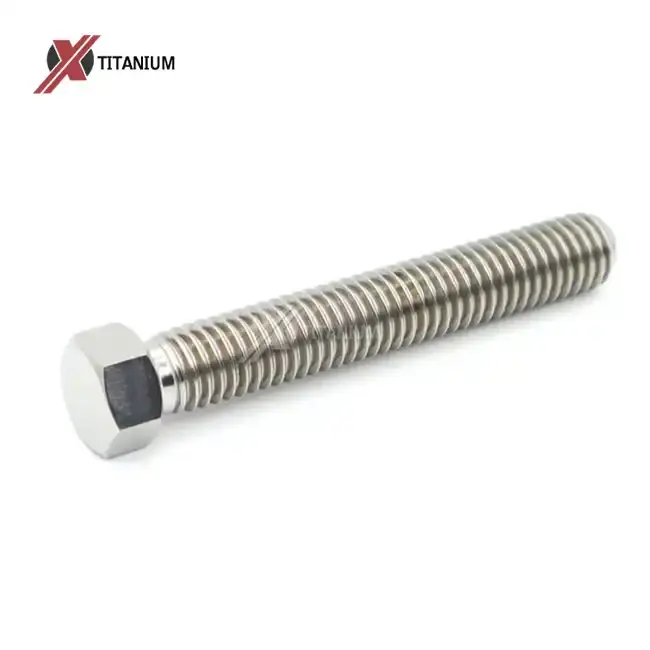
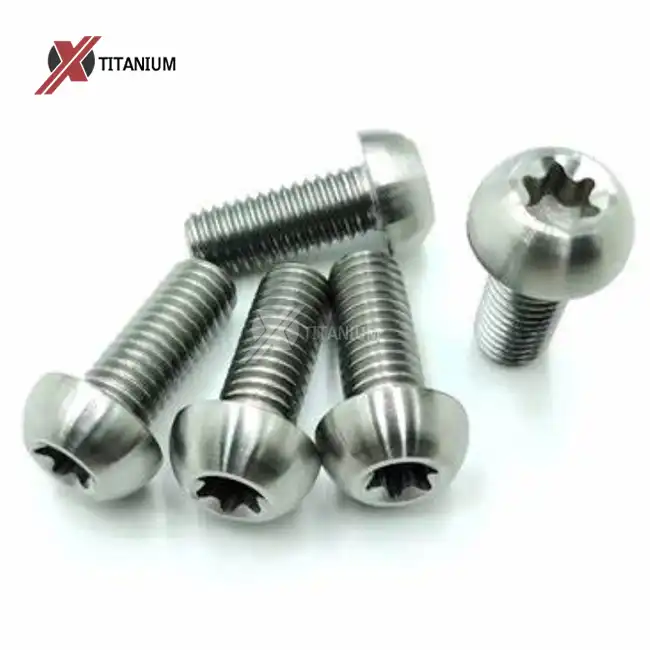
When it comes to choosing axle adjuster bolts for motorcycle racing and performance builds, GR5 Titanium Axle Adjuster Bolts M8 consistently outperform steel alternatives. Ti-6Al-4V titanium alloy delivers approximately 40% weight reduction while maintaining superior tensile strength (≥950 MPa) compared to standard steel hardware. Combined with exceptional corrosion resistance in demanding track environments, titanium bolts eliminate common issues like thread seizure and rust-related failures that plague steel components in moisture-exposed applications.
Introduction
As a race shop owner, you know that adjusting the chain tension should be easy. But how many times have you fought with steel adjuster bolts that wouldn't budge after a wet race weekend? Axle adjuster bolts are very important to the performance of a motorbike because they keep the rear axle in the right position and enable precise chain tension. Choosing between GR5 titanium and regular steel has a big effect on both the performance right away and the long-term usefulness and weight distribution.
Racing pros and shops that modify motorcycles are getting more and more requests from customers for parts that are strong, don't weigh much, and can handle rough track conditions. This comparison answers the main question: which material really gives you the best value when you look at how much it costs up front, how reliable it is under stress, and how long it lasts in use? We will talk about the technical differences, real-world benefits, and practical buying factors that shop owners need to think about when they are making sourcing decisions during the busy racing season.
Understanding GR5 Titanium Axle Adjuster Bolts M8 and Steel Bolts
Material Composition and Properties
According to ASTM B348 standards, GR5 Titanium Axle Adjuster Bolts M8 alloy, which is officially named Ti-6Al-4V, is made up of about 90% titanium, 6% aluminium, and 4% vanadium. This particular metal mixture has amazing mechanical properties: it has a density of only 4.43 g/cm³ and a tensile strength of over 950 MPa, which is about the same as high-grade 10.9 steel bolts but only about 45% as heavy. Most steel adjustment bolts are made of mild stainless steel or medium-carbon alloy steel that has been zinc-plated. These materials are strong and don't cost as much.
Titanium's crystalline structure makes it naturally resistant to corrosion through the formation of inactive oxide layers. This means that protective coats are not needed, which wear off over time. To keep their surface from rusting, steel bolts need to be galvanised or chrome-plated. However, these coats often fail in the rough, chemical-filled environment around motorbike chain systems.
Thread Manufacturing Methods
The manufacturing method has a big impact on how reliable a part is. Instead of cut threads, high-end titanium fasteners use rolled thread technology. This cold-forming process lines up the metal's grain structure along the thread profile. This increases wear resistance by about 30%, which is a big plus for parts that are constantly vibrating and rotating loads during high-speed operation. Cut threads are common on standard steel bolts. These threads break the grain structure and can create stress concentration points.
Key Benefits of GR5 Titanium Axle Adjuster Bolts M8 Over Steel
When race teams and repair shops switch from steel to titanium hardware, they find many speed and operational benefits. Knowing about these benefits helps to explain the original investment by showing how the value will grow over the lifecycle of the component.
Weight Reduction and Handling Improvements
Getting rid of unsprung mass, or weight that the suspension system isn't supporting, changes how quickly the suspension parts react to changes in the track surface. Axle adjuster bolts made of titanium save a lot of weight in a key spot. While replacing a few bolts at a time might only reduce the weight of the unsprung rear assembly by a few grams, replacing all of the hardware in the rear end can remove 200 to 300 grams. This weight loss makes the back suspension respond faster to bumps and keep better tyre contact, which is especially obvious when turning quickly and stopping quickly.
Corrosion Resistance in Harsh Environments
Motorcycles are damaged by many things on the track, such as sweat, chain oils, cleaning agents, rain, and mud. When GR5 Titanium Axle Adjuster Bolts M8 are threaded into aluminium swingarms, steel nuts corrode and cause galvanic reactions, which often cause them to seize permanently within one race season. We've seen shops drill out steel adjusters that won't move, which can damage expensive swingarm threads. Titanium's natural passivation stops this from happening at all. When the material comes into contact with aluminium, it stays inactive. This stops galvanic corrosion and protects against all common racing environment contaminants. This is especially helpful for coastal race operations, since saltwater quickly breaks down steel gear but not titanium.
Maintenance Efficiency and Long-Term Cost Savings
Steel adjuster bolts need to be checked often, treated with anti-seize compound, and eventually replaced as corrosion gets worse. Titanium nuts that are put with the right anti-seize compound keep the adjustment process running smoothly year after year. Shops cut down on the costs of keeping supplies and get rid of the need for quick replacements when important hardware breaks down before races. When you don't have to deal with seized bolts, damaged threads, or corroded adjustment marks during regular maintenance, you save time and money on labour costs that add up over many race seasons.
GR5 Titanium Axle Adjuster Bolts vs Steel: Practical Considerations for Procurement
Cost Analysis and Total Ownership Value
Titanium nuts are 3–5 times more expensive than steel gear that does the same job. Total cost of ownership calculations, on the other hand, show a different economic picture. Because they rust, steel bolts need to be replaced every one to two seasons. Titanium bolts, on the other hand, should be put correctly and should last the entire life of the car. When you consider the costs of labour to deal with seized steel gear, the chance of damaging the swingarm during extraction tries, and last-minute rush orders during racing season, the higher price for titanium suddenly seems like a good investment instead of a waste of money.
Supply Chain and Procurement Logistics
Buying things for a racing shop is different from buying things for a business. Small batch needs (50–200 pieces per order), specific length differences for different motorcycle models, and urgent mid-season restocking needs make it hard to find what you need. A lot of titanium providers have high minimum order amounts that make it hard for small sports shops to keep enough stock on hand. It's important for businesses to work with manufacturers like Chuanglian that understand the needs of the racing industry and can handle smaller orders, offer fast shipping (7–10 days), and offer expert support for applications that are unique to each car.
Material certifications are very important for fasteners that are used for safety. Material Test Certificates (MTC) from reputable sources show that the product meets the requirements of EN 10204 3.1 for chemical composition and mechanical qualities. This paperwork proves that you are getting real GR5 titanium and not one of the weaker commercially pure types that some shady sellers might try to sell you instead.
Customization and Application-Specific Solutions
Bolt lengths, head styles and surface treatments need to be different for each motorcycle platform. Anodised colour choices (blue, gold, and purple) appeal to people who want to stand out visually while also making the surface a little harder. Show bikes with a black PVD coating are the least likely to get scratched. Customisation with CNC machines lets you match exact OEM specs or make better designs with wrench flats or knurled adjustment surfaces built in. Manufacturers that let shops make changes without charging too much for tools make it easier for shops to meet the needs of a wide range of customers.
Installation and Maintenance Guide for M8 GR5 Titanium Axle Adjuster Bolts
Proper Installation Techniques
Because GR5 Titanium Axle Adjuster Bolts M8 are so special, they need to be installed in a certain way. Apply copper-based or nickel anti-seize product to threads at all times, even though titanium doesn't corrode. This stops galling between titanium and aluminium, which is a friction-welding process that can happen when there isn't any oil on the threads. The anti-seize works as a lubricant, lowering the friction coefficient while the clamp is being tightened. This changes the end clamping force. When using wet (lubricated) torque application, lower the specified torque values by about 15 to 20 percent.
Depending on the motorcycle maker, most M8 axle adjuster applications call for 18 to 25 Nm of torque. Check the OEM's specs for the device you're using. Instead of guessing, use calibrated torque wrenches. Because titanium is so strong, over-torquing won't cause failure right away, but it can damage threads or create stress risers that will eventually cause fatigue failure.
Routine Maintenance Protocols
Even though titanium is very strong, it still needs to be maintained. During yearly checks, take off the nuts and use contact or brake cleaner to clean the threads and get rid of old oil and other dirt. Check the state of the threads in good lighting for any signs of galling, such as a rough roughness or metal picking up on the threads. Apply new anti-seize compound again before putting the part back together. Check the heads of the bolts for damage or rounding from impacts. Because titanium is not as hard as steel, adjustment wrenches can damage hex sockets if too much force is used. Even though these upkeep steps are simple, they protect titanium's usefulness and stop the rare cases of premature wear that happen when the right steps aren't taken.
How to Decide: Is GR5 Titanium Axle Adjuster Bolt M8 the Right Choice for You?
Application-Specific Decision Framework
Depending on your needs, you can decide if titanium is worth the extra cost. Titanium becomes standard equipment for race teams in professional series where every performance edge counts. The lighter weight and greater stability are unavoidable benefits. Corrosion resistance and less maintenance work are big pluses for track day enthusiasts and club racers, but if money is tight, other upgrades may have to be prioritised. If you live near the coast and your bike is often exposed to salt, you should really think about titanium so that your adjustment bolts don't get stuck during normal maintenance. On the other hand, if you store your motorcycle inside in a dry climate and only need to make small adjustments every so often, it might not be worth the cost. High-quality stainless steel hardware works well in these situations.
Evaluating Supplier Capabilities
Sourcing choices are more than just comparing prices. Check to see how technical the possible suppliers are—can they tell you what bolt lengths are best for certain motorbike models? Do they know the terms used in racing and the requirements for applying? Check their methods for quality control, the certifications of their materials, and customer references from well-known race shops. You can't meet all of your customers' needs if your suppliers aren't flexible about minimum orders, fast shipping, and custom anodising. This is because your capital will be stuck in inventory that doesn't sell quickly. Finding the lowest price per unit isn't the only thing that matters. Building long-term relationships with quick makers who help your business grow is more valuable.
Conclusion
When it comes to demanding motorcycle racing situations, GR5 Titanium Axle Adjuster Bolts M8 clearly perform better and last longer than steel ones. The 40% weight savings, better resistance to rust, and removal of thread seizure problems make the higher price worth it because they lower lifetime costs and improve serviceability. Steel hardware can still be used for low-cost tasks in safe environments, but titanium's properties are much better for professional race operations and coastal users. For race shops to be successful, getting materials from manufacturers who know what the racing industry needs—flexible order quantities, fast shipping, and expert support—is just as important as choosing the right materials.
FAQ
Q1: Can titanium bolts handle the same stress as steel in high-performance applications?
A: Of course. The tensile strength of GR5 titanium alloy (Ti-6Al-4V) is higher than 950 MPa, which is higher than Grade 8.8 steel and the same as Grade 10.9 high-tensile requirements. Because the material doesn't wear down easily, especially when the threads are rolled instead of cut, it can be used in racing situations. Titanium screws are used by many professional MotoGP and Superbike teams because they are strong and light, which improves speed without sacrificing safety.
Q2: Will titanium bolts seize in aluminum swingarms like steel bolts do?
A: Titanium greatly lowers the risk of seizures, but it can still get galling in some situations. Titanium will not rust or corrode like steel does. High pressure, on the other hand, can cause friction welding when titanium touches aluminium. If you fix it correctly and use an anti-seize product based on copper or nickel, this problem will never happen. The main difference is that steel bolts seize up from corrosion no matter how they are installed, but titanium bolts only risk galling if they are installed incorrectly, which can be avoided.
Q3: What's the correct torque specification for M8 titanium adjuster bolts?
A: Follow the torque range given by the motorcycle's maker for the axle adjuster setting. For M8 uses, this is usually between 18 and 25 Nm. When using threads that have been lubricated, lower the power by 15-20% because anti-seize additive lowers friction and increases gripping force. When you use a calibrated torque wrench, you can avoid over-tightening, which can damage the threads or make stress concentration points in the material.
Partner with Chuanglian for Premium Titanium Fastener Solutions
Chuanglian is an expert at making GR5 Titanium Axle Adjuster Bolts M8 that are precisely made for racing and other high-performance uses. We are located in Baoji City, which is known as China's "City of Titanium." We have been machining titanium for over ten years and have a deep knowledge of the needs of racing. Our CNC-machined Ti-6Al-4V bolts are fully certified to meet ASTM B348 standards and come in a range of lengths and anodised colours (natural, gold, blue, purple, black, rainbow) to suit your needs.
We know that race shops face problems like limited funds, sudden wants in the middle of the season, and the need for small batches. That's why we offer flexible minimum order quantities (50–200 pieces) and fast 7–10 day delivery for situations that need it right away. Our technical team gives you advice on the right size for popular platforms like the SV650, CBR600, and R6, so you don't have to guess when you're looking for parts. Chuanglian makes high-quality titanium fasteners that work reliably season after season, whether you need a standard polished finish or a custom anodised finish. You can email our team at info@cltifastener.com or djy6580@aliyun.com to talk about your unique needs, ask for material approvals, or order samples.
References
1. ASTM International. (2021). ASTM B348-21: Standard Specification for Titanium and Titanium Alloy Bars and Billets. West Conshohocken, PA.
2. Budinski, K. G. (2018). Surface Engineering for Wear Resistance. ASM International.
3. Bickford, J. H. (2020). Introduction to the Design and Behavior of Bolted Joints (5th ed.). CRC Press.
4. Boyer, R., Welsch, G., & Collings, E. W. (2019). Materials Properties Handbook: Titanium Alloys. ASM International.
5. Donachie, M. J. (2000). Titanium: A Technical Guide (2nd ed.). ASM International.
6. SAE International. (2022). Aerospace Material Specification AMS 4928: Titanium Alloy Bars, Wire, Forgings, Rings, and Drawn Shapes. Warrendale, PA.
Learn about our latest products and discounts through SMS or email