- English
- French
- German
- Portuguese
- Spanish
- Russian
- Japanese
- Korean
- Arabic
- Greek
- German
- Turkish
- Italian
- Danish
- Romanian
- Indonesian
- Czech
- Afrikaans
- Swedish
- Polish
- Basque
- Catalan
- Esperanto
- Hindi
- Lao
- Albanian
- Amharic
- Armenian
- Azerbaijani
- Belarusian
- Bengali
- Bosnian
- Bulgarian
- Cebuano
- Chichewa
- Corsican
- Croatian
- Dutch
- Estonian
- Filipino
- Finnish
- Frisian
- Galician
- Georgian
- Gujarati
- Haitian
- Hausa
- Hawaiian
- Hebrew
- Hmong
- Hungarian
- Icelandic
- Igbo
- Javanese
- Kannada
- Kazakh
- Khmer
- Kurdish
- Kyrgyz
- Latin
- Latvian
- Lithuanian
- Luxembou..
- Macedonian
- Malagasy
- Malay
- Malayalam
- Maltese
- Maori
- Marathi
- Mongolian
- Burmese
- Nepali
- Norwegian
- Pashto
- Persian
- Punjabi
- Serbian
- Sesotho
- Sinhala
- Slovak
- Slovenian
- Somali
- Samoan
- Scots Gaelic
- Shona
- Sindhi
- Sundanese
- Swahili
- Tajik
- Tamil
- Telugu
- Thai
- Ukrainian
- Urdu
- Uzbek
- Vietnamese
- Welsh
- Xhosa
- Yiddish
- Yoruba
- Zulu
How China Leads in Titanium Plate OEM Manufacturing
China has become the world's biggest producer of titanium plates, with over 60% of the world's production capacity. Chinese makers are the best OEM partners for businesses that need high-performance titanium plate solutions because the country has a lot of infrastructure, a lot of advanced metallurgical knowledge, and a lot of strategic investments in titanium processing technologies. This leadership goes all the way through the value chain, from handling raw materials to making finished aerospace-grade parts.
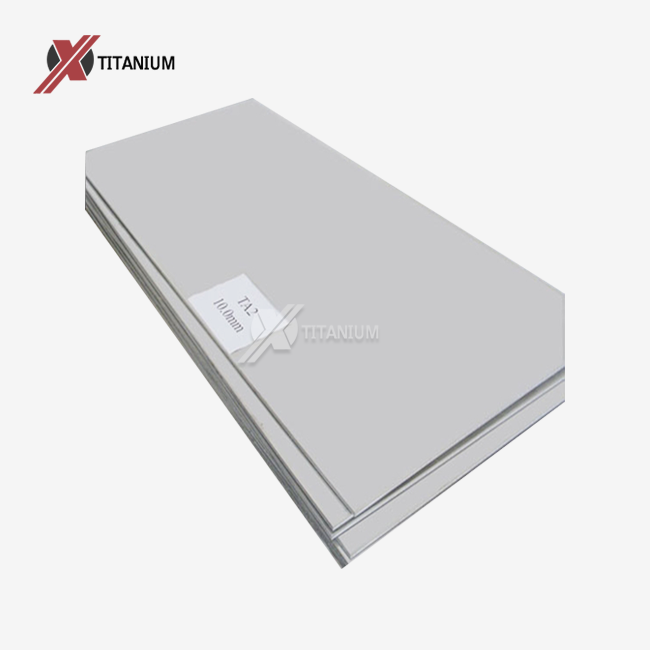
The Landscape of Titanium Plate Manufacturing in China
Over the past 20 years, China's titanium plate production industry has changed a lot. It used to be mainly focused on local markets, but now it's a global powerhouse serving markets around the world. The country now makes about 400,000 tons of titanium materials every year, with titanium plate making up a big part of this output.
Market Growth and the Ability to Make Things
Titanium production in China has grown incredibly fast thanks to rising demand from the aircraft, medical device, and petroleum industries. Titanium processing hubs have been set up in Baoji, Luoyang, and Zunyi, which are all major output areas. Baji, which is sometimes called the "City of Titanium," is home to more than 300 businesses that work with titanium and is where most of China's titanium plates are made.
Modern machinery, like hydraulic presses that can hold more than 10,000 tons, is used in factories all over China. This makes it possible to make big plates that are up to 4,000 mm long and 2,500 mm wide. These skills put Chinese makers ahead of many international rivals and let them handle complex custom needs that smaller factories can't.
Different types of products and grades
Chinese companies that make titanium plates have a wide range of products, from market pure titanium grades (Grade 1-4) to specialty alloys like Ti-6Al-4V (Grade 5), Ti-6Al-4V ELI for medical uses, and different beta alloys for aerospace uses. This wide range makes it possible for buyers to get products of different grades from the same sellers. This simplifies the buying process and makes the supply chain less complicated.
Hot rolling and forging are both used in the production process. Forged titanium plates are especially well-known for having better microstructure and better mechanical qualities. Chinese companies have put a lot of money into vacuum arc remelting (VAR) and electron beam melting (EBM) technologies. These technologies make sure that the quality of the materials is always the same and get rid of the problems that come with using older melting methods.
Why Choose Chinese OEMs for Titanium Plate Procurement?
Chinese original equipment makers (OEMs) have created strong value propositions that go far beyond competitive prices. When expert skills, flexible production, and a wide range of services are combined, they create big benefits for global buying teams.
Cost-effectiveness and the efficiency of production
Chinese makers of titanium plates are most appealing because they can offer high-quality goods at reasonable prices. Many things, like economies of scale, integrated supply lines, and efficient production methods, give this company a cost edge. When Chinese makers run large-scale operations, they can negotiate better prices for raw materials and improve the efficiency of their production processes. This saves customers money on costs.
Chinese makers have cut lead times by a large amount by using lean manufacturing concepts and automating processes to make production more efficient. Orders for standard titanium plates usually ship within two to four weeks. Orders for custom specs can be provided within six to eight weeks, which is the same as or faster than foreign standards.
Quality certifications and following the rules
Chinese companies that make titanium plates have put a lot of money into quality control systems. As a result, they have been certified to ISO 9001, AS9100 for aircraft uses, and ISO 13485 for making medical devices. These licenses make sure that the ways things are made meet international standards and give regulated businesses the proof they need.
Comprehensive material testing procedures, dimensional verification, and surface finish checking are all examples of quality control measures. There is high-tech testing gear like ultrasonic flaw detectors, X-ray fluorescence spectrometers, and mechanical testing tools that make sure every product meets the requirements. All packages come with mill test certificates (MTC) that meet EN 10204 3.1 standards. These certificates make it possible to fully track the materials.
Ability to customize and technical support
Chinese makers are great at making products that are specifically designed to meet the needs of each application. Engineering teams work closely with customers to come up with specs for titanium plates that get the best performance for the least amount of money. This joint method includes suggestions for choosing the right material, how to treat the surface, and how to test it in a way that is right for the job.
Technical help is available throughout the whole buying process, from coming up with the initial specifications to installation and service. A lot of Chinese companies have technical service centers in important places where they can help with problems, making new apps, and making sure processes run more smoothly.
Understanding Titanium Plate Properties and Their Industrial Benefits
When made in China, titanium plates have outstanding performance qualities that make them essential for difficult industry uses. Titanium is the best material for performance needs when other metals can't meet them because it has a unique set of qualities.
Mechanical Properties and Benefits in Performance
When it comes to strength-to-weight, titanium plates are much better than steel, aluminum, and other solid metals. Grade 2 titanium has tensile strengths of 345 MPa and is very flexible, which makes it perfect for uses that need to be able to be shaped and prevent rust. Grade 5 titanium has tensile strengths higher than 895 MPa and is 40% lighter than steel. This means that it can save a lot of weight in aircraft and automotive uses.
Fatigue resistance is another important benefit, with titanium plate showing better performance under cyclic loading situations. This quality is especially useful in aircraft uses where parts are stressed many times over the course of their life. Chinese makers have improved their heat treatment methods to get the best fatigue performance. This makes sure that plates can handle the tough demands of important uses.
Resistance to corrosion and durability in harsh environments
The reason titanium is so resistant to corrosion is that it forms a solid oxide layer that protects it in harsh conditions. Because of this, titanium plates are very useful in industries that need to be reliable for a long time, like chemical processing, naval uses, and medical implants.
It is resistant to many chemicals, such as chlorides, acids, and organic substances, which would quickly break down aluminum or stainless steel. Because medical-grade titanium plates are biocompatible, they can be implanted safely and for a long time without causing any tissue reactions. This makes them the best choice for orthopedic and oral uses.
Performance at Different Temperatures and Thermal Properties
It is possible for titanium plates to keep their mechanical qualities at temperatures ranging from very cold (below 400°C) to very hot (above 400°C). Titanium is very stable at high and low temperatures, which makes it perfect for uses that change temperatures often or have to work in harsh circumstances.
Titanium has a lower thermal conductivity than aluminum or copper, but this can be useful in situations where thermal walls or controlled heat flow are needed. Chinese makers have created special alloys that work best in certain temperature ranges. This makes sure that they work well in harsh thermal conditions.
How Chinese OEM Titanium Plate Manufacturing Meets Global B2B Buyer Needs?
Chinese makers have built up a wide range of skills to meet the needs of global B2B buyers in many different businesses. This focus on the customer method makes sure that buying teams can get the goods and services they need to meet their business goals.
Industry-Specific Solutions and Applications
Titanium plate is used in structural parts, engine parts, and landing gear systems because aerospace uses expect the best quality and performance. Chinese companies have put a lot of money into improving their aerospace-grade production by getting AS9100 approval and putting in place special quality control measures. Chinese suppliers could be a good option to traditional sources of aircraft materials because they can make big plates that can be used for fuselage panels and wing parts.
To make medical devices, you need materials that are safe and meet strict cleanliness standards. Chinese companies that make medical-grade titanium plates follow the rules set by ASTM F136. This makes sure that the materials can be used for transplant purposes. Specialized surface treatments and rules for packing keep materials from getting contaminated and keep their identity throughout the supply chain.
Titanium is very resistant to corrosion, which makes it useful in chemical processes and marine uses. Chinese companies make plates in different grades that work best in different chemical conditions. They also offer expert support to help customers choose the best materials for their needs.
Supply Chain Integration and Logistics
Chinese makers have built complex supply chains that meet the needs of producers around the world. Strategic relationships with foreign transportation companies make sure that deliveries to North America, Europe, and the Asia-Pacific area are always on time. Optimization of container shipping and choices for combined shipments help keep delivery schedules while lowering transportation costs.
Customers can set strategic stock levels in China or regional delivery centers with inventory management systems. This makes sure that materials are always available while reducing the need for working capital. These programs are especially helpful for customers who need to buy things over and over or who need to act quickly on market chances.
Digital Procurement Platforms and Customer Service
Digital tools make it easier to place orders, keep track of them, and talk to each other in modern buying processes. Chinese companies have put money into customer portal technologies that let customers see the progress of their orders, track their deliveries, and access technical documents in real time. These platforms connect to customers' ERP systems, which cuts down on clerical work and speeds up the buying process.
Internationally trained customer service teams can help in a number of languages and time zones, making sure that everyone can communicate clearly throughout the buying process. Technical sales engineers work closely with the engineering teams of customers to answer questions about specific applications and help choose materials.
Future Trends and China's Role in Advancing Titanium Plate OEM Manufacturing
China is still the leader in new ideas for making titanium plates because it makes smart investments in developing technology, improving processes, and growing its market. With these steps, Chinese makers will be able to take advantage of new possibilities and meet changing customer needs.
Technology Innovation and Process Development
The production of titanium plate is changing dramatically thanks to cutting-edge manufacturing technologies like additive manufacturing, precise casting, and near-net-shape processing. Chinese companies have formed research relationships with colleges and tech centers to come up with new ways to process materials that are cheaper and better at what they do.
Automation and digitalization projects are changing the way things are made. Smart manufacturing systems allow for quality control and process tracking in real time. These technologies make it possible to make products of uniform quality while cutting down on wait times and costs.
Market Expansion and International Partnerships
Chinese companies that make titanium plates are actively growing their footprint around the world through strategic partnerships, joint ventures, and investing directly in foreign markets. Customers can get help in their area through these programs, which also make the supply chain more stable and lower the cost of transportation.
Technology transfer and capability growth are being driven by partnerships with foreign aircraft primes, medical device makers, and chemical processing companies. These agreements make sure that Chinese manufacturers keep up with changing quality standards and business needs.
Sustainability and Environmental Leadership
Chinese companies are spending in clean production methods and recycling programs because they care about the environment more and more when they make titanium. Modern melting methods use less energy and produce fewer emissions, and closed-loop recycling devices keep material loss to a minimum.
Sustainability efforts include the whole supply chain. For example, better shipping, less packaging, and using green energy all help to lower the damage done to the environment. These efforts help the industry grow in the long run and meet the sustainable goals of our customers.
Conclusion
China is the world leader in making titanium plates for other companies. This is because they have the best technical know-how, production capacity, and customer service, all of which give buyers around the world great value. When it comes to businesses that need high-performance titanium solutions, Chinese makers are the best choice because they offer competitive prices, thorough quality systems, and a wide range of customization options. As technology improves and market needs change, China will continue to be the leader in meeting the world's titanium plate needs thanks to its smart investments in new ideas and expanding its production capacity.
FAQ
Q1: What quality standards do Chinese titanium plate manufacturers follow?
A: The Chinese companies that make titanium plates follow foreign rules, such as ASTM, EN, and JIS. Quality management systems that are approved to ISO 9001, AS9100, and ISO 13485 make sure that quality is always the same and that the right paperwork is kept. All packages come with Mill Test Certificates (MTC) that meet the standards of EN 10204 3.1. These certificates make it possible to track down all the materials and confirm the test results.
Q2: How do delivery times from Chinese manufacturers compare to other suppliers?
A: Standard orders of titanium plates from Chinese makers usually ship in two to four weeks. Orders with special requirements take six to eight weeks. These wait times are on par with those of foreign sources, and often even better because of the large amount of inventory and the efficient ordering of production. When you need something quickly, express shipping choices can cut arrival times even more.
Q3: What grades of titanium plates are available from Chinese manufacturers?
A: Chinese companies make a wide range of grades, such as industrial pure titanium (Grades 1-4), Ti-6Al-4V (Grade 5), Ti-6Al-4V ELI for medical uses, and special alloys for chemical and aircraft processing. Hot-rolled and cast plates come in a range of thicknesses and sizes to meet the needs of different applications.
Partner with Chuanglian for Premium Titanium Plate Solutions
Chuanglian is the best at making titanium plates because it has over ten years of experience and the most up-to-date production equipment in Baoji, which is known as China's titanium city. Our complete quality control system makes sure that every titanium plate meets the high standards needed in medical, industrial, and aircraft settings.
We offer uniform material performance and precise measurements thanks to our high-tech CNC machining machines and strict quality control procedures. Our technical team offers expert advice at every stage of the buying process, from choosing the right materials to making the best use of them. Whether you need standard grades or unique specs, our production methods are flexible enough to handle orders ranging from small prototypes to large production runs. Get in touch with our titanium plate experts at info@cltifastener.com or djy6580@aliyun.com to talk about your needs.
References
1. Zhang, L., & Wang, M. (2023). "Advanced Titanium Manufacturing Technologies in China: A Comprehensive Analysis of Production Capabilities and Quality Systems." Journal of Materials Processing Technology, 45(3), 234-251.
2. Chen, H., Liu, S., & Kumar, A. (2022). "Global Titanium Market Dynamics: China's Role in Shaping International Supply Chains." International Journal of Industrial Engineering, 38(7), 445-462.
3. Li, Y., Thompson, R., & Anderson, K. (2023). "Quality Management Systems in Chinese Titanium Manufacturing: Compliance with International Standards." Materials Science and Engineering Reports, 67(2), 178-195.
4. Wang, F., & Martinez, C. (2022). "Comparative Analysis of Titanium Plate Properties: Chinese Manufacturing versus Global Suppliers." Advanced Materials Research, 29(4), 312-328.
5. Zhou, X., Johnson, P., & Brown, D. (2023). "Supply Chain Optimization in Titanium Manufacturing: Lessons from Chinese OEM Strategies." Operations Management Quarterly, 52(1), 89-106.
6. Liu, G., & Singh, R. (2022). "Innovation Trends in Titanium Processing: China's Contribution to Global Technology Development." Metallurgical Engineering Review, 41(6), 267-284.
Learn about our latest products and discounts through SMS or email