- English
- French
- German
- Portuguese
- Spanish
- Russian
- Japanese
- Korean
- Arabic
- Greek
- German
- Turkish
- Italian
- Danish
- Romanian
- Indonesian
- Czech
- Afrikaans
- Swedish
- Polish
- Basque
- Catalan
- Esperanto
- Hindi
- Lao
- Albanian
- Amharic
- Armenian
- Azerbaijani
- Belarusian
- Bengali
- Bosnian
- Bulgarian
- Cebuano
- Chichewa
- Corsican
- Croatian
- Dutch
- Estonian
- Filipino
- Finnish
- Frisian
- Galician
- Georgian
- Gujarati
- Haitian
- Hausa
- Hawaiian
- Hebrew
- Hmong
- Hungarian
- Icelandic
- Igbo
- Javanese
- Kannada
- Kazakh
- Khmer
- Kurdish
- Kyrgyz
- Latin
- Latvian
- Lithuanian
- Luxembou..
- Macedonian
- Malagasy
- Malay
- Malayalam
- Maltese
- Maori
- Marathi
- Mongolian
- Burmese
- Nepali
- Norwegian
- Pashto
- Persian
- Punjabi
- Serbian
- Sesotho
- Sinhala
- Slovak
- Slovenian
- Somali
- Samoan
- Scots Gaelic
- Shona
- Sindhi
- Sundanese
- Swahili
- Tajik
- Tamil
- Telugu
- Thai
- Ukrainian
- Urdu
- Uzbek
- Vietnamese
- Welsh
- Xhosa
- Yiddish
- Yoruba
- Zulu
How do different grades of titanium affect brake bolt performance?
If you choose the right type of titanium for brake nuts, they will be more reliable, last longer, and be safer to use in high-performance settings. When engineers look at a Titanium Disc Brake Plug Bolt, they need to know that the grade of the material changes its weight, tensile strength, resistance to rust, and temperature stability. All of these properties are very important when stopping quickly. Grade 5 titanium metal (Ti-6Al-4V) has a tensile strength of over 950 MPa and is very resistant to chemical breakdown. It is now the standard for brake systems in planes, racing bikes, and precision bicycles that can't lose performance.
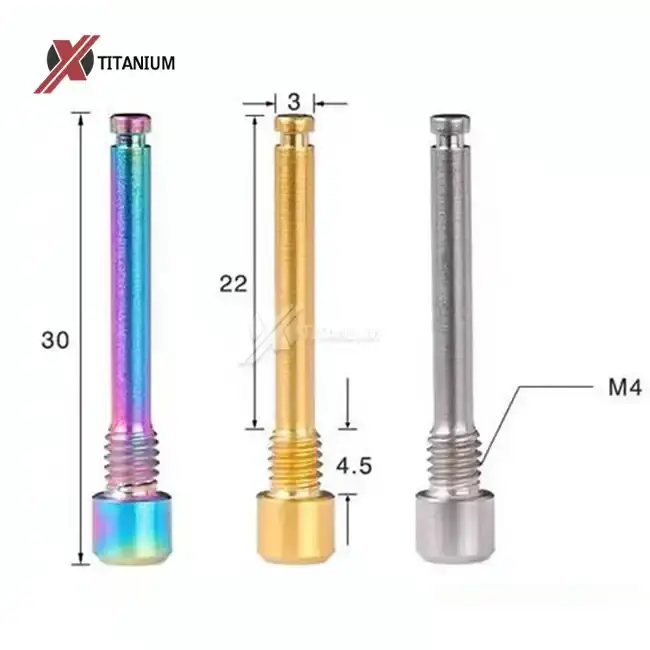
Understanding Titanium Grades for Disc Brake Plug Bolts
There are different kinds of titanium alloys that are used in brake nuts. Each has its own metallurgical make-up that affects how it works physically and how long it lasts in the environment. People most often use Grade 2, Grade 5 (Ti-6Al-4V), and Grade 9 (Ti-3Al-2.5V) to make brake nuts. It's very hard to rust Grade 2, which is sometimes called "commercially pure titanium," but it's not as strong as alloys. This grade works well for tasks that don't need a lot of weight and where chemical exposure is the major concern.
Metallurgical Composition and Mechanical Properties
The best mix of strength and lightness is grade 5 titanium. About 90% of it is titanium, 6% is aluminum, and 4% is vanadium. With yield strengths between 880 and 950 MPa, this alpha-beta metal is much stronger than Grade 2 and many types of stainless steel. By adding aluminum, the material gets stronger and its density goes down to 4.43 g/cm³, making it about 40% lighter than steel models. Vanadium makes the material more stable and flexible at high temperatures. It can keep its shape at temperatures up to 400°C. This is a big plus near places where brakes rub against each other and heat builds up.
Titanium Versus Traditional Fastener Materials
When you compare titanium alloys to steel bolts, aluminum, or stainless steel, they are harder, lighter, and less likely to rust. Steel nuts are strong and cheap, but they rust and lose a lot of mass over time. Even though aluminum is light, it is not strong enough to be used for brake parts that need to be pulled apart. Stainless steel doesn't rust as quickly as regular steel, but it's still not as strong per unit weight and is almost twice as dense as titanium. Galvanic rust can happen when steel bolts touch aluminum caliper bodies. Titanium stops the tool from stopping and chemically not working with the aluminum, so it will last a long time.
Performance Implications of Different Titanium Grades on Brake Bolts
The type of material you choose affects a number of performance factors that are important for how well brake bolts work. Corrosion resistance tells you how long something will last in harsh chemical and environmental conditions. Tensile strength tells you how much weight something can hold when it's being clamped down and vibrating. Weight tells you how much it weighs without any springs. And thermal tolerance tells you how stable its dimensions are after being heated and cooled many times.
Tensile Strength and Load-Bearing Capacity
Grade 5 titanium brake bolts can handle tension loads of more than 950 MPa. This means that even when the brakes are applied with all the force, the pads and caliper parts will stay in place. This can happen in racing and flight uses. Engineers can use smaller bolt sizes without lowering safety gaps because of this power. This saves even more weight and makes it possible to make brake systems that are smaller. Grade 2 bolts have tensile strengths of 340 to 450 MPa, which may be enough for low-stress situations. However, they can fail when it's very important that the bolts stay tight.
Corrosion Resistance and Fluid Compatibility
Titanium makes an oxide layer on its own that keeps glycol-based brake fluids (DOT 3, 4, 5.1) and mineral oil formulas used in hydraulic systems from combining with stainless steel. Unlike coated steel nails, whose coats may wear off over time, titanium doesn't rust at all during its useful life. This is a great quality for boats, bike paths along the coast, and business tools that are used in places with acids, saltwater, and damaging agents.
Weight Reduction and Unsprung Mass Benefits
When it comes to cars, dropping the unsprung mass makes the suspension work better, the driving more precise, and the gas mileage better. A Grade 5 titanium brake pin is 40–45% lighter than a steel one. When you add up all the weight savings for the car and brakes, they add up to a lot of useful savings. Titanium Disc Brake Plug Bolts give professional riders an edge in the race without compromising the bike's structural stability. Every gram is important in this sport.
Thermal Stability Under Braking Conditions
When going downhill for a long time or racing on a track, stopping and starting a lot makes the parts of the brake very hot. When it gets close to 400°C, grade 5 titanium keeps its tensile properties. This means that nuts don't bend or lose their ability to grip, which can happen with stronger materials. This resistance to heat makes sure that the brakes always work well and lowers the number of times they need to be repaired, which lowers the product's total cost of ownership over its lifetime.
Installation and Maintenance Insights Specific to Titanium Brake Bolts
The life and consistent performance of titanium parts are greatly improved by using the correct fitting methods and maintenance plans that are made just for titanium. If you know how to deal with problems that are unique to a material, you can avoid making common mistakes like galling, overtorquing, and premature wear.
Torque Specifications and Anti-Seize Application
Because titanium is less springy than steel, it's important to carefully follow the pressure values that the maker gives you. Most of the time, these numbers are between 2 and 6 Nm for small brake plug nuts. More than this could cause the threads to twist or the bolt to break. It also tends to char when it comes into contact with metals that are not the same as it, like aluminum. This is a form of cold welding. An anti-seize material based on copper or nickel can be used to stop galling and make it easy to take apart again in the future. You can also use medium-strength thread lockers to keep threads from coming loose when the machine shakes. You can still use hand tools to remove them, though.
Inspection Protocols and Wear Monitoring
The threads should be checked often to make sure they are still tight, the finish on the outside should still be good, and there should be no rust or fluid leaks. Titanium doesn't rust in the air, but if the surface isn't treated well or there are flaws in the way it was made, it might not work as well. Checks with the naked eye and a microscope reveal burrs or cutting marks that could make it harder for fluid-retaining plugs to seal. All of the Allen, Torx, and hexagonal bolt heads are tested for torque-to-yield during production to make sure they can handle the minimum fastening torques without rolling off.
Real-World Case Study: Motorsport Brake Systems
A top motorbike racing team moved from stainless steel to Grade 5 titanium brake caliper bolts, specifically the Titanium Disc Brake Plug Bolt, to make their unsprung weight lighter and make them less likely to rust in coastal races with three or more stages. It was checked after every race for six seasons and there were no signs of galling, corrosion, or stress cracks. This is not the same as steel bolts, which need to be changed every so often. The suspension's compliance and lap times both got faster after it lost weight, which showed that the money spent on high-quality titanium parts was well spent.
Procurement Considerations When Selecting Titanium Brake Bolts
To quickly and easily get titanium brake nuts, you need to carefully look at different sources, understand how price affects performance, and make plans ahead of time for both small and large orders.
Supplier Credibility and Quality Assurance
You can trust suppliers who have quality control certifications like ISO 9001 and AS9100 for use in airplanes. There are also methods in place that keep track of the chemical make-up and mechanical properties of each output batch. Spectroscopic tests show that the sent sample is indeed Grade 5 Ti-6Al-4V. This stops the growth of Grade 2 titanium that isn't very good and doesn't have the right tensile strength. Go/No-Go thread gauges are used to make sure that the measurements are correct. This keeps the threads on the metal brakes from getting broken while they are being put together.
Cost-Benefit Analysis and Price-Performance Metrics
As a whole, titanium brake nuts are usually cheaper than steel or stainless steel bolts, even though they cost more per unit. This is because titanium lasts longer, needs less maintenance, and works better. When procurement managers buy fasteners, they should not only think about how much they cost at first, but also how much they will cost in the long run, like when they have to replace them, when they cause downtime, or when they have to deal with guarantee claims because the fasteners aren't up to par. The high price of grade 5 titanium is supported by the fact that it lasts a long time and is reliable in cases where being lighter and more reliable are clear advantages.
Customization and OEM Requirements
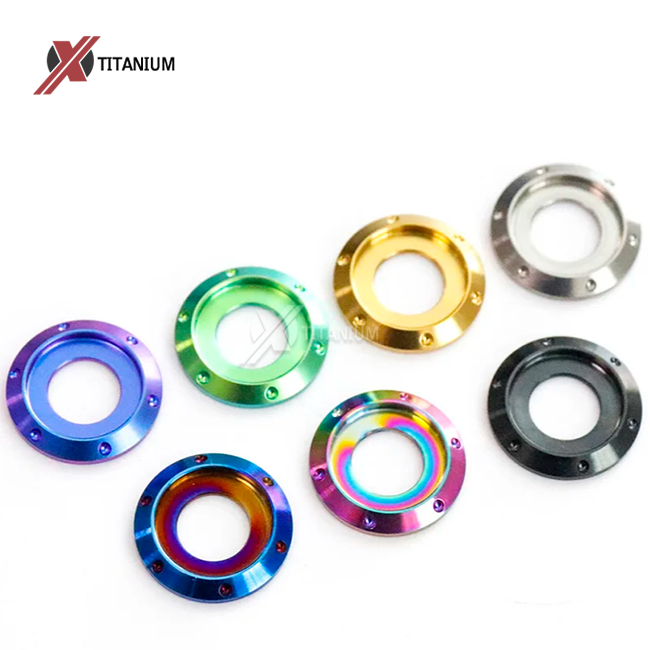
OEMs (original equipment manufacturers) and aftermarket dealers often need solutions that are made just for their caliper designs, thread needs, and surface finishes. Change the length, style, and pitch of a bolt's threads with CNC cutting to make sure they fit perfectly. A process called anodizing changes the surface of things to bright colors like rainbow, blue, green, purple, and gold. This makes them look better and less likely to rust. Physical Vapor Deposition (PVD) layers make the surface stronger and less likely to wear away. This means that bolts will last longer in rough circumstances. Customization helps designers improve their work and sets one brand apart from others by making more advanced sellers stand out from basic wholesalers.
Logistics and Bulk Order Management
There are a few things you should think about when making a large order for Titanium Disc Brake Plug Bolt: wait times, minimum order amounts, and the safety of the supply chain. Titanium has special ways of being made and a small supply base around the world, so it needs to be carefully managed to keep projects on track. Setting up basic deals with verified sellers keeps prices and shipping times fixed, which lowers the risks that come with materials running out or prices going up or down. Shipping costs are cut down and parts come on time when shipping processes are coordinated. This lets production plans be met.
Comparing Titanium Grades—Which Is Best for Your Brake Bolt Needs?
The buying and production teams can use data to help them choose the best material after a full study of all the titanium grades.
Grade 2: Commercially Pure Titanium
It takes between 340 and 450 MPa of force to pull apart Grade 2, and it doesn't bend easily. It can only be used in places where chemical exposure is higher than the mechanical stress needs because it is not as strong. Grade 2 doesn't rust, which makes it a good choice for boats that work in the water or industrial equipment that is in salty places. Higher-stress brake systems, on the other hand, need metals that are harder.
Grade 5 (Ti-6Al-4V): The Industry Standard
High-performance brake bolts most often come in Grade 5, which is the best mix of strength, weight, and heat stability. There is more than 950 MPa of tensile strength in this alpha-beta metal. It is 30 to 36 HRC hard and weighs 4.43 g/cm³. Airplane brake systems, race calipers, and expert bicycle parts are all made from it because it is strong enough. It can be used with PVD coats and anodizing processes, which make the surface better without changing how well the core works mechanically. Grade 5 is still the best material to use when you need to lose weight and can't give up reliability.
Grade 9 (Ti-3Al-2.5V): The Practical Alternative
Grade 9 is a good middle ground because its tensile strength is between 620 and 690 MPa. It's easier to make than Grade 5 and can hold more weight than Grade 2. If you don't expect a lot of stress, this type is good for use in cars and bikes. It does a better job than Grade 5 and costs less. If you need something strong and cheap at the same time, titanium is a good choice for projects that don't need aerospace-grade standards.
Application-Specific Recommendations
When riding mountain bikes in mud or water, Grade 5 is better because it doesn't rust and is lighter, which helps riders do better on rough ground. By making the end look better and making the brake systems lighter, anodized Grade 5 bolts give road bicycle brake systems a competitive edge. Grade 5 is the only choice for uses that need to be safe, since it meets the highest standards for strength and heat stability. To save money, Grade 2 can be used on industrial machinery that works in dangerous environments when the motor loads are low. To get the best grade for each job, you need to think about how stressful it is, where it is, and what your success goals are.
Conclusion
Being strong, light, resistant to rust, and stable in heat are just some of the important ways that the grade of titanium you choose affects how well brake bolts work, including the Titanium Disc Brake Plug Bolt. Grade 5 titanium alloy (Ti-6Al-4V) is now known to be the best for high-performance tasks that need to be very reliable in tough conditions. It's 40% lighter than steel, has a tensile strength of over 950 MPa, and doesn't break down when brake fluid is added. Because of these features, it is an important part of brake systems for airplanes, race bikes, and precision riding. Procurement officers should think about both technical needs and lifetime costs when deciding what to buy. They should give more weight to sellers with strong quality systems and the ability to make goods fit specific needs. If you use the right fitting methods, like torque obedience and anti-seize application, your parts will work better and last longer. Engineers and buying teams can choose materials that give real practical benefits while still keeping costs and safety gaps low if they know how the different types of titanium are made.
FAQ
Q1: Why is Grade 5 titanium most popular for brake bolts?
A: Stronger than 950 MPa, Grade 5 titanium (Ti-6Al-4V) is also 40% lighter than steel. Because of this, it is great for use in brakes that need to be safe. Because it is very thermally stable, the structure stays rigid at temperatures up to 400°C. This keeps it from warping in places where brakes touch. Because it doesn't rust, galvanic responses don't happen with metal brakes. This stops steel nuts from locking up in places that are salty or wet.
Q2: Can titanium brake bolts withstand harsh marine conditions?
A: The oxide layer that forms on titanium makes it very resistant to acids, saltwater, and oxidation agents. This makes it great for use in marine areas. It's not like steel or stainless steel screws that they rust or get stuck. They don't change size and don't rust even after being in salt water and near the sea for a long time. This means they will last a long time and not need to be fixed up as often.
Q3: How do I verify supplier authenticity and material grade?
A: Ask for papers that list the chemicals that make up the material and show that it really does contain Grade 5 Ti-6Al-4V by testing it with spectroscopy. AS9100 or ISO 9001 standards should be checked, and you should ask for tools that can link each batch of output to test results. Before making big orders, measure and test sample batches randomly for torque-to-yield to see how well they work mechanically.
Partner With Chuanglian for Premium Titanium Brake Fasteners
Baoji Chuanglian New Metal Material Co., Ltd. specializes in manufacturing aerospace-grade Titanium Disc Brake Plug Bolts engineered for demanding industrial applications. Our CNC machining capabilities deliver precision-fit components customized to your exact specifications, with surface treatments including anodizing, PVD coating, and polishing available in natural titanium, gold, blue, green, purple, black, and rainbow finishes. Located in Baoji City—China's renowned "City of Titanium"—we maintain rigorous quality control systems ensuring material authenticity, dimensional accuracy, and consistent mechanical properties across every production batch.
Whether you require prototype samples or large-volume procurement for aerospace, motorsport, or marine brake systems, our technical team provides comprehensive application support and reliable delivery schedules. Contact our engineering specialists at info@cltifastener.com or djy6580@aliyun.com to discuss your Titanium Disc Brake Plug Bolt requirements, request material certifications, or obtain customized quotations as a trusted Titanium Disc Brake Plug Bolt manufacturer serving global B2B markets.
References
1. Boyer, R., Welsch, G., and Collings, E.W. (1994). Materials Properties Handbook: Titanium Alloys. ASM International.
2. Donachie, M.J. (2000). Titanium: A Technical Guide, 2nd Edition. ASM International.
3. Lütjering, G. and Williams, J.C. (2007). Titanium, 2nd Edition. Springer-Verlag Berlin Heidelberg.
4. Peters, M., Kumpfert, J., Ward, C.H., and Leyens, C. (2003). "Titanium Alloys for Aerospace Applications." Advanced Engineering Materials, 5(6), 419-427.
5. Schutz, R.W. and Watkins, H.B. (1998). "Recent Developments in Titanium Alloy Application in the Energy Industry." Materials Science and Engineering: A, 243(1-2), 305-315.
6. Veiga, C., Davim, J.P., and Loureiro, A.J.R. (2012). "Properties and Applications of Titanium Alloys: A Brief Review." Reviews on Advanced Materials Science, 32(2), 133-148.
Learn about our latest products and discounts through SMS or email