- English
- French
- German
- Portuguese
- Spanish
- Russian
- Japanese
- Korean
- Arabic
- Greek
- German
- Turkish
- Italian
- Danish
- Romanian
- Indonesian
- Czech
- Afrikaans
- Swedish
- Polish
- Basque
- Catalan
- Esperanto
- Hindi
- Lao
- Albanian
- Amharic
- Armenian
- Azerbaijani
- Belarusian
- Bengali
- Bosnian
- Bulgarian
- Cebuano
- Chichewa
- Corsican
- Croatian
- Dutch
- Estonian
- Filipino
- Finnish
- Frisian
- Galician
- Georgian
- Gujarati
- Haitian
- Hausa
- Hawaiian
- Hebrew
- Hmong
- Hungarian
- Icelandic
- Igbo
- Javanese
- Kannada
- Kazakh
- Khmer
- Kurdish
- Kyrgyz
- Latin
- Latvian
- Lithuanian
- Luxembou..
- Macedonian
- Malagasy
- Malay
- Malayalam
- Maltese
- Maori
- Marathi
- Mongolian
- Burmese
- Nepali
- Norwegian
- Pashto
- Persian
- Punjabi
- Serbian
- Sesotho
- Sinhala
- Slovak
- Slovenian
- Somali
- Samoan
- Scots Gaelic
- Shona
- Sindhi
- Sundanese
- Swahili
- Tajik
- Tamil
- Telugu
- Thai
- Ukrainian
- Urdu
- Uzbek
- Vietnamese
- Welsh
- Xhosa
- Yiddish
- Yoruba
- Zulu
Installation guide for GR5 titanium rear axle nuts on bicycles
Installing a Gr5 Titanium Rear Axle Nut on your bicycle requires precise handling to maximize performance, longevity, and safety. Manufactured from Ti-6Al-4V alloy, these fasteners deliver exceptional strength while reducing unsprung mass by approximately 45% compared to traditional steel components. Throughout this guide, we address the critical installation procedures, material advantages, and procurement considerations that matter most to OEM engineers, technical maintenance teams, and procurement managers evaluating high-performance cycling components.
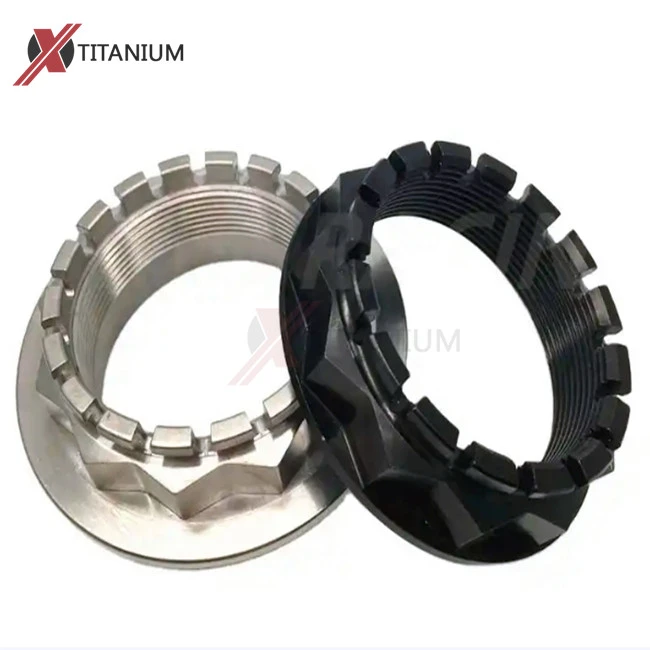
Understanding GR5 Titanium Rear Axle Nuts
What Makes Ti-6Al-4V Material Superior?
Gr5 Titanium Rear Axle Nut is made up of 90% titanium, 6% aluminium, and 4% vanadium, which is in line with ASTM B348 standards. This metallurgical profile gives the material a density of 4.43 g/cm³ and a tensile strength between 895 MPa and 1050 MPa, which is about the same as high-grade steel fasteners but much lighter. The material doesn't rust because it forms a stable oxide film that doesn't break down when exposed to chlorides, road salts, or water. Aluminium options have low shear strength, and steel parts tend to rust-weld onto axle threads. Titanium metal nuts, on the other hand, keep their shape even when they are heated and cooled and under mechanical stress.
Technical Specifications and Material Properties
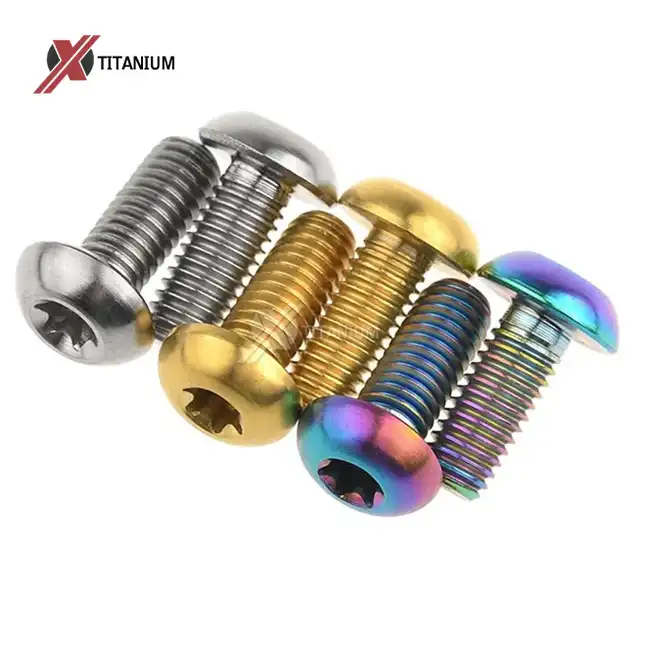
With precise CNC cutting, threaded shapes are made to fit both metric and imperial axle standards to the letter. A minimum yield strength of 830 MPa ensures that the material won't deform under the cyclic loads that are common in professional bike uses. Surface treatments like polishing, anodising, and nitriding raise the hardness to 36 HRC and let you choose from natural titanium, gold, blue, green, purple, black, and rainbow finishes to suit your style. When used with aluminium or carbon fibre parts, anodised coatings add extra protection to wear without changing the mechanical qualities of the base material or creating galvanic corrosion risks.
Why Engineering Teams Specify GR5 Over Alternatives
OEM bicycle makers prefer Gr5 Titanium Rear Axle Nuts because the material can handle more than one type of failure at the same time. Thread galling is a typical problem when stainless steel meets aluminium. Titanium's natural lubricity and oxide layer make this problem almost unnoticeable. The lower rotational mass makes the suspension respond faster, which gives the bike better handling in both mountain biking and road racing. It has been tested and found that the fatigue resistance is higher than 10^7 cycles under variable amplitude loads. This means that it meets the durability needs of professional race teams and adventure touring uses where field serviceability cannot be compromised.
Step-by-Step Installation Guide for GR5 Titanium Rear Axle Nuts
Preparation and Required Tools
To do a proper fitting, you must first get calibrated torque wrenches that can accurately measure torques in the 10-15 Nm range, which is common for rear axle uses. To keep the flanks from getting damaged while the nut is being tightened, the socket must precisely match the shape of the nut. The necessary tools include clean microfibre cloths, isopropyl alcohol or acetone for cleaning, and anti-seize compounds that work with titanium alloys. As part of safety rules, you must wear eye protection when cleaning the threads and make sure the bike stays safely supported on a repair stand the whole time.
Thread Cleaning and Surface Preparation
Before putting the axle together, check the threads for dirt, rust, or damage. If the thread profiles were deformed by the old fasteners, use a thread chaser or clean tap that fits the axle's specifications to fix them. Wipe the axle threads and the titanium nut's internal threads with rubbing alcohol to get rid of any oils, dirt, or leftover lubricants that might change the torque readings. Any dirt or dust stuck between the connecting surfaces could lead to uneven clamp loads, which would lower the safety of wheel retention. Visual proof of thread state stops installation problems that show up when the load is high.
Anti-Seize Application and Assembly Sequence
Put a thin, even layer of an anti-seize substance that works with titanium on the axle threads. Copper-based goods can cause galvanic reactions, so stay away from them. Instead, choose nickel or ceramic formulas that are made for pairing metals that are not the same. First, thread the Gr5 Titanium Rear Axle Nut by hand to make sure it fits smoothly and doesn't have any cross-threading resistance. The nut should be able to turn easily until it is hand-tight, which means it is lined up correctly with the axis of the axle and the bearing preload surfaces. This check done by hand stops expensive thread damage that automatic installation tools might miss.
Torque Application and Verification Protocol
For exact values, look at the torque specification sheet provided by the bicycle maker. For rear axle uses, these values usually fall between 12 and 15 Nm. Set the measured torque wrench to the number that was given, and then apply steady, controlled pressure until the wrench says "done." Do not use impact tools or twisting movements that could damage the titanium threads or bearing races by introducing shock loads. After setting the initial torque, gently bounce the wheel for 30 seconds and then check the torque again. When nuts are properly seated, torque readings stay the same and no more tightening is needed.
Common Installation Errors to Avoid
The most common mistake during installation is over-tightening, especially when switching from steel fasteners that could handle higher torque values. Gr5 Titanium Rear Axle Nut is much stronger than steel, so it can clamp securely at lower torque settings. Going over the recommended torque may damage threads or bend bearing surfaces. On the other hand, not enough torque lets the nut rotate while riding, which causes fretting wear that speeds up the breakdown of the component. If you use too many lubricants or formulas that don't work well together, the friction coefficients will change, which makes torque specs useless. These problems don't happen again and again in production settings because techs are trained on how to handle different materials properly.
Comparison and Procurement Insights of GR5 Titanium Rear Axle Nuts
Material Performance Benchmarking
In low-cost steel axle nuts, high strength is achieved, but each part gains 60 to 80 grams in weight and is still susceptible to rust in wet or salty environments. Aluminium alternatives are lighter, but they don't have as much final tensile strength, so they can only be used in low-stress leisure bicycles. Gr5 Titanium Rear Axle Nut has the best performance range; it is as strong as or stronger than steel at 55% of the weight, and it doesn't need to be maintained to keep it from rusting over the life of the part. This mix allows for higher prices in situations where dependability, performance, and the total cost of ownership are more important than the original unit price.
Grade Comparison Within Titanium Family
Commercially pure titanium GR4 is very resistant to corrosion but not very strong, so it can't be used for high-load axle applications. GR9 titanium (Ti-3Al-2.5V) has a medium level of strength and can be cold shaped more easily. It is used in specific situations where deep drawing or complicated shapes are needed. Gr5 Titanium Rear Axle Nut is still the standard for bicycle bolts because it has the best balance of strength and weight, which directly leads to better performance without using complicated manufacturing methods that raise costs or lengthen wait times.
Supplier Selection and Quality Verification
Teams in charge of buying things should give more weight to companies that have ISO9001 certification, which shows that they have consistent quality management systems and protocols for tracking materials. For uses related to aerospace, AS9100 certification shows that the company can meet strict requirements for testing and documentation. Ask for certificates of the materials that say they meet the requirements of ASTM B348 for chemical makeup, mechanical properties, and heat treatment parameters. When suppliers offer full batch tracking, it's possible to figure out why something went wrong in the field, which helps with efforts to make products better all the way through their lifecycles. Well-known companies usually keep a stock of popular thread specs, which lets them quickly fill orders for prototypes and offer customisation help for large-scale production needs.
Practical Applications and Use Cases of GR5 Titanium Rear Axle Nuts
Professional Racing and Competitive Cycling
Elite race teams choose Gr5 Titanium Rear Axle Nuts because the small weight savings add up across all of its parts, giving the car real acceleration benefits during sprints and climbs. Less unsprung mass lets suspension systems react more quickly to changes in the terrain, keeping tires in contact with the road and maintaining grip on rough terrain. Professional workers like how the constant torque retention means they don't have to worry about maintenance in the middle of a race. The corrosion resistance is also very important for multi-stage events that happen in a variety of weather conditions.
Mountain Biking and Adventure Touring Applications
When you ride your bike off-road, it exposes parts to mud, water, and other debris, as well as constant vibration and impact loads. Gr5 Titanium Rear Axle Nuts keep the clamp load integrity even in these tough conditions, so they don't loosen and fail like steel fasteners that aren't properly held. Adventure travelling bicycles who travel through different climate zones benefit from the material's resistance to saltwater rust and thermal cycling. This means that the parts can be serviced reliably in the field during long trips where a broken part could put riders in danger or leave them stranded in remote areas.
Custom Builds and High-End OEM Integration
Boutique frame makers and high-end bicycle brands set their goods apart by carefully choosing parts that focus on both function and style. Using Gr5 Titanium Rear Axle Nuts in colour schemes that go well together makes things look better and works better too. Custom geometry bikes often need axle configurations that aren't standard. CNC-machined titanium parts make it possible to match the dimensions of off-the-shelf steel parts perfectly. These apps are worth the extra money because they improve performance and help the brand stand out in the high-end bicycle market.
Troubleshooting and Maintenance Tips After Installation
Inspection Intervals and Wear Indicators
Set up regular repair plans based on how often the vehicle is used. For competitive use, check the thread condition, nut seating, and torque retention every 500 kilometres. For leisure use, check them every 1000 kilometres. Fraying thread profiles, discolouration that suggests burning from poor lubrication, or less torque readings that show tightening are all visual signs of wear. If bearing play appears after a proper installation, it could mean that the nut has deformed or the axle threads are damaged and need to be replaced before a catastrophic failure happens.
Cleaning Procedures and Retorquing Best Practices
To clean titanium nuts, use water and a mild detergent. Do not use rough cleaners that can scratch anodised surfaces or weaken the nuts' ability to resist corrosion. During yearly maintenance, take off the nut fully, check the mating surfaces, reapply fresh anti-seize compound and then put it back on using the original pressure settings. Maintenance rounds that happen every three months are good for parts that work in harsh settings because they keep debris from building up and causing stress concentrations. Keep track of torque values and installation dates to help predictive maintenance programs figure out the best time to change parts based on their past performance rather than making up plans at random.
Replacement Criteria and Component Lifecycle
Replace Gr5 Titanium Rear Axle Nuts that have visible thread damage, keep coming loose even after being installed correctly, or deformation that shows they are overloaded. Unlike steel fasteners that show clear signs of corrosion that they need to be replaced, titanium parts may look like they're still usable even though they have internal stress risers that were caused by bad installation or impact damage. When used in professional racing or after any accident that causes the wheels to become out of line, conservative replacement policies every 5,000 kilometres provide safety gaps that are right for critical fastening applications. By keeping a stock of replacement parts, you can avoid downtime caused by unexpected failures that could affect training schedules or competitions.
Conclusion
When installed and maintained correctly, Gr5 Titanium Rear Axle Nuts improve speed in a wide range of bicycle situations, from professional racing to adventure touring. Because of its high strength-to-weight ratio, resistance to corrosion, and fatigue performance, the material is specified by engineering teams that put reliability and long-term component life first. By following exact fitting steps, like using the right amount of torque, anti-seize chemicals that work with the system, and proof steps, you can be sure that these benefits will lead to better performance in the real world. When procurement professionals work with certified makers who offer traceable materials, customisation options, and expert help during the product development and production scaling phases, they gain a competitive edge.
FAQ
Are GR5 titanium nuts compatible with all bicycle axle sizes?
Customisable CNC machining methods make it possible for Gr5 Titanium Rear Axle Nuts to fit both metric and imperial thread sizes. Common sizes are M12x1.5, M14x1.5, and imperial equivalents that match the specifications of the hub manufacturer. Before buying something, you have to make sure that the pitch, diameter, and flange geometry match up with the axle plans for thread compatibility proof. Custom thread profiles that work with unique hub designs usually need minimum order quantities to cover the cost of the tools needed, but well-known suppliers keep a stock of common specifications that allow for small-batch ordering for prototype development.
How does weight reduction impact bicycle performance?
Using lightweight Gr5 Titanium Rear Axle Nuts to reduce unsprung mass makes the suspension more sensitive. This lets the dampers and springs better control wheel motion on a variety of terrain. The weight savings of about 40 grams per rear axle nut helps reach total weight reduction goals, which are very important in competition cycling where small benefits add up over full builds. Tests show that there are measurable gains in acceleration during sprints and better handling precision through technical parts where keeping tyre contact is important for control and grip.
What are typical lead times for bulk titanium nut orders?
Standard thread standards that are kept in stock by the seller ship within 5 to 7 business days for orders of less than 500 units. Orders of more than 1000 units or unique specs that need dedicated production runs usually take three to four weeks from the time the purchase order is confirmed until it is delivered. With extra costs, expedited manufacturing that meets urgent prototype needs or production shortfalls may cut lead times to 10–14 days. When quality system requirements call for full tracking records, procurement planning should account for the extra two to three days needed to prepare material certification documents.
Partner with Chuanglian for Premium Gr5 Titanium Rear Axle Nut Solutions
Baoji Chuanglian New Metal Material Co., Ltd. is one of the leading manufacturers of Gr5 Titanium Rear Axle Nut solutions. They have been doing this for over ten years and have experience working with industries like aerospace, marine, medicine, and high-performance cycle. Our CNC cutting skills allow us to make precisely-threaded parts that meet all industry standards. Full quality control systems make sure that each batch is the same, which is important for OEM integration and mass production. We can customise surface treatments like anodising in different colours, polishing for looks, and nitriding to make the metal more resistant to wear.
Material traceability standards, flexible minimum order amounts, and expert advice to help with component selection and application optimisation are all things that our customers who are purchasing managers and engineering teams looking for reliable supply partnerships can use. You can email our team at info@cltifastener.com or djy6580@aliyun.com to talk about large orders, special requests, or to get material certifications and technical data sheets. You can look at our whole selection of titanium fasteners and machined parts at cl-titanium.com. These are made for tough situations where performance must be maintained.
References
1. Boyer, R., Welsch, G., & Collings, E.W. (1994). Materials Properties Handbook: Titanium Alloys. ASM International, Materials Park, Ohio.
2. Donachie, M.J. (2000). Titanium: A Technical Guide, 2nd Edition. ASM International.
3. Lutjering, G., & Williams, J.C. (2007). Titanium: Engineering Materials and Processes, 2nd Edition. Springer-Verlag Berlin Heidelberg.
4. ASTM International. (2020). ASTM B348 Standard Specification for Titanium and Titanium Alloy Bars and Billets. West Conshohocken, PA.
5. Schutz, R.W., & Thomas, D.E. (1987). Corrosion of Titanium and Titanium Alloys. ASM Handbook Volume 13: Corrosion, ASM International.
6. Peters, M., Kumpfert, J., Word, C.H., & Leyens, C. (2003). Titanium Alloys for Aerospace Applications. Advanced Engineering Materials, Volume 5, Issue 6.
Learn about our latest products and discounts through SMS or email