- English
- French
- German
- Portuguese
- Spanish
- Russian
- Japanese
- Korean
- Arabic
- Greek
- German
- Turkish
- Italian
- Danish
- Romanian
- Indonesian
- Czech
- Afrikaans
- Swedish
- Polish
- Basque
- Catalan
- Esperanto
- Hindi
- Lao
- Albanian
- Amharic
- Armenian
- Azerbaijani
- Belarusian
- Bengali
- Bosnian
- Bulgarian
- Cebuano
- Chichewa
- Corsican
- Croatian
- Dutch
- Estonian
- Filipino
- Finnish
- Frisian
- Galician
- Georgian
- Gujarati
- Haitian
- Hausa
- Hawaiian
- Hebrew
- Hmong
- Hungarian
- Icelandic
- Igbo
- Javanese
- Kannada
- Kazakh
- Khmer
- Kurdish
- Kyrgyz
- Latin
- Latvian
- Lithuanian
- Luxembou..
- Macedonian
- Malagasy
- Malay
- Malayalam
- Maltese
- Maori
- Marathi
- Mongolian
- Burmese
- Nepali
- Norwegian
- Pashto
- Persian
- Punjabi
- Serbian
- Sesotho
- Sinhala
- Slovak
- Slovenian
- Somali
- Samoan
- Scots Gaelic
- Shona
- Sindhi
- Sundanese
- Swahili
- Tajik
- Tamil
- Telugu
- Thai
- Ukrainian
- Urdu
- Uzbek
- Vietnamese
- Welsh
- Xhosa
- Yiddish
- Yoruba
- Zulu
How do I choose the right titanium alloy plate for marine use?
To pick the best titanium alloy plate for naval use, you need to carefully consider the grades of the material, how well it resists corrosion, its mechanical qualities, and the supplier's abilities. titanium alloy plate made for marine use, especially Grade 2 and Grade 5 (Ti-6Al-4V), work very well in salt water because they form a passive oxide film that stops pitting and fissure rust. Procurement teams have to find the right mix between technical requirements and long-term operating costs when choosing materials for offshore platforms, desalination systems, or shipbuilding parts. The material is naturally strong for its weight—it is usually 40–50% lighter than steel while still having the same tensile strength—which makes it essential for lowering the weight of ships and saving fuel. Knowing the alloy's make-up, how it's processed (such as hot rolling and annealing), and making sure it meets ASTM B265 or AMS standards helps make sure the material meets the needs of the project, needs as little upkeep as possible, and lasts longer than 30 years in difficult sea conditions.
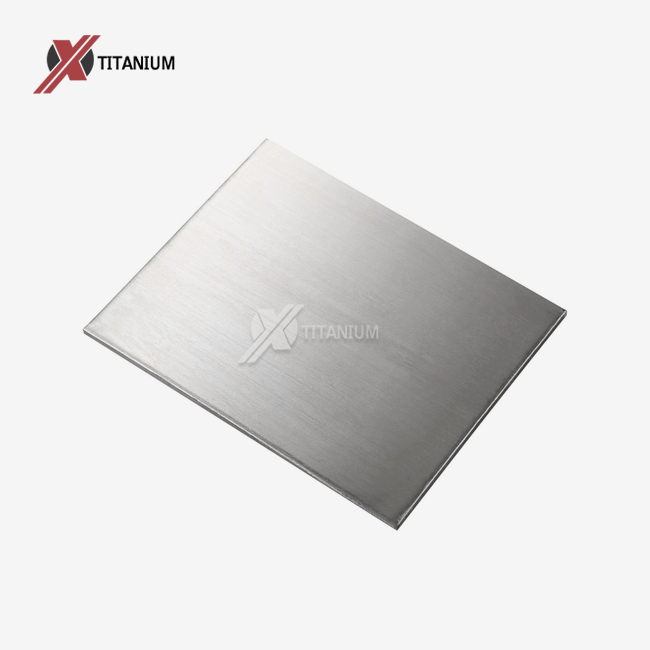
Understanding Titanium Alloy Plates in Marine Environments
Marine-grade titanium alloy plate are designed flat-rolled goods that are made by mixing pure titanium with certain elements to make it stronger and less likely to rust. When used in salt water, these materials solve important problems that standard metals can't. The material's protective oxide layer grows back on its own when it gets broken. This gives it better corrosion protection than stainless steel in chloride-rich settings.
Defining Marine-Grade Titanium and Its Core Advantages
Marine-grade titanium alloy plate have a low density (about 4.43 g/cm³) and are very resistant to biofouling, stress corrosion cracking, and rusting in seawater. Titanium doesn't break down like other materials do because of galvanic action or rusting. It can stay structurally sound for over thirty years without any protective layers. The material is very stable at high and low temperatures, and can handle situations as cold as -70°C in the Arctic and processing settings hotter than 300°C. Because it works well with heat, it can be used in heat exchangers for underwater drills and as a condenser in power generation systems on ships.
Common Grades for Marine Applications
Grade 2 commercially pure titanium is the main material for marine settings that need high corrosion protection but not too much strength. This grade has a controlled oxygen level of 99.2% titanium, giving it a tensile strength of about 345 MPa while still being very easy to shape for complex production. A lot of desalination plants use Grade 2 for the condenser tubes and brine heaters that are always in touch with seawater.
Grade 5 (Ti-6Al-4V) is the most common titanium alloy plate used in naval engineering. It has a tensile strength of up to 900 MPa thanks to the controlled addition of aluminum and vanadium. To get the best mechanical qualities, this alpha-beta alloy goes through solution treatment and aging heat processes. This makes it perfect for structural parts in submersibles, propeller shafts, and offshore platform joints that are loaded and unloaded many times. The material is more resistant to stress than aluminum and stainless steel, so it won't break in catastrophic ways when it's loaded with waves.
Adding palladium to Grade 7 makes it more resistant to reducing acids and is still the best choice for chemical ship parts and offshore oil handling equipment that will be exposed to sour gas. For specific uses that involve extreme pH changes or contact to hydrogen sulfide, Grade 7 performs well enough to justify its high price.
Contrasting Titanium with Alternative Marine Materials
When compared to 316L stainless steel, titanium alloy plate reduces the possibility of stress corrosion cracks caused by chloride in warm waters above 60°C. Marine boats that use stainless steel parts usually need to be replaced every 5 to 10 years. On the other hand, titanium setups don't break down much after 30 years of use. When it comes to topside tools, where every kilogram affects the stability of the ship and how much fuel it uses, the weight edge becomes very important.
Galvanic rusting happens when aluminum alloys are mixed with different metals in salt water, even though they are light. They also pit quickly when the water stays still. Titanium is a noble metal in the galvanic series, which means it can be used safely with carbon steel or copper-nickel alloys without speeding up rust. This makes design easier and gets rid of the need for complicated separation systems.
Critical Criteria to Evaluate When Choosing Titanium Alloy Plates for Marine Use
To choose the right marine-grade titanium alloy plate, you need to carefully look at how it will react to the environment, how it will be used, and how it will meet legal requirements. Frameworks for structured assessments that turn working situations into specific material needs help procurement teams.
The F-1 Criteria Screening Approach
The F-1 structure puts four main things in order of importance: the chemistry of the fluid, the power needs, the limitations of the fabrication process, and official approvals. You can tell if Grade 2 is good enough by looking at the specific saltwater chemistry at your launch site. This includes the salinity levels, dissolved oxygen content, and temperature ranges. Grade 5 is stronger, so it's worth spending more on. Static immersion in seawater doesn't affect Grade 2 specs, but dynamic loads in underwater manipulator arms or mooring links needs Grade 5's better fatigue properties.
Evaluating Corrosion Resistance Parameters
Titanium doesn't rust in saltwater because it has a steady passive oxide film that forms instantly when it comes in contact with oxygen or water. This film is usually 1 to 10 nanometers thick. Unlike stainless steel, which is attacked locally below pH 5, this protected layer doesn't break down in pH ranges from 3 to 12. When looking at different sources, make sure they have corrosion test results that meet ASTM G48 (pitting protection) and ASTM G36 (stress corrosion cracking) standards. Reputable makers show proof that corrosion rates are less than 0.0025 mm/year in rapid ocean testing methods.
Crevice rust is a major problem in bolted joints and gasket surfaces where seawater pools and doesn't move. In most marine situations, Grade 2 titanium doesn't corrode in cracks, but Grade 5 titanium may need Grade 7 specifications in harbors that are very still or dirty. The right grade should be chosen based on your unique placement conditions.
Mechanical Strength and Fatigue Considerations
Marine buildings have to deal with waves, changes in pressure, and rounds of thermal growth that make them very resistant to wear. Grade 5 titanium alloy plate have a failure strength of about 510 MPa at 10^7 cycles, which is a lot higher than aluminum alloys, which fail at below 200 MPa in the same tests. When choosing materials for moving parts like flexible steps or articulated loading arms, make sure that the providers give you fatigue test results that follow ASTM E466 rotating beam testing or ASTM E647 fatigue crack growth rates.
When it comes to pressure vessels, where safety factors need to take into account both high working pressures and safety margins, the material's yield strength is very important. When Grade 5 plates are treated with a solution at 955°C and then aged at 540°C, their yield strengths go above 880 MPa. This lets wall sections be smaller, which lowers the total system weight without lowering safety.
International Standards and Certification Requirements
Marine projects usually need to follow more than one set of rules that combine based on the type of craft, where it will be used, and where it will be deployed. For general uses, ASTM B265 sets the standards for titanium alloy plate. It says the maximum and minimum chemical compositions, mechanical property ranges, and size errors. AMS 4911 has tighter rules for Grade 5 aerospace-quality material, which is often used for important naval parts that need to be easier to track.
When parts come into contact with drinkable water in desalination plants or freshwater systems on ships, they need to be certified to ISO 5832-3. This makes sure that the cleanliness of the materials meets standards for drinking water. DFARS compliance may be needed for projects involving navy boats or military uses. This means that materials can only be sourced from approved domestic sources with full supply chain paperwork. During qualification reviews, expensive project delays can be avoided by making sure that possible sellers keep their certifications up to date.
Comparing Titanium Alloy Plates with Alternative Materials for Marine Use
Knowing how titanium alloy plate works compared to other materials lets you do a cost-benefit study that takes into account the whole lifecycle of the product, not just the original cost of buying it.
Titanium Versus Stainless Steel in Seawater Service
Marine-grade stainless steels, such as 316L or duplex 2205, have lower material costs, but they cost more in the long run because they need more upkeep and don't last as long. In seawater, stainless steel parts usually get pitting rust within 3 to 5 years, which means they need to be inspected regularly, have their protective coatings reapplied, or be replaced. A comparison of heat exchanger setups shows that titanium alloy plate tubes don't need to be cleaned as often as stainless steel tubes do because of biofouling and scale buildup, which lowers their efficiency by 15–30% per year.
The difference in weight has big effects on ocean platforms, where the weight of the topside directly affects the cost of the base and how hard it is to set up. Using titanium instead of stainless steel for pipe systems lowers their weight by 42%, which could mean they don't need as many extra buoyancy units or can carry more. This benefit is especially appealing for projects that need to be retrofitted or have uses that need to be light.
Titanium Versus Aluminum Alloys
Marine-grade aluminum alloys, like 5083 or 6061, have good strength-to-weight ratios and lower material costs, but they are more likely to rust and don't last as long in salt water. To protect aluminum parts, you need either sacrificial anode systems or forced current cathodic protection. This makes things more complicated and costs more to maintain over time. These extra systems are not needed for titanium alloy plate installs, which makes planning easier and lowers the cost of lifelong support.
The material behaves very differently when it is hit with force. While titanium alloy plate maintains elastic behavior over a wider stress range, allowing recovery from overload conditions without lasting damage, aluminum shows ductile behavior but experiences permanent deformation under loads exceeding yield strength. This quality is useful for grounding gear and flexible joint uses that might experience extreme weather sometimes.
Long-Term Cost-Benefit Analysis
Titanium's higher original material cost—usually three to five times that of stainless steel plates that are the same—must be weighed against its 30-year lifetime costs, which include repairs, replacements, and lost work time. A careful study of the lifetime costs of offshore platform topsides shows that titanium alloy plate parts have a 22% lower total cost of ownership over 25 years of operation, even though they require more capital. The study looks at the costs of maintenance access in remote settings, where staffing levels and weather windows make it more expensive to do regular checks and fixes.
Taking energy economy into account adds another layer to the economic analysis. Titanium structures that are lighter make ships less mobile, which can cut fuel use by 3–8% based on the type of ship and how it is used. Commercial ships and offshore support boats can save a lot of fuel over the course of decades of use, which makes the extra material investment very worthwhile.
Procurement Considerations: How to Source Titanium Alloy Plates for Marine Projects?
To make sure that materials are of good quality, the supply chain needs to be reliable, and the terms of the deal need to be flexible enough to meet the needs of the project. Marine projects that go well rely on providers who can deliver titanium alloy plate with the same qualities across production batches while also being able to adapt to changes in the engineering.
Identifying Qualified Suppliers with Marine Expertise
Titanium providers that are known all over the world keep their certifications and quality processes in line with the needs of the marine industry. Over the past ten years, Baoji Chuanglian New Metal Material Co., Ltd. has built up a wide range of specialized skills to serve offshore engineering clients. We keep our AS9100 and ISO9001 certifications up to date and use batch traceability systems to connect finished titanium alloy plate to the original production lots of titanium sponge. Our site is in Baoji City, which is known as the "City of Titanium" in China's Shaanxi Province. This manufacturing cluster has integrated supply lines and a lot of highly skilled expert workers.
When procurement teams look at possible sources, they should check more than just the material approval to see if they can actually make the goods. When a supplier offers combined services like hot rolling, cold rolling, annealing, and surface finishing (pickling, acid cleaning, and sandblasting), they give customers more options for unique requirements while keeping quality control higher at all stages of the process. Our building has CNC machining centers and mechanical testing tools that let us do hardness testing, bend testing, and hydraulic pressure testing all in-house. This makes sure that everything is checked out completely before it is shipped.
Customization Capabilities and Technical Support
Marine uses often need measurements that aren't standard, heat treatments that aren't standard, or surface preparations that aren't standard on common titanium alloy plate. During the engineering steps, suppliers who can meet requests for customization without charging too much for longer lead times give engineers a competitive edge. We can make things in thicknesses from 1mm to 100mm, widths up to 2000mm, and lengths that can be customized up to 6000mm. This lets us get the best material yield for each part geometry.
Suppliers who work as development partners are different from commodity sellers because they can provide technical help. It's helpful for engineering teams when suppliers offer advice on choosing materials, checking for corrosion, and making things that will work in certain marine settings. Our expert staff helps customers come up with specifications, figures out what test results mean for materials, and suggests welding procedures that will lead to successful fabrication.
Navigating Lead Times and International Logistics
Marine project plans are very strict, and if materials are late, it can affect the whole process, from building the ship to turning it over to the crew. Knowing how long it really takes to make titanium alloy plate helps you plan your projects correctly. Standard Grade 2 and Grade 5 plates in common sizes usually ship 4 to 6 weeks after an order is confirmed. Customized sizes that need special melting campaigns or special processes can take 8 to 12 weeks. Setting up framework deals with qualified suppliers lets you store strategic inventory ahead of time for when projects are awarded, which shortens the buying cycle when time is tight.
When shipping titanium alloy plate internationally, it's important to follow rules for packing that keep the plates' surfaces from getting damaged during shipment. Reliable sellers use protective measures like interleaving paper, wooden crates, and moisture barriers to make sure that the material comes in a state that meets the requirements. International shipping rules apply to the way we package our exports, and we keep in touch with freight forwarders who know how to handle high-value metal goods so that customs processing times are kept to a minimum.
Case Studies and Best Practices in Selecting Titanium Alloy Plates for Marine Use
Real-life examples show how smart material selection and partnerships with titanium alloy plate suppliers can help projects in a way that can be measured. They also show typical problems that procurement teams should be ready for.
Offshore Platform Heat Exchanger Upgrade
A company in the North Sea changed the stainless steel tube bundles in topside heat exchangers to Grade 2 titanium alloy plate that were cut into the shape of tubes. The system fixed long-lasting fouling problems that needed shutdowns every three months for cleaning, which cost about $2.3 million in lost production and repair work. Titanium's smooth oxide surface doesn't let living things stick to it, so it only needs to be cleaned every 24 months. This also makes heat movement 18% more efficient because scale doesn't build up as much. The project had a payback period of 3.2 years, even though titanium is a more expensive material. It is expected to last longer than 35 years, compared to the 8-year replacement cycle for stainless steel.
The procurement team initially encountered challenges when early quotes from suppliers called for Grade 5 material at higher costs than necessary. Technical advice showed that the application's mild pressure and temperature levels allowed Grade 2 standard, which cut the cost of the material by 32% while still meeting the corrosion resistance requirements. This experience shows how important it is to work with sources who really know marine engineering instead of general metal sellers.
Shipboard Piping System Corrosion Mitigation
A navy auxiliary vessel had multiple galvanic corrosion failures at the points where stainless steel and aluminum met in seawater cooling systems. This meant that fixes had to be done quickly while the ship was in operation. Concerns about galvanic coupling were taken care of by redesigning the system with Grade 2 titanium alloy plate pipes. Titanium's place in the galvanic series allowed direct connection to both aluminum and steel parts without speeding up corrosion. During the next five years, the system cut the number of unplanned repair events by 87%.
Material procurement for this project required careful attention to certifications because military requirements needed full material traceability and DFARS-compliant sourcing. Working with suppliers to keep up-to-date documentation systems and production skills in the United States was key to meeting contractual obligations on time.
Common Pitfalls and Lessons Learned
When buying teams use aerospace or industrial titanium alloy plate types without thinking about marine-specific needs, marine projects often have problems with meeting specifications. When Grade 5 material is used for applications that only need corrosion protection, it costs more than it needs to, while Grade 2 material used for high-stress structure applications could fail early. These problems can be avoided by working with metallurgical experts or skilled sources when making the specifications.
If you don't pay attention to surface finish standards, it can cause problems with manufacturing later on. When heavy mill scale is placed on titanium alloy plate, they need to be pickled or blasted again before they can be welded. This adds to the cost and risk of the fabrication timeline. When you place an order, be sure to include the surface conditions you want (bright, pickled, or sanded) so the material comes ready to use right away.
When suppliers don't have strong quality processes or try to use products from more than one production lot instead of the same ones, batch consistency problems happen. Making sure that important parts must be made from a single melt-lot and that material test reports (MTRs) can be linked to heat numbers will make sure that all of the titanium alloy plate in your project have the same features.
Conclusion
When choosing marine-grade titanium alloy plate, you have to balance the need for high technical performance with the cost of ownership over the whole lifetime and the supplier's abilities. Grade 2 is used for most seawater rust tasks where middling strength is enough, while Grade 5 is used for structure parts that are under a lot of mechanical stress or fatigue cycles. For procurement to go well, sellers must offer full expert support, open customization, and quality systems that make sure materials are consistent. Because the material is more resistant to corrosion, lasts longer, and is lighter, it has strong total cost of ownership benefits that support higher initial investment costs. Setting up organized evaluation frameworks, defining the right grades, and forming partnerships with qualified suppliers sets marine engineering projects up for long-term operating success while reducing the need for repairs and replacements.
FAQ
Q1: What grade of titanium alloy plate is optimal for marine heat exchangers?
A: This Grade 2 commercially pure titanium alloy plate works best for naval heat exchangers that work below 300°C. This grade is very good at resisting rust in seawater and has enough thermal conductivity to move heat around efficiently. Compared to copper-nickel or stainless steel, this material doesn't allow biofouling or scale to form, so cleaning times are much longer. Grade 5 may be needed for situations with higher temps or pressures, but the extra strength usually goes beyond what a heat exchanger needs, so Grade 2 is the cheaper option for most installs.
Q2: How does titanium compare to duplex stainless steel in saltwater applications?
A: In salty settings, titanium alloy plate works better than duplex stainless steel because it doesn't crack or pit when chloride causes stress corrosion. Even though duplex grades like 2205 are better at resisting rust than 316L stainless, they can still be attacked locally in warm seawater, when they are not moving, or if the protective films are broken. Titanium's self-healing oxide layer grows back right away, so it doesn't break down slowly over many years of use like duplex stainless steel does. Titanium's higher material costs are usually balanced out by its lower weight and longer service life in offshore and undersea uses.
Q3: Can suppliers provide customized dimensions and surface treatments for marine projects?
A: Trustworthy titanium alloy plate providers allow modification, such as different thicknesses, widths, lengths, and surface finishes. The methods of hot rolling, cold rolling, annealing, and pickling can be changed to fit the needs of the job. Depending on how complicated the specifications are, lead times for customized material are usually between 6 and 10 weeks. When you work with suppliers who offer combined manufacturing capabilities, you can be sure of better quality control and a faster response to changes in engineering than when you work with middlemen who buy from different mills.
Partner with Chuanglian for Marine-Grade Titanium Alloy Plate Solutions
Baoji Chuanglian New Metal Material Co., Ltd. offers a wide range of titanium alloy plate products that are designed to work well in harsh naval settings. As a top titanium alloy plate maker with more than ten years of experience, we have strict quality control systems that include checking the raw materials and doing a final review to make sure that every shipment meets your exact needs. Our marine-grade products come in different sizes and grades, such as Grade 2, Grade 5, Grade 7, and Grade 9. They are made using modern hot rolling, cold rolling, annealing, and surface finishing methods like pickling, polishing, and sanding.
We know how important it is for naval projects that deliveries are on time and materials are always the same. Our expert team gives you application-specific advice on which grade to choose, data from corrosion tests, and suggestions for fabrication that will help your purchase go as smoothly as possible. Since we are in Baoji's integrated titanium industry area, we can offer reasonable prices without lowering quality standards because we have a lot of technical experts in one place. Our certificates and traceability systems meet international maritime standards, giving your projects the strict paperwork they need.
For in-depth technical advice, unique quotes, or material test results, email our marine materials experts at info@cltifastener.com or djy6580@aliyun.com. We're happy to answer any questions you have about providing samples, creating specifications, and forming long-term supply partnerships. Visit cl-titanium.com to see our full range of titanium alloy plate products and learn how our production services can help you succeed in marine engineering.
References
1. Boyer, R., Welsch, G., & Collings, E.W. (1994). Materials Properties Handbook: Titanium Alloys. ASM International, Materials Park, Ohio.
2. Schutz, R.W. & Watkins, H.B. (1998). Recent Developments in Titanium Alloy Application in the Energy Industry. Materials Science and Engineering: A, Volume 243, Issues 1-2, Pages 305-315.
3. Cotton, J.D. (2007). Titanium Alloys for Marine Applications. Advanced Materials & Processes, Volume 165, Issue 4, Pages 25-28.
4. Oldfield, J.W. & Todd, B. (1991). Corrosion Resistance of Titanium in Marine and Offshore Applications. British Corrosion Journal, Volume 26, Issue 3, Pages 173-180.
5. ASTM International (2020). ASTM B265-20: Standard Specification for Titanium and Titanium Alloy Strip, Sheet, and Plate. West Conshohocken, Pennsylvania.
6. Donachie, M.J. (2000). Titanium: A Technical Guide, 2nd Edition. ASM International, Materials Park, Ohio.
Learn about our latest products and discounts through SMS or email