- English
- French
- German
- Portuguese
- Spanish
- Russian
- Japanese
- Korean
- Arabic
- Greek
- German
- Turkish
- Italian
- Danish
- Romanian
- Indonesian
- Czech
- Afrikaans
- Swedish
- Polish
- Basque
- Catalan
- Esperanto
- Hindi
- Lao
- Albanian
- Amharic
- Armenian
- Azerbaijani
- Belarusian
- Bengali
- Bosnian
- Bulgarian
- Cebuano
- Chichewa
- Corsican
- Croatian
- Dutch
- Estonian
- Filipino
- Finnish
- Frisian
- Galician
- Georgian
- Gujarati
- Haitian
- Hausa
- Hawaiian
- Hebrew
- Hmong
- Hungarian
- Icelandic
- Igbo
- Javanese
- Kannada
- Kazakh
- Khmer
- Kurdish
- Kyrgyz
- Latin
- Latvian
- Lithuanian
- Luxembou..
- Macedonian
- Malagasy
- Malay
- Malayalam
- Maltese
- Maori
- Marathi
- Mongolian
- Burmese
- Nepali
- Norwegian
- Pashto
- Persian
- Punjabi
- Serbian
- Sesotho
- Sinhala
- Slovak
- Slovenian
- Somali
- Samoan
- Scots Gaelic
- Shona
- Sindhi
- Sundanese
- Swahili
- Tajik
- Tamil
- Telugu
- Thai
- Ukrainian
- Urdu
- Uzbek
- Vietnamese
- Welsh
- Xhosa
- Yiddish
- Yoruba
- Zulu
How strong are titanium button head bolts compared to stainless steel?
When testing how well fasteners work in tough industrial settings, titanium button head bolts regularly show a tensile strength of about 900 MPa in Grade 5 (Ti-6Al-4V) metal, which is as strong as or stronger than many grades of stainless steel. While 316 stainless steel usually has a strength range of 515–620 MPa and austenitic grades are around 700 MPa, titanium's main benefit is not just its raw strength, but also its very high strength-to-weight ratio. Titanium has the same performance as steel but is 45% lighter, which is important in aircraft parts and high-speed racing uses where every gram counts when it comes to fuel economy and costs. This mix of mechanical stability and reduced mass means a measured return on investment over many operating cycles for procurement managers who look at lifetime value instead of just upfront price.
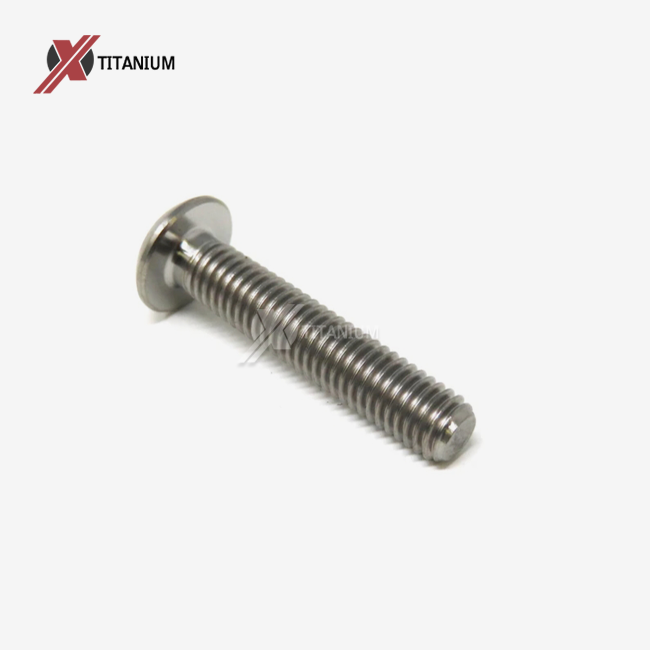
Understanding the Strength of Titanium Button Head Bolts vs Stainless Steel
Tensile and Yield Strength Comparison Across Material Grades
The maximum tensile strength of Grade 5 titanium alloy (Ti-6Al-4V) is 900 MPa, and the yield strength is about 830 MPa. This puts it above standard 304 stainless steel, which has a tensile strength of 515 MPa, and on par with harder 316 stainless steel. Grade 2 commercial titanium has a lower tensile strength of about 345 MPa, which makes it good for less demanding structural uses where resistance to rust is more important than load-bearing needs. When engineers choose bolts for pressure tank flanges or offshore platform structures, Grade 5 is often the first choice because it has been shown to work well in cycle loading situations. This is because the material's bending properties (around 10-15%) make it flexible without losing stiffness.
Corrosion Resistance in Industrial Environments
Titanium's inactive oxide layer forms on its own and grows back when it gets broken. This gives it the best defense in chloride-filled seas and acidic chemical processing environments. Grades of stainless steel like 316 work fine in normal situations, but they get pitting and crevice rust when chloride levels go over 1000 ppm or temperatures rise above 60°C.
We've been providing fixing solutions for over ten years to desalination plants and petrochemical companies. Titanium fasteners have been used for more than twenty years without needing to be replaced, while stainless steel fasteners only need to be replaced every five to seven years. Titanium doesn't suffer from galvanic rust when it's mixed with metals that aren't the same, which is a common problem in marine engineering systems made of more than one material.
Weight-to-Strength Ratio and Structural Efficiency
Titanium button head bolts offer significant advantages in weight-sensitive systems due to titanium's lower density (4.5 g/cm³ vs. stainless steel's 8.0 g/cm³). A Grade 5 titanium M8 x 25mm button head bolt weighs about 3.2 grams, while a Grade 316 stainless steel one weighs about 6.1 grams. This 580-gram weight loss has a direct effect on the carrying capacity and fuel consumption measures that flight engineers look at during design evaluation. This is because a normal airplane engine nacelle needs more than 200 screws to hold it together. The low-profile button head design improves aerodynamic efficiency even more by lowering parasitic drag on external surfaces. This is one reason why several UAV makers chose our CNC-machined titanium bolts for attaching fuselage skins.
Comparing Titanium Button Head Bolts and Stainless Steel Bolts: Key Considerations
Material Grade Impact on Performance Parameters
Choosing between titanium and stainless steel depends on how well you understand how alloying elements change how things behave in the real world. The aluminum and vanadium in grade 5 titanium make it stronger and more stable at high temperatures. It can keep its mechanical qualities up to 315°C before it starts to creep. Adding molybdenum to stainless steel 316 makes it more resistant to chloride, but it's not as good as titanium when it comes to handling both high temperatures and acidic conditions at the same time.
For chemical reactor maintenance, the requirements for buying materials should make it clear that titanium grades must meet ASTM B348 or AMS 4928 standards. This is to make sure that the alloying composition is the same from batch to batch, which is a quality control measure we apply through our approved testing methods.
Behavior Under High-Stress and Temperature Extremes
In systems that are prone to shaking, such as turbine bearings and car suspension parts, fatigue resistance becomes the most important factor. Extremely high-cycle fatigue performance is better in titanium alloys, with limits around 50–60% of ultimate tensile strength compared to 35–40% for austenitic stainless steels. Titanium's low thermal expansion rate (8.6 µm/m·K vs. 16–18 µm/m·K for stainless steel) means that it doesn't change much in size when temperatures are changed from -40°C to 200°C, which happens a lot in aircraft applications. This stability keeps bolted joints from coming free when they are exposed to repeated heat stress, so lock-wire safety measures or chemical thread-locking compounds are not needed.
Price and Lifecycle Cost Analysis
Titanium screws cost 4 to 6 times more than stainless steel when they are first bought, which can cause budget reviews to be hesitant. The real cost comparison is shown when you add up all the costs of owning the business over a 10 to 15-year time. When you add up the time it takes to move, check, and repair corrosion-related fasteners on offshore platforms, maintenance downtime for these events usually costs between $15,000 and $25,000. These ongoing costs can be eliminated with a single switch to titanium gear, which also extends the time between certifications. We have proof of clients in the chemical processing industry saving 40% over the life of an investment, even though the initial investment was higher. This was mostly due to getting rid of planned repair programs and the costs that come with keeping inventory.
How to Choose Titanium Button Head Bolts for Your Industry Applications?
Matching Tensile Strength to Load Requirements
The engineering specs for titanium button head bolts should match the bolt grade with the estimated joint forces and include the right safety factors for dynamic loads. For uses where the tension load is less than 60% of a Grade 5 bolt's capacity, it may be cheaper to select Grade 2 commercially pure titanium, which is strong enough but costs less for special manufacturing runs.
Titanium doesn't have as much shear strength as steel, so the thread engagement length is very important. Titanium needs a minimum engagement of 1.5× bolt width to keep the threads from breaking. Our CNC cutting services can handle unique thread shapes and length requirements from M3 to M30 diameter ranges. This makes sure that they work with current assembly tools and makes the best use of the material.
Environmental Factor Assessment
In sea and chemical uses, the level of corrosive contact is the most important factor in choosing the right material. Grade 5 titanium is more stable and needs to be used in places with pH levels below 3 or above 12, temperatures that stay above 250°C for a long time, or hydrogen sulfide. The smooth shape of the button head setup keeps dirt from building up in open installations, which is a problem that often happens with hex-head designs. Anodizing surface processes (Type II or Type III per MIL-A-8625) that are available on our production line make parts even more resistant to wear and make them easier to find by color coding, which is useful for maintenance teams that have to keep track of a lot of different kinds of hardware.
Supply Chain and Customization Considerations
Lead times for titanium screws are usually between 6 and 10 weeks from the time an order is confirmed until it is delivered. This is because of the time it takes to get raw materials and use CNC machines for small-batch customization. Setting up outline deals with qualified makers, like our plant in Baoji, which is known as the center of China's titanium industry, makes sure that attention is given when there are problems in the supply chain.
Custom requirements like non-standard lengths, unique drive configurations (Torx, hex, or a combination of the two), and specific coating needs are easily accommodated in our production process. This is made possible by our own in-house metallurgical testing, which confirms that material certifications meet ASTM B348 and ISO 5832-3 standards.
Installation and Best Practices for Titanium Button Head Bolts
Torque Settings and Handling Protocols
Because titanium is easily galling, it's important to carefully control the torque—recommended values are 15–20% lower than for steel bolts of the same type to keep the threads from seizing up during installation. A Grade 5 M8 bolt usually needs 12 to 15 Nm of torque, while stainless steel needs 18 to 22 Nm. Lubrication is required to lower the friction coefficients.
Copper or nickel-based anti-seize chemicals shouldn't be used because they don't work well with galvanic corrosion. Instead, molybdenum disulfide or titanium-safe lubricants should be used to keep clamp loads stable without causing corrosion. Our technical paperwork packages come with torque-tension curves that are unique to each size and grade mix. These curves were measured through real-world testing that takes into account differences in surface finish such as polished versus anodized treatments.
Common Installation Mistakes and Inspection Methods
Over-torquing is still the most common reason why fasteners fail before they should. It creates stress centers that spread fatigue cracks when the load is changed. Visual inspection should confirm even contact around the edge of the button head, and the lack of material growth should show that the seat is properly engaged.
Dye penetrant inspection according to ASTM E1417 finds cracks on the surface of important parts, and ultrasonic testing confirms that the inside is sound for aircraft uses that are needed for flight. Using go/no-go gauges to check the state of the threads after fitting proves that the dimensions are correct, finding cross-threading or warping before the parts are put to use.
Maintenance Strategies for Extended Service Life
During regular inspections of titanium button head bolts, you should look for pitting rust at the points where two contacts meet and check the clamp load retention by force. Titanium fasteners rarely need to be replaced because they break down in the environment, unlike stainless steel fasteners. Wear patterns usually show problems with the design of the joint rather than material failure. When titanium is used in threads again, removal and reinstallation procedures must take this into account. Using new lube and checking the thread sides for cutting stops installation damage that weakens the joint during reassembly operations.
Where to Buy High-Quality Titanium Button Head Bolts—Supplier Insights
Supplier Qualifications and Certifications
Manufacturers with a good reputation keep their quality systems in line with AS9100 for aircraft uses, ISO 13485 for medical device parts, and ISO 9001 for general industry supply chains. Every package should have a material test record (MTR) that lists the chemical make-up using optical emission spectrometry and the mechanical qualities using tension testing in line with ASTM E8 standards.
The NADCAP certification that our facility has for special processes like heat treatment and non-destructive testing gives buying quality assurance teams the third-party proof they need during source checks. Traceability goes from approvals of the raw materials' mills to the final check of their dimensions. This makes a continuous paperwork chain that helps with failure analysis and meeting legal requirements.
Bulk Ordering and Customization Options
When you commit to a certain amount of goods, you can get better prices and make sure that production gets the most attention during times of high demand. Standard setups usually have minimum order numbers that start at 500 pieces. Custom requirements, on the other hand, need pledges of 1,000 or more pieces to support the cost of casting for non-standard head shapes or thread forms.
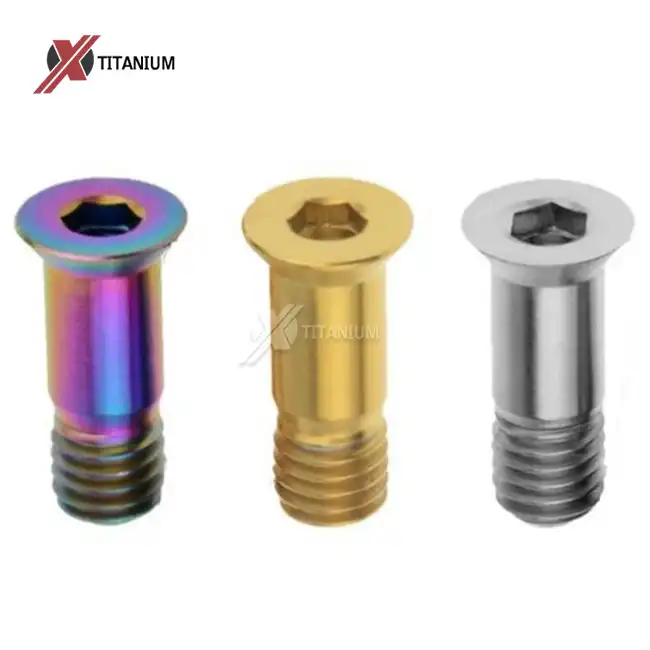
For important jobs, our CNC machining center can work with tolerances as low as ±0.02mm, and the surface finish can be anywhere from 1.6 Ra cut to 0.4 Ra finished. In consumer-facing uses, anodized color choices like natural silver, gold, blue, purple, black, and colorful PVD coats are used for both function (improved rust) and style (brand difference).
Lead Times and Logistics Solutions
Standard stock items usually ship in three to four weeks, but engineered-to-order items can take eight to ten weeks, based on how complicated they are and how many tests they need to be done. We keep strategic inventory backups for popular aircraft sizes (M6, M8, and M10 in Grade 5) so that we can meet the needs of known companies quickly.
International logistics planning includes making sure that the right waste classification is used (although titanium screws are not restricted), that shipments are grouped together to save money on freight, and that the right paperwork is ready for customs clearance in North American and European markets. Our export compliance processes make sure that the status is checked without using ITAR and give export control classification numbers (ECCNs) that make regulatory review easier during the approval cycles for purchases.
Conclusion
Titanium and stainless steel bolts are compared in terms of more than just their tensile strength. Lifecycle performance, environmental resistance, and the total cost of ownership are also taken into account. Grade 5 titanium button head bolts are very reliable because they have a tensile strength of 900 MPa, don't rust, and are lightweight, which has a direct effect on how well they work.
While stainless steel is still good enough for moderate-demand uses, titanium is a much better long-term investment in places where corrosion is a problem, parts that need to be light, and systems that need to be reliable because repair costs are so much higher than the initial cost of buying titanium. When technical teams are trying to balance performance requirements with budget limits, they should look at the total lifetime costs instead of just the purchase price. This way of thinking always favors titanium in tough industrial settings.
FAQ
What makes Grade 5 titanium stronger than most stainless steel grades?
The 900 MPa tensile strength of Grade 5 titanium (Ti-6Al-4V) comes from alloying aluminum and vanadium, which makes a two-phase lattice that is both strong and flexible. This is 75% stronger than 304 stainless steel and as strong as strengthened 316 versions while still having half the density. The balance between the alpha and beta phases makes the wear resistance better, especially in situations with repeated loads that happen a lot in aircraft and car uses. Stainless steel would need bigger cross-sections to get the same performance.
Can titanium button head bolts be reused after removal?
The state of the thread decides whether it can be used again. Because titanium tends to galle, it needs to be carefully inspected before reinstallation. With new anti-seize lube, threads that haven't been deformed or scored can be used again, but aircraft uses usually don't allow it because of standards for tracking. In industrial settings, the installation can be done two to three times if the torque-tension relationships stay within the acceptable range and a dye penetrant check shows that there are no wear cracks around the button head transition radius.
How do I prevent galvanic corrosion when using titanium fasteners with aluminum structures?
Titanium is the cathode when aluminum and titanium form a galvanic couple. This could speed up the rusting of aluminum in wet settings. Some ways to separate things are to use non-conductive pins, anodized surfaces on metal parts, or glue walls that stop electrolyte crossing. Corrosion rates depend on area ratios. Reducing the amount of visible aluminum surface compared to titanium bolt area lowers current density and slows corrosion to levels that can be handled in most industrial settings.
Partner with Chuanglian for Reliable Titanium Button Head Bolt Solutions
To find precision-engineered titanium screws, you need a production partner with a strong quality system and a track record of metalworking skill. We at Baoji Chuanglian New Metal Material Co., Ltd. have been processing titanium for more than ten years, and we can make Grade 5 (Ti-6Al-4V) button head bolts to exact specs in sizes M3 to M30. With CNC cutting, we can make unique lengths and finishes, such as polished or anodized in different colors, while still keeping the 900 MPa tensile strength and rust resistance that important uses need.
As the main titanium manufacturer in China, Baoji, we are in charge of the whole supply chain, from checking the raw materials to doing the final measurement inspection. This way, we can make sure that each batch is the same and that there is full paperwork for every step of the process. Our expert team is ready to help you make the best fastener standards for performance and cost, whether you need a small number of prototypes for testing or a lot of fasteners with tight delivery times. Get in touch with our technical support staff at info@cltifastener.com or djy6580@aliyun.com to talk about your project needs with a reliable titanium button head bolts maker that can meet the strictest industry standards.
References
1. Boyer, R., Welsch, G., & Collings, E.W. (1994). Materials Properties Handbook: Titanium Alloys. ASM International, Materials Park, Ohio.
2. Donachie, M.J. (2000). Titanium: A Technical Guide, 2nd Edition. ASM International, Materials Park, Ohio.
3. Seagle, S.R. & Hall, J.A. (2019). "Corrosion Behavior of Titanium Alloys in Marine Environments." NACE International Corrosion Conference Proceedings, Houston, Texas.
4. American Society for Testing and Materials (2021). ASTM B348-21: Standard Specification for Titanium and Titanium Alloy Bars and Billets. West Conshohocken, Pennsylvania.
5. Lütjering, G. & Williams, J.C. (2007). Titanium, 2nd Edition: Engineering Materials and Processes. Springer-Verlag, Berlin, Germany.
6. Aerospace Industries Association (2020). AMS 4928P: Titanium Alloy Bars, Wire, Forgings, Rings, and Drawn Shapes 6Al-4V Annealed. SAE International, Warrendale, Pennsylvania.
Learn about our latest products and discounts through SMS or email