- English
- French
- German
- Portuguese
- Spanish
- Russian
- Japanese
- Korean
- Arabic
- Greek
- German
- Turkish
- Italian
- Danish
- Romanian
- Indonesian
- Czech
- Afrikaans
- Swedish
- Polish
- Basque
- Catalan
- Esperanto
- Hindi
- Lao
- Albanian
- Amharic
- Armenian
- Azerbaijani
- Belarusian
- Bengali
- Bosnian
- Bulgarian
- Cebuano
- Chichewa
- Corsican
- Croatian
- Dutch
- Estonian
- Filipino
- Finnish
- Frisian
- Galician
- Georgian
- Gujarati
- Haitian
- Hausa
- Hawaiian
- Hebrew
- Hmong
- Hungarian
- Icelandic
- Igbo
- Javanese
- Kannada
- Kazakh
- Khmer
- Kurdish
- Kyrgyz
- Latin
- Latvian
- Lithuanian
- Luxembou..
- Macedonian
- Malagasy
- Malay
- Malayalam
- Maltese
- Maori
- Marathi
- Mongolian
- Burmese
- Nepali
- Norwegian
- Pashto
- Persian
- Punjabi
- Serbian
- Sesotho
- Sinhala
- Slovak
- Slovenian
- Somali
- Samoan
- Scots Gaelic
- Shona
- Sindhi
- Sundanese
- Swahili
- Tajik
- Tamil
- Telugu
- Thai
- Ukrainian
- Urdu
- Uzbek
- Vietnamese
- Welsh
- Xhosa
- Yiddish
- Yoruba
- Zulu
How does MMO titanium mesh anode improve corrosion resistance in marine applications?
Marine environments rank among the harshest testing grounds for materials and equipment. The relentless assault of saltwater, aggressive chloride ions, and constant mechanical stress creates conditions that accelerate metal degradation at alarming rates. For engineers overseeing offshore platforms, port facilities, or desalination plants, corrosion represents not just a maintenance headache but a genuine threat to operational safety and profitability. MMO titanium mesh anode technology addresses these challenges head-on, delivering a dimensionally stable solution that extends protection cycles from months to decades. The mixed metal oxide coating—typically comprising iridium oxide, ruthenium oxide, and tantalum pentoxide—transforms a Grade 1 or Grade 2 titanium substrate into an electrochemically active surface that maintains structural integrity while facilitating electron transfer for cathodic protection. This represents a fundamental shift from consumable anodes that require frequent replacement to permanent installations that eliminate downtime and reduce lifecycle costs.
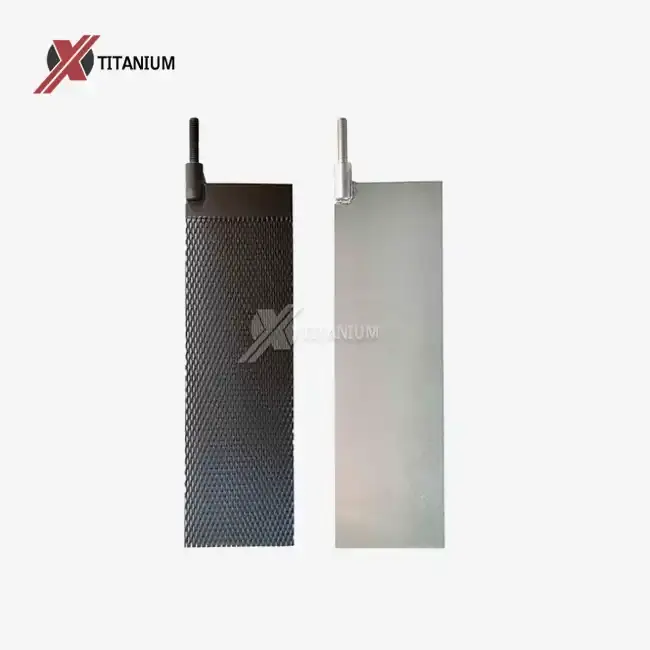
Understanding MMO Titanium Mesh Anode and Its Role in Corrosion Resistance
Material Composition and Manufacturing Excellence
High-purity titanium that meets ASTM B265 standards is the building block of all dimensionally stable anodes. At Chuanglian, we start by taking high-quality titanium sheets and either cold rolling or hot rolling them until they reach the right thickness. The thickness can be anywhere from 0.5 mm to 5 mm, based on the present density needs and the expected mechanical load. After that, the titanium base goes through a cooling process that lowers internal stresses and makes the grain structure better so that the coating can stick.
During this important step, surface preparation, we use pickling and acid cleaning to get rid of any metal layer and other impurities. This makes the surface very rough, which is needed for the next MMO layer to stick to it mechanically. A special thermal decomposition method is used to apply the mixed metal oxide layer. Precursor solutions containing valuable metal salts are brushed onto the substrate, and then it is fired at temperatures above 400°C. Several coating processes create a smooth layer that is usually 8 to 15 micrometers thick, but we can change the thickness based on how your business works.
Electrochemical Principles Behind Corrosion Protection
The mesh arrangement is clearly better than solid plate forms. The expanded shape makes the useful surface area about 25–30% bigger than with flat plates that are the same size. This means that current flows more efficiently through protected structures. This mesh anode is the positive end of impressed current cathodic protection devices. It releases electrons into the electrolyte, which in marine uses is water. The electrons then move toward the cathode, which is the structure that needs protection.
The MMO layer has great electrocatalytic activity, which means it lowers the overpotential needed for processes that release oxygen at the anode surface. ICCP systems use 15-20% less power than usual high-silicon iron anodes because of this electrochemical efficiency. The crystalline structure of the layer makes it easier for electrons to move while stopping the titanium base from passivating, which would stop current flow otherwise.
Durability Factors in Marine Environments
Seawater is very active because it has a lot of chloride (about 19,000 ppm), dissolved oxygen, different pH levels, and animals that make fouling substances. In these kinds of situations, traditional graphite anodes lose their shape, which means they need to be replaced every two to three years in high-current uses. Our MMO coated titanium mesh is very stable, and has been shown to last more than 50 years when submerged in salt water at current levels of up to 100 A/m².
The open shape of the mesh structure lets water flow through instead of making dead spots where faster rusting could start, so it is better at resisting mechanical damage than solid anodes. Titanium is lighter than steel—its density is only 4.5 g/cm³ compared to 7.8 g/cm³—which makes mounting systems less likely to fail. This is especially important for repair setups on old infrastructure where extra weight could weaken the structure.
Comparing MMO Titanium Mesh Anode with Alternative Anode Materials
Performance Against Graphite Anodes
Since the mid-20th century, graphite has served as the primary material in impressed current cathodic protection systems due to its low initial cost. However, in seawater environments it typically corrodes at rates between 0.5 kg and 1.0 kg per ampere-year—meaning a 10-amp system could consume 5 to 10 kg of anode material annually. This dimensional instability necessitates frequent replacement, driving recurring procurement cycles and installation downtime.
Graphite's brittle nature makes it susceptible to fracture during handling or installation. Thermal cycling or mechanical impact can initiate cracks that lead to premature failure. By contrast, the flexible titanium substrate in our mmo titanium mesh anode withstands bending and vibration without structural compromise. This mechanical resilience proves invaluable for projects involving rough water conditions or debris-laden environments.
Economic Comparison with Platinum-Coated Titanium
Dimensionally stable anode technology's top level is platinum-coated anodes, which give great performance but come at a high cost. The valuable metal coating makes the prices of materials three to four times higher than in other MMOs. This difference in cost makes it impossible to do large-scale marine protection projects that need a lot of anode surface area, like covering a whole dock structure or the legs of an offshore platform.
Our MMO coatings have similar electrochemical performance at current levels common in marine applications (20–80 A/m²), and they still keep the important benefit of being stable in size. The ruthenium and iridium oxides in our coating make it catalytic enough for oxygen generation, which is the main process in ICCP systems that use seawater. Data from tests done on sites in the Gulf of Mexico shows that MMO coatings that are put correctly keep working well for 15 years with less than 5% wear and tear.
Operational Efficiency Considerations
Operating costs are directly affected by current efficiency, which is the amount of applied current that actually helps protect against damage instead of being lost to side effects. When used in seawater, mixed metal oxide layers get current efficiencies above 95%, while high-silicon iron anodes only get 80–85%. This efficiency benefit cuts down on power use and makes it possible for smaller rectifier systems, which lowers both the cost of capital and the cost of running the system.
The mesh shape makes it possible for the current to flow evenly, which stops hot spots from forming where overprotection could happen in one area. Overprotection can weaken high-strength steels due to hydrogen embrittlement or cause protective coatings to come off. For complete asset protection without unexpected effects, it is important to make sure that current flows properly.
Installation and Maintenance: Ensuring Optimal Performance of MMO Titanium Mesh Anodes
Site Preparation and Installation Methodology
A careful site evaluation is the first step to a successful implementation of mmo titanium mesh anode systems. Engineers must determine total required protection current by calculating water resistivity, structure surface area, and coating breakdown factors. Our technical team assists with these calculations and recommends optimal anode placement to achieve uniform potential distribution across all protected surfaces.
The mesh anodes are attached to the structure using corrosion-resistant titanium lugs welded during production. For permanent submerged installations, electrical connections are made with titanium bolts using specialized anti-seize compounds or exothermic welding methods. Titanium mesh is remarkably lightweight—a 1000mm × 2000mm × 2mm anode weighs approximately 18 kg—reducing handling difficulty and installation labor compared to heavy cast iron alternatives.
When adequate spacing is maintained between anodes, interference patterns that could create underprotected zones are prevented. In seawater environments, a general rule suggests spacing should not exceed 3–4 meters, though computer modeling based on your specific structure's geometry can provide more precise placement recommendations. As part of our technical support, we perform finite element analysis for complex configurations where current shadowing might occur behind structural members.
Routine Inspection Protocols
Electrical continuity, coating stability, and lack of mechanical harm or heavy fouling should all be checked once a year. Underwater inspection procedures include checking for coating delamination, which isn't common but could happen if there were problems with the manufacturing, and making sure that potential readings on protected structures stay within the safe range of -800 to -1100 mV compared to a silver/silver chloride reference electrode.
In tropical waterways, where barnacles and algae grow and block the flow of water, biofouling control needs to be looked at. The smooth oxide layer naturally keeps bacterial attachments at bay better than rougher graphite surfaces, and oxygen bubbles that are made during operation help keep surfaces clean. Places with a lot of active fouling might benefit from brushing every so often. Brushing is a simple mechanical way to clean that won't hurt the oxide layer if done right.
Troubleshooting Common Issues
Voltage rises that don't make sense in rectifier systems could be caused by anode passivation, a weakening electrical link, or a problem with the rectifier itself, not the anode itself. As part of the diagnostic process, the anode-to-water potential should be checked to make sure that the anode is still electrochemically active. When MMO coatings are made correctly, their potentials stay in the 1.0 to 1.5 volt range while they are working. This shows that oxygen evolution is happening as it should.
The most common way for an anode device to fail is through connection point rust. Titanium is very resistant to rust, but when titanium cable meets copper cable, a galvanic couple forms that can be attacked more quickly if marine-grade potting solutions or junction boxes are not used to protect it. Our installation directions list accepted connection methods that keep out moisture, which is the main reason why connections fail.
Procurement Guide: Sourcing MMO Titanium Mesh Anodes for Marine Projects
Quality Certifications and Technical Documentation
Reliable sources provide full material traceability, including titanium mill certificates that confirm the grade's makeup, measures of the coating's thickness from each production lot, and data from accelerated life testing that shows how well the coating sticks to the material over time. At Chuanglian, our quality control method includes tests for hardness, bending to see how flexible the base is, and hydrostatic testing techniques for specific pressure vessel uses.
Buyers should require proof of the coating's quality through cyclic voltammetry or other similar scientific methods used for electrochemical testing that measures the coating's activity. This precise information shows that the oxide layer does have the desired catalytic qualities and is not just there for looks. The ISO 9001 certification shows that the company manages quality in a planned way, and the AS9100 certification shows that the company can provide accuracy and traceability at an aerospace level. This is important for clients in the defense or offshore oil sectors where strict paperwork is needed to meet safety standards.
Customization Capabilities and Lead Time Management
Marine projects rarely follow standard specifications. For mmo titanium mesh anode systems, you can select from standard substrate widths (up to 1000 mm) and lengths (up to 2000 mm), or we can fabricate precisely to your measurements. Mesh opening size selection balances mechanical strength, weight, and electrolyte flow requirements. Adjusting the ruthenium-to-iridium oxide ratio in the coating optimizes performance for either chlorine evolution environments (such as desalination pretreatment) or oxygen evolution environments (typical for most impressed current cathodic protection systems).
Due to the multi-step coating and quality verification processes, lead times for custom orders typically range from 6–8 weeks. Our stock of standard-sized Grade 1 titanium with standard MMO formulations suitable for marine service can support projects requiring rapid deployment. When procurement managers plan large-scale infrastructure protection initiatives, they should initiate supplier discussions during the design phase—allowing adequate time for prototype testing and production scale-up without compromising critical quality checks.
Supplier Evaluation Criteria
When processing titanium, having long-term relationships with suppliers is very important because the regularity of the material affects the safety of assets for decades. When evaluating a company, you should look at its production capacity to meet both initial orders and future growth needs, its expert support for help with installation and troubleshooting, and its after-sales service, such as its guarantee terms and availability of replacement parts.
Shipping logistics and prices are affected by how close a product is to being made, but the high value-to-weight ratio of titanium goods makes airfreight a cost-effective option for urgent needs. Chuanglian keeps its export paperwork simple and works with specialized titanium transport companies that know how to deal with reactive metals in a way that follows international shipping rules.
Case Studies & Future Trends in MMO Titanium Mesh Anode Applications
Documented Performance in Offshore Platform Protection
A big oil company in the North Sea replaced a graphite anode system that needed to be replaced every 30 to 36 months with mixed metal oxide mesh anodes in 2008. These anodes protect the jacket leg conductors from cathodic damage. 240 mesh anodes were spread out over four platform legs with depths between 15 and 80 meters for the installation. Inspection data collected every year until 2023 shows that the coating's integrity stays above 98% and there are no measurable changes in size. This means that the expensive overseas intervention cycles that were needed to replace the anode no longer need to happen. The amount of power used dropped by 18% compared to the graphite system. This saved over $45,000 a year per platform.
Desalination Plant Applications
Cathodic protection is used in seawater desalination plants to cover parts of the intake structures, outfall pipes, and processing tank interiors that can't be covered completely by normal coating systems. As part of their input screen security system, a reverse osmosis plant in the Middle East that processes 50,000 cubic meters of water every day put in titanium mesh anodes in 2015. The installation has been up and running nonstop until 2024, with only eye checks every three months. It has been protecting carbon steel screen frames in one of the world's harshest marine settings, where water temperatures exceed 32°C and salinity levels hit 42,000 ppm.
Emerging Technology Integration
The coming together of corrosion protection and smart tracking is an interesting path for progress. Potential tracking sensors are now built into more advanced installations and send real-time data about the state of safety to cloud-based analytics platforms. These systems allow for predictive upkeep by finding patterns of wear and tear before they actually happen. This improves both the usefulness of protection and the efficiency of running costs.
Coating formulation research keeps moving forward. Experiments are using tantalum oxide to make the coatings last longer and titanium dioxide to make them more resistant to UV light in splash zone uses. Manufacturers who are looking into additive manufacturing techniques may eventually be able to make mesh geometries that are best for certain installation conditions by using computational fluid dynamics modeling. However, for standard applications, traditional expanded mesh manufacturing is still the most cost-effective method.
Conclusion
Mixed metal oxide coated titanium mesh, specifically the mmo titanium mesh anode, offers the optimal solution for corrosion protection in marine environments by delivering exceptional electrochemical efficiency, mechanical durability, and an extended operational lifespan. This dimensionally stable anode technology provides decades of maintenance-free protection—unlike sacrificial alternatives requiring repeated replacement and reinstallation. The mesh geometry optimizes current distribution while reducing weight and material costs compared to solid plate designs. As operational demands on marine infrastructure intensify and service life expectations extend, asset managers and procurement professionals committed to operational excellence must select corrosion protection systems that eliminate failure rather than merely postponing it.
FAQ
Q1: How long do MMO titanium mesh anodes last in seawater environments?
A: The service life of anodes varies on the working current density and the environment, but anodes that were properly made usually last more than 50 years when submerged in seawater all the time at cathodic protection current densities below 100 A/m². Under normal working conditions, the covering thickness of 8 to 15 micrometers gives a lot of extra space because it is used up in nanometers per year.
Q2: Can anode specifications be customized for varying project requirements?
A: Customization is not an extra feature, it's a core skill. We make mesh anodes that can be up to 1000 mm wide and up to 2000 mm long. The substrate thickness can be anywhere from 0.5 mm to 5 mm, depending on your mechanical and current density needs. You can change the coating's ingredients to work best in certain electrochemical settings, like when chlorine is released in hypochlorite systems or when oxygen is released in normal impressed current cathodic protection.
Q3: How does maintenance compare between MMO mesh anodes and traditional graphite systems?
A: There is a big difference. Graphite anodes need to be replaced every so often because the material wears down, usually every two to four years based on the working current. To replace an anode, the system has to be shut down, the old material has to be thrown away, new anodes have to be installed, and then the system is back up and running. This causes a lot of operating problems and costs that keep coming up. Mixed metal oxide anodes get rid of the need for this replacement cycle completely.
Partner with Chuanglian for Superior Marine Corrosion Protection
To protect marine infrastructure, you need to work with MMO titanium mesh anode providers that you can trust and who understand both the electrochemical science and the practical side of your uses. Baoji Chuanglian New Metal Material Co., Ltd. has been processing titanium for more than ten years and has strict quality systems that make sure every anode that leaves our plant meets international standards like ASTM specs and ISO certifications. Our CNC cutting skills allow us to make exact changes to your project, whether it needs standard sizes or custom shapes to fit specific fitting requirements.
Our technical experts are available for engineering teams, sourcing managers, and project leaders to talk about your unique corrosion protection needs. Every quote comes with full material specs, coating analysis results, and application engineering help. You can email us at info@cltifastener.com or djy6580@aliyun.com to ask for detailed information or set up a meeting.
References
1. Baboian, R. (2005). Corrosion Tests and Standards: Application and Interpretation. ASTM International, West Conshohocken, Pennsylvania.
2. Morgan, J. (1987). Cathodic Protection: Theory and Practice. National Association of Corrosion Engineers, Houston, Texas.
3. Trasatti, S. (2000). "Electrocatalysis: Understanding the Success of DSA®." Electrochimica Acta, 45(15-16), 2377-2385.
4. Broomfield, J. P. (2007). Corrosion of Steel in Concrete: Understanding, Investigation and Repair. Taylor & Francis, London, United Kingdom.
5. Cotton, J. B., & Williams, B. P. (1984). Practical Corrosion Principles. National Association of Corrosion Engineers, Houston, Texas.
6. von Fraunhofer, J. A. (2006). "Anodes for Cathodic Protection Systems." Materials Performance, 45(3), 52-57.
Learn about our latest products and discounts through SMS or email