- English
- French
- German
- Portuguese
- Spanish
- Russian
- Japanese
- Korean
- Arabic
- Greek
- German
- Turkish
- Italian
- Danish
- Romanian
- Indonesian
- Czech
- Afrikaans
- Swedish
- Polish
- Basque
- Catalan
- Esperanto
- Hindi
- Lao
- Albanian
- Amharic
- Armenian
- Azerbaijani
- Belarusian
- Bengali
- Bosnian
- Bulgarian
- Cebuano
- Chichewa
- Corsican
- Croatian
- Dutch
- Estonian
- Filipino
- Finnish
- Frisian
- Galician
- Georgian
- Gujarati
- Haitian
- Hausa
- Hawaiian
- Hebrew
- Hmong
- Hungarian
- Icelandic
- Igbo
- Javanese
- Kannada
- Kazakh
- Khmer
- Kurdish
- Kyrgyz
- Latin
- Latvian
- Lithuanian
- Luxembou..
- Macedonian
- Malagasy
- Malay
- Malayalam
- Maltese
- Maori
- Marathi
- Mongolian
- Burmese
- Nepali
- Norwegian
- Pashto
- Persian
- Punjabi
- Serbian
- Sesotho
- Sinhala
- Slovak
- Slovenian
- Somali
- Samoan
- Scots Gaelic
- Shona
- Sindhi
- Sundanese
- Swahili
- Tajik
- Tamil
- Telugu
- Thai
- Ukrainian
- Urdu
- Uzbek
- Vietnamese
- Welsh
- Xhosa
- Yiddish
- Yoruba
- Zulu
What Are Titanium Forgings? Process, Types, and Benefits
Titanium forgings are high-performance parts that are made by stretching or shaping titanium alloys or commercially pure titanium under controlled compression forces and high temperatures. Forging is different from casting, where molten metal is put into molds. The material is worked manually, and the internal grain structure is aligned along the shape of the part. This makes parts with better mechanical qualities, like high strength, resistance to fatigue, and structural integrity, which are needed for safety-critical uses in the energy, medical, aircraft, and marine industries.
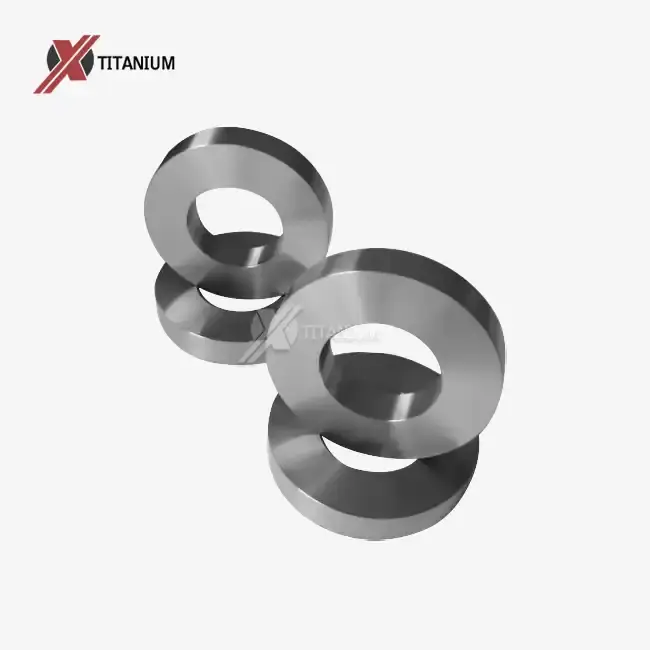
Understanding Titanium Forgings: Definition and Key Characteristics
When we talk about titanium forgings, we're talking about parts that have been made by putting a lot of pressure on hot titanium billets. The material doesn't melt; instead, it flows into the shape that is needed while still having the qualities of a solid. This method completely changes the way the metal's grains are arranged, which gives the part strength that follows its shape.
What Makes Titanium Forgings Different?
The mechanical structure is what makes forged titanium parts different from those made by casting or cutting. When titanium is forging, the grains run into the shape of the part. This gets rid of the random grain direction that happens in castings. This controlled shape directly leads to better motor performance. Internal porosity is a typical weakness in cast parts. The compressive forces close the tiny holes, getting rid of them completely. When purchasing teams look at a supplier's skills, knowing this basic difference helps them understand why cast parts are more expensive in important situations.
Industry-Standard Titanium Grades
We usually work with a few basic grades of titanium, based on the needs of the job. Commercially pure titanium Grade 2 is very good at resisting rust and being shaped, so it can be used in chemical processing equipment and naval parts. Grade 5 titanium alloy (Ti-6Al-4V) is used a lot in aircraft and medicine because it is very strong for its weight and doesn't harm living things. Both grades meet the standards set by ASTM B381, AMS 4928, and ISO 5832, which makes sure that they are the same all over the world. These specs aren't just words on paper; they show the real qualities of the material that engineers use to figure out safety factors and lifetime performance.
Enhanced Mechanical Properties Through Forging
When exact heat treatment methods are used with the forging process, tensile strength, yield strength, and fatigue resistance are all greatly improved. For example, aerospace rotor wheels go through millions of stress cycles over the course of their useful life. Forged titanium's fine grain structure gives it the fracture toughness it needs to stop cracks from spreading under repeated loads. Also, offshore drilling parts have to deal with high pressure, corrosive seawater, and mechanical stress all at the same time. In these situations, the characteristics of forged titanium become necessary rather than desired.
The Titanium Forging Process: Step-by-Step Guide
Knowing how titanium forgings are made helps people who buy things judge the skills of suppliers and guess what quality results will be. The process isn't easy or forgiving, which is why choosing a provider requires a thorough check of their expert skills.
Raw Material Selection and Inspection
Vacuum arc remelting (VAR) makes high-quality titanium bars or billets that are the start of everything. We use ultrasonic tests to check new material for chemical makeup, surface flaws, and soundness inside. This earlier checking stops problems later on that could affect whole production batches. Each lot comes with material tracking paperwork that sets up the chain of custody that quality inspectors and aircraft certifications need.
Forging Techniques and Equipment
Three main types of forging are used for different types of manufacturing:
Open-die forging moves the titanium around between flat or simple-shaped dies, which lets the material flow side to side. This method works well for making bigger parts like discs, rings, and blocks, especially when only a few are being made at a time. The process is flexible, but skilled workers are needed to meet physical goals.
Closed-die forging, which is sometimes called impression-die forging, keeps the titanium inside matching die cavities that hold the end part's shape. The material is pushed into more complicated forms with less room for error when the pressure is higher. This method works great for making a lot of complicated parts, like bolts for spacecraft or stems for medical implants.
Press forging uses constant pressure instead of repeated hammer hits, which lets you better control the rate of shaping and the temperature. Hydraulic presses that can hold up to a thousand tons of force shape titanium forgings slowly while keeping the temperature even across the block. This managed method lowers the chance of cracking and raises the regularity of the microstructure.
Controlling the temperature during shaping is very important. Alpha-beta forging happens below the beta transus temperature, which is around 1830°F for Ti-6Al-4V. This keeps the mixed-phase microstructure that makes the metal strong and flexible. If you forge above this point, you'll get different grain patterns that make the metal more resistant to breaking but may make it less flexible. The temperature range is chosen based on the practical needs of the component rather than how easy it is to make.
Post-Forging Heat Treatment
After the initial forging, the parts go through solution treating and aging processes that are designed to work with the grade of titanium and the application. These thermal processes reduce leftover stresses, improve the spread of precipitates, and keep the mechanical properties stable. Heat treatment is necessary—it's the difference between a part that works as expected and one that breaks down quickly in use.
Surface Treatment and Quality Verification
The alpha case is a hard, oxygen-rich layer that forms on top of the material during high-temperature processing. It is removed by chemical milling or cutting. If this weak layer is left alone, it can cause cracks that make the wear life much shorter. After the surface is cleaned, measurements are taken to make sure it matches the engineering plans. Ultrasonic screening, dye penetrant testing, and radiography are all non-destructive testing methods that can find flaws inside things that can't be seen with the naked eye. These quality gates make sure that only fully conforming parts get to customers. This protects both the safety of end users and the image of the provider.
Types of Titanium Forgings and Their Applications
Because forging methods are so flexible, manufacturers can make parts with a wide range of shapes and sizes that are best for different commercial uses.
Common Forging Configurations
Bars and billets are used as raw materials for further processing or as structural parts in frames and supports. Discs are the base for jet engine turbine blades and compressor stages. They need to be very strong and stable because they are rotated so quickly. Rings are used in landing gear systems, pipe flanges, and bearing races—all examples of things that need to be strong around the edges without seams or welds. Shafts transmit torque in pumps, motors, and drive systems, leveraging titanium's fatigue resistance in settings with repeated loads.
In addition to these basic shapes, custom titanium forgings are used to solve specific technical problems. Aerospace companies pay close attention to the buy-to-fly ratio, and complex near-net forms help improve it by cutting down on trash and machining time. Titanium is a very expensive raw material that is hard to work with, so this skill becomes even more valuable.
Industry-Specific Applications
Forged titanium is used a lot in aerospace engineering for structural parts of airframes, engine parts, and landing gear systems. Because the material is strong at high temperatures, turbine discs can work in jet engines, which are very hot places. Forgings are used by aircraft makers for wing attaches and bulkheads because failure would be very bad if they didn't work. This is why forged grain flow is so important.
Biocompatible titanium forgings are used by companies that make medical devices to make orthopedic implants like hip stems, knee joints, and spine fusion plates. The forging process makes sure that there are no porosities left, which is very important because tiny holes could turn into wear problems inside the body. Also, titanium's elastic modulus is more like bone than that of stainless steel, which means that stress buffering effects that can cause bone loss around implants are less likely to happen.
Titanium is very resistant to corrosion in seawater, which is used in marine and coastal uses. Forged parts used in underwater wellhead assemblies, riser systems, and blowout preventer stacks can handle high-pressure, high-temperature (HPHT) conditions and don't crack when exposed to salt, which breaks down regular steels. Titanium forgings are cost-effective even though the material is more expensive at first because they are strong and don't rust. This is because they last longer and require less upkeep, which lowers their overall cost.
For pressure tanks, heat exchangers, and reactor parts that deal with corrosive media, chemical processing plants choose forged titanium. The structure stays strong even when acids, alkalis, and chlorine compounds attack it. These chemicals quickly break down other metals. Geothermal power systems are one use of titanium in the energy field. Titanium can handle the harsh chemicals in water at high temperatures.
Advantages of Titanium Forgings Over Other Manufacturing Methods
Knowing the differences between the benefits of forged titanium forgings and other materials helps engineers and sourcing teams choose the right materials.
Superior Mechanical Performance
When it comes to fatigue resistance—the ability to handle repeated loading cycles without cracking—forged titanium parts always do better than cast or machined options. This quality is very important for machinery that turns, airplane frames, and equipment that moves back and forth, because millions of stress cycles build up over time. The aligned grain structure and lack of pores make the material's reaction to pressure more predictable and reliable. When we look at the fracture toughness values of different materials, forgings show higher resistance to crack propagation. This gives important uses an extra safety cushion.
Cost Considerations for B2B Procurement
Titanium's raw material cost is higher than that of aluminum or steel, but there are many other factors that affect the total cost. Forged near-net forms cut down on the need for grinding, which speeds up the process and protects tools. Forging is more flexible than casting when it comes to small batches and special orders, which are popular in the aerospace, defense, and medical industries. Forging is often better for prototypes and small-scale production because it has shorter lead times. This means that projects can move faster from design approval to production. Even though they cost more up front, titanium forgings often have a lower total cost of ownership when you consider their longer service life, fewer upkeep intervals, and lack of early breakdowns.
Material Efficiency and Sustainability
The aircraft industry keeps a close eye on the buy-to-fly ratio, which is the ratio of the weight of the finished part to the weight of the raw materials that were bought. Parts made from fully finished plate stock might have ratios of 20:1 or more, while efficient near-net-shape forging can get as low as 3:1. This material economy cuts down on waste, lowers the cost of cutting, and keeps expensive titanium feedstock from going to waste. Material recycling is important for sustainability goals because the energy used to make titanium is bad for the earth. The lifetime environmental picture is even better when parts last longer because they are more resistant to fatigue.
Surface Quality and Downstream Processing
When forgings are properly handled, they come out with smooth sides that don't need much more work. Castings, on the other hand, often need a lot of finishing work to get rid of surface imperfections and meet measurement standards. Less machining means faster output, lower labor costs, and less tool usage, all of which become important as production numbers rise. Closed-die forging can achieve consistent dimensions that can get rid of the need for extra operations in some shapes, making production processes more efficient.
How to Source and Procure High-Quality Titanium Forgings?
There's more to choosing the right provider than just checking prices. Because titanium forgings are so complicated and some uses are so important, suppliers need to be carefully looked at.
Certification and Quality Management Systems
Forging companies with a good reputation keep the certifications needed by the businesses they work with. AS9100 certification shows that you can handle quality in aircraft, and ISO 13485 certification talks about how to make medical devices. General business quality systems are built on top of ISO 9001. These certificates aren't just for looks; they show that the methods used to control material traceability, output parameters, inspection routines, and systems for ongoing improvement have been checked and written down. When reviewing providers, make sure to ask to see proof of their current certifications and look over the results of surveillance audits to see how consistent compliance is.
Evaluating Supplier Technical Capabilities
In addition to certifications, you should look into the supplier's testing infrastructure, metalworking knowledge, and machine skills. Modern forging tools that are managed by CNC give you the process control you need for reliable results. Proper thermal processing is guaranteed by in-house heat treatment equipment with programmable ovens and atmosphere control.
Comprehensive testing labs with tools for checking mechanical properties, chemical analysis, and non-destructive evaluation show that a provider is dedicated to quality control and doesn't rely on third-party services that add to wait times. Manufacturing freedom is important for project-based buying. Commodity sellers who only sell high-volume standard parts aren't as useful as suppliers who can handle small-batch production, prototype amounts, and custom configurations.
Global Sourcing Considerations
Several countries have the ability to forge titanium, and each has its own benefits. North American companies like TIMET and ATI have long histories in the aerospace industry and are close to major airplane makers. European companies make high-quality medical devices and have certifications that are in line with EU rules. Chinese makers, especially those in Baoji, which is known as the "City of Titanium," offer low prices and quality systems and professional skills that are getting better all the time.
When considering foreign suppliers, look at more than just the price per unit. Think about how reliable the lead time is, how quickly they respond to communications, and their track record with similar projects. Quality stability across batches is often more valuable than marginal price advantages.
Procurement Process Best Practices
The first step in getting titanium forgings is to communicate clearly about the scientific details. Give full details about the item, including dimensions, amount needs, and the context of the application. With this knowledge, suppliers can suggest the best ways to forge metal and spot possible problems early on. Ask for test results and certificates of agreement for the materials that show they meet the requirements. Validating samples before agreeing to large amounts of output avoids confusion and confirms the supplier's abilities. Maintain transparent dialogue throughout the procurement cycle. Titanium forging lead times can extend several months depending on material availability, production scheduling, and testing requirements. Regular communication helps manage expectations and allows a proactive response to any delays or issues that emerge.
Conclusion
Titanium forgings represent an important manufacturing solution in fields where broken parts are not accepted. Forging makes grain structures and mechanical qualities that can't be achieved by casting or milling. This gives the metal better strength, durability, and resistance to wear. Although the cost of forged titanium parts is higher than options, they offer better value because they last longer, need less upkeep, and are safer, which justifies the extra cost. To do good procurement, you need to look at providers' certifications, professional skills, and consistency of quality, not just price. Forged titanium parts will continue to help technology move forward in the hardest uses as engineering needs rise in the aircraft, medical, marine, and energy sectors.
FAQ
What distinguishes open-die from closed-die forging processes?
Titanium is shaped by open-die forging between flat or simple-shaped dies. This method lets the material flow side to side as it is pressed down. Larger parts like rings, discs, and blocks can be made with this method, especially when the number of parts being made is low and the cost of the tools needs to be kept low. In closed-die forging, the titanium is confined within matching die holes that hold the entire part form. Higher pressures are used to shape the material into complex shapes with tighter dimensional tolerances.
How does forging temperature affect titanium component properties?
The temperature of forging has a big effect on the grain and the mechanical qualities that come from it. When you forge alpha-beta below the beta transus temperature (around 1830°F for Ti-6Al-4V), you keep the two-phase structure that balances strength and flexibility, which is perfect for most structural uses. When beta forging goes above this point, it changes the grain features in a way that makes the metal more resistant to breaking but may make it less flexible.
Can titanium forgings be welded for assembly purposes?
If you use the right methods, you can easily weld titanium grades like Grade 2 and Grade 5. Inert gas protection (usually argon) or vacuum tanks are needed for the process to keep oxygen and nitrogen from absorbing, which would weaken the material at high temperatures. Electron beam welding and tungsten inert gas (TIG) welding are both popular ways to join metals together. The mechanical qualities of a forged part are kept up by using the right joint design, fixings, and post-weld heat treatment.
Partner with Chuanglian for Your Titanium Forging Needs
Baoji Chuanglian New Metal Material Co., Ltd. has been making titanium parts for more than ten years. We are in Baoji City, which is China's main titanium production hub. We offer advanced forging services as well as full machining, so we can make unique titanium forgings that meet the strictest requirements. Our ISO-certified quality management system makes sure that every production batch performs the same way. Additionally, our team of metallurgical experts offers technical advice to make plans more cost-effective and easy to make.
We can handle a range of order amounts and provide full test results and traceable material paperwork. This includes prototype numbers for validation testing as well as ongoing production volumes. We know how hard it is for customers in the military, medical, and industrial sectors to get things approved, which is why we keep communication open at all times during every step of a project. Contact our technical team at info@cltifastener.com or djy6580@aliyun.com to discuss your specific requirements.
References
1. Donachie, M.J. (2000). Titanium: A Technical Guide (2nd ed.). ASM International.
2. Lütjering, G., & Williams, J.C. (2007). Titanium (2nd ed.). Springer-Verlag Berlin Heidelberg.
3. ASM International Handbook Committee. (1991). Metals Handbook Volume 14: Forming and Forging. ASM International.
4. Boyer, R., Welsch, G., & Collings, E.W. (1994). Materials Properties Handbook: Titanium Alloys. ASM International.
5. Froes, F.H. (2015). Titanium: Physical Metallurgy, Processing, and Applications. ASM International.
6. Peters, M., Kumpfert, J., Ward, C.H., & Leyens, C. (2003). Titanium Alloys for Aerospace Applications. Advanced Engineering Materials, 5(6), 419-427.
Learn about our latest products and discounts through SMS or email