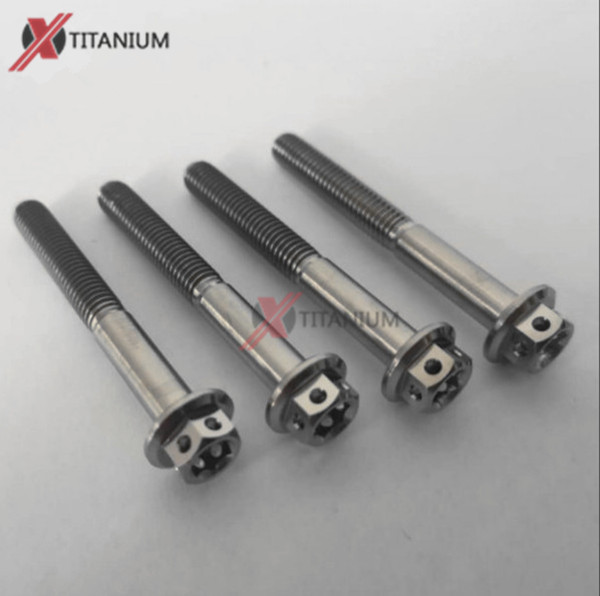
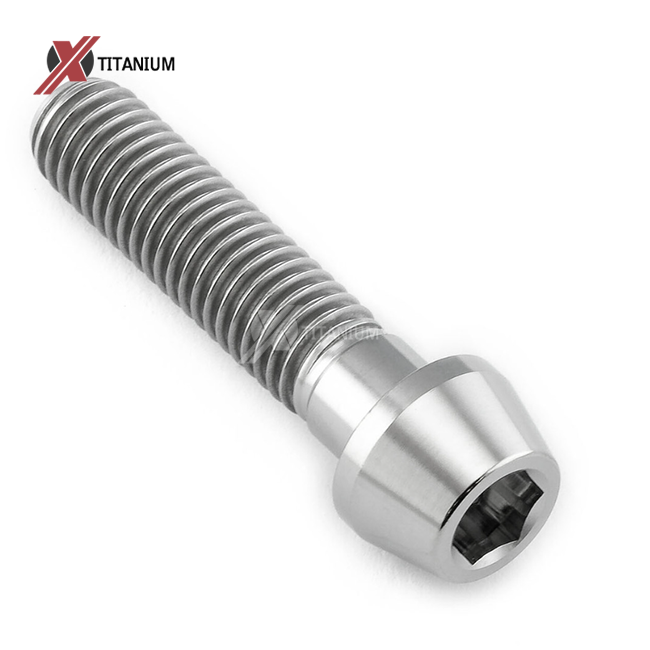
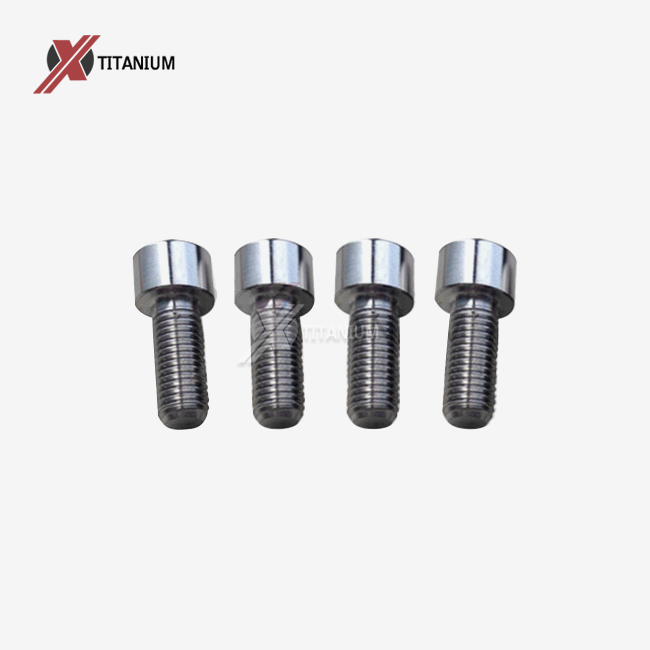
OEM titanium fastener factories make sure of quality control by using strict material certification, advanced testing protocols, and full inspection systems all the way through the manufacturing process. From getting the raw materials to delivering the finished product, these facilities follow strict rules. They use special tools to check for accuracy in measurements, mechanical properties, and surface finishes. Titanium socket cap bolts are used in some of the toughest fastener applications. To make sure they meet the standards for aerospace, medical, and industrial use, they go through several quality checks, such as chemical composition analysis, tensile strength testing, and corrosion resistance testing.
Understanding the Problems with Quality Control in Making OEM Titanium Fasteners
There are some unique challenges that come with making high-performance titanium fasteners that set this industry apart from other fastener production. Because of the way titanium alloys are made, manufacturers have to follow certain quality control rules all the time.
The biggest problem in making titanium fasteners is making sure that the materials are always the same. Titanium Grade 2 and Grade 5 alloys have different properties from one supplier or batch to the next, so they need to be checked thoroughly. Changes in chemical composition can have a big effect on the mechanical properties of a product, which can make it less effective in important uses like medical implants or aerospace parts.
For heat treatment processes to work, the temperature and air quality must be carefully controlled. Titanium reacts with oxygen at high temperatures, so forging and thermal processing must be done in controlled environments. Any change from the given parameters can cause alpha case formation, which lowers the fastener's ability to resist fatigue and corrosion.
Precision machining is very hard to do with titanium because it work-hardens quickly and doesn't conduct heat well. If the right cutting parameters and tools are not used, these properties can lead to differences in size and surface imperfections. Specialized techniques are needed to get the thread accuracy in titanium socket cap bolts that are needed for high-performance applications.
Controlling surface contamination is another very important problem. Because titanium reacts with hydrogen, oxygen, and nitrogen, it needs to be handled and stored with care. During processing, contamination can weaken materials and make them less resistant to corrosion. This is especially a problem in marine or chemical processing environments.
OEM Titanium Fastener Factories Use Modern Ways to Keep Quality Under Control
Leading original equipment manufacturer (OEM) titanium fastener makers have come up with complex quality control methods that deal with the unique challenges of working with titanium while maintaining consistently high-quality products.
Material traceability systems are the basis of quality control in the production of titanium fasteners. These systems keep track of each batch of raw materials from the person who makes them in the first place all the way through to the person who delivers the finished product. Certificates of compliance include a full chemical analysis, proof of mechanical properties, and records of the processing history.
Advanced inspection technologies are very important for making sure the quality of the product. Professional manufacturers use the following methods for checking the core:
- Optical emission spectroscopy: Checks the chemical composition with greater accuracy than 0.01% for key elements, making sure that the alloy specifications meet all the needs of specific applications.
- Coordinate measuring machines (CMM): These machines check measurements to within ±0.0001 inches, which is very important for precision fastener applications where fit and function are very important.
- Ultrasonic Testing: It finds internal cracks and problems with material homogeneity that could weaken fasteners when they are under load.
- Measurement of surface roughness: makes sure that the finish quality is always the same, which affects both resistance to corrosion and performance in high-stress service environments
These different types of inspection work together to make a full quality control system that finds problems before they reach customers. Statistical process control (SPC) methods help companies keep an eye on production trends and spot changes before they cause products that don't meet standards. Getting data in real time from machining centers, heat treatment furnaces, and inspection tools lets you know right away if the process is stable.
In production facilities, environmental controls keep the air clean and consistent so that the same processing results are always achieved. Putting together and packaging finished fasteners in clean rooms keeps them free of dust and other particles that could affect their performance.
Titanium Socket Cap Bolts Quality vs. Other Materials: A Comparison
To understand how titanium fasteners work better, you need to compare them objectively to other materials that are often used in tough situations. Strength-to-weight ratios show that titanium is a better material for many uses. The tensile strength of Grade 5 titanium alloy is over 130,000 psi, but it still has a density about 60% that of steel. This mix lets applications that need to meet structural requirements without sacrificing performance meet those needs.
Comparisons of corrosion resistance show that titanium works very well in harsh conditions. 316 stainless steel is good for many uses when it comes to corrosion resistance, but titanium keeps its protective oxide layer in chloride environments, where stainless steel gets pitting and crevice corrosion. This benefit is especially useful in marine settings and equipment used to process chemicals.
A study of temperature stability shows that titanium fasteners keep their mechanical properties at high temperatures, while aluminum alloys become much weaker. At temperatures close to 800°F, titanium socket cap bolts keep their structure, but above 300°F, aluminum fasteners start to lose their strength.
Titanium's benefits in critical applications can be seen in the following performance traits:
- Biocompatibility: Medical grade titanium is very good at interacting with tissues and causing little inflammation, which makes it perfect for surgical implants and medical device fasteners.
- Fatigue resistance: Titanium fasteners can handle cyclic loading conditions that would break other materials after long periods of use because they have higher endurance limits.
- Chemical inertness: Titanium is resistant to most acids, bases, and organic compounds. This makes it a good choice for chemical processing tasks where material degradation must be kept to a minimum.
Titanium fasteners are more expensive at first, but their better performance makes up for it by making them last longer and needing less maintenance. A cost-effectiveness analysis shows that titanium fasteners are more expensive, but their longer service life and better performance often make their total cost of ownership lower. In many situations, higher initial acquisition costs are balanced out by lower replacement frequency and maintenance needs.
Case Studies: How Top OEM Factories Make Sure Quality
Real-life examples show how well-known OEMs set up complete quality control systems to meet the strict needs of customers in many different industries.
One of the strictest quality control environments for titanium fasteners is in the production of aerospace parts. A major company that makes airplane engines needs titanium socket cap bolts that can be tracked back to the original mill heat numbers and have full documentation of their mechanical properties for each production lot. The OEM fastener supplier keeps careful records that connect each fastener to a unique batch of raw materials, set of processing parameters, and inspection results.
Because of concerns about patient safety, medical device applications need even stricter quality controls. Surgical instrument makers need certificates of biocompatibility testing and full proof that their products can be sterilized. The fastener supplier has separate production lines for medical uses that have better environmental controls and inspection tools just for those uses.
When it comes to long-term corrosion resistance and structural reliability, marine engineering projects have their own unique problems. When building an offshore platform, you need fasteners that have been tested to work in saltwater and won't crack from stress corrosion. As part of quality standards, items are put through accelerated corrosion tests and their mechanical properties are checked after being exposed to simulated service conditions.
Here are some specific quality assurance methods used in these difficult applications:
- Batch segregation: Separate systems for processing and tracking keep different alloy grades and uses from mixing, which protects the integrity of the material throughout production.
- Environmental simulation testing: Being exposed to conditions that will be present during service confirms long-term performance traits and finds possible failure modes before deploying in the field
- Statistical sampling protocols: Testing representative samples from each production batch in a planned way gives confidence in the quality of the whole lot while keeping the business's finances stable.
These practices show how quality systems can change to fit the needs of a particular application while still keeping production costs low and efficiency high. Customer feedback integration processes let quality systems keep getting better based on data from the field. Talking to end users on a regular basis gives you information about how the service is actually working and where quality could be improved.
Tips on How to Choose OEM Titanium Socket Cap Bolt Manufacturers and Work with Them
To find the right manufacturing partners, you need to carefully look at their skills, certifications, and quality control systems to make sure they meet the needs of your specific application.
Verification of certification is the first step in evaluating a supplier. ISO 9001 certification shows that you can set up a basic quality management system, while AS9100 certification shows that you can meet the quality requirements for aerospace. Companies that make medical devices should look for suppliers that are either ISO 13485 certified or registered with the FDA.
To do a production capability assessment, you need to look at the manufacturing equipment, capacity, and technical know-how. CNC machining centers with the right tools for working with titanium make sure that the dimensions are correct and that the surface finish is always the same. With controlled atmosphere furnaces, heat treatment capabilities keep things clean during thermal processing.
An evaluation of the quality control infrastructure looks at things like the capabilities of inspection equipment, testing procedures, and systems for keeping records. As needed for each application, suppliers should show that they can do a full range of tests, such as chemical analysis, verification of mechanical properties, and non-destructive testing.
Superior suppliers are different from commodity producers because they can offer technical support. Help from engineers with choosing materials, designing for specific uses, and fixing problems adds a lot of value on top of just supplying the product.
A supply chain stability assessment looks at the relationships between companies that supply raw materials, how they manage their inventory, and how well they've delivered in the past. Reliable suppliers keep strategic levels of inventory and a variety of material sources on hand to make sure that supplies are always available.
Conclusion
OEM titanium fastener factories ensure quality control through comprehensive systems that address the unique challenges of titanium processing while meeting demanding application requirements. These systems encompass rigorous material verification, advanced inspection technologies, environmental controls, and systematic documentation protocols. Understanding these quality control methodologies enables procurement professionals to select appropriate manufacturing partners and specify requirements that ensure consistent product performance. The investment in sophisticated quality systems reflects the critical nature of applications where titanium fasteners provide essential performance advantages over alternative materials.
Frequently Asked Questions
Q1: What testing methods verify the quality of titanium socket cap bolts?
A: Quality verification includes chemical composition analysis using optical emission spectroscopy, mechanical property testing including tensile strength and hardness measurements, dimensional inspection with coordinate measuring machines, and surface finish verification. Non-destructive testing methods such as ultrasonic inspection and dye penetrant testing detect internal flaws and surface defects that could compromise performance.
Q2: How do material certificates ensure titanium fastener traceability?
A: Material certificates provide complete traceability from the original mill heat through final product delivery. These documents include chemical analysis results, mechanical property test data, processing history, and inspection records. Each certificate links specific fasteners to raw material batches, enabling identification of material sources and processing parameters if performance issues arise.
Q3: What quality standards apply to titanium fasteners in aerospace applications?
A: Aerospace titanium fasteners must comply with stringent standards including ASTM F467 for chemical composition, ASTM F468 for mechanical properties, and AS9100 quality management requirements. Additional specifications may include NASM (National Aerospace Standard) requirements and customer-specific engineering standards that exceed general commercial fastener specifications.
Q4: How do manufacturers prevent contamination during titanium fastener production?
A: Contamination prevention includes controlled atmosphere processing during heat treatment, proper material handling procedures to prevent surface contamination, clean room environments for final assembly and packaging, and segregated storage systems that prevent cross-contamination between different alloy grades. Regular cleaning and maintenance of production equipment eliminates contamination sources.
Q5: What factors determine the lead time for custom titanium socket cap bolts?
A: Lead times depend on material availability, complexity of specifications, required testing and certification, production capacity, and inspection requirements. Standard configurations typically require 2-4 weeks, while custom specifications may require 4-8 weeks. Expedited processing is available for urgent requirements with appropriate scheduling coordination.
Join forces with Chuanglian to make the best premium titanium socket cap bolts
As a reliable source for titanium socket cap bolts, Chuanglian combines decades of specialized experience with state-of-the-art quality control systems to provide top-notch fastener solutions for tough industrial uses. Our full range of manufacturing services includes checking the quality of the raw materials all the way through to final inspection and delivery.
We use our location in Baoji City, which is known as the "City of Titanium," and our established supply chains to make sure that the quality of our materials is always high and our prices are low. There are more than a dozen CNC machines and other specialized processing tools in our building that are made just for working with titanium.
At every stage of production, our quality control system uses strict inspection rules. Each titanium socket cap bolt goes through a lot of tests to make sure it meets international standards like ASTM, DIN, and customer-specific needs. These tests include checking the material as it comes in and making sure the dimensions are correct.
Custom design support, rapid prototyping services, and application-specific engineering consultation are some of the technical services that can be provided. To meet the specific needs of each project, our experienced team helps with everything from choosing the right materials to creating specifications and improving performance.
We work with a wide range of industries, such as aerospace, petrochemical, medical devices, marine engineering, and high-end manufacturing. When used in harsh conditions like cryogenic temperatures or high-temperature chemical processing, our products always work the same way.
Are you ready to see how professional manufacturing of titanium fasteners can make a difference in your important applications? Get in touch with us at info@cltifastener.com and djy6580@aliyun.com to talk about your specific needs and find out how our focus on quality can help your project succeed. You can find detailed information about our products and other technical resources at cl-titanium.com.
References
1. American Society for Testing and Materials. "Standard Specification for Titanium Alloy Bolts and Screws for Aerospace Applications." ASTM International Committee on Titanium Products.
2. Aerospace Industries Association. "Quality Management Systems Requirements for Aviation, Space and Defense Organizations." AS9100 Certification Standards Documentation.
3. International Organization for Standardization. "Quality Management Systems Fundamentals and Vocabulary for Titanium Product Manufacturing." ISO 9001 Implementation Guidelines.
4. Society of Automotive Engineers. "Titanium Fastener Design and Manufacturing Best Practices for High-Performance Applications." SAE Technical Paper Series on Advanced Materials.
5. National Association of Corrosion Engineers. "Corrosion Resistance and Performance Characteristics of Titanium Alloys in Marine Environments." NACE International Research Publication.
6. American Society of Mechanical Engineers. "Mechanical Properties and Testing Standards for Titanium Fasteners in Pressure Vessel Applications." ASME Boiler and Pressure Vessel Code Section VIII.