- English
- French
- German
- Portuguese
- Spanish
- Russian
- Japanese
- Korean
- Arabic
- Greek
- German
- Turkish
- Italian
- Danish
- Romanian
- Indonesian
- Czech
- Afrikaans
- Swedish
- Polish
- Basque
- Catalan
- Esperanto
- Hindi
- Lao
- Albanian
- Amharic
- Armenian
- Azerbaijani
- Belarusian
- Bengali
- Bosnian
- Bulgarian
- Cebuano
- Chichewa
- Corsican
- Croatian
- Dutch
- Estonian
- Filipino
- Finnish
- Frisian
- Galician
- Georgian
- Gujarati
- Haitian
- Hausa
- Hawaiian
- Hebrew
- Hmong
- Hungarian
- Icelandic
- Igbo
- Javanese
- Kannada
- Kazakh
- Khmer
- Kurdish
- Kyrgyz
- Latin
- Latvian
- Lithuanian
- Luxembou..
- Macedonian
- Malagasy
- Malay
- Malayalam
- Maltese
- Maori
- Marathi
- Mongolian
- Burmese
- Nepali
- Norwegian
- Pashto
- Persian
- Punjabi
- Serbian
- Sesotho
- Sinhala
- Slovak
- Slovenian
- Somali
- Samoan
- Scots Gaelic
- Shona
- Sindhi
- Sundanese
- Swahili
- Tajik
- Tamil
- Telugu
- Thai
- Ukrainian
- Urdu
- Uzbek
- Vietnamese
- Welsh
- Xhosa
- Yiddish
- Yoruba
- Zulu
How to care for and maintain GR5 titanium rear axle nuts
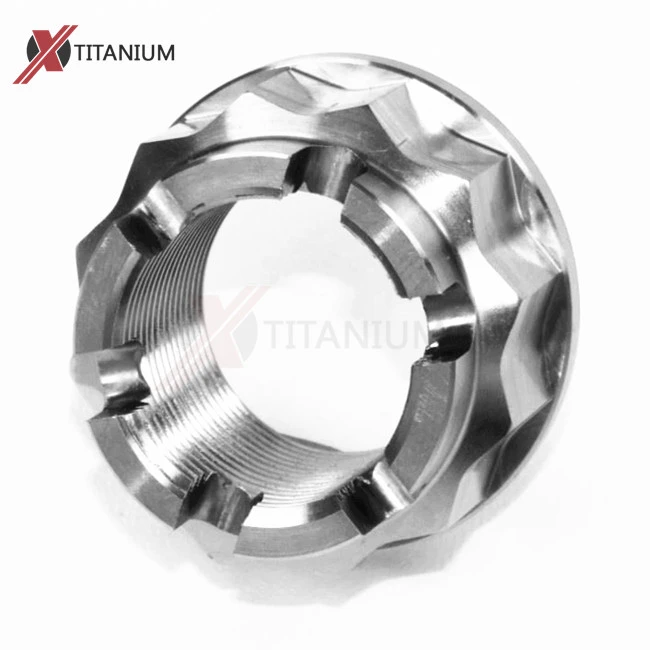
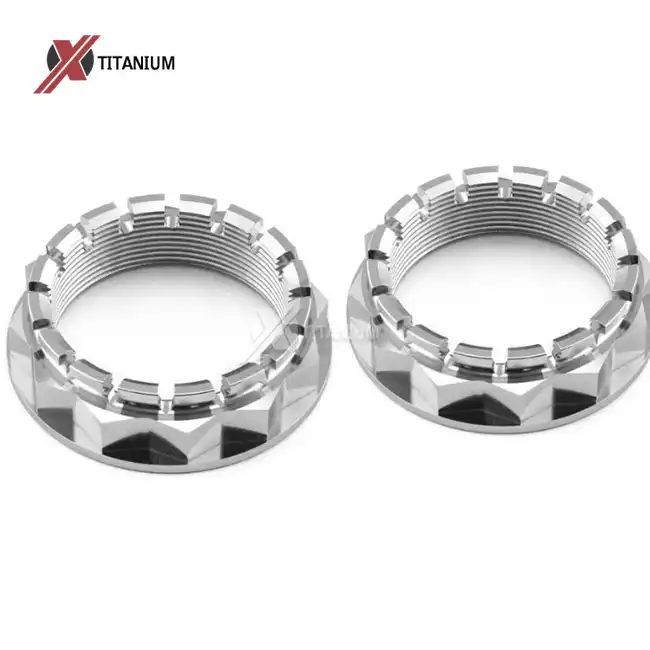
Proper care and maintenance of Gr5 Titanium Rear Axle Nuts begins with understanding their unique material properties and implementing precise installation protocols. These high-performance fasteners, manufactured from Ti-6Al-4V alloy, require controlled torque application, appropriate anti-galling lubricants, and periodic visual inspections to preserve their structural integrity.
Unlike steel alternatives, titanium fasteners demand specific handling procedures to prevent thread damage and ensure consistent performance throughout their service life. Regular cleaning with mild solutions and storage in controlled environments further extend component longevity, making maintenance practices as critical as material selection for procurement teams seeking reliable, long-term fastening solutions in demanding industrial applications.
Introduction
A problem that procurement managers and maintenance teams often face is how to make sure that critical fastening parts last as long as possible without affecting safety or performance. This problem can happen on aerospace assembly lines, marine engineering workshops, and high-performance automotive facilities. The Gr5 Titanium Rear Axle Nut is a big investment in reducing weight and resistance to corrosion, but you can only get the most out of it if you take care of it the right way.
When we buy titanium fasteners for projects worth millions of dollars, the decision goes beyond just buying them. Engineers at companies that make aircraft parts say that performance has gone down not because of faulty materials but because of maintenance mistakes that could have been avoided. A lot of early repairs in high-value uses are caused by thread galling during installation, contamination from using the wrong cleaning agents, and variations in torque.
This guide answers the specific questions that technical decision-makers have when they look at fastener performance thru the lens of total cost of ownership. When procurement professionals know how weather exposure, installation methods, and regular maintenance affect Ti-6Al-4V parts, they can set up maintenance schedules that protect both the parts' integrity and business budgets. The sections that follow give you strategies that you can use right away. These strategies are based on material science and have been tested in the real world across a number of industries.
Understanding GR5 Titanium Rear Axle Nuts
Material Composition and Core Properties
The Ti-6Al-4V metal is made up of 90% titanium, 6% aluminum, and 4% vanadium. Its microstructure makes it very good at what it does. This mix has a minimum tensile strength of 895 MPa and a maximum yield strength of 830 MPa, making it one of the strongest titanium types that can be bought in stores. The material's density of 4.43 g/cm³ makes it about 45% lighter than similar steel bolts. This is a big benefit in situations where unsprung mass affects performance dynamics directly.
Precision CNC machining raises the surface hardness to 36 HRC, which makes it resistant to wear while still allowing it to be shaped in ways that make it useful for fastening applications. Titanium is different from other ferrous materials because it doesn't rust because its crystalline structure forms a stable oxide layer when exposed to air.
Performance Advantages Over Alternative Materials
The Gr5 alloy is much stronger than Grade 2 commonly pure titanium. This means it can be used in load-bearing situations where pure titanium would need bigger cross-sections. When compared to Grade 9 titanium (Ti-3Al-2.5V), the Gr5 variant has better tensile properties. This is why it is used in high-stress areas like racing suspensions and aerospace structural assemblies.
Gr5 Titanium Rear Axle Nuts are better at resisting fatigue under cyclical loading than 7075 aluminum alloys. They also don't pose any galvanic corrosion risks when paired with aluminum hubs or axles. Steel substitutes are about as strong as titanium, but they are much heavier and break down quickly in sea or chemically aggressive settings, while titanium stays strong for decades.
Technical Specifications for Procurement Evaluation
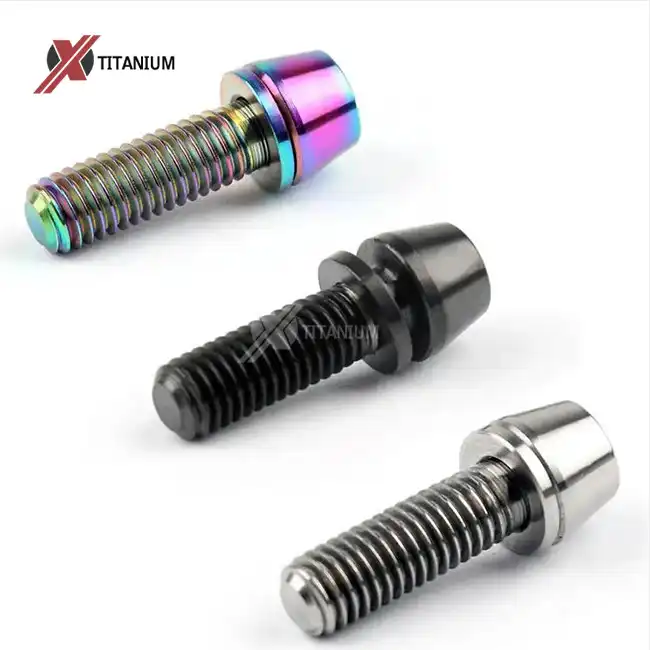
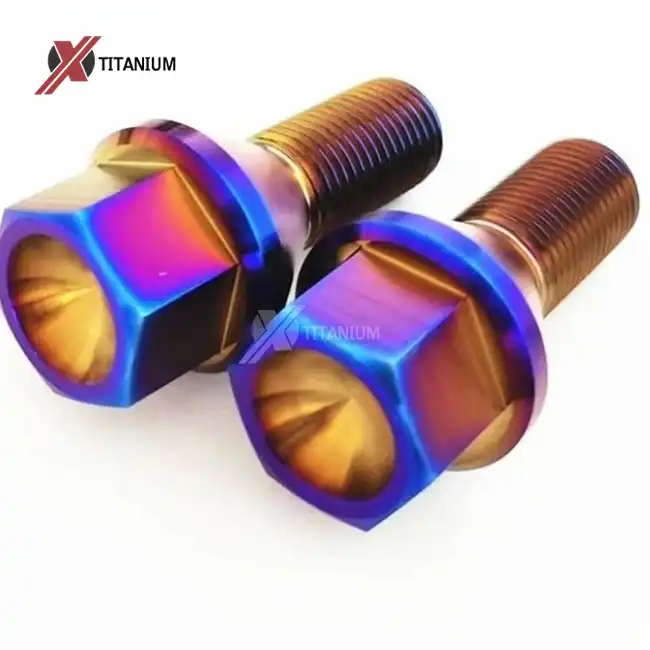
CNC cutting makes sure that the threads are accurate within very small ranges, and it can work with both metric and imperial measurements depending on the need of the application. Surface processes like polishing, anodizing, and nitriding give you more ways to customize it. For example, anodized finishes come in natural titanium, gold, blue, green, purple, black, and colorful colors. These processes are done for both esthetic and practical reasons. For example, some changes to the surface make it less likely to galle or provide visual quality control marks during assembly verification.
Common Issues and Challenges with Titanium Rear Axle Nuts
Thread Galling and Installation Damage
Thread galling is the most common way that titanium fasteners break. It happens when high friction during installation moves material between threads that are supposed to fit together. Work hardening helps protect steel bolts, but titanium is more likely to cold-weld under pressure, which makes it more vulnerable to this effect. Maintenance workers often run into this problem when they use installation methods meant for steel parts, Gr5 Titanium Rear Axle Nut is a typical example of such a fastener, and this causes screws to stop, which means they have to be destructively removed and expensively replaced.
The effect on the economy goes beyond the cost of each clip. In aerospace uses, a single galled fastener can cause production plans to slip by hours while special steps are taken to remove it. When titanium nuts get stuck on stainless steel studs in marine engineering projects, expensive mounting hardware has to be carefully machined off.
Improper Torque Application
When titanium screws are overtightened, stress builds up and shortens their fatigue life. On the other hand, when they are not torqued enough, tiny movements happen that speed up wear at the thread surfaces. It's even harder because steel and titanium don't have the same elastic modulus, which means that torque values can't be easily copied from steel specs. If engineering teams don't have titanium-specific torque charts, they could damage the installation right away or see performance drop over time, which could show up as unexpected maintenance issues during key working times.
Axle nut preload variations have been linked to cases where different production batches of the same product failed early on because the torque applied was not consistent. These failures show how important it is for manufacturing environments to have torque tools that are properly calibrated and tightening sequences that have been checked.
Environmental Contamination and Chemical Exposure
Titanium is very good at resisting rust, but its protective metal layer can be damaged by some chemicals. Hydrofluoric acid, strong sulfuric acid at high temperatures, or reducing conditions with hydrogen at high temperatures can cause corrosion in certain areas or hydrogen embrittlement. The working conditions must be taken into account in the procurement requirements, because titanium fasteners chosen for their general resistance to corrosion may break down too soon in certain chemical processing applications.
According to maintenance records from petroleum plants, titanium parts have been damaged by pitting rust caused by the wrong cleaning agents, especially those with chlorides and acidic pH levels. This is true even tho titanium is known for being resistant to chemicals. This shows how important it is to check the environment-specific materials used during the buying process.
Best Practices for Caring and Maintaining GR5 Titanium Rear Axle Nuts
Installation Protocols for Optimal Performance
Most titanium fastener failures can be avoided by following the right installation steps. Before a titanium nut touches a mating thread, the surfaces must be cleaned very well to get rid of any production oils, dirt, or corrosion products. To set up the right conditions for thread engagement, the process should be done in a methodical way.
Using the right anti-seize chemicals is the most important thing you can do to stop galling. Specialized lubricants for titanium-to-steel or titanium-to-titanium surfaces have solid lubricants like molybdenum disulfide, copper, nickel, or nickel disulfide mixed in with carrier greases. A thin, even coating on both the male and female threads lowers the friction coefficients just enough to stop cold-welding during installation while keeping the torque-to-preload relationships correct.
To apply torque, you need tools that are calibrated and numbers that are specific to the object. When compared to steel, titanium has a lower modulus of elasticity, which means that the same torque values produce different clamping forces. Torque ranges can be confirmed by looking at maker specs or industry guides, such as those put out by the Aerospace Fastener Manufacturers Association.
For multi-bolt systems, tightening should be done slowly and in a star design. This will make sure that the stress is spread evenly and keep the parts from warping. A re-torque check is done after the first operating cycle to make sure that thread setting has not lowered preload below the values that were set.
Routine Maintenance and Inspection Schedules
Setting inspection times based on how important the process is increases the life of parts and finds possible problems before they become major problems. Visual inspections should check the condition of the surface, looking for discoloration that could mean too much heat exposure, surface pitting that could mean chemical attack, or deformation around thread engagement areas that could mean overload conditions.
When cleaning titanium parts, you need to be very careful about which chemicals and methods you use. When used with soft brushes and mild alkaline or pH-neutral cleansers, they get rid of operating contaminants without damaging the oxide layer. Do not use wire brushes or rough pads on surfaces because they will scratch them and make stress points. Ultrasonic cleaning is a thorough way to remove contaminants from highly soiled fasteners. It works especially well in sea settings where salt crystals build up in thread valleys.
Using optical comparators or thread gages to inspect the threads finds wear before it affects the fastener's function. Measuring tools find elongation, thread flank damage, or pitch deviations that happen after many installation cycles. For critical components like the Gr5 Titanium Rear Axle Nut, setting "go/no-go" criteria based on dimensional tolerances lets you make objective decisions about when to retire a product, which stops you from using faulty fasteners in important applications.
Storage and Handling Procedures
Titanium fasteners last longer between repair rounds if they are stored properly. Controlled humidity conditions keep wetness from building up, which, when mixed with some contaminants, could cause rusting. Keeping titanium parts away from metals that are not the same as them removes the chance of galvanic contamination if water comes into touch with stored parts. Individual packing or storage systems with separate compartments keep parts from damaging each other when they are being handled.
Temperature stability is important, especially for fasteners with anodized finishes, since changing temperatures can make it harder for the coating to stick. Temperature-controlled warehouses keep the surface treatments that give extra protection and help with identification. Predictive maintenance strategies are made possible by systems that keep track of installation history, torque values, and service hours. This lets procurement teams make the best replacement schedules based on actual component life instead of rough estimates.
Comparing GR5 Titanium Rear Axle Nuts with Other Materials
Performance Analysis Against Steel Alternatives
Steel screws, especially those that meet the requirements for Grade 8.8 or 10.9, are as strong as titanium ones but usually cost less per unit. Total cost study, on the other hand, shows different results. When used in cars, a Grade 10.9 steel nut that weighs about 85% more than its titanium counterpart causes rotational inertia that makes the suspension less responsive. While steel needs to be replaced after a certain number of years of use because it corrodes in salty seas or on the roads, titanium stays structurally sound.
Testing for fatigue shows that titanium is better in situations with cyclical loading. Fasteners used in aerospace are subject to vibration and thermal cycling, which means that titanium parts need to be serviced much more often. Because the material is stronger against wear, it is possible to make cross-sections that are smaller without lowering reliability. This lets designers make changes that would not be possible with steel.
Evaluation Against Aluminum Alloys
Aluminum metals, especially 7075-T6, have great strength-to-weight ratios and are used in most cost-effective situations. But because aluminum isn't as strong as steel, it needs bigger fasteners to have the same clamping force, which can cancel out any weight advantages. Thread wears more quickly in aluminum, which makes it less useful for upkeep tasks where titanium screws can be installed more than once.
When aluminum touches different metals, there is a risk of galvanic rusting, which is a big problem. Titanium's electrochemical superiority speeds up aluminum corrosion when electrolytes are present, so it needs to be carefully separated or coated to protect it. On the other hand, titanium doesn't change at all, which makes it the best choice when long-term dependability is more important than original cost.
Comparison with Other Titanium Grades
Grade 2 economically pure titanium is the most resistant to rust, but it only has a tensile strength of 345 MPa, which is too low for structural fastening uses. With a tensile strength of 620 MPa, Grade 9 titanium is an intermediate option that works well in moderate-load situations but can't match Grade 5's performance in high-stress settings.
The price difference between grades is usually between 15% and 30%, with Grade 5 being the most expensive. Instead of always going with the greatest specification, choices about what to buy should be based on the grade of the material and what it needs to be used for. Medical devices that need to be biocompatible might choose Grade 23 (ELI Ti-6Al-4V), while aircraft structural parts always choose Grade 5 because it has a proven performance range.
Procuring GR5 Titanium Rear Axle Nuts: What B2B Buyers Need to Know
Supplier Evaluation Criteria
To find reliable titanium fastener suppliers, you need to check their manufacturing capabilities and quality control systems. ISO 9001 certification is a basic level of quality assurance. AS9100 certification, on the other hand, is specific to the aerospace business and covers things like process control and material tracking. For medical uses, providers must keep their ISO 13485 certifications up to date and make sure that biocompatibility is checked and contamination is controlled throughout production—and when sourcing a specific component such as the Gr5 Titanium Rear Axle Nut, these certification requirements become even more critical to ensure consistent performance and traceability.
Material certificates that come with every shipment list the alloy's makeup, the settings for heat treatment, and the results of tests on its mechanical properties. With these certificates, quality checking teams can make sure that parts meet the requirements before they are put into production. Suppliers who offer third-party testing thru accredited laboratories give you extra peace of mind. This is especially helpful in critical situations where a failed fastener could have serious safety or financial consequences.
Supply chain stability is affected by how much can be produced and how reliably it can be delivered. Manufacturers who keep enough supplies on hand and use a variety of raw material sources show they can handle changes in the market. Because most of the titanium supply chain is concentrated in a few areas, buying teams in charge of long-term projects need to think about source redundancy.
Pricing Structures and Volume Considerations
The price of titanium fasteners is based on the cost of the raw materials, the difficulty of the cutting process, and the need for surface treatment. At the moment, the price of a Ti-6Al-4V billet is much higher than the price of steel or aluminum, and certified aerospace-grade material costs even more. Custom specifications, such as non-standard thread forms, specialized coatings, or changes to the size or shape of an item, come with engineering and setup costs that go down as more units are ordered.
Blanket purchase agreements that set schedules for releases over long periods of time help sellers plan their production more efficiently, which usually means lower costs for buyers. The trade-off between unit price and inventory holding costs needs to be carefully thot thru, especially for companies that are working on several projects at once that have different titanium component needs.
Technical Support and Post-Sale Services
Suppliers who offer engineering consulting help buying teams choose the right materials, make the best specifications, and fix problems with applications. This support is especially helpful when switching from steel to titanium screws, since the design may need to be changed to fit the qualities of the new material. Implementation risks are lowered by services like developing torque specifications, finite element analysis, and suggestions for installation procedures.
As opposed to transactional sellers, providers who offer post-delivery support such as failure analysis, warranty provisions, and fast replacement programs set themselves apart as strategic partners. When problems with fasteners cause production schedules to be pushed back, quick technical support keeps downtime costs to a minimum. These costs often go over the cost of the part by many orders of magnitude.
Conclusion
For Gr5 Titanium Rear Axle Nuts to work well and last as long as possible, you need to know a lot about them and do regular maintenance. The alloy's high strength-to-weight ratio and resistance to corrosion make it useful in aerospace, marine, automotive, and industrial settings. However, these benefits will only fully show up after proper installation, regular inspection, and care protocols that are right for the environment.
Setting up thorough maintenance procedures, making sure suppliers are qualified, and enforcing handling rules that are specific to titanium are all things that procurement professionals should do to protect their investments and meet the reliability standards that justify titanium's high position in critical fastening applications.
FAQ
What torque specifications should be applied to GR5 titanium rear axle nuts?
Different thread sizes, pitches, and materials must be mated with different amounts of torque. However, because titanium is less springy than steel, titanium screws usually need 15-20% less torque. Check the manufacturer's instructions or references from the industry, like those given by qualified suppliers. To make sure you get the right preload without damaging the threads, you should always use measured torque tools and anti-galling oils.
Can titanium rear axle nuts be reused after removal?
Titanium screws can usually be installed and taken off more than once as long as they are not damaged and the threads stay within the allowed dimensions. Before putting the parts back together, make sure that the threads are clean and that no galling or deformation has happened. Use the right gages to check the threads carefully. Keep track of how many times each bolt was installed and remove any that are near the manufacturer's cycle limits.
What cleaning agents are safe for titanium components?
Mild alkaline cleaners, pH-neutral detergents, and isopropyl alcohol can get rid of dirt and grime without hurting the protective oxide layer on titanium. In acidic places, stay away from hydrofluoric acid, hot concentrated sulfuric acid, and solutions that contain chloride. Ultrasonic cleaning with the right methods gets rid of all the germs on highly dirty fasteners without damaging them mechanically.
Partner with Chuanglian for Reliable Titanium Fastening Solutions
Chuanglian has been making titanium products for more than ten years and can help buying teams find reliable Gr5 Titanium Rear Axle Nut sources around the world. Based in Baoji City, which is known around the world as the "City of Titanium," our facility has full CNC machining capabilities and strict quality control systems to make sure that every Gr5 Titanium Rear Axle Nut meets the strict requirements for use in aerospace, marine, automotive, and industrial settings.
We offer full material traceability, certified test reports, and customization services that include thread specifications, surface treatments, and anodized color choices that are made to fit your specific technical needs. Our engineering team can help you choose the right material, get the right torque, and make suggestions based on your specific needs. They can also help you make the switch to titanium fasteners by giving you technical advice that goes beyond just supplying you with products.
You can email our procurement experts at info@cltifastener.com or djy6580@aliyun.com to talk about the needs of your project, ask for material certifications, or get specific quotes. You can look thru our full catalog of products at cl-titanium.com and learn how our strategic relationships with qualified makers lower supply chain risks and improve the total cost of ownership.
References
1. Boyer, R., Welsch, G., & Collings, E.W. (2022). Materials Properties Handbook: Titanium Alloys. ASM International, Materials Park, Ohio.
2. Donachie, M.J. (2021). Titanium: A Technical Guide, Third Edition. ASM International, Materials Park, Ohio.
3. Aerospace Industries Association. (2023). Fastener Installation Standards for Titanium Components in Aerospace Applications. Washington, D.C.
4. National Association of Corrosion Engineers. (2022). Corrosion Resistance of Titanium Alloys in Industrial Environments. NACE International, Houston, Texas.
5. Society of Automotive Engineers. (2023). Surface Engineering of Titanium Fasteners: Standards and Best Practices. SAE Technical Paper Series, Warrendale, Pennsylvania.
6. International Titanium Association. (2023). Titanium Fastener Design and Application Guidelines for Marine and Industrial Use. ITA Technical Committee Report, Westminster, Colorado.
Learn about our latest products and discounts through SMS or email