- English
- French
- German
- Portuguese
- Spanish
- Russian
- Japanese
- Korean
- Arabic
- Greek
- German
- Turkish
- Italian
- Danish
- Romanian
- Indonesian
- Czech
- Afrikaans
- Swedish
- Polish
- Basque
- Catalan
- Esperanto
- Hindi
- Lao
- Albanian
- Amharic
- Armenian
- Azerbaijani
- Belarusian
- Bengali
- Bosnian
- Bulgarian
- Cebuano
- Chichewa
- Corsican
- Croatian
- Dutch
- Estonian
- Filipino
- Finnish
- Frisian
- Galician
- Georgian
- Gujarati
- Haitian
- Hausa
- Hawaiian
- Hebrew
- Hmong
- Hungarian
- Icelandic
- Igbo
- Javanese
- Kannada
- Kazakh
- Khmer
- Kurdish
- Kyrgyz
- Latin
- Latvian
- Lithuanian
- Luxembou..
- Macedonian
- Malagasy
- Malay
- Malayalam
- Maltese
- Maori
- Marathi
- Mongolian
- Burmese
- Nepali
- Norwegian
- Pashto
- Persian
- Punjabi
- Serbian
- Sesotho
- Sinhala
- Slovak
- Slovenian
- Somali
- Samoan
- Scots Gaelic
- Shona
- Sindhi
- Sundanese
- Swahili
- Tajik
- Tamil
- Telugu
- Thai
- Ukrainian
- Urdu
- Uzbek
- Vietnamese
- Welsh
- Xhosa
- Yiddish
- Yoruba
- Zulu
How to Choose a Reliable Titanium Fastener OEM
Choosing a reliable titanium fasteners OEM requires careful evaluation of manufacturing capabilities, quality certifications, and technical expertise. The selection process should prioritize suppliers with proven track records in aerospace, medical, or marine applications where Titanium Fasteners demand exceptional performance standards. Key considerations include material grade specifications, production capacity, delivery reliability, and comprehensive quality management systems that ensure consistent batch-to-batch performance across demanding industrial environments.
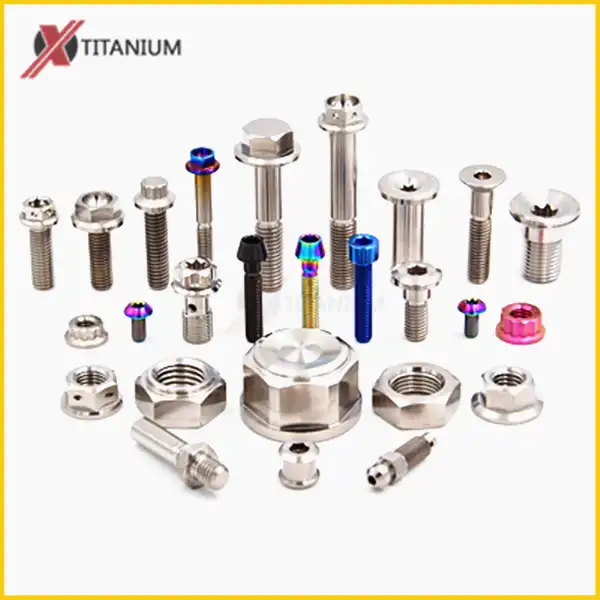
Understanding the Importance of Selecting the Right Titanium Fastener OEM
When it comes to deciding whether or not to collaborate with a certain titanium fastener manufacturer, the choice goes much beyond just comparing prices. When it comes to modern industrial applications, it is necessary to have fastening solutions that are able to tolerate severe temperatures, corrosive conditions, and mechanical pressures while still preserving structural integrity over a long period of service life. Titanium fastening engines have become practically required in a variety of applications, including aircraft propulsion systems, drilling off the coast platforms, and medicinal implant assembly, all of which are in situations where failure might have disastrous effects.
Inconsistencies in quality are the most critical procurement difficulty that industrial purchasers are now experiencing. The differences in material properties that occur between batches of manufacturing might put important assemblies at risk, which can result in expensive failures in the field and even serious safety problems. When a supplier does not possess the right credentials for regulated sectors, such as aerospace standards AS9100 or medical ISO13485, certification gaps generate extra issues. As a result of the intensification of these issues brought about by interruptions in the supply chain, OEM dependability and backup capacity have become critical procurement factors.
The estimate of the total price of ownership has to take into account more than just the unit price. Original equipment manufacturers (OEMs) of premium titanium fasteners provide value by lowering the amount of maintenance that is required, extending the service intervals, and increasing the operational uptime. With their technical assistance skills, they are able to optimize the selection of materials and make improvements to the design that are application-specific, which simultaneously increase performance while reducing weight penalties. The procurement of fasteners is transformed from a commodity purchase into a strategic relationship that produces competitive benefits across numerous performance metrics as a result of this all-encompassing strategy.
Modern titanium fastener manufacturing operates under rigorous quality frameworks that span raw material verification through final inspection protocols. Traceability requirements mandate complete documentation of material origins, processing parameters, and mechanical property verification for each production lot. These systems enable rapid root cause analysis when performance issues emerge and provide confidence for mission-critical applications.
There is a growing awareness among procurement experts that the value of titanium fasteners goes beyond the purchase price and encompasses the characteristics of their performance throughout their lives. When compared to steel alternatives, corrosion resistance removes the need for coating and minimizes the frequency with which replacements are required. Weight reduction gains translate onto fuel savings for aeronautical applications and greater cargo capacity for marine boats, so producing demonstrable benefits for operation that justify higher prices. These advantages may therefore be used to support premium pricing.
Core Criteria for Evaluating Titanium Fastener OEMs
An exhaustive evaluation of the original equipment manufacturer (OEM) necessitates a methodical examination of a variety of technical and commercial aspects. In the process of manufacturing capacity analysis, it is important to investigate the level of complexity of production equipment, quality assurance processes, and technical staff experience. For the purpose of preventing contamination during the forming process, modern titanium processing necessitates the use of specialized equipment and furnaces with controlled atmospheres. Fasteners having poor mechanical qualities or surface quality faults are often produced by original equipment manufacturers (OEMs) that lack these skills.
Evaluation of the certification portfolio demonstrates the dedication of the original equipment manufacturer to quality excellence or regulatory compliance. Certification according to AS9100 is required for aerospace applications, and extra OEM-specific clearances that come from the companies Boeing, Airbus, or deliberately engine manufacturers are also required. For the purpose of determining whether or not they are biocompatible, medical device fasteners must need both ISO13485 inspection and FDA registration. Chemical processing applications need NACE certification in order to operate in sour service environments, which are settings that present dangers of hydrogen embrittlement.
When compared to commodity sellers, professional suppliers are distinguished by their competence in material quality. Titanium that is commercially pure and grade 2 provides good corrosion resistance for applications regarding chemical processing; nevertheless, it does not possess the strength that is necessary for aeronautical constructions. Ti-6Al-4V grade 5 offers high strength-to-weight characteristics, which are required for aviation components. However, in order to attain the desired attributes, it is necessary to exercise tight control over the heat treatment process. The grade 23 extremely low interstitial material is recommended for use in medical implant settings where biocompatibility is more important than mechanical performance.
Manufacturing Technology Assessment
Computer-controlled forming procedures are included into the manufacture of advanced titanium fasteners. These processes assure dimensional uniformity and reduce the fluctuations that are caused by human error. For the purpose of preventing galling during the forming process, cold heading operations need the use of specific dies and lubricants. In order to produce the desired microstructures without causing surface oxidation, which would reduce fatigue resistance, heat treatment capability must incorporate vacuum furnaces and regulated cooling systems.
Geographic diversification and backup supplier arrangements protect against supply disruptions that could halt production operations, especially for critical components like the titanium fastener. Reliable OEMs maintain strategic inventory levels and coordinate with raw material suppliers to ensure continuous availability. Their logistics capabilities include expedited shipping options and regional distribution centers that minimize lead times for urgent requirements.
The use of geographical diversity and backup supplier agreements provides protection against supply interruptions that might potentially stop manufacturing operations. This is particularly important for essential components such as the titanium fastener. In order to guarantee ongoing availability, dependable original equipment manufacturers (OEMs) maintain strategic levels of stock and cooperate with raw material suppliers. Their strengths in the field of logistics include the provision of accelerated shipping alternatives and regional distribution centers, which reduce the amount of time needed to fulfill urgent needs.
Comparing Titanium Fasteners and OEM Solutions in the Market
The examination of the market indicates that there are considerable performance differences among the providers of titanium fasteners. Premium manufacturers charge price premiums due to their higher customer service and quality capabilities. For the purpose of comparative assessment, it is necessary to investigate the consistency of mechanical properties, the quality of surface finishes, and the dimensional correctness across manufacturing batches. In order to give objective proof of production capabilities and the efficiency of quality systems, process control statistical data is often used.
Competitive positioning analysis helps identify suppliers that align with specific procurement requirements. Volume-oriented manufacturers excel at standard fastener production with competitive pricing for large quantity orders. Specialty suppliers focus on custom configurations and exotic alloys for demanding applications where technical expertise proves more valuable than cost optimization. Understanding these market segments enables more effective supplier selection and negotiation strategies.
The results of performance benchmarking tests reveal that titanium has benefits over other types of fastener materials across a variety of parameters. Based on corrosion tests conducted in saltwater settings, it has been determined that titanium retains its structural integrity, while stainless steel displays crevice corrosion and pitting. It has been shown via fatigue testing that titanium has greater endurance limitations in comparison to aluminum alloys when subjected to cyclic stress. Titanium's higher cost for situations where dependability cannot be compromised is justified by the performance benefits it offers.
Titanium has a higher strength-to-weight ratio than steel in the majority of structural applications. Grade 5 alloy offers a weight reduction of forty percent when compared to metal fasteners of equal strength. Elastic modulus concerns have an effect on joint strength and load distribution. Titanium's lower modulus brings to a reduction in stress concentrations and composite assemblies in composite assemblies. The parameters of thermal expansion must coincide with the materials of the substrate in order to avoid the material from becoming loose under circumstances of temperature cycling.
For the purpose of determining lifespan value, total cost modeling takes into account purchase prices, labor expenses for installation, maintenance needs, and replacement frequency. Titanium's resistance to corrosion reduces the need for protective coatings and allows for longer service intervals as compared to steel equivalents. The advantages of weight reduction translate into savings in operation via decreased fuel consumption and improved payload capacity, which compound over the course of the equipment's service life.
How to Match OEM Solutions to Your Procurement Needs?
In order to ensure that the procurement strategy is aligned, it is necessary to first clearly define the technical requirements, volume predictions, and delivery timelines before beginning the assessment period for suppliers. Original equipment manufacturers (OEMs) that have technical capability and flexible production processes that can handle design alterations are required for custom fastener applications. According to the standard product specifications, high-volume suppliers that already have manufacturing lines in place and affordable prices structures are given preference.
When the economics of a project are affected by factors like as cost of shipping or lead times, geographic considerations play a role in the selection of suppliers. It is possible that domestic providers do not have the cost competitiveness to meet big volume needs, despite the fact that they offer benefits such as accelerated delivery and face-to-face technical assistance. When it comes to planned procurement, international suppliers provide economic benefits; nevertheless, they often need longer wait times and more sophisticated logistical coordination.
Quality system requirements vary significantly among industrial sectors and must guide OEM selection criteria, particularly for the titanium fasteners supply chain. Aerospace applications demand extensive documentation, statistical process control, and first article inspection protocols. Medical device fasteners require biocompatibility testing and sterile packaging capabilities. Chemical processing applications need corrosion testing and material traceability systems that ensure performance reliability.
The demand of high volumes makes it possible to conduct specialized manufacturing runs, which improve both the quality consistency and the unit cost. The visibility of demand that is provided by blanket purchase contracts with planned releases is something that helps with the planning of suppliers and the management of inventories. When it comes to low-volume niche applications, suppliers need to have manufacturing methods that are flexible and minimum order quantities that can handle the stages of prototyping and pilot production.
The development of custom fasteners requires collaborative engineering processes, including OEM capabilities, which have a direct impact on the success of the project. The capabilities of rapid prototyping allow for design iteration and efficiency confirmation prior to making a commitment to production tooling. The ability to modify designs without incurring significant tooling costs or tardiness in delivery, both of which might have an influence on project timetables, is made possible by manufacturing flexibility.
Ensuring Long-Term Success with Your Titanium Fastener OEM
In order to maintain sustainable partnerships with suppliers, it is necessary to conduct continual evaluations of performance and continuous improvement activities that are mutually beneficial. Regular inspections of quality ensure that original equipment manufacturers (OEMs) stick to the processes that have been set and find possibilities for process improvement. It is possible to conduct an objective review of delivery results, quality trends, and reaction to technical queries via the monitoring of performance indicators.
When it comes to order acknowledgment, performance reporting, and problem resolution, communication standards provide clear expectations for all of these activities. Important projects should have weekly status meetings to verify that the needs of the client and the capabilities of the supplier are aligned. In the event that application obstacles arise, technical review sessions make it possible to share information and work together to find solutions to problems. These more organized conversations help to create trust and make it easier to respond quickly in the event that an emergency scenario arises.
The conversations that take place during capacity planning assist to predict future needs and ensure that suppliers are prepared for increases in demand. Volume guarantees are provided by long-term agreements, which justify the expenditures made by original equipment manufacturers (OEMs) in specialized tooling and management of inventory systems. By identifying developing capabilities that might be beneficial to future applications and maintaining competitive advantages via innovation collaborations, technology roadmap talks are able to uncover emerging capabilities.
Key performance indicators should encompass quality metrics, delivery performance, and responsiveness measures that reflect procurement priorities. Statistical quality control data reveals trends that enable proactive corrective actions before defect rates impact operations. Delivery performance tracking identifies scheduling issues and supports logistics optimization initiatives.
Joint improvement projects leverage OEM expertise to optimize fastener designs and application methods. Cost reduction initiatives explore material substitutions and manufacturing process improvements that maintain quality while reducing expenses. Technology development partnerships investigate new alloy compositions and surface treatments that extend performance capabilities.
Company Introduction and Product & Service Overview
Baoji Chuanglian New Metal Material Co., Ltd. stands as a premier manufacturer of titanium fastening solutions, leveraging over ten years of specialized experience in titanium product development and precision manufacturing. Located in Baoji City, renowned globally as the "City of Titanium," our company combines regional expertise with advanced manufacturing capabilities to deliver superior titanium fastener solutions across aerospace, petrochemical, medical, and marine applications.
Our comprehensive product portfolio encompasses titanium rods, wire, plates, tubes, flanges, and custom machined components alongside our specialized fastener manufacturing capabilities. This integrated approach enables complete material traceability from raw material sourcing through finished product delivery, ensuring consistent quality and performance characteristics that meet the most demanding industrial specifications.
Manufacturing excellence drives our operations through a dozen CNC machine tools and specialized processing equipment designed specifically for titanium fabrication. Our quality management system incorporates rigorous inspection protocols at every production stage, from incoming material verification through final dimensional and mechanical property testing. This commitment to quality has earned recognition from leading aerospace manufacturers, chemical processing companies, and medical device producers worldwide.
Technical support capabilities distinguish our service offerings through application engineering assistance and custom design collaboration. Our experienced engineering team works closely with customers to optimize fastener specifications for specific applications, ensuring maximum performance while maintaining cost-effectiveness. Prompt delivery and responsive customer service support global operations with reliable supply chain performance.
Our production facilities incorporate specialized titanium processing technology including controlled atmosphere heat treatment, precision CNC machining, and non-destructive testing capabilities. Cold heading operations utilize custom tooling designed specifically for titanium forming operations, ensuring dimensional accuracy and superior surface finish quality. Quality control systems include coordinate measuring machines, tensile testing equipment, and metallurgical analysis capabilities.
International shipping capabilities and export documentation expertise enable seamless delivery to customers worldwide. Strategic partnerships with freight forwarders and customs brokers minimize delivery lead times and ensure compliance with international trade regulations. Regional technical support through authorized representatives provides local assistance for global customers.
Conclusion
Selecting a reliable titanium fasteners OEM requires comprehensive evaluation of manufacturing capabilities, quality systems, and technical expertise that align with specific application requirements. The investment in thorough supplier assessment pays dividends through improved product performance, reduced lifecycle costs, and enhanced operational reliability. Successful partnerships evolve through ongoing communication, performance monitoring, and collaborative improvement initiatives that benefit both parties. The titanium fastener market continues expanding as industries recognize the performance advantages and lifecycle value these specialized components provide across demanding applications.
FAQ
What certifications should a reliable titanium fastener OEM possess?
Premium titanium fastener OEMs maintain comprehensive certification portfolios that align with target market requirements. AS9100 aerospace quality management certification demonstrates adherence to aviation industry standards and statistical process control requirements. ISO13485 medical device certification verifies compliance with biocompatibility and sterile processing protocols. NACE certification indicates expertise in corrosion-resistant materials for chemical processing applications.
How do titanium fasteners compare to stainless steel alternatives in terms of performance and cost?
Titanium fasteners provide superior corrosion resistance, strength-to-weight ratio, and temperature performance compared to stainless steel options. While initial costs prove higher, lifecycle value analysis often favors titanium through reduced maintenance requirements and extended service life. Weight savings translate into operational benefits for aerospace and marine applications where payload capacity and fuel efficiency matter significantly.
What minimum order quantities should buyers expect for custom titanium fastener orders?
Minimum order quantities vary significantly based on fastener complexity and OEM capabilities. Standard configurations may require minimums of 100-500 pieces, while custom designs often necessitate quantities of 1,000-5,000 pieces to justify tooling costs. Prototype quantities of 10-25 pieces enable design validation before committing to production volumes.
How can buyers verify the quality and authenticity of titanium fastener materials?
Material certification documents should include chemical composition analysis, mechanical property test results, and traceability information linking finished products to original mill certifications. Third-party testing verification provides additional confidence through independent analysis of critical properties. Supplier quality audits enable direct verification of manufacturing processes and quality control procedures.
Contact Chuanglian for Your Titanium Fastener Requirements
Chuanglian delivers exceptional titanium fastener solutions backed by proven manufacturing excellence and comprehensive technical support. Our experienced engineering team collaborates with customers to optimize fastener specifications for specific applications while ensuring competitive pricing and reliable delivery performance. Contact our titanium fasteners supplier team at info@cltifastener.com or djy6580@aliyun.com to discuss your procurement requirements and receive detailed technical proposals.
References
1. ASTM International. "Standard Specification for Titanium and Titanium Alloy Fasteners." ASTM F467/F467M-19, West Conshohocken, PA, 2019.
2. Boyer, R., Welsch, G., and Collings, E.W. "Materials Properties Handbook: Titanium Alloys." ASM International, Materials Park, OH, 1994.
3. Aerospace Industries Association. "Quality Management Systems Requirements for Aviation, Space and Defense Organizations." AS9100D Standard, Arlington, VA, 2016.
4. National Association of Corrosion Engineers. "Materials Requirements: Sulfide Stress Cracking Resistant Metallic Materials for Oilfield Equipment." NACE MR0175/ISO 15156, Houston, TX, 2015.
5. Peters, M., Kumpfert, J., Ward, C.H., and Leyens, C. "Titanium Alloys for Aerospace Applications." Advanced Engineering Materials, Vol. 5, No. 6, 2003.
6. International Organization for Standardization. "Medical Devices Quality Management Systems Requirements for Regulatory Purposes." ISO 13485:2016, Geneva, Switzerland, 2016.
_1742980398281.webp)
_1747726553514.webp)
Learn about our latest products and discounts through SMS or email