- English
- French
- German
- Portuguese
- Spanish
- Russian
- Japanese
- Korean
- Arabic
- Greek
- German
- Turkish
- Italian
- Danish
- Romanian
- Indonesian
- Czech
- Afrikaans
- Swedish
- Polish
- Basque
- Catalan
- Esperanto
- Hindi
- Lao
- Albanian
- Amharic
- Armenian
- Azerbaijani
- Belarusian
- Bengali
- Bosnian
- Bulgarian
- Cebuano
- Chichewa
- Corsican
- Croatian
- Dutch
- Estonian
- Filipino
- Finnish
- Frisian
- Galician
- Georgian
- Gujarati
- Haitian
- Hausa
- Hawaiian
- Hebrew
- Hmong
- Hungarian
- Icelandic
- Igbo
- Javanese
- Kannada
- Kazakh
- Khmer
- Kurdish
- Kyrgyz
- Latin
- Latvian
- Lithuanian
- Luxembou..
- Macedonian
- Malagasy
- Malay
- Malayalam
- Maltese
- Maori
- Marathi
- Mongolian
- Burmese
- Nepali
- Norwegian
- Pashto
- Persian
- Punjabi
- Serbian
- Sesotho
- Sinhala
- Slovak
- Slovenian
- Somali
- Samoan
- Scots Gaelic
- Shona
- Sindhi
- Sundanese
- Swahili
- Tajik
- Tamil
- Telugu
- Thai
- Ukrainian
- Urdu
- Uzbek
- Vietnamese
- Welsh
- Xhosa
- Yiddish
- Yoruba
- Zulu
How to Choose a Reliable Titanium Pipe Supplier
It's not about getting the best price when looking for a titanium pipe provider. It's about finding a partner who can deliver consistent quality, meet strict standards, and support your project from testing samples to full-scale production. Titanium Seamless Tube suppliers' technical skills and dependability are much more important than price when looking for high-stakes uses like aircraft hydraulic systems, chemical processing equipment, or medical implants. A Titanium Seamless Tube doesn't have the structural weaknesses that come with soldered ones; it has the same level of metal stability all the way around. This structural benefit directly leads to better resistance to fatigue, better corrosion performance in harsh conditions, and peace of mind for engineers building mission-critical systems.
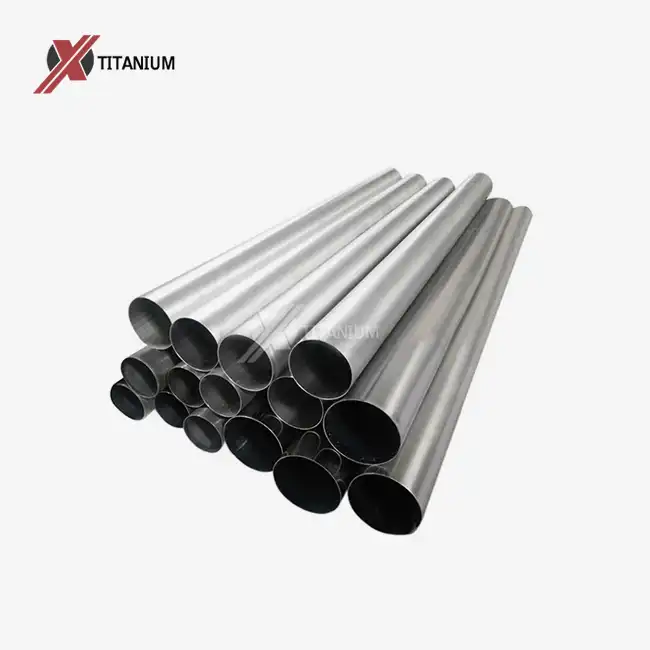
Comprehending the Titanium Seamless Tube Market
Manufacturing Process and Material Properties
Specialized methods, like extrusion or rotary cutting, are used to make Titanium Seamless Tube. These tubes are then cold rolled (pilgering) and heated in a vacuum. Welded tubing creates a Heat Affected Zone (HAZ) that can become a weak spot for stress buildup and limited corrosion. Titanium Seamless Tube, on the other hand, have a microstructure that is the same all the way through their cross-section. This method of making things directly handles important problems like failing too soon under cyclic loading, crevice corrosion at weld seams in chloride-rich settings, and the need to drastically reduce weight without sacrificing structural integrity.
The requirements for the material change a lot depending on the purpose. Titanium Grade 2 doesn't rust and is used a lot in chemical processing. Titanium Grade 9 (Ti-3Al-2.5V), on the other hand, is stronger and is used in aircraft hydraulic lines that work at pressures above 3,000 psi. Grade 5 (Ti-6Al-4V) is used in high-temperature situations where hardness and resistance to rust are very important. When buying teams know these differences, they can better match material grades to practical needs. This way, they can avoid both over-specification, which drives up costs, and under-specification, which increases the risk of failure too soon.
Global Supply Landscape and Key Players
The global market for Titanium Seamless Tube is mostly made up of a few well-known companies with a lot of technical know-how. Some of the biggest names in the industry are ATI (Allegheny Technologies), VSMPO-AVISMA, Timet, and specialists in Baoji, China, which is known around the world as the "City of Titanium." Baoji has become a major manufacturing hub because it is close to sources of raw materials and has decades of experience processing and making things out of titanium.
Concerns about the supply chain go beyond the image of the producer. Stock supply depends a lot on the size of the tube, the thickness of the wall, and the grade of titanium used. Standard sizes in popular grades, like Grade 2, usually have shorter wait times. On the other hand, it can take 8 to 12 weeks from the time an order is confirmed until it is delivered for specialized metals or custom sizes. When buying things from other countries, export operations, meeting certification standards like ASTM B862 and ASME SB862 compliance, and making sure that paperwork is correct become very important. This is especially true for medical and aerospace uses where traceability is very important.
Key Criteria to Evaluate When Choosing a Titanium Pipe Supplier
Quality Standards and Certifications
Quality management methods that can be checked are the basis of provider reliability. You should look for more than just general ISO 9001 certification. It's useful, but it doesn't cover the unique challenges of processing titanium. AS9100 approval shows aerospace-level quality control, which is important for companies that work with aircraft makers or companies that make engine parts. For medical-grade uses, providers must have ISO 13485 approval and clear biocompatibility testing procedures.
How well a provider can test materials can tell you a lot about their technical knowledge. Reliable providers have their own testing facilities for checking mechanical properties (like tensile strength, yield strength, and elongation), chemical makeup (using spectrometry), and non-destructive tests (like ultrasonic inspection and eddy current testing). It's necessary for batch-to-batch accuracy and regulatory compliance to be able to provide Material Test Reports (MTRs) that can be fully linked to raw material heat numbers.
Supplier Capabilities and Product Range
A supplier's wide range of products shows how advanced their making is and how much they've invested in equipment. Check to see if they can handle work with tight tolerances, custom wall thicknesses, and different surface finishes (pickled, polished, or sanded). Being able to handle small batches of custom orders without having to meet a minimum order quantity is especially helpful when developing or maintaining specialized equipment.
Equipment used in manufacturing has a direct effect on the uniformity of quality. Modern CNC machining centers, precise cold-rolling mills, and controlled-atmosphere annealing ovens used by suppliers give better surface finish and accuracy in measurements than facilities that use older manual equipment. When evaluating a provider, find out how old their equipment is, how often they maintain it, and what new investments they have made recently. These will help you figure out how well they will be able to meet your changing technology needs in the future.
Pricing Transparency and Total Cost Analysis
The unit price is only one part of the total cost of buying something. Ask for specific quotes that break down the prices of materials, processing, testing, and shipping. This openness makes it possible to compare sources in a useful way and finds hidden costs that come up later in the relationship.
Look at how flexible the price system is. Volume-based discounts are common, but progressive providers offer more than just lower prices. They offer expert advice, faster handling for pressing needs, and help with managing inventory for long-term contracts. There is real money worth to these services, even if it isn't stated directly. The cheapest price often hides lower quality, poor testing, or unstable delivery, all of which raise costs through production delays, extra work, and possible fails in the field.
Delivery Reliability and After-Sales Support
In project-based sourcing, where titanium tubes are often on the vital path, lead time accuracy is very important. Check with current buyers to see how well you've done at delivering on time in the past. Operational maturity is shown by suppliers who have formed logistics relationships, real-time order tracking tools, and proactive communication about possible delays.
Support after the sale is what sets real partners apart from transactional sellers. Technical support should include more than just fulfilling orders. It should also include application advice, help choosing materials for new projects, and fixing when processing problems happen. Warranty terms for material flaws, clear steps for dealing with non-conformances, and helpful customer service build trust over the course of the multi-year contracts that make up titanium supply agreements.
Comparing Titanium Seamless Tubes with Alternatives for Informed Procurement Decisions
Performance Advantages Over Common Alternatives
Titanium Seamless Tubes are more expensive than stainless steel ones, but the better performance makes the extra cost worth it in tough situations. In many situations, 316L stainless steel is good at resisting rust. However, it fails horribly in hot salt solutions and fast-moving seawater, where titanium does its best. Titanium metals are stronger than stainless steel by about 40%. This makes it possible to make lighter systems that use less fuel in aircraft uses or are easier to handle in portable medical equipment.
There are big differences in performance between Titanium Seamless Tube and those that are bonded. Welded tubes have a lengthwise gap that is where the failure starts when the load is applied over and over again. In chemical processing settings, the changed microstructure of the weld zone speeds up crevice rust, which forces tubes to be replaced too soon. These weaknesses can't happen with seamless construction because it gives the whole tube the same mechanical properties and corrosion resistance. This is a must for pressure vessels, heat exchangers, and hydraulic systems because failure could cause safety risks and major operational problems.
In high-temperature situations, Inconel and other nickel-based superalloys can compete with titanium because they are better at stopping creep above 500°C. But titanium's lower density (about 45% lighter than Inconel 718) makes it much better in situations where weight is important. Aluminum alloys are even less dense than titanium, but they can't match titanium's resistance to rust or stability at high temperatures. This means they can't be used in harsh chemical conditions or for service at high temperatures.
Grade Selection Impact on Application Success
Choosing the right material grade has a direct effect on both efficiency and source suitability. Grade 1 and Grade 2 commercially pure titanium are used most often in chemical processes because they don't rust at all pH levels. These types are easy to find and can be bought from most sources with shorter lead times and lower prices.
Grade 5 (Ti-6Al-4V) is used for high-strength tasks like medical devices, high-performance sports equipment, and structural parts for spacecraft. Because of its better mechanical qualities, the material is more expensive and needs to be processed in a more complicated way, which limits the number of suitable suppliers. When you ask for Grade 5 Titanium Seamless Tube, make sure that the providers can heat treat them properly and show that they follow aerospace material specs (AMS standards).
This grade, 9 (Ti-3Al-2.5V), is in the middle. It is stronger than widely pure grades while still being easy to shape cold. It has become the standard for hydraulic tubing in airplanes because it is strong enough for high-pressure systems and flexible enough to bend and flare in complicated ways. Suppliers who work with aircraft companies should show that they have a lot of experience with Grade 9 testing and processing processes that are specific to hydraulic system uses.
Avoiding Common Pitfalls When Selecting a Titanium Seamless Tube Supplier
The False Economy of Low-Price Suppliers
When it comes to finding titanium, choices that are based only on price often have expensive results. Material that isn't up to par may meet basic size requirements but not meet important mechanical property requirements or have too many intermediate elements (oxygen, nitrogen, and carbon) that make it less flexible and less resistant to rust. These flaws might not be found until the tubes are in use, which can lead to failures in the field that lead to warranty claims, output stops, and possibly safety issues.
Suppliers who aren't qualified and don't use well-known quality control systems can't provide the paperwork that is needed for medical, aerospace, or pressure vessel uses. Buyers who don't have or falsify material test records risk not following the rules, failing customer checks, and being held legally responsible. When non-conforming material has to be thrown away and new orders have to be rushed at higher costs, the cost saves from lower prices quickly disappear.
Delivery Reliability and Production Continuity
Industries that use Titanium Seamless Tube are more likely to be affected by problems in the supply chain. A shipment that is late can stop production lines, put off launching equipment, or throw off project plans, all of which can lead to contractual penalties. When evaluating a provider, find out how they get their raw materials, how they handle their inventory, and what their backup plans are for when demand goes up unexpectedly or there are problems with logistics.
The ability to provide after-sales help has a direct effect on the continuation of operations. Customers are left in the dark when problems arise because suppliers think their job is done when the goods are shipped. In contrast, providers who keep technical support teams that can answer questions about processes, offer metallurgical knowledge to help with corrosion problems, and quickly send new material when quality issues arise are more reliable. This support system tells the difference between sellers who are valued long-term partners and those who just fill orders.
Verifying Supplier Reputation and Credentials
Assessing a supplier's image takes more work than just reading comments on a website. Ask for customer examples from companies in the same line of work and call them to talk about delivery performance, quality stability, and how quickly problems are fixed. Industry certifications from well-known groups (like NADCAP for aircraft or PED for pressure equipment) show that process controls and expert skills are reliable.
Case studies that show how companies helped with complicated projects can show you how they solve problems and how technical they are. If a supplier is ready to give specific examples, including problems they've had and how they've solved them, it shows that they have faith in their skills and are open about how they run their business. On the other hand, marketing claims that aren't specific enough to back them up should raise red flags about the person's experience and skill.
Best Practices and Steps to Finalize Your Titanium Pipe Supplier
Defining Precise Technical Requirements
A good way to choose a seller is to write down all of your needs in detail for Titanium Seamless Tube. In addition to basic measurements like length, width, and thickness of the walls, you should also list any accepted deviations, the quality of the finish, the requirement for straightness, and the necessary mechanical properties. Find the industry standards that apply (such as ASTM B862, ASME SB862, and AMS specs) and any customer-specific needs that are more important than the standards.
Clearly explain the expected number, including the amount of the original order, the amount that will be used each year, and the possible growth path. This information helps providers figure out if your business fits with the things they can make, and it lets them suggest the best ways to set prices, organize supplies, and provide technical support.
Supplier Shortlisting and Evaluation Process
Create a standard Request for Quotation (RFQ) form so that all possible sellers will give you similar answers. Include technical drawings, lists of materials, standards for quality paperwork, expected delivery dates, and criteria for judging the work. Instead of lump-sum pricing that makes it hard to see how much something really costs, ask for specific quotes that break down all the costs.
Before making big purchases, trying samples is a great way to make sure everything is okay. Ask for samples that match your exact needs, not just any old stock items, and have them tested by a third party for accuracy in measurements, durability, and microstructural features. This investment finds quality problems before they stop production and shows that the company did its homework when it came to qualifying suppliers.
During the whole review process, check how responsive the seller is. Quick, thorough answers to technical questions show that the company knows what it's doing and cares about its customers. If suppliers need to be contacted more than once for basic information or give general answers to specific technical questions, it's likely that they don't have the organizational complexity needed for tough jobs.
Contract Negotiation and Quality Assurance
Good contracts set clear success goals and strike a balance between cost, quality, and delivery. In addition to unit prices, you should also talk to sellers about payment terms that work with your cash flow needs and give them enough working capital. Set clear delivery schedules with clear lead times, accepted delivery windows, and fines for late shipments that show how they really affect the business.
The quality assurance rules should spell out the requirements for testing and review, as well as the guidelines for acceptance and the steps to be taken when something doesn't meet the standards. Set clear rules for returning items, paying for replacements, and guarantee support. Include plans for regular checks of suppliers to make sure that quality management systems are still working and that process controls are being kept up to date.
The relationship doesn't end when the deal is signed. Set up regular contact schedules to go over delivery performance, quality metrics, and future needs. Collaborative relationships based on open conversation and a shared desire to always get better are much more valuable than transactions where the only goal is to negotiate prices.
Conclusion
If you want to find a good titanium pipe provider, you need to do more than just compare prices. Your buying choice will either help the project succeed or cause expensive problems based on the supplier's quality management systems, technical skills, delivery reliability, and dedication to customer service. Titanium Seamless Tube is a big investments that pay off because they work so well in tough situations. But you can only get this value if you buy them from sellers who follow strict rules in everything they do. Relationship-based contracting, thorough supplier evaluation, and clear sharing of requirements all lead to relationships that support long-term business goals while lowering the risks that come with buying complicated materials.
FAQ
How can I verify titanium seamless tube quality before purchase?
Ask for Material Test Reports (MTRs) that list the chemical make-up and mechanical qualities that can be linked to particular heat numbers. Make sure you get third-party inspection certificates from well-known testing labs. Before agreeing to big orders, suppliers can back up their claims with sample tests at independent metallurgical labs. Check the certifications of your suppliers (AS9100 for aircraft applications and ISO 13485 for medical applications) and, if you can, visit the site to see how well it works and how it handles quality control. In summary, ensuring the quality of a Titanium Seamless Tube requires rigorous documentation and verifiable testing.
What distinguishes seamless tubes from welded alternatives?
Titanium Seamless Tube are made without lengthwise welds, so they don't have the Heat Affected Zone that changes the mechanical properties of welded tubes and speeds up rusting. This even structure gives better fatigue resistance under cyclic loading and consistent corrosion resistance around the tube's edge. These are important benefits for pressure vessels, hydraulic systems, and chemical processing equipment where weld zones often become failure points.
Can suppliers customize titanium seamless tubes for specialized applications?
Suppliers you can trust offer a wide range of customization options, such as non-standard sizes, tight standards, specialized surface treatments (such as grinding, passivation, and coating), and heat treatment that is tailored to your specific mechanical property needs. Talk about your application needs in detail with the suppliers you're considering so you can see how much customization they offer, what the minimum order quantity is for custom specs, and how they can help you choose the best materials and set the best processing settings.
Partner with Chuanglian for Your Titanium Seamless Tube Requirements
With more than ten years of experience making Titanium Seamless Tube, Chuanglian is ready to help you with your most difficult titanium sourcing needs. We are located in Baoji, which is known around the world as the "City of Titanium." This gives us direct access to high-quality raw materials and modern production tools, such as CNC cutting, controlled-atmosphere heat treatment, and full testing facilities. Our quality control systems include strict checking procedures that make sure every shipment of Titanium Seamless Tube meets or beats international standards like ASTM B862 and ASME SB862.
We know that relationships work best when they do more than just give goods. Throughout the lifetime of your project, our technical team provides application advice, help with material selection, and quick response support. We can make Grade 2 tubes for chemical processing, Grade 9 tubes for aerospace hydraulics, or Grade 5 tubes for medical uses. We can handle both small amounts for prototypes and long-term supply agreements. Contact our team at info@cltifastener.com or djy6580@aliyun.com to talk about your needs with a reliable titanium seamless tube provider that cares about quality, customer success, and dependability.
References
1. Boyer, R., Welsch, G., & Collings, E.W. (1994). Materials Properties Handbook: Titanium Alloys. ASM International, Materials Park, Ohio.
2. Donachie, M.J. (2000). Titanium: A Technical Guide, 2nd Edition. ASM International, Materials Park, Ohio.
3. Lutjering, G., & Williams, J.C. (2007). Titanium, 2nd Edition. Springer-Verlag, Berlin Heidelberg.
4. American Society for Testing and Materials (2021). ASTM B862-14: Standard Specification for Titanium and Titanium Alloy Welded Pipe. ASTM International, West Conshohocken, Pennsylvania.
5. Peters, M., Kumpfert, J., Ward, C.H., & Leyens, C. (2003). Titanium Alloys for Aerospace Applications. Advanced Engineering Materials, Volume 5, Issue 6.
6. Schutz, R.W., & Thomas, D.E. (1987). Corrosion of Titanium and Titanium Alloys. ASM Handbook Volume 13: Corrosion. ASM International, Materials Park, Ohio.
Learn about our latest products and discounts through SMS or email