- English
- French
- German
- Portuguese
- Spanish
- Russian
- Japanese
- Korean
- Arabic
- Greek
- German
- Turkish
- Italian
- Danish
- Romanian
- Indonesian
- Czech
- Afrikaans
- Swedish
- Polish
- Basque
- Catalan
- Esperanto
- Hindi
- Lao
- Albanian
- Amharic
- Armenian
- Azerbaijani
- Belarusian
- Bengali
- Bosnian
- Bulgarian
- Cebuano
- Chichewa
- Corsican
- Croatian
- Dutch
- Estonian
- Filipino
- Finnish
- Frisian
- Galician
- Georgian
- Gujarati
- Haitian
- Hausa
- Hawaiian
- Hebrew
- Hmong
- Hungarian
- Icelandic
- Igbo
- Javanese
- Kannada
- Kazakh
- Khmer
- Kurdish
- Kyrgyz
- Latin
- Latvian
- Lithuanian
- Luxembou..
- Macedonian
- Malagasy
- Malay
- Malayalam
- Maltese
- Maori
- Marathi
- Mongolian
- Burmese
- Nepali
- Norwegian
- Pashto
- Persian
- Punjabi
- Serbian
- Sesotho
- Sinhala
- Slovak
- Slovenian
- Somali
- Samoan
- Scots Gaelic
- Shona
- Sindhi
- Sundanese
- Swahili
- Tajik
- Tamil
- Telugu
- Thai
- Ukrainian
- Urdu
- Uzbek
- Vietnamese
- Welsh
- Xhosa
- Yiddish
- Yoruba
- Zulu
Where to Source Grade 5 Titanium Countersunk Washers
To find Grade 5 Titanium Countersunk Washers, you need to work with experienced makers who focus on Ti-6Al-4V metal parts and keep up with strict quality standards. You can get these special nuts from companies that only make titanium fasteners, like Baoji Chuanglian New Metal Material Co., Ltd., which is based in China's "City of Titanium," or from trusted dealers that work in the aerospace, medical, and marine industries. To make sure they follow ASTM B348 and AMS standards, buyers should give priority to suppliers who offer traceability of materials, consistent batches, and expert help. Direct communication with manufacturers, certified B2B platforms, and industry-specific trade shows are all ways to buy things. At these shows, you can look at certification paperwork and test samples carefully before committing to large orders.
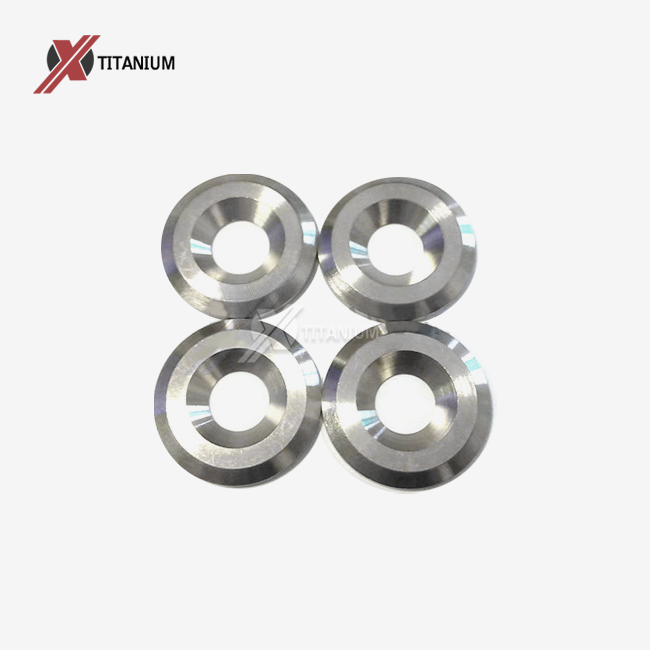
Understanding Grade 5 Titanium Countersunk Washers
Grade 5 Titanium Countersunk Washers are an important way to fix high-performance industrial parts. These parts are made of an alloy called Ti-6Al-4V, which is 90% titanium, 6% aluminum, and 4% vanadium. They have great mechanical qualities that meet the needs of hard operations in many fields.
What Makes Ti-6Al-4V Alloy Superior?
The alloying elements in Grade 5 titanium make the microstructure much stronger than pure titanium grades that are sold in stores. Vanadium makes the beta phase stronger and improves the response to heat treatment, while aluminum keeps the alpha phase stable and lowers its density. This mix gives the material a tensile strength of about 130 ksi (895 MPa), which is almost twice as strong as Grade 2 titanium while still being very flexible. The alloy is stronger than steel when it comes to weight, about 40% more. This makes it very useful in situations where weight reduction directly affects performance, like in aircraft buildings and racing.
The Countersunk Design Advantage
Countersunk washers are different from regular flat washers because they have a conical bearing surface that has been machined to exact angle specs, usually 90° or 100° based on the application standards. When paired with countersunk screws, this shape lets the washer sit flush with the base surface, making a smooth, aerodynamic outline. The design spreads the loads of the fasteners over a bigger bearing area without making the unit taller. This keeps the substrate from getting damaged in thin-walled structures and composite panels. In naval settings, the smooth surface gets rid of protrusions that could get in the way of water flow or cause fouling. Medical gadgets work better when they have smooth sides that don't irritate tissues and make sterilization easier.
Manufacturing Processes and Quality Standards
Premium countersunk screws are made from forged titanium bar stock and are carefully CNC machined to make sure they are the same size and have a stable grain structure. Forging lines the microstructure of the alloy, which improves its mechanical qualities in key load-bearing areas. Manufacturers who follow ASTM B348 standards make sure that the chemical makeup and mechanical properties are checked by a third party. ISO 9001 certification shows that a quality management system is working properly, and AS9100 certification meets the unique standards for traceability and process control in the aerospace industry. According to ISO 10993 standards, medical-grade cleaners need extra biocompatibility testing to make sure they don't contain any harmful contaminants.
How to Choose the Right Grade 5 Titanium Countersunk Washers for Your Projects?
To choose the right Grade 5 Titanium Countersunk Washers, you need to carefully look at the technical needs of your product, its exposure to the environment, and its legal compliance needs.
Evaluating Material Performance Requirements
Engineers have to make sure that the washer's specs match the load conditions, working temperature range, and surroundings of the assembly. Grade 5 titanium keeps its mechanical qualities up to temperatures as low as -196°C (750°F). This means it can be used for both arctic offshore bases and the edges of airplane engines. When galvanic corrosion is a risk, like when titanium washers are used with carbon fiber composites or aluminum structures are used in saltwater, Grade 5's rank on the galvanic series stops the neighboring materials from rusting faster. For projects that need more strength, Grade 5 titanium may be worth the extra cost compared to Grade 2, which has the same level of rust protection but only 50 ksi (345 MPa) of tensile strength.
Comparing Alternative Materials
Stainless steel washers are much cheaper than titanium washers, but they weigh almost twice as much. In situations where weight is important, this extra weight is not acceptable. Steel doesn't fight corrosion well in marine and chemical processing settings, so it breaks down early and needs expensive upkeep. Grade 2 titanium is less expensive than Grade 5 and has good corrosion protection and enough strength for many uses. This makes it a good choice for chemical handling equipment that doesn't need to be very strong. Ceramic cleaners keep out electricity and chemicals, but they aren't flexible or tough enough to withstand impacts in systems that tend to vibrate.
Dimensional Specifications and Standards Compliance
The measurements of the countersunk washer must exactly match the fastener system and the material of the base. For proper fitting and load distribution, the countersunk angle needs to line up with the screw head shape. The outer diameter, inner diameter, and width of the material of the washer all affect how the bearing stresses are spread out and how well the unit stays together when it shakes. When writing procurement specifications, they should use relevant standards as examples, like ASTM F467 for titanium bolt sizes or military specifications like MS24693 for flight uses. Medical assemblies need paperwork that shows they follow FDA rules and any relevant medical device directions.
Certification Requirements Across Industries
When buying materials for aerospace, you need to make sure you have full certifications, such as mill test reports (MTRs), chemical makeup analyses, and mechanical property checks. Traceability to raw material heat lots makes it possible to handle recalls and look into failures. For chemical processing, you need corrosion tests results that show the metal is resistant to certain chemicals at the right temperatures and amounts for the job. Manufacturers of medical devices need to keep track of biocompatibility test results, certificates of approval, and proof that their manufacturing processes have been checked and proven to work. When used in nuclear uses, low cobalt content and neutron activation studies are also needed.
Where to Source Certified Grade 5 Titanium Countersunk Washers?
Identifying reliable suppliers for Grade 5 Titanium Countersunk Washers requires evaluating technical capabilities, quality systems, and supply chain stability rather than focusing solely on unit pricing.
Direct Manufacturer Engagement
For expert buyers, working closely with companies that make titanium parts has a number of strategic benefits. Some manufacturers, like Baoji Chuanglian New Metal Material Co., Ltd., have their own CNC machines and quality testing tools, so they can change the washer's size, finish, and material certifications to fit the needs of each project. Direct connections make it easier for engineers to work together on technical details during the design process. This lets them find the best washer shape for specific load cases or production methods. Manufacturers in Baoji City benefit from being close to titanium smelting plants, which cuts down on material prices and wait times while keeping an eye on the quality of the raw materials.
Specialized Fastener Distributors
Industrial fastener wholesalers that keep titanium product lines in stock make it easy to get common sizes with shorter lead times than when they are made to order. Trustworthy wholesalers keep a variety of grade choices in stock and keep quality records on hand for quick shipping. This route works well for projects that need small amounts or quick prototypes before placing large orders. Buyers should make sure that the wholesalers they work with get their goods from approved makers and can show full material tracking paperwork, not just business bills.
B2B Platforms and Verification
Online industrial markets put buyers in touch with sellers around the world, but buyers need to be very careful to avoid buying fake or low-quality goods. Platforms that give services like quality inspection, escrow payment safety, and source verification lower the risks of transactions. Before making an order for production, buyers should ask for sample packages with full material certifications. Before a high-value order is shipped, third-party inspection services can check the supplier's facility to make sure the dimensions are correct and the material is what it says it is.
Quality Certification Priorities
When you evaluate a supplier, you should give quality management certifications that are relevant to your business the most weight. ISO 9001 certification shows that a basic quality system has been put in place, while AS9100 covers aerospace quality standards, such as first article inspection procedures and configuration management. Medical device suppliers need to have ISO 13485 approval to show that they follow the rules for medical device quality control systems. For chemical processing and heat treatment, NADCAP accreditation shows that the company follows the agreed upon norms for special processes in the aircraft business. Asking for the supplier's most recent surveillance audit reports gives you an idea of how compliant they are still after the initial approval.
Procurement Process and Best Practices for Bulk Purchasing
Efficient procurement of Grade 5 Titanium Countersunk Washers balances inventory carrying costs against supply security while maintaining flexibility for project changes.
Lead Time Management and Production Scheduling
Depending on whether standard or special specs are needed, it usually takes 4 to 8 weeks from the time an order is placed until the part is delivered. Getting the raw materials, setting up the CNC machine, checking for quality, and treating the surface all add to the total wait time. For projects with set installation dates, procurement should start during the design phase by asking for basic quotes and ratings of capability before finalizing specs. Setting up framework deals with agreed-upon quality and price standards lets you send orders quickly when project schedules get tight.
Inventory Strategy Considerations
Just-in-time inventory methods lower holding costs but make businesses more vulnerable to changes in supply and prices. Safety stock levels for critical parts should be kept at a level that is estimated based on past consumption rates and the unpredictability in supplier wait times. Titanium is easier to store than materials that go bad quickly or are too heavy because it has a long shelf life and a high value-to-weight ratio. Having consignment inventory agreements with sellers can give you on-site access without having to pay for it all at once. You only pay when you use it, not when it arrives.
Customization and OEM Collaboration
Beyond standard catalog measurements, optimizing washer geometry can help a lot of different uses. Loads are spread out over larger carrying areas when the outer diameter gets bigger. This lowers the stress accumulation in thin-walled structures. To make sure proper fitting and load transfer, countersunk angles must be changed to fit non-standard screw head shapes. Surface treatments like passivation or titanium nitride covering make things less likely to rust in harsh settings. When suppliers have their own engineering teams, they can model how loads are distributed and suggest changes to the shape during design reviews. This adds value beyond just making the product.
Pricing Negotiation and Cost Optimization
Titanium's raw material costs change with the global supply chain, which makes it hard to set prices in the long term. Using index-based pricing that is tied to public prices for titanium sponges makes things clear and protects both parties from changes in the market. By making volume promises, suppliers can plan output and buy materials in the most efficient way, which lowers unit costs through economies of scale. When you combine several SKUs into one production run, you can use setup amortization to save money on bigger amounts. Overall prices are affected by payment terms that balance the need for cash flow with credit risk. Buyers who can pay early often get savings.
Ensuring Quality and After-Sales Support
Ensuring the quality of Grade 5 Titanium Countersunk Washers goes all the way through the supply chain, from checking the raw materials to doing the final review and keeping an eye on how well suppliers are doing all the time.
Material Traceability and Documentation
Full material tracking starts with mill test records that list the raw titanium bar stock's chemical make-up and mechanical qualities. Each production lot should have its own unique identification number so that it can be tracked through all stages of production. Shipments must come with certificate packages that have physical inspection records, measures of the surface finish, and any other tests that need to be done, like an ultrasonic inspection or a dye penetrant examination. Digital tracking systems make it easy to find goods that are affected quickly if there are problems with the raw materials or the process.
Inspection Protocols and Acceptance Criteria
When a part comes in for inspection, it should be checked for key measurements using calibrated measuring tools and comparing the results to the drawing specs and tolerance ranges that have already been set. Visual analysis finds flaws, machining lines, or residue on the surface that might affect performance. Random sampling for destructive testing gives statistical confidence in the quality of the batch, but because titanium is so expensive, it is only practical for important uses to use 100% non-destructive testing. Coordinate measuring machines (CMMs) check complicated geometrical features, such as the correctness of the countersunk angle and the concentricity of the inner and outer circles.
Supplier Performance Monitoring
Setting up key performance indicators makes it possible to evaluate suppliers objectively after the initial selection stage. The number of on-time deliveries shows how reliable the plan is, while quality measures like parts-per-million defect rates show how consistent the material is. How quickly a seller responds to technical questions and how full their documentation is show how mature their operations are and how much they care about their customers. Periodic checks of suppliers make sure that they are still following the rules of the quality system and give people a chance to talk about how to make things better. Supplier scorecards that are shared openly encourage ongoing growth and show appreciation for great work.
Warranty and Return Policies
With clear guarantee terms, you know who is responsible for material flaws and non-conformances. Reliable providers promise that the materials they provide meet certain standards and are free of any production flaws that would make them unfit for their intended use. Return clearance methods should make it easy to replace broken materials quickly without stopping production. Failure analysis support helps find the real reasons why things fail in the field, separating real problems from things like bad application use or bad design. Long-term relationships with reliable sellers cut down on the costs of switching vendors and help both parties learn more about each other's needs and abilities.
Conclusion
To find Grade 5 Titanium Countersunk Washers, you need a plan that puts technical skills, quality certifications, and the dependability of the supply chain ahead of purchasing price. These precision-engineered parts work better than any others in tough aircraft, marine, medical, and industrial settings that need strength, resistance to rust, and less weight. Successful procurement teams build long-term partnerships with qualified makers that offer full material tracking, technical teamwork, and quick customer service. Buyers can get reliable access to parts that improve product performance and operating efficiency while lowering supply chain risks by following strict seller evaluation processes, keeping the right inventory levels, and making the most of customization options.
FAQ
How does Grade 5 titanium compare to stainless steel for corrosion resistance?
When it comes to corrosion protection, Grade 5 Titanium Countersunk Washers do better in chloride-rich settings like seawater and chemical processing. The titanium oxide layer that forms naturally on uncovered surfaces protects very well against pitting and crevice corrosion, even in high-temperature, high-salinity environments where stainless steel types break down more quickly. Titanium is resistant to stress corrosion cracking and doesn't react with most organic chemicals. This makes it the best material for important marine and chemical processing fastening uses, even though it costs more at first.
Can I order custom dimensions for specific project requirements?
Companies that can do CNC cutting can easily make products in any size you need. You can change the countersunk angles, inner and outer sizes, and thickness of the material to fit the needs of different fastener systems and substrates. Custom orders usually need engineering plans with GD&T callouts, and there may be a minimum order quantity to cover the costs of tools and setup. Custom parts usually have longer lead times than standard stock items, so it's best to get involved early in the planning process.
What lead times should we expect for bulk orders?
Standard-sized bulk orders usually take between 4 and 6 weeks to deliver, which includes getting the raw materials, CNC cutting, quality control, and shipping internationally. Depending on how complicated the order is and how busy the factory is right now, custom specs may make wait times 6 to 8 weeks longer. There are choices for faster production that can cut times by 25–40%, but they cost more. Setting up blanket purchase orders with planned releases lets suppliers keep committed inventory and cut down on the time it takes to fill each order.
Partner With Chuanglian for Premium Ti-6Al-4V Countersunk Washers
Baoji Chuanglian New Metal Material Co., Ltd. is a specialist Grade 5 Titanium Countersunk Washers maker with more than ten years of experience making titanium fasteners. Our factory is in Baoji, which is the center of titanium production in China. It has state-of-the-art CNC machines and strict quality control systems that are approved to ISO 9001 standards. From heating the titanium to the final review, we keep full track of the materials to make sure that every washer meets ASTM B348 standards and your project's exact needs.
Our engineering team works closely with clients to find the best washer shape for each load situation. We also have a wide range of testing tools that we use to make sure that each batch of washers meets the required standards for accuracy and material properties. You can email our expert sales team at info@cltifastener.com or djy6580@aliyun.com to talk about your countersunk washer needs, get material clearances, or get quotes from other companies for your next purchase.
References
1. Boyer, R., Welsch, G., & Collings, E.W. (1994). Materials Properties Handbook: Titanium Alloys. ASM International.
2. Donachie, M.J. (2000). Titanium: A Technical Guide, 2nd Edition. ASM International.
3. Lutjering, G., & Williams, J.C. (2007). Titanium, 2nd Edition. Springer-Verlag Berlin Heidelberg.
4. ASTM International. (2020). ASTM B348-20: Standard Specification for Titanium and Titanium Alloy Bars and Billets. West Conshohocken, PA.
5. SAE International. (2018). AMS 4928: Titanium Alloy, Bars, Wire, Forgings, Rings, and Drawn Shapes 6Al-4V Annealed. Warrendale, PA.
6. Peters, M., Kumpfert, J., Ward, C.H., & Leyens, C. (2003). "Titanium Alloys for Aerospace Applications." Advanced Engineering Materials, 5(6), 419-427.
Learn about our latest products and discounts through SMS or email