- English
- French
- German
- Portuguese
- Spanish
- Russian
- Japanese
- Korean
- Arabic
- Greek
- German
- Turkish
- Italian
- Danish
- Romanian
- Indonesian
- Czech
- Afrikaans
- Swedish
- Polish
- Basque
- Catalan
- Esperanto
- Hindi
- Lao
- Albanian
- Amharic
- Armenian
- Azerbaijani
- Belarusian
- Bengali
- Bosnian
- Bulgarian
- Cebuano
- Chichewa
- Corsican
- Croatian
- Dutch
- Estonian
- Filipino
- Finnish
- Frisian
- Galician
- Georgian
- Gujarati
- Haitian
- Hausa
- Hawaiian
- Hebrew
- Hmong
- Hungarian
- Icelandic
- Igbo
- Javanese
- Kannada
- Kazakh
- Khmer
- Kurdish
- Kyrgyz
- Latin
- Latvian
- Lithuanian
- Luxembou..
- Macedonian
- Malagasy
- Malay
- Malayalam
- Maltese
- Maori
- Marathi
- Mongolian
- Burmese
- Nepali
- Norwegian
- Pashto
- Persian
- Punjabi
- Serbian
- Sesotho
- Sinhala
- Slovak
- Slovenian
- Somali
- Samoan
- Scots Gaelic
- Shona
- Sindhi
- Sundanese
- Swahili
- Tajik
- Tamil
- Telugu
- Thai
- Ukrainian
- Urdu
- Uzbek
- Vietnamese
- Welsh
- Xhosa
- Yiddish
- Yoruba
- Zulu
How to choose high-quality titanium clad copper bars for electrical applications?
When selecting the appropriate titanium clad copper bar for electrical uses, it is important to understand the complicated balance between conductivity, rust protection, and mechanical durability. In the middle of these combination materials is high-purity copper, and on top of that is titanium that is joined to the copper through metals. This makes them work well with electricity and keep them from breaking down in bad weather. When looking for high-quality bars, people in the green energy, power distribution, and electrolytic processing industries need to check how well the bars are joined, how accurate the measures are, and how regularly the bars are made. Before agreeing to long-term partnerships with material sources, it is important to do a lot of study. This is because the choice you make will directly affect how well the system works, how much it costs to run, and how long the supplies last.
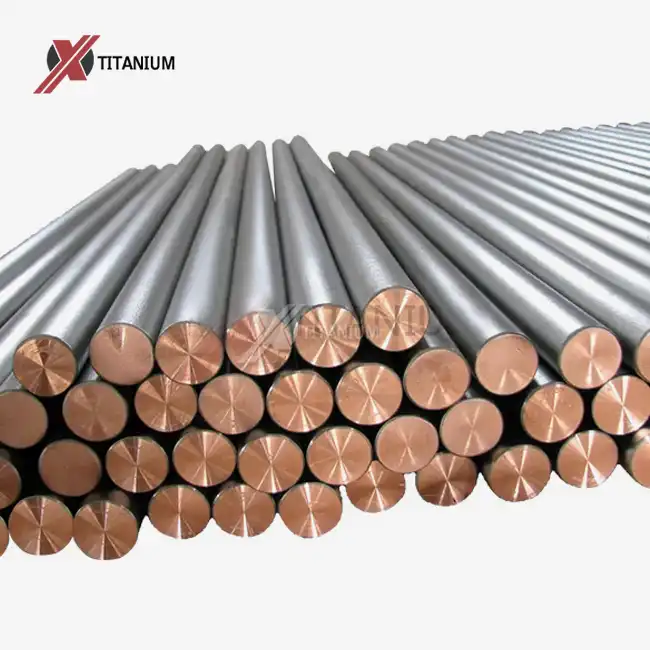
Understanding Titanium Clad Copper Bars for Electrical Use
Find out how to make electricity work with titanium clad copper bars. They are a new way to solve an old technical problem: how to make something that is good at fighting the environment and moving electricity through it? OFHC, which is oxygen-free and high-conductivity copper, is used to make the heart. It generally meets ASTM B170 standards. OFHC provides almost perfect electrical lines with little loss due to resistance. Around this core is a layer of carefully controlled titanium, generally grades like Grade 1 or Grade 2 that are commercially pure. It is best to keep this layer on top of you when you are in an acidic, alkaline, or salty environment.
Manufacturing Process and Quality Assurance
How these titanium clad copper bars were made affects how well they work and how reliable they are. Explosion bonding is the most common way. This is when layers of titanium and copper are joined at the atomic level by controlled release forces. This method promises bond strengths of more than 130 MPa, which means that the material won't separate even if the temperature changes or it is physically stressed. To get the right size and finish on the outside, manufacturers use annealing, hot rolling, cold rolling, or annealing after the first glueing. One way to make sure the building is strong is to test its strength by breaking it and running water over it.
Pickling and acid cleaning are used in modern workplaces to get rid of oxides on the surface and other dirt. Based on the job, the next step is either cutting or grinding. When exact electrical contact is needed, these surface treatments make the surface look better and work better as well. These bars are very important for electrical systems that need to work well because they are not dense, don't rust, and don't change temperature much.
Application Environments and Performance Benefits
Copper lines in electrical systems break down quickly in tough places like drug plants, military bases, and soldering shops. The titanium clad copper bar keeps the copper core safe by letting it carry electricity and stopping ions from going into close fluids or other media. Because it can be used for two different things, it doesn't have to choose between being energy efficient and lasting in hard conditions. This means engineers can make systems that just work and don't need to have their parts changed very often.
Critical Selection Criteria for High-Quality Titanium Clad Copper Bars
When choosing what to buy, you should focus on performance factors that are easy to measure and have a direct effect on how well your business does. When you know these things, you can tell the difference between really good items and cheap ones that look like a good deal at first but break down quickly.
Electrical Conductivity and Resistivity
The copper core must keep its conductivity levels above 98% IACS (International Annealed Copper Standard) for the investment to be worth it. Readings of resistance should stay below 1.75×10⁻⁸ Ω·m to keep voltage drops along wire lengths as low as possible. Make sure that the conductivity tests that were done according to ASTM E1004 or a similar standard were done by any possible companies you are thinking about hiring. If the core conductivity goes down, it means that there are flaws or bad treatment that are making the system work less well.
Bonding Integrity and Cladding Thickness
With the metal link between the titanium and copper layers, it will last for a long time. Make sure you have proof from ultrasound tests that the closing is complete on all bar surfaces. When there is localized debonding, rusting can happen faster and heat can build up, which can cause the whole thing to fail. The covering is generally between 0.5 mm and 2.5 mm thick, depending on how dangerous the area is where it will be used. A thinner layer may save money on materials, but it may not be strong enough for chemical processes that happen very quickly. Too much thickness, on the other hand, makes things heavier and more expensive without making them work better.
Dimensional Precision and Surface Quality
To make sure that busbar units, junction blocks, and connection gear all fit together properly in electrical applications, there must be clear size limits. It's harder to fit and the current might move unevenly if the width changes by more than 0.1 mm or the length changes by more than 5 mm. The finish of the surface has a direct effect on how much resistance the touch points have. Bright or polished surfaces make the best electrical contact. Pickled or sanded finishes, on the other hand, can be used to make protection coats stick better or make mechanical fitting better.
Mechanical Properties and Thermal Stability
Check the bars' yield strength, tensile strength, and stretch to make sure they can handle the loads that will be put on them and those that will be used. High-quality titanium clad copper bars can survive temperature changes of -40°C to 200°C without losing structural integrity in outdoor electrical sets and industrial process equipment. Copper and titanium expand and contract at very different rates when heated and cooled. This is why the bonding process is so important: it keeps the layers from coming apart when the temperatures change. Find out about thermal cycling tests that show the product stays stable through at least 100 rounds at temperatures that are common for the use.
Comparing Titanium Clad Copper Bars with Alternative Materials
Find out how titanium-clad copper bars work compared to other materials so you can make smart buying decisions based on your needs instead of just the price. Pure copper is a good conductor, but it breaks down quickly in acidic or salty places, which means it has to be changed often and slows down the system. Covers that protect help for a while, but they wear off over time, exposing the base metal to damage. It's very hard for stainless steel to rust, but it's only 2% to 3% as good at carrying electricity as copper. This means a lot of heat and force is lost. Steel lines that are used with a lot of electricity often waste more power than they cost in the first few months of use.
Different things are done with copper-clad titanium bars, which have copper on top of the titanium body. Electricity flow is not prioritized in this design; mechanical strength and rust protection come first. Because of this, it can be used for structure purposes or when carrying current is not the main goal. It's much heavier and costs more because it has a titanium core, but it's a little more conductive than solid titanium. Copper bars covered in titanium are the best choice for electrical tasks that need to be fast and last a long time. The design uses the best parts of each metal and lessens the bad things about them. This means that the higher initial investment was worth it because it lowers the costs over time. Better use of energy, longer repair times, less work for support staff, and getting rid of metal ions that poison the electrolyte are all things that should be looked at in a cost-benefit analysis.
Sourcing High-Quality Titanium Clad Copper Bars: Procurement Insights
It's not enough to just compare prices when you buy something; you also need to carefully evaluate providers and build relationships with them. Providers' skills vary a great deal because titanium clad copper bars are such unique composite materials. This is true even for companies that seem to offer the same product specs.
Supplier Qualification and Certification Verification
Give more weight to buyers who have up-to-date ISO 9001 quality management certification and can show that they keep processes under control and are always looking for ways to make them better. Certifications like AS9100 or ISO 13485 give extra assurance that strict manufacturing is done for uses in medicine or airplanes. You should ask the company for proof that they follow ASTM B898, which is the standard for making plates with explosive and hard metals on them.
For each batch of production, it should be easy for sellers to give certificates of materials, reports on chemical makeup studies, and certificates of mechanical property tests. Knowing how to make things is very important in this very technical field. Titanium companies that have been in business for more than ten years have probably gotten better at customer service, quality control, and blast bonding. Baoji Chuanglian New Metal Material Co., Ltd., which is in China's "City of Titanium," is a good example of this level of industry growth because it can make finished goods and process raw materials.
Product Specification and Customization Capabilities
If you want to start with standard sets of measurements, you can. But for many electrical uses, you will need to make your own. Make sure the sellers can meet all of your exact needs for width (10 mm to 200 mm), length (500 mm to 3000 mm), and thickness (0.1 mm to 2 mm). Manufacturing that is flexible is very important for making new systems or changing designs to fit the needs of a certain place. Providers who own a range of CNC machine centers and other processing tools can quickly make unique forms, connector setups, or mounting features that lower the cost of the system and make installation easier.
Supply Chain Reliability and Technical Support
If the project needs to be approved by a certain date, make sure the seller can keep their normal sending dates. Production wait times rely on how difficult the order is and how much demand there is at the moment. However, well-known manufacturers can usually meet standard requirements in 4 to 6 weeks. Learn how to rush in an emergency to protect yourself in case equipment breaks down or the job needs to be done faster than planned. Transactional sellers are not the same as special sellers because they do not provide technical support.
An application engineer can help choose materials for complicated electrical systems by matching product specs to things like temperature, current loads, and mechanical forces. Technical support teams that are quick to react can help with problems during setup, suggest the best ways to connect, and give tips on how to keep products in good shape so they last as long as possible.
Practical Tips for Ensuring Long-Term Satisfaction and Performance
The first step toward getting maximum system efficiency is receiving high-quality titanium clad copper bars. Making sure that the right steps are taken for proofing, installing, and maintaining will protect your investment and make sure that the plan standards are met in real life.
Incoming Inspection and Testing Protocols
After getting the materials, there are some steps you should take to make sure they are the right size, in good shape, and with the right paperwork before you put them in place. You should be able to see if there are any flaws on the surface, signs of delamination, or damage from being handled that the seller needs to fix. To make sure that the performance levels are met, tools are used to measure the electrical conductivity. Tests of stiffness make sure that the right heat treatment was carried out.
If you want to make sure that the item meets your needs in terms of material make-up, technical specs, and being able to track the production lot, look at the licensing paperwork that comes with it. So that the project doesn't get held up or system performance isn't harmed, the source needs to be told right away when the specs that were bought and those that were given don't match. Take pictures of the goods as they come. This will help if there is a dispute over who is responsible for damage or not meeting standards.
Installation Best Practices
Being careful during installation can keep things from getting broken in a way that could affect how they work in the long run. If you pull the bars across rough surfaces, you could scratch the titanium covering and make holes where rust could start to form. If the bars are longer or bigger, make sure you use the right pulling gear so that the metal doesn't twist and break. When you link things, the mechanical loads should be spread out properly.
When screws are tightened too much, they can create concentrated stress that can damage the coating or make galvanic cells at the areas where they join. You need to pay extra attention to how the touch area is set up when you are making electrical connections. Clean the matching areas very well to get rid of rust, dirt, or protective oils that make it harder to make contact. Joint materials that are made to work with both titanium and copper should be used. These will keep things from rusting and improve the flow of electricity. Tighten the screws to the manufacturer's recommended level, making sure there is enough contact pressure to protect the composite structure.
Maintenance and Performance Monitoring
Regularly checking systems helps find new issues before they cause the system to crash. When you look at the layer with the naked eye, you should look for signs of peeling, odd rust patterns, or damage caused by movements or changes in temperature. During operation, thermographic imaging shows places where there are issues with touch resistance or damage on the inside that needs to be investigated.
Every so often, electrical tests are done to make sure the system is still working right. When you measure the voltage drop across different parts of a line, you can see that the resistance is going up. This could be because of broken links or issues with the material. When you look at the changes in these measures over time, you can quickly tell when things are getting worse and need to be fixed. Clean the link points once a year or as needed to get rid of rust and other debris that slows down the system and raises its resistance.
Even after decades of being exposed to high temperatures and salt spray, which would have killed normal copper lines in months, case studies from military electrical systems demonstrate that titanium clad copper bars have continued to function flawlessly. Electrochemical processing plants say that their new systems use more than 15% less energy than their old ones made of stainless steel wire. On top of that, metal ions are no longer going into the lines of ware.
Conclusion
When looking for high-quality titanium clad copper bars, you need to think about their technical specs, source skills, and how well they work over time. The best choice has a good power connection and doesn't rust easily. It is made exactly how you want it by people who care about product and customer service. One way to tell which products are better than others is to look closely at how well they glue, how accurate their measures are, and whether they meet the requirements for approval. So that these high-tech composite materials last longer, procurement professionals make sure that they are carefully checked when they come in, installed properly, and kept up with their regular maintenance.
FAQ
What performance advantages does titanium cladding provide over pure copper conductors?
The biggest problem with copper is that it rusts quickly. Titanium coating fixes this issue while keeping the copper's full ability to carry electricity. Oxidation, acid attack, and chloride-induced pitting are all things that quickly wear down copper surfaces that are exposed to them. The titanium layer guards the copper from these things. Conductors last decades longer in harsh environments because of this security. This means that there are no fix costs and no system downtime.
Which quality standards and certifications should I verify when sourcing these materials?
Make sure that the standards for composite plates are in line with ASTM B898 and that they are ISO 9001 certified to show that they have an organized way of handling quality. ASTM rules say that material certificates for both titanium and copper parts should list the chemicals that make them up. To show that the project was successful, you need test data for tensile strength, joined strength, and electrical conductivity. Depending on the area where you want to use it, you might need approvals specific to your business, such as RoHS compliance for environmental reasons.
Can suppliers customize dimensions and specifications for specialized electrical applications?
If you buy from a reputable company, you can change the width, length, layer thickness, and surface treatments to suit your needs. In modern factories, CNC machine centers let them make special forms, combined links, or one-of-a-kind patterns that make setting up the system easier. Application engineering support from good companies helps you turn your functional needs into better material specs that balance cost, performance, and ease of manufacture.
Partner with Chuanglian for Premium Titanium Clad Copper Bar Solutions
For decades of heavy use, the parts you use to build electricity systems need to keep working well. The high standards of many foreign businesses, such as the oil and gas industry and green energy systems, are met by the precision-engineered titanium-clad copper bars produced by Chuanglian. As part of our quality control process, our explosion-bonded composite bars are checked for stiffness, bending strength, and conductivity. This is done to make sure that every product that leaves our Baoji plant meets international standards. We can make solutions that are just the right size and performance for you because we have worked with titanium for more than ten years and know how to use CNC cutting equipment.
Workers who buy from us can be sure that the materials they use will be the same for every order because our quality control systems and production methods can be monitored. You can talk about the specifics of your project with our team by emailing info@cltifastener.com or djy6580@aliyun.com. Our titanium clad copper bar is made by a respected company, and we offer reasonable prices, flexible delivery times, and quick engineering support that turn material selection from a buying challenge into a strategic advantage for your electrical system.
References
1. ASM International. Metals Handbook: Properties and Selection of Nonferrous Alloys and Special-Purpose Materials. ASM International, 2018.
2. Davis, J.R. Copper and Copper Alloys: Engineering Applications in Electrical and Electronics. ASM International Press, 2017.
3. Findlay, S.J. and Harrison, N.D. "Explosive Bonding of Dissimilar Metals for Industrial Applications." Journal of Materials Processing Technology, vol. 245, 2019, pp. 178-192.
4. Kobayashi, M. and Toda, H. "Corrosion Resistance of Titanium Clad Metals in Chemical Processing Environments." Corrosion Science and Engineering, vol. 62, 2020, pp. 334-347.
5. Lienert, T.J. and Burgardt, P. "Fundamentals of Weldability and Bonding in Bimetallic Systems." Welding Journal Research Supplement, vol. 98, 2019, pp. 89-103.
6. Zhang, W. and Chen, Y. "Performance Optimization of Composite Conductors for Marine and Industrial Electrical Systems." IEEE Transactions on Industry Applications, vol. 56, 2021, pp. 4521-4530.
_1747380359244.webp)
Learn about our latest products and discounts through SMS or email