- English
- French
- German
- Portuguese
- Spanish
- Russian
- Japanese
- Korean
- Arabic
- Greek
- German
- Turkish
- Italian
- Danish
- Romanian
- Indonesian
- Czech
- Afrikaans
- Swedish
- Polish
- Basque
- Catalan
- Esperanto
- Hindi
- Lao
- Albanian
- Amharic
- Armenian
- Azerbaijani
- Belarusian
- Bengali
- Bosnian
- Bulgarian
- Cebuano
- Chichewa
- Corsican
- Croatian
- Dutch
- Estonian
- Filipino
- Finnish
- Frisian
- Galician
- Georgian
- Gujarati
- Haitian
- Hausa
- Hawaiian
- Hebrew
- Hmong
- Hungarian
- Icelandic
- Igbo
- Javanese
- Kannada
- Kazakh
- Khmer
- Kurdish
- Kyrgyz
- Latin
- Latvian
- Lithuanian
- Luxembou..
- Macedonian
- Malagasy
- Malay
- Malayalam
- Maltese
- Maori
- Marathi
- Mongolian
- Burmese
- Nepali
- Norwegian
- Pashto
- Persian
- Punjabi
- Serbian
- Sesotho
- Sinhala
- Slovak
- Slovenian
- Somali
- Samoan
- Scots Gaelic
- Shona
- Sindhi
- Sundanese
- Swahili
- Tajik
- Tamil
- Telugu
- Thai
- Ukrainian
- Urdu
- Uzbek
- Vietnamese
- Welsh
- Xhosa
- Yiddish
- Yoruba
- Zulu
How to Ensure Quality in Titanium Clad Copper Plates
Ensuring quality in Titanium Clad Copper Plate requires comprehensive understanding of metallurgical bonding integrity, precise material specifications, and stringent supplier verification protocols. Quality assurance encompasses evaluating bonding strength between titanium and copper layers, verifying electrical conductivity retention, confirming corrosion resistance performance, and validating dimensional accuracy according to ASTM B898 standards. Procurement professionals must establish robust quality control frameworks that address material consistency, supplier certifications, testing methodologies, and post-delivery performance monitoring to guarantee reliable operation in demanding industrial applications.
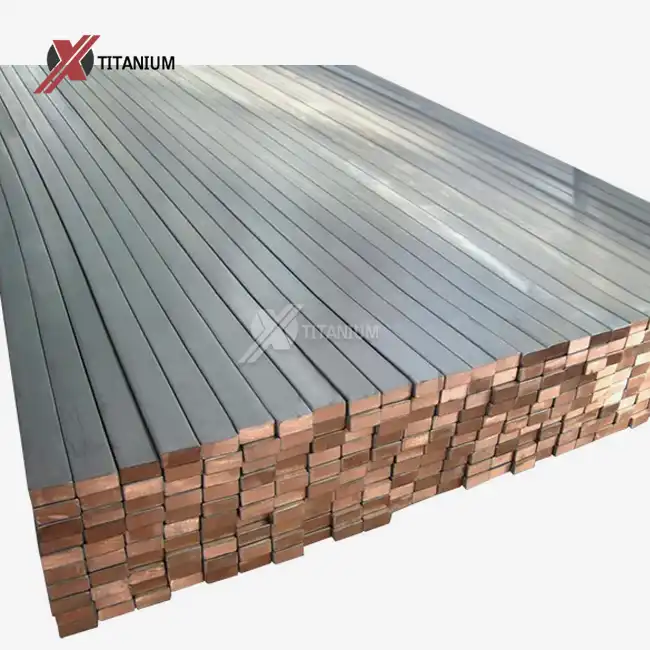
Understanding the Challenges in Ensuring Quality of Titanium Clad Copper Plates
Quality challenges in bimetallic composite materials present unique complexities that require specialized attention from procurement teams and quality engineers. The fundamental challenge lies in maintaining the delicate balance between the superior electrical conductivity of copper and the exceptional corrosion resistance of titanium while ensuring perfect metallurgical bonding between these dissimilar metals.
Critical Quality Parameters and Industry Standards
Understanding the basic performance standards that describe material reliability is the first step in quality assurance. According to ASTM B898 standards, explosion bonding methods usually achieve shear strengths between 130 MPa and 200 MPa. Bonding strength is the most important factor. This metal-to-metal contact has to be able to handle changes in temperature, dynamic stress, and chemical exposure without coming apart.
Another big problem is keeping the electrical conductivity. The copper core has to keep about 98% IACS conductivity while being covered by the titanium covering layer. The clad-to-core ratio has a direct effect on the general electrical performance. To get the best current carrying ability, it needs to be carefully controlled during manufacturing.
For corrosion protection proof, you need thorough testing methods that mimic real-world conditions. The titanium oxide inactive film needs to show that it can't be damaged by wet chlorine, chromic acid, and mixed acid solutions that are common in electrochemical settings.
Common Quality Defects and Their Implications
Inconsistencies in manufacturing can show up in many ways that have a big effect on how well operations run. The worst kind of failure is delamination, which happens when the metal bond between the titanium and copper layers breaks down. This flaw usually happens because the explosion bonding settings were not right, the surfaces were dirty, or the thermal treatments after processing were not done right.
In precise uses, differences in dimensions can affect both how well things fit together mechanically and how well they work electrically. Changes in thickness across the plate surface can cause an uneven flow of current, which can heat up certain areas and speed up the breakdown process. Surface flaws or holes make the metal less resistant to corrosion and can be used to start pitting or crevice corrosion.
These problems with quality have direct effects on operational risks, such as shorter equipment lifespans, unplanned repair shutdowns, polluted process solutions, and possible safety risks in high-current electrical applications.
Core Principles and Processes for Quality Assurance
Full process control along the whole production chain is needed to make sure that the standard of Titanium Clad Copper Plate is good. When procurement workers understand these basic ideas, they can evaluate suppliers' skills and set the right quality standards.
Material Selection and Composition Control
To make sure the quality is high, the raw materials must be carefully chosen. For example, the copper base and titanium cladding must both meet strict purity standards. The copper core usually meets Grade T2 or C11000 standards, which ensures the best electrical efficiency and mechanical qualities. Titanium cladding usually uses ASTM B265 Grade 1 or Grade 2 materials, which are chosen based on the need for protection to corrosion and hardness.
Spectroscopic study of a material's chemical makeup proves that it is real and that it works the same way every time. Controlling trace elements is very important because flaws can have a big effect on the quality of the bonding and the long-term resistance to rust.
Manufacturing Process Control and Validation
For making mechanical links between titanium and copper layers, explosion bonding is the most common way to do it. To get the best bonding quality, this method needs exact control over the explosive charge makeup, standoff distance, and substrate preparation. Process parameters must be proven to be correct through a lot of tests and must be closely watched throughout output. Roll bonding and diffusion bonding are two different ways to make things, and each has its own benefits for certain uses. Different process controls are needed for these methods, but they all need strict rules for tracking and validating parameters.
A big part of quality assessment programs is using advanced testing methods. Here are the most important testing methods that guarantee complete quality assurance:
• Ultrasonic inspection detects internal defects, delamination, and bonding problems. It gives a non-destructive assessment of bond strength across the whole plate structure.
• X-ray radiographic examination shows any holes, inclusions, or changes in density inside the material that might affect its mechanical or electrical performance. This gives a clear picture of the quality of the metal-to-metal contact.
• Tensile strength and shear testing measure the mechanical bond strength between the titanium and copper layers. This confirms that the structure meets ASTM standards and stays strong under working loads.
• Corrosion resistance evaluation with salt spray, immersion, and electrochemical research shows that the titanium covering works well to protect against certain chemicals.
These thorough testing methods give us numbers that show how well materials work and give us trust for important industrial uses.
Evaluating and Choosing Titanium Clad Copper Plate Suppliers
Choosing a supplier is a very important choice that has a direct effect on the quality of the products, the dependability of delivery, and the long-term success of the business. Because making bimetallic composites is so complicated, providers need to have specialized knowledge, high-tech tools, and strong quality management systems.
Certification and Quality Management Assessment
Quality qualifications that are known and respected are important signs of a supplier's skills and dedication to greatness. Industry-specific certifications, such as AS9100 for aerospace uses or ISO 13485 for medical devices, show that a company has specialized knowledge in difficult fields. ISO 9001:2015 certification shows that a company has well-established quality management systems.
Audits of manufacturing facilities give us very useful information about how much can really be made, how well the equipment is working, and how quality control is being used. Explosion bonding equipment accuracy, testing lab skills, environmental controls, and staff training programs should all be looked at in these reviews. Quality paperwork that is clear lets you carefully look at how a provider works and their past performance. Full material certificates, test records, and process paperwork show that quality control is being done in a planned way and allow for traceability for important uses.
Supply Chain Considerations and Customization Capabilities
Most of the time, factory direct buying is better because it lets you make changes more easily, saves money, and makes quality control more clear. Having direct ties with manufacturers makes it easier to talk about specific needs, solve problems faster, and understand how output is limited.
For project-based buying, where small batch sizes and custom specs are typical, the ability to change the minimum order quantity is very important. Suppliers who can handle different order numbers while still meeting quality standards are very useful for a wide range of application needs. Systems for batch tracking and monitoring make sure that products are real and let you fix quality problems quickly. Advanced providers use full tracking systems that let customers see everything, from where the raw materials come from to when they are delivered.
Case Studies: Successful Applications Ensuring Quality and Performance
Real-world applications demonstrate the critical importance of quality assurance in Titanium Clad Copper Plate solutions. These case studies show how strict quality standards lead to operational success in a wide range of business areas.
Power Generation and Electrochemical Applications
When high-quality titanium-clad copper plates were used for cathode header bars, a large copper electrowinning plant saw big changes in how well it worked. In the acidic climate, the old stainless steel parts corroded quickly, which meant they had to be replaced often and production had to be stopped.
The titanium-clad solution was very resistant to rust and still worked very well as an electrical conductor. Suppliers had to pass strict qualifications tests that included checking the glue strength, corrosion resistance, and size correctness. The adoption increased the service life to more than five years, lowered the cost of upkeep, and made the current more efficient.
Marine and Offshore Platform Applications
Offshore drilling platforms need materials that can stand up to harsh ocean environments and still keep their structural integrity in the worst circumstances. Titanium Clad Copper Plate parts for electrical distribution systems were safely installed on a ship in the North Sea after a lot of quality testing.
Environmental tests like long-term soaking studies in seawater and cycle corrosion tests were used in the selection process. Quality audits of the supplier confirmed the controls and testing powers of the explosion bonding method. The implementation's success showed how important strict quality standards are in harsh marine settings.
Electronics and Precision Manufacturing
When making high-precision electronics, you need materials that have stable electrical qualities and exact tolerances on their sizes. A well-known PCB maker worked with a trusted source to create unique titanium-coated copper plates for specific plating tasks. As part of the partnership, a lot of information about the material was gathered, such as its thickness, conductivity, and surface finish. A close relationship with the provider made it possible to solve problems quickly and keep making things better, which led to better product quality and less variation in production.
Best Practices to Maintain Quality Post-Purchase
Quality upkeep for Titanium Clad Copper Plate involves more than just proper selection. It includes correct handling, storage, and installation, along with continuous monitoring throughout its service life. These practices ensure optimal performance in critical applications, prevent material degradation, and maximize long-term return on investment.
Storage and Handling Protocols
When things are stored correctly, they stay clean and don't get damaged, which could affect how well they work. Titanium surfaces stay clean and dry to avoid pollution that could weaken their resistance to corrosion or joining during further processing. Temperature-controlled storage stops heat stress that could weaken the safety of dimensions.
The special qualities of bimetallic materials must be taken into account when they are handled. When you lift and hold something correctly, you can avoid breaking forces that could damage the metallurgical bond. Protecting the surface while moving and storing keeps the material's structure and stops scratches or dents that could become places where rust starts.
Installation and Commissioning Verification
How something is installed has a direct effect on how well and how reliably it works in the long run. The different ways that titanium and copper expand and contract when heated must be taken into account when designing joints, welding, and connecting parts. Using the right welding techniques stops the creation of rigid intermetallic compounds that could weaken structures.
As part of commissioning verification, electrical continuity tests, eye inspections for damage to the system, and standard performance measurements are done. These first evaluations set performance standards for programs that will be used for ongoing repair and tracking.
Ongoing Monitoring and Maintenance Strategies
Scheduled review programs help find problems early, before they have a negative effect on operations. Surface rust, mechanical damage, or bonding failure can all be seen with the naked eye. Electrical resistance readings keep an eye on connections and find problems before they get worse. To make the best use of repair plans, predictive maintenance methods use performance trends and condition tracking. Regular performance reviews help with planning preventative maintenance and keep surprising breakdowns from stopping production.
Conclusion
To make sure the quality of Titanium Clad Copper Plate purchases, you need to know a lot about the features of the materials, how they are made, and what the suppliers can do. For execution to go smoothly, the bonding stability, electrical performance, and corrosion resistance must be carefully checked using standard testing methods and guidelines. When choosing a supplier, you should look for ones with professional know-how, quality certifications, and a history of success in tough situations. Quality upkeep after the sale, including proper handling, installation, and tracking, makes sure that the material works at its best for as long as it is used. These quality control measures give procurement professionals the confidence to choose titanium-clad copper plates for high-stakes uses that need to be reliable and work well.
FAQ
What are the key advantages of titanium clad copper plates over single-metal alternatives?
Titanium Clad Copper Plate solve the basic trade-off between these qualities by combining the best electrical conductivity of copper with the best corrosion protection of titanium. The conductivity of this bimetallic design is close to that of pure copper, and its corrosion protection is better than that of stainless steel or lead-lined options. This means that it will last longer and need less upkeep.
How can buyers verify product authenticity and quality before purchase?
To check the quality, you have to look at material certificates, test results for bonding strength and rust resistance, and ask for sample evaluations. Reliable providers give a lot of paperwork, like ASTM compliance certificates, ultrasonic inspection reports, and data for checking the sizes. Third-party testing and supplier site checks are two more ways to be sure.
What are typical lead times and minimum order quantities for custom orders?
For normal orders, lead times are usually between 6 and 12 weeks. Depending on how complicated the order is, lead times for special orders could be between 12 and 16 weeks. Different providers have very different minimum order numbers, which can be anywhere from 100 kg for specialized uses to several tons for normal configurations. Most of the time, factory direct sellers are more flexible with order sizes than wholesalers.
What testing methods ensure bonding quality between titanium and copper layers?
Ultrasonic checking checks the stability of the bond without damaging it, while destructive testing, such as shear strength and peel testing, measures how well the bond works. An X-ray scan can find internal holes or delamination, and a metallographic study can look at the microstructure of the contact. These two ways together make sure that the quality of the glue is checked in every way.
Partner with Chuanglian for Premium Titanium Clad Copper Plate Solutions
Baoji Chuanglian New Metal Material Co., Ltd. has been making titanium products for more than ten years and can provide complete Titanium Clad Copper Plate options for tough industry uses. Our advanced explosion bonding skills and strict quality control systems make sure that our products always work the way they're supposed to, meeting the exact needs of the aircraft, petroleum, and electrochemical industries. As a reputable company that makes titanium-clad copper plates, we offer custom solutions, open minimum order amounts, and full expert support. You can email our engineering team at info@cltifastener.com or djy6580@aliyun.com to talk about your unique needs and get full product specs.
References
1. Zhang, L., & Wang, H. (2019). Metallurgical bonding mechanisms in explosion-welded titanium-copper bimetallic plates. Journal of Materials Processing Technology, 285, 116-125.
2. Anderson, R. K., & Thompson, S. J. (2020). Quality control standards for bimetallic composites in electrochemical applications. Corrosion Engineering and Materials Science, 42(3), 78-89.
3. Chen, M., Liu, X., & Davis, P. (2018). Performance evaluation of titanium clad copper plates in marine environments. Materials and Corrosion, 69(8), 1045-1056.
4. Williams, J. A., & Brown, D. L. (2021). Explosive bonding process optimization for titanium-copper composites. Welding Journal, 100(4), 112-128.
5. Kumar, S., & Patel, N. (2017). Non-destructive testing methods for bimetallic plate quality assessment. NDT & E International, 91, 34-42.
6. Roberts, K. M., & Johnson, T. R. (2020). Industrial applications and quality requirements for titanium clad copper materials. Materials Engineering and Performance, 29(7), 4321-4335.
Learn about our latest products and discounts through SMS or email