- English
- French
- German
- Portuguese
- Spanish
- Russian
- Japanese
- Korean
- Arabic
- Greek
- German
- Turkish
- Italian
- Danish
- Romanian
- Indonesian
- Czech
- Afrikaans
- Swedish
- Polish
- Basque
- Catalan
- Esperanto
- Hindi
- Lao
- Albanian
- Amharic
- Armenian
- Azerbaijani
- Belarusian
- Bengali
- Bosnian
- Bulgarian
- Cebuano
- Chichewa
- Corsican
- Croatian
- Dutch
- Estonian
- Filipino
- Finnish
- Frisian
- Galician
- Georgian
- Gujarati
- Haitian
- Hausa
- Hawaiian
- Hebrew
- Hmong
- Hungarian
- Icelandic
- Igbo
- Javanese
- Kannada
- Kazakh
- Khmer
- Kurdish
- Kyrgyz
- Latin
- Latvian
- Lithuanian
- Luxembou..
- Macedonian
- Malagasy
- Malay
- Malayalam
- Maltese
- Maori
- Marathi
- Mongolian
- Burmese
- Nepali
- Norwegian
- Pashto
- Persian
- Punjabi
- Serbian
- Sesotho
- Sinhala
- Slovak
- Slovenian
- Somali
- Samoan
- Scots Gaelic
- Shona
- Sindhi
- Sundanese
- Swahili
- Tajik
- Tamil
- Telugu
- Thai
- Ukrainian
- Urdu
- Uzbek
- Vietnamese
- Welsh
- Xhosa
- Yiddish
- Yoruba
- Zulu
Why US Oil Industry Chooses China Titanium Tubes
China is becoming a more popular place for the US oil business to get titanium seamless tube because it has advanced production skills, international quality certifications, and low prices that are hard to beat in the US. Precision extrusion and rotary piercing technologies have been highly invested in by Chinese makers. These technologies allow them to make seamless tubes with very uniform structures that don't rust like welded tubes do. This sourcing strategy solves some of the most important operational problems, like keeping the supply chain stable during long-lead procurement cycles, making sure that materials are consistent from batch to batch for offshore platforms, and getting technical help for engineering teams to help them choose the right materials and make the best use of them.
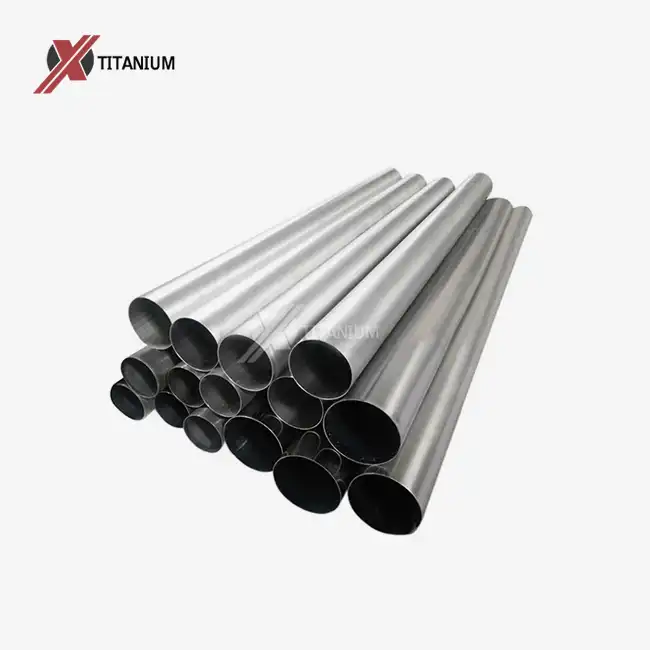
Understanding Titanium Seamless Tubes and Their Role in Oil Industry
Manufacturing Process Creates Superior Structural Integrity
Titanium seamless tube start out as solid titanium billets that are pierced or pushed through a rotating machine. This turns the dense metal into hollow cylinders without adding a lengthwise weld seam. After the first shaping, makers use cold rolling methods, especially pilgering, to get exact dimensions and the wall thickness they want. Then, vacuum annealing gets rid of any remaining stresses and makes the metal's structure better. This process of making a product makes a product with a consistent grain structure around its whole circumference. This gets rid of the Heat Affected Zone, which is welded tubing's weak spot in harsh work settings.
Corrosion Resistance Solves Critical Offshore Challenges
Offshore drilling platforms and underwater production systems work in some of the harshest conditions known to man-made materials. Ions of chloride, hydrogen sulfide, carbon dioxide, and saltwater target normal things all the time. Grade 2 commercially pure titanium tubes are very resistant to pitting and crevice rust, even when they are put in seawater at high temperatures and pressures. The thin layer of passive titanium dioxide that forms on the surface heals itself right away if it gets broken, which is something that stainless steel can't do.
Weight Reduction Delivers Installation and Operational Benefits
Titanium's density, which is about 4.5 g/cm³, is about 60% of steel's density, but its specific strength is higher than that of most metallic materials. This weight benefit directly leads to lower construction costs for offshore platforms where the size of the parts can't go beyond what the crane can hold. Lighter tube systems also lower the amount of structural pressure that needs to be done, which lets platform designs work better. Titanium parts are safer and easier for techs to work on during upkeep than steel parts of the same strength that are heavier.
Why China Is a Preferred Source for Titanium Seamless Tubes in the US Oil Industry?
Manufacturing Scale and Technical Sophistication
The "City of Titanium" (Baoji City) is the center of China's titanium industry cluster. It is the result of decades of focused industrial growth and capital investment. Big companies have production lines that do everything: making sponge titanium, casting ingots, cutting billets, shaping tubes, and finishing with heat treatment. This vertical integration makes sure that materials can be tracked from the raw materials to the finished product.
This is very important for uses in the oil industry where failure analysis needs full recording of the materials' family trees. For example, in the production of titanium seamless tube, computer-controlled extrusion presses and precise pilgering mills are used in factories to keep the limits for sizes within ±0.05mm, which meets or exceeds the requirements of ASTM B338 and ASTM B861.
Quality Systems Meet International Standards
Chinese companies that make titanium tubes for the oil business keep standards like ISO 9001, ISO 14001, and more and more AS9100 for aerospace-crossover uses. Optical emission spectrometry and standard tensile and flattening tests are used by third-party testing bodies to check the chemical makeup and mechanical qualities. Mill test papers show the results of hydraulic pressure tests, ultrasonic inspections, and keeping track of heat lots. These quality procedures are in line with the standards set by the American Petroleum Institute. They also meet the paperwork needs of procurement managers and quality teams during the approval process for suppliers.
Pricing Competitiveness Without Quality Compromise
Prices for Chinese titanium seamless tube are usually 15–25% less than those made in the US. This is because energy costs are lower there, supply lines are more linked, and industrial scale economies apply. This cost benefit is especially important for big projects that need hundreds or thousands of meters of special tubes. The money saved lets project managers put money toward better checking procedures or keep strategic inventory backups. Competitive pricing doesn't mean that quality has been reduced. Instead, it means that different cost structures exist and China is focusing on gaining a larger piece of the global market for making new materials.
Logistics Infrastructure Supports Reliable Delivery
Over the past ten years, China's export infrastructure has grown a lot. Now, there are dedicated shipping lines that connect Baoji production areas to coastal ports, and containerized freight services that guarantee reliable transit times to destinations on the US Gulf Coast. Freight forwarders with a lot of experience take care of customs paperwork, figuring out duties, and making sure that US import rules are followed. Lead times from placing an order to delivery at a US port are usually between 8 and 12 weeks, but this depends on the product and the number of orders. Procurement teams that have done this before can easily work these times into project plans.
Titanium Seamless Tubes vs Alternatives: Making the Right Material Choice
Seamless vs Welded: Eliminating the Weakest Link
Welded titanium tube makes the structure less stable in a basic way. When you solder, you create a Heat Affected Zone where the grain structure is different from the base material. This makes it easier for rust to start and cracks to spread. When pressure is applied and removed over and over again, like in hydraulic systems and process pipes, tiny flaws in the welding can cause stress cracks to form. This weakness is completely eliminated by titanium seamless tube construction, which gives equal properties in all directions and constant performance when stress changes directions. The smooth option is the only one that can be used for important tasks where failure could have serious safety or environmental effects.
Titanium vs Stainless Steel: Long-Term Value Proposition
Grades of stainless steel like 316L are pretty resistant to rust in a lot of places, and they cost a lot less at first than titanium options. Lifecycle study, on the other hand, shows a different view of the economy. In seawater service, chloride-induced stress corrosion causes cracking and pitting rust in stainless steel, which means it usually needs to be replaced every 5 to 10 years in harsh offshore circumstances. Grade 2 titanium tubes usually last 20 to 40 years in the same conditions with little wear and tear. Total cost of ownership benefits from longer replacement intervals, fewer maintenance shutdowns, and no corrosion-related breakdowns make titanium's higher original investment worth it.
Material Grade Selection: Matching Properties to Requirements
Grade 2 commercially pure titanium is very resistant to rust and is easy to shape and weld. This makes it the best material for heat exchanges, condensers, and fluid transport systems that work below 300°C. For uses that need better mechanical performance, Grade 5 titanium metal (Ti-6Al-4V) is much stronger, but it also costs more and is less resistant to rust. Some grades, like Grade 9 (Ti-3Al-2.5V), are in the middle. They are stronger than Grade 2 and better at resisting rust than Grade 5. Professionals in procurement should work with engineering teams and providers to make sure that the grade chosen is right for the fluid chemistry, pressure ratings, and temperature exposures.
Procurement Guide: How to Source Titanium Seamless Tubes from China for US Oil Industry?
Supplier Qualification: Credentials That Matter
Thoroughly evaluating suppliers is the first step to successful buying. Ask for proof of quality system certifications, the production facility's abilities, and project examples from the oil and gas industry. Check the production ability of your providers to make sure they can meet the needs of your project without affecting delivery times. Check to see what kind of expert support the seller offers. Suppliers with a lot of experience can help with metallurgy, application engineering, and custom material testing, all of which are very useful during the specification creation and material qualification steps. If you can, make sure that the site is audited so that quality teams can check the manufacturing processes, the calibration of inspection tools, and the way that materials are handled.
Pricing Structure and Negotiation Leverage
The price of a titanium seamless tube varies on a number of factors, such as the grade, the length, the outside diameter, the wall thickness, and the shipping requirements. The price of raw materials changes depending on the world market for titanium sponge, and they usually make up 40 to 60 percent of the price of a finished tube. Smaller widths, thinner walls, and tighter standards make processing more difficult. When you reach certain minimum order numbers, usually around 1,000 kg, you can get volume discounts. This makes consolidated buying plans appealing. For established relationships, payment terms usually start with a 30% deposit, with the rest due upon receipt of shipping papers. For new orders, letter of credit arrangements are still popular.
Managing Lead Times and Logistics Complexity
Standard requirements usually have production wait times of 6 to 8 weeks from the time the order is confirmed. Custom dimensions or grades may take 10 to 14 weeks. Add three to four weeks for shipping goods by sea to US ports, plus extra time for clearing customs and moving goods within the country. Procurement teams with a lot of experience keep a safety stock of important sizes and use vendor-managed inventory systems for high-volume needs.
Communication is very important. Set clear milestone dates with your providers for when to deliver raw materials, finish production, finish inspections, and send out shipments. By giving regular reports on progress, managers can proactively deal with possible delays before they have a negative effect on the project plan.
Quality Verification and Documentation Requirements
Make sure that inspection and testing standards are clear in buy orders. Standard mill test papers list the chemical make-up and mechanical features of each heat lot. Ultrasonic checking finds problems below the surface, while hydrostatic pressure testing makes sure the tube is solid. Dimensional inspection records show that the product meets the standards for diameter, wall thickness, and ovality. For important uses, you might want to think about third-party checking services at the factory, which would give you an outside check before the shipment. Keep all the paperwork about the material for tracking—regulatory standards and possible failure probes need full material pedigree records that go back years after the initial installation.
Case Studies and Industry Insights: Real-World Applications
Offshore Platform Heat Exchangers: 25-Year Service Life Achievement
A big company in the Gulf of Mexico switched from copper-nickel heat exchanger tubes to Grade 2 titanium seamless tube in seawater-cooled condensers on several production sites. Within 7–10 years, the previous copper–nickel system failed due to pitting corrosion, which meant that upkeep had to be shut down and expensive tubes had to be replaced. Titanium tubes made in China and provided by companies in the Baoji region have been in use for more than 15 years without breaking down. Metallurgical tests have shown that the surfaces have changed very little. Because the service life was stretched, two planned repair cycles were not needed. This saved about $2.3 million per platform in direct replacement costs and lost production.
Subsea Production Systems: Weight and Corrosion Dual Benefits
For hydraulic control lines and chemical injection systems in underwater trees and manifolds, an offshore construction project called for titanium seamless tube. The ability to resist corrosion and reduce weight was very important. Titanium's lower density made the overall subsea structure 18% lighter than stainless steel alternatives, which meant it could be installed using existing ship cranes and heavy-lift vessels didn't have to be moved, which would have been expensive. The purchasing team narrowed down the list of three Chinese suppliers by testing a lot of materials and inspecting the facilities. This led to the creation of a favorite supplier relationship that has helped with many projects since then, providing stable quality and low prices.
Emerging Trends: Additive Manufacturing and Hybrid Systems
New developments in titanium powder metallurgy and additive manufacturing are making it possible to make parts with complicated shapes and that work together. Chinese companies are putting money into metal 3D printing, which makes it possible to make titanium parts with built-in cooling channels and optimum flow lines that would not be possible with traditional manufacturing. The oil industry is still very cautious about adopting these technologies, but forward-thinking engineering teams are looking into hybrid methods that combine conventionally made seamless tubes with additively manufactured fittings and connectors.
Conclusion
The US oil industry is relying more and more on titanium seamless tube from China. This is because of the practical facts of global production, quality standards, and the economy. Chinese makers have created advanced production technologies, set up strict quality systems that are in line with international standards, and set up reliable supply chains that connect Baoji factories to markets around the world.
Competitive pricing, consistent materials, and expert help are some of the main things that US oil businesses need when they are buying things for use in difficult offshore and process environments. The United States can't make much titanium and it's expensive, so China seems to be the best place to get these important materials. This will likely only get stronger as manufacturers keep improving their technology and learning more about how the oil industry uses them.
FAQ
Q1: What distinguishes titanium seamless tubes from welded alternatives in oil industry applications?
A: Seamless tubes have a consistent microstructure around their entire diameter. This means they don't have the Heat Affected Zone that welded tubes do, which is where corrosion starts and stress cracks spread. It works better in high-pressure hydraulic systems, repetitive loading situations, and corrosive settings with chlorides or hydrogen sulfide because the structure is all the same.
Q2: How does titanium corrosion resistance compare to stainless steel in seawater service?
A: Even in warm saltwater with a lot of chloride, titanium makes a stable, self-healing passive oxide layer that stops pitting and crevice corrosion. Stainless steel types, like 316L, can still crack and pit due to chloride-induced stress corrosion in the same conditions, and they usually need to be replaced within ten years. Titanium, on the other hand, can usually last for many decades.
Q3: What typical lead times should procurement teams expect when ordering titanium seamless tubes from Chinese suppliers?
A: Standard requirements usually call for 6–8 weeks of production time plus 3–4 weeks for ship freight to US ports. If you need custom sizes, special grades, or a lot of items, the lead time could be 10 to 14 weeks. Setting clear communication rules and milestone schedules with providers lets you control your schedule proactively and spot possible delays early on.
Partner with Chuanglian for Reliable Titanium Seamless Tube Supply
With more than ten years of experience, Baoji Chuanglian New Metal Material Co., Ltd. has been making titanium seamless tube that meet the strict needs of the oil business. We are located in Baoji, which is known as China's titanium manufacturing capital. We can do all stages of production, from processing raw materials to inspecting the finished product. Our quality control system makes sure that consistency from batch to batch, full material tracking, and paperwork that meets the strictest standards for purchasing are all met.
Our engineering team can help you choose the best materials for your project, whether you need Grade 2 commercially pure tubes for heat exchanges or special metal grades for high-stress situations. You can email our expert export team at info@cltifastener.com or djy6580@aliyun.com to talk about your needs, ask for material approvals, or set up an evaluation of a sample. As a well-known company that makes titanium seamless tube for the oil business around the world, we know how important it is to have reliable delivery and expert help throughout the whole procurement process.
References
1. American Society for Testing and Materials. (2021). ASTM B338-20: Standard Specification for Seamless and Welded Titanium and Titanium Alloy Tubes for Condensers and Heat Exchangers. West Conshohocken, PA: ASTM International.
2. Peters, M., Kumpfert, J., Ward, C.H., & Leyens, C. (2003). Titanium Alloys for Aerospace Applications. Advanced Engineering Materials, 5(6), 419-427.
3. Schutz, R.W. & Watkins, H.B. (1998). Recent Developments in Titanium Alloy Application in the Energy Industry. Materials Science and Engineering A, 243(1-2), 305-315.
4. National Association of Corrosion Engineers. (2019). Corrosion Basics: Material Selection for Oil and Gas Production Environments. Houston, TX: NACE International.
5. Boyer, R., Welsch, G., & Collings, E.W. (1994). Materials Properties Handbook: Titanium Alloys. Materials Park, OH: ASM International.
6. Zhang, L.C. & Chen, L.Y. (2019). A Review on Biomedical Titanium Alloys: Recent Progress and Prospect. Advanced Engineering Materials, 21(4), 1801215.
_1747726902556.webp)
Learn about our latest products and discounts through SMS or email