- English
- French
- German
- Portuguese
- Spanish
- Russian
- Japanese
- Korean
- Arabic
- Greek
- German
- Turkish
- Italian
- Danish
- Romanian
- Indonesian
- Czech
- Afrikaans
- Swedish
- Polish
- Basque
- Catalan
- Esperanto
- Hindi
- Lao
- Albanian
- Amharic
- Armenian
- Azerbaijani
- Belarusian
- Bengali
- Bosnian
- Bulgarian
- Cebuano
- Chichewa
- Corsican
- Croatian
- Dutch
- Estonian
- Filipino
- Finnish
- Frisian
- Galician
- Georgian
- Gujarati
- Haitian
- Hausa
- Hawaiian
- Hebrew
- Hmong
- Hungarian
- Icelandic
- Igbo
- Javanese
- Kannada
- Kazakh
- Khmer
- Kurdish
- Kyrgyz
- Latin
- Latvian
- Lithuanian
- Luxembou..
- Macedonian
- Malagasy
- Malay
- Malayalam
- Maltese
- Maori
- Marathi
- Mongolian
- Burmese
- Nepali
- Norwegian
- Pashto
- Persian
- Punjabi
- Serbian
- Sesotho
- Sinhala
- Slovak
- Slovenian
- Somali
- Samoan
- Scots Gaelic
- Shona
- Sindhi
- Sundanese
- Swahili
- Tajik
- Tamil
- Telugu
- Thai
- Ukrainian
- Urdu
- Uzbek
- Vietnamese
- Welsh
- Xhosa
- Yiddish
- Yoruba
- Zulu
Top Reasons to Use Titanium Lug Nuts
When engineers and buying teams look at fastening options for high-performance uses, the choice of material is very important. The aerospace-grade Ti-6Al-4V titanium alloy used to make Gr5 Ti Wheel Lug Nuts is a clever option that reduces weight, increases longevity, and prevents corrosion all at the same time. These specialized fasteners solve basic problems in many fields, from racing to naval engineering. Instead of the usual steel lug nuts that rust and add extra weight that isn't needed, titanium options are about 45% lighter while still having higher tensile strength (950–1050 MPa). Their unique properties make them essential for tasks where weight matters and where materials need to be more durable than usual metals because they are exposed to harsh conditions.
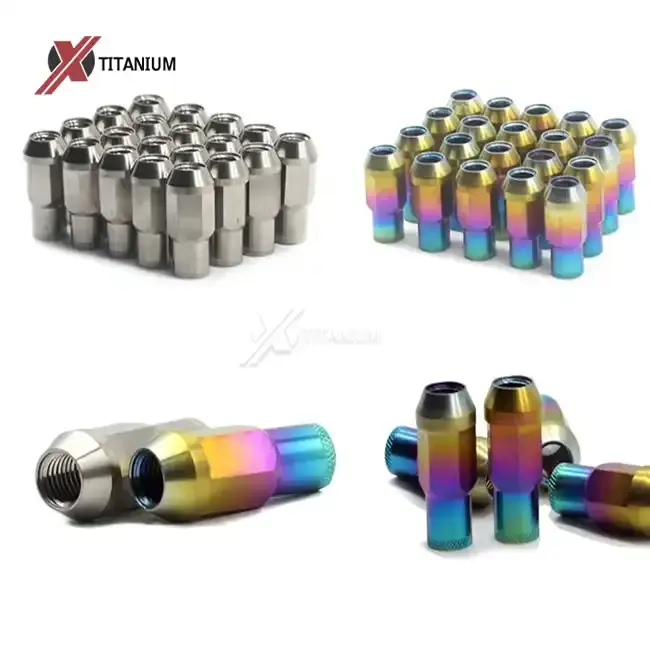
Understanding Gr5 Titanium Lug Nuts: Specifications and Benefits
The range of performance for high-quality titanium wheel fasteners is set by the Ti-6Al-4V metal makeup. This metal mixture is made up of about 90% titanium, 6% aluminum, and 4% vanadium. It has an alpha-beta phase structure that gives it great dynamic properties. Adding aluminum makes it stronger and less dense, and adding vanadium stabilizes the beta phase, which makes it tougher and easier to work with during production.
Material Properties That Drive Industrial Performance
The physical properties of Ti-6Al-4V make it different from other materials in ways that can be measured. Since aluminum has a density of 4.43 g/cm³ and steel has a density of 7.85 g/cm³, the weight benefit is clear right away. This difference in density directly leads to less rotating mass on wheel units, which engineers know is important for how well the suspension responds and the brakes work. The tensile strength is usually between 950 and 1050 MPa, which is higher than Grade 8.8 steel and close to Grade 10.9 performance levels. The yield strength is around 880 MPa. The hardness ranges from 30 to 36 HRC, which means it is very resistant to bending during torquing operations and doesn't need a lot of installation force.
Corrosion Resistance in Demanding Environments
Surfaces that are open to air form a solid layer of titanium dioxide on their own, which makes them very resistant to corrosion. When this inactive film is scratched or broken, it grows back right away. This is different from protective coatings on steel, which break down over time. Our tests in coastal settings show that titanium fasteners keep their shape after being exposed to saltwater spray for a long time, which quickly breaks down even high-grade stainless steel. In the same way, chemical processing plants benefit from this inertness when placing equipment in environments that are acidic or basic.
Thermal Stability Under Operating Stress
High-performance stopping systems often work at temperatures above and beyond the point at which normal materials start to lose their properties. The structure of the Ti-6Al-4V metal stays strong up to 400°C, so fasteners will work even after many heavy stopping cycles. This temperature stability stops the loosening that happens when steel bolts regularly expand and contract, which weakens the clamp load and wheel security in the long run.
Comparing Gr5 Titanium Lug Nuts With Alternative Materials
To choose the right material, you need to know how different choices compare on a number of different factors. When technical teams are looking at fastener solutions, they need to make comparisons that are more than just measuring strength. These comparisons should also include lifetime costs, upkeep needs, and operating reliability. For instance, when considering Gr5 Ti Wheel Lug Nuts, it's important to evaluate not only their strength but also their corrosion resistance, long-term durability, and ease of maintenance to ensure the best performance over time.
Titanium Versus Steel: Performance and Practical Differences
Steel lug nuts are the standard choice because they are strong enough and don't cost much to buy. However, their heavy weight adds a lot to unsprung mass, which lowers the efficiency of the suspension and raises the spinning inertia. Every kilogram that is taken off of wheel parts makes the vehicle go faster and makes the brake system work less hard. Because steel is easily oxidized, it is hard to keep up with upkeep, especially in places where road salt is used often. Getting rid of seized steel bolts often requires destructive methods, which can damage wheel systems and cause unplanned downtime. Titanium gets rid of these worries and has the same or better tensile strength in a package that weighs less than half as much.
Grade 5 Versus Grade 9 Titanium: Cost-Performance Balance
Grade 9 titanium (Ti-3Al-2.5V), which is in the same family as Grade 5, is slightly more flexible than Grade 5 but has a lower final strength. Grade 5 is the best choice for most car and industry uses because it has the best mix of mechanical properties and cost-effectiveness. Grade 9 usually comes with a higher price tag, but this is only necessary in very specific situations where the material needs to be very easy to shape during production or have a little more impact resistance. When procurement teams are trying to find titanium benefits while working with limited budgets, they find that Grade 5 specifications meet the needs of a wide range of uses without the higher cost of Grade 9.
Aluminum Alloy Limitations in Critical Applications
People are interested in aluminum lug nuts because they are lightweight and don't cost too much. But when there is a lot of force, the difference in material properties between aluminum and titanium becomes very important. Aluminum isn't as hard as steel, so it can gall up against steel studs. It's also not as strong against wear, which makes it less reliable in places with a lot of shaking. Thread contact longevity is a problem because aluminum threads bend more easily than titanium threads, which causes the clamp load to slowly decrease over time. Racing teams and business groups that have to work in tough conditions often report that aluminum fasteners fail in ways that titanium options don't.
Installation and Torque Specifications for Gr5 Ti Lug Nuts
The right way to put something has a direct effect on both safety and service life. Engineers need to be aware that titanium has different qualities from steel screws, so they need to change the way they do things. For example, when working with Gr5 Ti Wheel Lug Nuts, they must consider factors like torque requirements and material compatibility to ensure proper installation and maximize both safety and longevity.
Recommended Installation Procedures
When fitting titanium fasteners, it is still necessary to use calibrated torque tools. Impact tools are useful, but they pose a number of risks when used on titanium parts. Impact guns apply torque quickly, which can go over yield points instantly, stretching threads past their elastic limits. Also, titanium has a lower amount of elasticity than steel, which means it bends more when it's loaded. This makes precise torque control even more important. Hand tools with beam-type or click-type torque wrenches let you apply the torque in a controlled way for the best results.
Thread Lubrication and Anti-Galling Measures
Titanium tends to gall when put against steel, so precautions need to be taken. This cold-welding effect happens when tiny surface flaws stick together under pressure, making resistance and the chance of thread damage. This problem can be solved by using anti-seize chemicals that are specially made for titanium-steel surfaces. Copper or nickel particles in products make a protective shell that keeps titanium and steel from touching directly. Some makers use PVD coatings, which do the same kind of safe work while keeping the fastener's good looks.
Torque Values and Re-Torque Requirements
According to the manufacturer's instructions, the pressure values for wheel fasteners should be between 80 and 110 ft-lbs. These values are also usually good for titanium lug nuts. But the different friction coefficient needs to be checked after the first fitting. It is suggested that you re-torque the bolts after 50 to 100 miles of use to let them settle down and go through some temperature cycling before you do the final check. This process makes sure that the clamp load is the same on all fasteners, which keeps the wheel secure during repair times.
Procurement Considerations for Gr5 Ti Wheel Lug Nuts in B2B Markets
When an industrial company buys something, they need to think about more than just the unit price. They need to think about the total ownership costs, the supplier's skills, and the stability of the supply chain. For instance, when purchasing Gr5 Ti Wheel Lug Nuts, it’s essential to consider not only the upfront cost but also the long-term durability, maintenance requirements, and the reliability of the supplier to ensure consistent quality and availability.
Supplier Qualification and Certification Requirements
When you buy titanium screws, you have to make sure that the materials are real and that the products are made well. Reliable providers give Material Test Reports that show the chemical makeup using spectroscopic analysis, the mechanical qualities using standard tests, and the ability to track back to the creation of the billet. Systematic quality control is shown by certifications like AS9100 for aircraft uses or ISO9001 for general manufacturing. Buyers should ask for inspection reports from a third party and paperwork that is specific to the batch they are buying, especially in cases where a failed bolt could put people in danger or cause major problems with operations.
Volume Pricing and Customization Options
Bulk buying agreements can save you a lot of money and make sure you always have what you need for production. Different providers have different minimum order numbers, but well-known makers usually can handle both small amounts for prototype testing and large amounts for production manufacturing. For OEM uses that need particular sizes, head styles, or finish processes, the ability to customize is very important. Thread sizes like M12x1.5 are popular in the car industry, but unique pitches and lengths can be made to fit particular mounting needs. Knowing the difference between standard and custom wait times helps buying teams make sure that orders are placed at the right time to fit with production plans.
Total Cost of Ownership Analysis
The higher price of Gr5 Ti Wheel Lug Nuts at first compared to steel ones needs to be understood in the context of larger cost structures. Less frequent repair means less work for the workers and less time without the car. Longer service lives mean that equipment will need to be replaced less often over its working lifetime. Getting rid of extra weight helps save fuel, and these small changes add up to big savings across the whole fleet. When all of these things are taken into account in full financial models, titanium screws often show a good return on investment, even though they cost more to buy. When procurement managers make capital requests, it's helpful for them to measure these lifecycle benefits instead of just comparing buy prices.
Top Reasons to Choose Titanium Lug Nuts for Your Fleet or Product Line
Using modern materials in car systems gives companies a competitive edge in performance, operational efficiency, and setting their brand apart. For example, incorporating Gr5 Ti Wheel Lug Nuts into vehicle designs can enhance both strength and weight savings, providing a performance advantage while also boosting the brand's image as innovative and high-tech.
Unsprung Weight Reduction and Dynamic Performance
The mass that is directly connected to wheel assemblies has a huge effect on how the car moves. By lowering the weight that isn't being sprung, the suspension parts can react more quickly to changes in the road surface, keeping the tires in touch and making the vehicle more stable. This response makes both the ride and the driving more precise. When rotational inertia is low, it takes less energy to overcome the rotary momentum of wheel systems, which speeds things up. Similar things happen with braking systems: expectations are lowered, which could make brake parts last longer. Racing teams know these ideas inside and out and require titanium screws as standard equipment. Similar benefits are seen in commercial teams that use performance-sensitive cars, though these benefits are usually seen in the form of better fuel economy rather than faster lap times.
Corrosion Resistance and Maintenance Reduction
Fasteners break down over time when they are exposed to chemicals, water, or road salt. Steel lug nuts rust, which finally causes them to seize, which makes taking off the wheel hard or impossible without special tools. This situation makes it hard to change tires on the side of the road or do regular brake service, and it often causes damage to the studs that needs more fixes. Titanium's natural resistance to rust takes away all of these worries. When corrosion-related problems are avoided, fleets that operate in coastal areas or places with hard winters can save a lot on upkeep costs. In the same way, marine uses gain because saltwater environments are some of the harshest places for equipment to rust.
Safety Through Reliable Fastening Performance
Whether fasteners keep their clamp load between service intervals depends on how well the threads hold up under cycle loading. Titanium doesn't easily wear down, so stress builds up at the thread roots and doesn't spread to other parts, causing them to break. Because the material doesn't easily come away from vibration, wheels stay in place even in rough working conditions. This dependability is especially useful in business transportation, where a detached wheel is a huge safety risk. Because the fasteners have better mechanical properties, engineering teams can be sure that the specs include enough safety margins for both regular and extreme working conditions.
Premium Product Differentiation for OEMs
Manufacturers who want to stay ahead of the competition are becoming more and more aware that the quality of the parts they buy affects their decisions. For picky buyers, specifying titanium screws shows dedication to engineering and attention to quality. In places where looks are important, the visual difference of titanium parts that can be seen through wheel holes helps brands stand out. Performance car companies use titanium specifications in their marketing materials to stress how light it is and how long it lasts. This premium placement makes price increases reasonable and builds customer trust by showing that quality investment is worth it.
Conclusion
Using Gr5 Ti Wheel Lug Nuts has many benefits besides just lowering weight. They also make things last longer, are safer, and work more efficiently. For challenging uses, these fasteners are especially useful because the Ti-6Al-4V alloy has a unique set of qualities that can't be found in other materials. Even though the starting costs are higher than other options, total ownership analysis always shows that the economics are better because of lower upkeep, longer service life, and better performance. When industrial buyers are looking at fastening options, they can get a lot out of working with manufacturers that offer tested quality systems, full expert help, and dependable supply lines.
FAQ
Q1: What torque specifications should be applied to titanium lug nuts?
A: Titanium lug nuts should still be tightened to the factory recommended levels by the car maker, which are usually between 80 and 110 ft-lbs. In spite of this, different friction factors mean that the nuts must be re-torqued every 50 to 100 miles of drive. Using measured torque wrenches instead of impact tools makes sure that the job is done right without going over the yield limits. Using the right anti-seize chemicals to grease the threads may slightly change the torque that is needed, so making sure you follow the manufacturer's instructions for your fastener set is the best way to get the best holding force.
Q2: Can titanium lug nuts be used with standard steel wheel studs?
A: As long as the right steps are taken to prevent galling, titanium lug nuts will work with steel screws. You can stop cold-welding between different metals by using special anti-seize chemicals or choosing bolts with protective PVD coatings. If these steps aren't taken, thread damage could happen during installation or removal. Good makers usually include assembly instructions that talk about how to make sure the materials work together.
Q3: How does titanium fastener performance compare in extreme temperature conditions?
A: It is possible for the Ti-6Al-4V metal to keep its shape at temperatures ranging from very cold to about 400°C. This level of thermal stability is higher than what is needed for most car uses, such as high-performance braking systems where hub temperatures rise very quickly. Titanium works the same way in all temperature ranges that are used in harsh settings, unlike some materials that break easily at low temperatures or lose their power when heated.
Q4: What verification methods confirm authentic Grade 5 titanium material?
A: Titanium types can't be safely told apart by looking at them. For final confirmation, Material Test Reports from approved labs that show the chemical make-up by using spectrographic analysis are needed. Portable X-ray fluorescence testers can check the metal level in the field. Hardness testing, which usually gives results between 30 and 36 HRC for Grade 5, is another way to be sure. Reliable sellers provide full tracking paperwork that connects finished fasteners to approved batches of raw materials. This gives buying teams faith in the authenticity of the materials.
Partner With Chuanglian for Certified Titanium Fastening Solutions
Baoji Chuanglian New Metal Material Co., Ltd. makes precision-engineered Gr5 Ti Wheel Lug Nuts and has over ten years of experience working with titanium. They have a lot of quality certifications to back up their work. Our CNC cutting makes sure that the dimensions are correct to international standards, and our material tracking systems give your quality control teams the proof they need.
As a manufacturer in China's famous "City of Titanium," we can offer you low prices without sacrificing the quality of the materials that are important for your needs. Technical consulting services help tech teams figure out the best ways to set up things for their specific needs. You can email our team at info@cltifastener.com or djy6580@aliyun.com to talk about your unique fastener needs and get full technical specs. We serve the aircraft, marine, and high-performance automotive businesses around the world.
References
1. ASM International. (2015). Titanium: A Technical Guide. Materials Park, OH: ASM International Handbook Committee.
2. Boyer, R., Welsch, G., & Collings, E.W. (Eds.). (2018). Materials Properties Handbook: Titanium Alloys. Materials Park, OH: ASM International.
3. Donachie, M.J. (2000). Titanium: A Technical Guide, 2nd Edition. Materials Park, OH: ASM International.
4. Lutjering, G., & Williams, J.C. (2007). Titanium (Engineering Materials and Processes). Berlin: Springer-Verlag.
5. Peters, M., Kumpfert, J., Ward, C.H., & Leyens, C. (2003). "Titanium Alloys for Aerospace Applications." Advanced Engineering Materials, 5(6), 419-427.
6. Schutz, R.W., & Watkins, H.B. (1998). "Recent developments in titanium alloy application in the energy industry." Materials Science and Engineering: A, 243(1-2), 305-315.
Learn about our latest products and discounts through SMS or email