- English
- French
- German
- Portuguese
- Spanish
- Russian
- Japanese
- Korean
- Arabic
- Greek
- German
- Turkish
- Italian
- Danish
- Romanian
- Indonesian
- Czech
- Afrikaans
- Swedish
- Polish
- Basque
- Catalan
- Esperanto
- Hindi
- Lao
- Albanian
- Amharic
- Armenian
- Azerbaijani
- Belarusian
- Bengali
- Bosnian
- Bulgarian
- Cebuano
- Chichewa
- Corsican
- Croatian
- Dutch
- Estonian
- Filipino
- Finnish
- Frisian
- Galician
- Georgian
- Gujarati
- Haitian
- Hausa
- Hawaiian
- Hebrew
- Hmong
- Hungarian
- Icelandic
- Igbo
- Javanese
- Kannada
- Kazakh
- Khmer
- Kurdish
- Kyrgyz
- Latin
- Latvian
- Lithuanian
- Luxembou..
- Macedonian
- Malagasy
- Malay
- Malayalam
- Maltese
- Maori
- Marathi
- Mongolian
- Burmese
- Nepali
- Norwegian
- Pashto
- Persian
- Punjabi
- Serbian
- Sesotho
- Sinhala
- Slovak
- Slovenian
- Somali
- Samoan
- Scots Gaelic
- Shona
- Sindhi
- Sundanese
- Swahili
- Tajik
- Tamil
- Telugu
- Thai
- Ukrainian
- Urdu
- Uzbek
- Vietnamese
- Welsh
- Xhosa
- Yiddish
- Yoruba
- Zulu
How to Install Titanium Rear Derailleur Screws on a Mountain Bike
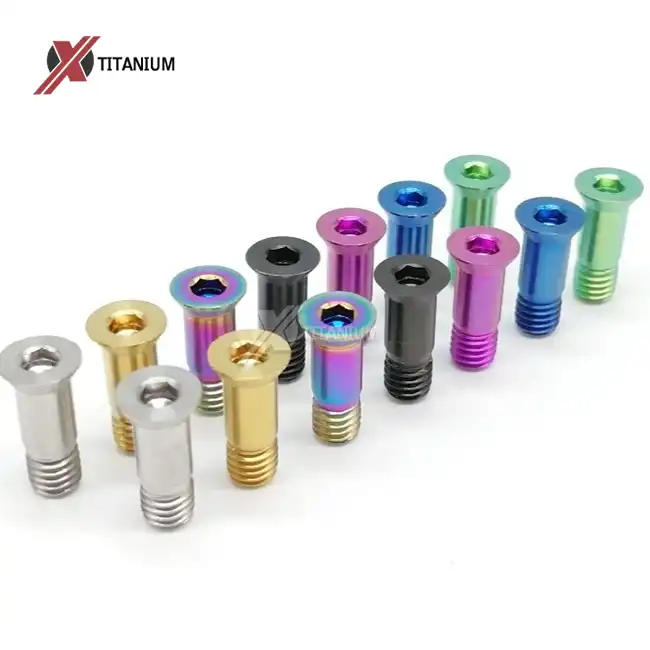
To put Titanium Rear Derailleur Screws on a mountain bike, you need to know a lot about engineering and follow the right steps. Standard steel screws aren't as strong or likely to rust as these aerospace-grade screws. They're also lighter. As part of the assembly process, any old gear must be carefully taken off, the right amount of torque must be applied, and it must work with big groupset makers. This comprehensive guide tells professional bike mechanics and manufacturing companies everything they need to know about titanium fixing solutions for high-performance engine uses. It includes all the technical details, best practices, and buying options they need to know.
Understanding Titanium Rear Derailleur Screws and Their Benefits
Making bicycle parts like these titanium rear gear screws is a big step forward. They were made to meet the specific needs of mountain bikes. Grade 5 titanium metal (Ti-6Al-4V), which is used to make these screws, was carefully chosen because it has better mechanical properties than steel and aluminum.
Superior Material Properties and Performance Characteristics
Titanium's best quality is that it is very strong for how light it is. Ti is about 45% lighter than steel, but it still has a tensile strength of at least 950 MPa. This optimization of weight is especially helpful for competitive riding, since dropping the spinning mass has a direct effect on how well the rider does.
It doesn't rust, which is another great thing about it. This is especially helpful for mountain biking, where mud, salt, and water can make the terrain hard. Titanium surfaces naturally build up an oxide layer that keeps them from rusting in the air. In other words, titanium fasteners don't have to deal with the problems that steel fasteners do when they rust.
Compatibility and Application Considerations
These days, modern Shimano, SRAM, and Campagnolo gear sets all use the same M5 threads. However, the bolt length needs vary from model generation to model generation and are usually between 14.5mm and 16mm. Procurement workers have to make sure that these numbers meet the needs of all the different product lines before they choose a provider.
Titanium does not let electricity or magnets flow through it, so it does not affect electrical moving systems. That means there are no issues with electrochemical corrosion that can happen when metal screws touch carbon composites when they are wet. It also works well with carbon fiber parts.
Preparation and Tools Required for Installing Titanium Rear Derailleur Screws
A professional must carefully prepare Titanium Rear Derailleur Screws for fitting. They must also use the right tools to avoid hurting the parts and get the best performance. If you want to keep titanium screws in good shape, you have to handle them very differently than you would steel gear.
Essential Tool Requirements and Setup Protocols
To do the job right, you need a qualified torque wrench that can measure between 2.5 and 3.0 Nm. You can tell the difference when you tighten titanium screws. You can strip the threads on the derailleur hanger before the bolt breaks if you over-torque them. If you use good hex keys or Torx screws that fit the head shape, the tool won't slip, which could damage the contact point.
Low-strength threadlocker (Loctite 222) or anti-seize powder must be used on metal that is put into aluminum or titanium cages so that it does not cold weld or gall. This step in getting ready makes a big difference in how long the system will last and keeps pricey parts from breaking when it needs to be fixed again.
Pre-Installation Inspection and Workspace Configuration
A full check of the gear cage is done before fitting to see if there are any problems that could happen. There is no doubt that the new titanium screws will work properly with the current drivetrain design. We will check the thread condition, bearing wear, and alignment. Protecting parts and staying clean are the most important things for keeping the area in order. Cleaning up the work area, putting the tools in order, and making sure there is enough light can help you avoid making mistakes while installing and protect the carefully made titanium surfaces from damage that can happen when you handle them.
Step-by-Step Guide to Installing Titanium Rear Derailleur Screws
There is a right way to install titanium sprocket bolts so that the parts stay in good shape and the bike works at its best. This methodical method reduces the risk while increasing the benefits of titanium products' long life.
Removal of Existing Hardware
First, move the gear to where it has the smallest cog. This will make it easy to get to the screws and take some stress off the drive wheels. Use the right tools to carefully take off the present jockey wheel bolts. Write down where they were before and how the nuts were arranged so that they can be put back together properly. Make sure that the new titanium bolts will fit by writing down the length and shape of the old bolt's head. Some use designs that are countersunk, while others use designs that are button head. When you mix these types, it can be harder to line up the cage properly and make moving work better.
Titanium Fastener Installation Process
Put a little anti-seize powder on the holes of the titanium bolt before you put it in place. When you do this important step, you stop galling, make sure the system will work in the future, and protect the clamp and cage threads. Do not cross-thread the bolts until they fit without any trouble. It is possible for cross-threading to damage the highly polished threads.
It's important to follow the manufacturer's directions very carefully when adding torque. Most of the time, it's between 2.5 and 3.00 Nm. Titanium feels very different from steel when you fix something, and trained workers get used to this difference. Over-tightening is the most common mistake people make when fitting, and it can cost a lot to repair the part.
Post-Installation Verification and Testing
When the installation is finished, the ability to shift through all gears should be checked again. That's the right amount of bolt pressure for the jockey wheel. It should turn easily and stay in place while it's being used. This test makes sure that the pulley wheels stay in the right place all the way through the cassette range. Making sure the titanium screw heads don't get in the way of the parts around them is done by looking at them. Switching from shorter steel nuts to titanium ones that may be a different size and form makes this even more important.
Choosing the Best Titanium Rear Derailleur Screws for Procurement
Take a close look at the seller's skills, the materials' certifications, and the quality standards for making Titanium Rear Derailleur Screws before you buy them. Titanium is very difficult to work with, so it's important to be very picky about who sells it so that the product always works well and the supply chain is stable.
Supplier Evaluation Criteria and Quality Standards
Checking the material approval is the first thing that you should do to make sure the quality of a product. In the case of Grade 5 titanium (Ti-6Al-4V), the guidelines say that the chemical make-up and mechanical qualities must be shown. If the supplier has a good name, they will give you mill certificates that show the tensile strength, yield strength, and chemistry analysis data for the product. These will show that the product meets the standards of the airplane business.
The possible review of the industrial process is mostly about thread rolling vs. cutting. When it comes to riding, rolled threads are better at not wearing out. Some surface treatments, like anodization or PVD finishing, make the surface harder and lower the coefficient of friction. This helps the part last longer in difficult conditions.
Cost-Benefit Analysis and Volume Considerations
Even though titanium screws cost more than steel ones, the more money you spend on them is well worth it because they last longer and need less maintenance. Corrosion resistance means you don't have to fix steel gear that has been rusted, and weight reduction helps uses that want to be as efficient as possible. When it comes to big orders, different companies charge very different prices. Price breaks happen every 100, 500, or 1000 pieces most of the time. When you sign a long-term supply deal, you can keep costs low and make sure that the goods are always of the same high quality. For OEM users who need to keep track of batches, this is very important.
Common Challenges and Solutions When Using Titanium Derailleur Screws
Putting in titanium fixing systems has its own issues that need to be dealt with in a certain way and with a set of steps. If you know about these problems, you can stop them in a good way, which makes the performance benefits of titanium materials even better.
Installation-Related Complications and Prevention Strategies
Galling represents the most common issue encountered with titanium fasteners, particularly when proper lubrication procedures are not followed. Titanium's molecular structure lets two surfaces come together under pressure without the right kind of oil. This is called cold welding. Using anti-seize agents on a daily basis gets rid of this risk and keeps the thread clean.
Regular bicycle tools don't work well enough with titanium to avoid tool fit problems. Since Grade 5 titanium is stronger, it needs good tool grips to keep bolt heads from breaking when it is being put on or taken off. Buying professional-grade tools will make sure the job is done right and keep you from having to fix expensive parts.
Maintenance Optimization and Lifecycle Management
With titanium screws, it's easy to do regular checks because they don't rust naturally. The steel ones need to be changed more often in harsh settings, but the titanium ones last longer. It also looks the same and keeps its shape for a long time. You don't have to worry about starting rust when you use normal degreasers and cleaning products to clean. This makes it easy to do upkeep work and cuts down on the need for chemicals. Once the steady oxide layer forms, it keeps the environment safe from the pollution that mountain bikes often cause.
Conclusion
Titanium Rear Derailleur Screws have many advantages for mountain bikes, such as better rust protection, less weight, and a longer lifespan. By following the right installation steps and using precise torque tools and anti-seize solutions, you can get the best performance and avoid making common installation mistakes. When choosing a provider, it can be helpful to look closely at their material approvals, manufacturing skills, and quality assurance methods. Titanium fixing technology costs more up front, but it saves money in the long run because it needs less maintenance and works better in tough circumstances. This is useful for both competitive success and long-term plans for lowering costs.
FAQ
What torque specification should be used for titanium derailleur screws?
The torque for titanium jockey wheel bolts should be between 2.5 and 3.0 Nm, but you should always follow the manufacturer's instructions. When tightening, be careful not to over-torque titanium because it has a different feel. If you do, you could strip the derailleur hanger threads before the bolt breaks.
Do titanium screws require special lubrication during installation?
When put into aluminum or titanium cages, titanium screws need to be used with anti-seize compound or low-strength threadlocker so that they don't cold weld or gall. This layer of grease protects the threads on the bolts and other parts so they don't get damaged and can be used again.
Are titanium derailleur screws compatible with all major groupset manufacturers?
M5 threads are standard on most systems, but the length and shape of the bolt head must be different depending on the manufacturer and model generation. It's checked to make sure that certain sizes, like the choice between 14.5mm and 16mm widths, work with Shimano, SRAM, and Campagnolo systems.
What material grade should be specified for derailleur applications?
Grade 5 titanium (Ti-6Al-4V) is better for fasteners than Grade 2 titanium because it has a stronger surface and a higher tensile strength. The alloy is made in a way that makes it strong enough for a hex or Torx tool interface to join consistently while repairs are being done.
Will titanium fasteners react with carbon fiber derailleur components?
Titanium is galvanically compatible with carbon fiber. This means that when aluminum bolts and carbon fibers are wet, electrically charged particles can't quickly break them down. This benefit of flexibility helps make sure that your mountain bike will work reliably when it's wet.
Partner with Chuanglian for Premium Titanium Fastening Solutions
Baoji Chuanglian New Metal Material Co., Ltd. leverages over ten years of titanium processing expertise to deliver precision-engineered Titanium Rear Derailleur Screws that meet the demanding requirements of professional bicycle manufacturing and maintenance operations. Our ISO-certified quality control systems ensure consistent material properties and dimensional accuracy across all production runs, while our comprehensive inventory supports both prototype development and volume production requirements.
As a leading titanium rear derailleur screws manufacturer based in China's renowned "City of Titanium," we provide competitive pricing, technical consultation, and reliable delivery schedules that support your supply chain optimization objectives. Contact our technical team at info@cltifastener.com or djy6580@aliyun.com to discuss your specific fastening requirements and discover how our advanced titanium solutions can enhance your product performance and customer satisfaction.
References
1. American Society for Testing and Materials. "Standard Specification for Titanium and Titanium Alloy Strip, Sheet, and Plate." ASTM B265-20. West Conshohocken: ASTM International, 2020.
2. Bicycle Product Suppliers Association. "Technical Guidelines for Bicycle Component Fasteners." BPSA-2024-TC. Coral Gables: BPSA Technical Committee, 2024.
3. International Organization for Standardization. "Fasteners - Mechanical Properties of Titanium Fasteners." ISO 8974:2019. Geneva: ISO Central Secretariat, 2019.
4. Society of Automotive Engineers. "Aerospace Material Specification for Titanium Alloy Fasteners." AMS 6931G. Warrendale: SAE International, 2023.
5. Titanium Development Association. "Guidelines for Titanium Fastener Design and Application." TDA-TG-001. Dayton: Titanium Development Association, 2022.
6. Union Cycliste Internationale. "Technical Regulations for Bicycle Equipment Standards." UCI-TR-2024. Aigle: UCI Equipment Commission, 2024.
Learn about our latest products and discounts through SMS or email