- English
- French
- German
- Portuguese
- Spanish
- Russian
- Japanese
- Korean
- Arabic
- Greek
- German
- Turkish
- Italian
- Danish
- Romanian
- Indonesian
- Czech
- Afrikaans
- Swedish
- Polish
- Basque
- Catalan
- Esperanto
- Hindi
- Lao
- Albanian
- Amharic
- Armenian
- Azerbaijani
- Belarusian
- Bengali
- Bosnian
- Bulgarian
- Cebuano
- Chichewa
- Corsican
- Croatian
- Dutch
- Estonian
- Filipino
- Finnish
- Frisian
- Galician
- Georgian
- Gujarati
- Haitian
- Hausa
- Hawaiian
- Hebrew
- Hmong
- Hungarian
- Icelandic
- Igbo
- Javanese
- Kannada
- Kazakh
- Khmer
- Kurdish
- Kyrgyz
- Latin
- Latvian
- Lithuanian
- Luxembou..
- Macedonian
- Malagasy
- Malay
- Malayalam
- Maltese
- Maori
- Marathi
- Mongolian
- Burmese
- Nepali
- Norwegian
- Pashto
- Persian
- Punjabi
- Serbian
- Sesotho
- Sinhala
- Slovak
- Slovenian
- Somali
- Samoan
- Scots Gaelic
- Shona
- Sindhi
- Sundanese
- Swahili
- Tajik
- Tamil
- Telugu
- Thai
- Ukrainian
- Urdu
- Uzbek
- Vietnamese
- Welsh
- Xhosa
- Yiddish
- Yoruba
- Zulu
How to maintain a raw titanium bike frame finish?
Maintaining a raw titanium bike frame finish starts with understanding what makes titanium unique. Unlike painted or coated frames, raw titanium surfaces rely on a naturally forming TiO₂ oxide layer for protection. For procurement teams evaluating titanium bicycle frame parts, this means the material is largely self-protecting — but it still benefits from a disciplined care routine. Routine cleaning with pH-neutral solutions, avoiding abrasive tools, and applying a light wax layer preserves both surface appearance and structural integrity over the long term. Consistent maintenance directly extends product lifespan and reduces lifecycle costs.
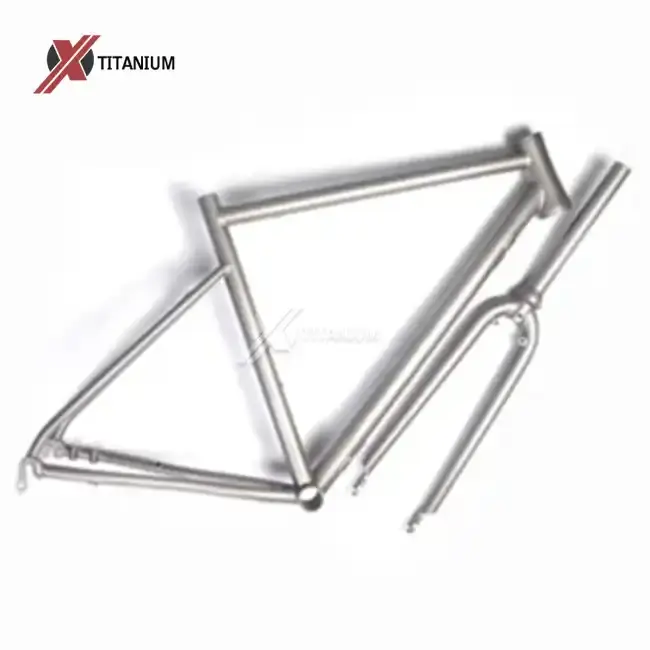
Understanding Raw Titanium Bike Frame Finishes
What Makes the Raw Finish Different?
Something with a raw titanium finish isn't just unfinished. It is a surface state that was made on purpose to show off the metal's natural grain and oxide layer. When grade 9 titanium (Ti-3Al-2.5V), which is used in high-performance frame tubes, comes in contact with air, it almost instantly forms a passive TiO₂ film. You don't have to paint or coat this film to keep it from rusting because it doesn't react with chemicals and can usually fix itself. There is a brushed or bead-blasted matte look to the finish that is useful and stands out, which is what serious cyclists and OEM manufacturers are always looking for.
Key Components Carrying the Raw Finish
Every part of a titanium frame that holds it together has a rough surface. This surface feature is mostly found on the seat stays (16–22mm diameter), top tubes (25–32mm diameter), and chainstays (19–25mm diameter). Each part is made from Grade 9 titanium, which has a density of 4.43 g/cm³ and a minimum tensile strength of 900 MPa. This titanium gives the frame a mix of stiffness and flexibility that no carbon or metal frame of the same weight can match. It's important for B2B procurement professionals to understand this big picture when they write material specs or check out new suppliers.
Step-by-Step Guide to Maintaining a Raw Titanium Bike Frame Finish
You don't have to spend a lot of money or do a lot of steps to keep a raw surface on titanium bicycle frame parts in great shape. The fact that the material doesn't rust naturally does most of the work. Over time, surface dirt, small scratches, and discolorations caused by rust add up. These things are taken care of and get rid of.
OEM partners and professional teams can use this fix plan right away:
- Routine cleaning: Wipe the frame with a damp microfiber cloth after each ride. Use a pH-neutral soap solution for removing road grime, chain oil splatter, or mineral deposits. Avoid chlorine-based cleaners or acidic detergents — these can disrupt the oxide layer and leave staining that requires polishing to reverse.
- Addressing micro-abrasions: Light scratches on a raw titanium surface are normal and genuinely easy to address. A 3M Scotch-Brite pad (non-metallic, fine grade) applied in the direction of the original grain effectively buffs out surface marks without removing base material. This is one of the most cited advantages of titanium over carbon fiber — damage is recoverable in the field.
- Removing oxidation discoloration: Heat-tinted areas near weld zones may turn straw, gold, or blue over time. These are aesthetic variations, not structural defects. A diluted oxalic acid solution or a commercial titanium-specific cleaner can restore color uniformity. Rinse thoroughly with clean water afterward.
- Applying a protective sealant: A thin coat of paste wax or carnauba-based polish applied every two to three months creates a hydrophobic barrier that repels road salts and moisture. This step is especially relevant for frames used in coastal environments or wet-weather conditions where saltwater exposure is frequent.
Protecting against tiny scratches: A surface made of raw titanium will naturally have small scratches. These are very simple to fix. A fine-grade 3M Scotch-Brite pad that isn't made of metal can get rid of surface marks without taking away the base material when used in the direction of the original grain. A big reason why titanium is better than carbon fiber is that it can be put together on the job site.
Comparing Titanium Frame Maintenance with Other Materials
Titanium vs. Aluminum and Steel
When metal frames corrode, they leave behind a white, chalky layer of aluminum oxide that can make the surface look bad and needs to be polished or anodized off. There are stricter ways to keep steel frames from rusting, such as cleaning them often, keeping water out, and putting rust inhibitors on the inside of the frame. With titanium bicycle frame parts, you don't have to worry about these things. The layer of inactive oxide is solid and clear, so it doesn't need any extra defense.
Titanium vs. Carbon Fiber
Things need to be fixed with carbon fiber on its own. Cracks or delamination on the surface caused by impact damage aren't always easy to see with the naked eye. The skeleton can weaken without warning. To fix something, you need either argon-purged welding or glue injection, along with the right tools. On the other hand, a skilled TIG welder can cut, reinforce, and re-weld a piece of titanium frame. Lifecycle costs: Being able to be fixed cuts down on long-term maintenance costs by a lot for OEMs and frame builders who are in charge of a group of units.
When purchasing managers look at the different frame materials, they should pay close attention to these differences. When you look at the total cost of ownership over 10 to 15 years, titanium is cheaper because it needs less maintenance and is known to last longer. In the high-end and custom-build markets, this number always leans toward titanium.
Procurement Tips for Titanium Bicycle Frame Parts with Raw Finish
Evaluating Supplier Capabilities
When looking for raw titanium bicycle frame parts from different sellers, it's not enough to just compare prices. How well the first cuts are made, the standards for drawing tubes, and the weld shielding methods used during production all have a big effect on how solid the rough surface is. ASTM B338 says that titanium tubes must meet certain standards, and ASTM B348 says that titanium bars must meet certain standards. They also have to give full material tracking, which includes heat numbers, chemical composition records, and certificates for each batch's mechanical test.
Customization and Surface Treatment Options
You don't always need a finish that is 100% natural when you need to buy something. From reliable manufacturers, you can choose from a number of surface treatments that build on the raw base:When you polish something, you make it brighter and get rid of small metal marks.
- Polishing enhances surface reflectivity and removes minor weld discoloration
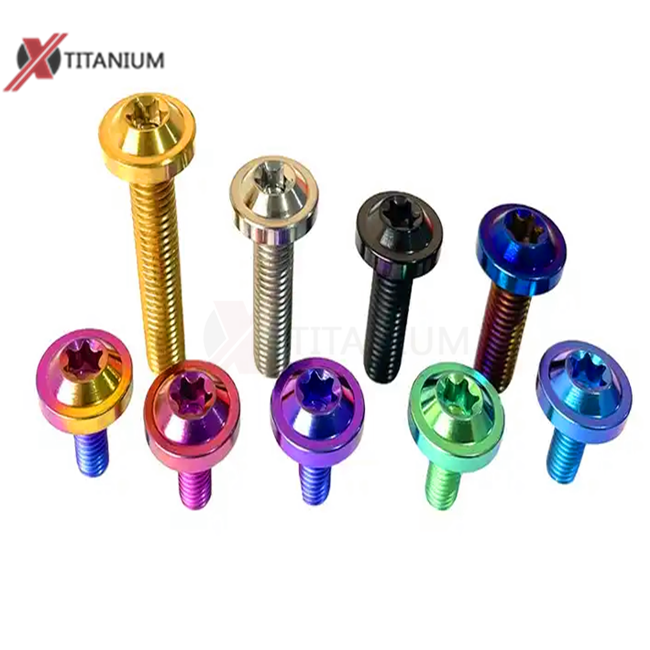
- Anodizing introduces controlled oxidation to produce colors — gold, blue, green, purple, black, and rainbow — without adding weight or compromising corrosion resistance
- Nitriding increases surface hardness and wear resistance for components subject to high friction loads
These treatments come in normal sizes, and you can tell them what each part needs. For OEM production runs or custom bike builds, this means that buying teams don't have to look for parts from different sources in order to meet exact performance and style standards. Many B2B buyers in the precision metal components sector have trouble with batches that aren't consistent. If you choose a maker with CNC machining, in-house surface treatment, and recorded quality controls, you can cut down on approval times and the chance of this happening.
Conclusion
Just by being themselves, raw titanium bicycle frame parts surfaces don't need much care. But if you stick to a pattern, they will last for decades. Sourcing and engineering teams can make better decisions when they know about the surface features of Grade 9 titanium. This is true whether they are in charge of a fleet of OEM frames or getting parts ready for a custom build program. It is one of the most flexible and inexpensive ways to make high-performance frames because it doesn't rust, can be fixed, and can be used with different surface treatments. The finish will continue to work perfectly as long as it is maintained regularly.
FAQ
Q1: How often should a raw titanium frame be cleaned?
A: A light wipe-down after every ride is advisable in dirty or wet conditions. A more thorough cleaning with a pH-neutral solution every two to four weeks is sufficient for regular use. Frames exposed to saltwater or acidic road spray may benefit from more frequent rinsing.
Q2: Can I use standard bike polish on a titanium frame?
A: Most carnauba-based paste waxes and general bike polishes are safe for titanium. Avoid products containing hydrofluoric acid or strong chloride compounds, as these can chemically etch the TiO₂ oxide layer and cause irreversible staining.
Q3: QWill anodizing affect the structural properties of the frame?
A: Anodizing is a surface-only electrochemical process. It does not alter wall thickness, tensile strength, or fatigue characteristics. Grade 9 titanium retains its 900 MPa minimum tensile strength and 10% minimum elongation after anodizing.
Q4: What causes creaking in titanium frame assemblies?
A: Creaking typically originates from galling or galvanic interaction between titanium threads and dissimilar metals such as aluminum bottom bracket cups. Applying a copper or nickel anti-seize compound during assembly resolves this reliably.
Q5: Is it possible to repair a cracked titanium frame section?
A: Yes. Unlike carbon fiber, titanium can be TIG-welded under argon purge to repair or reinforce a damaged section. This repairability is a key differentiator for long-term asset value in commercial frame programs.
Partner with Chuanglian for Premium Titanium Bicycle Frame Parts
CNC-machined Grade 9 titanium bike frame parts are bought and sold by OEM makers, custom builders, and buying teams all over North America. Our parts are made to ASTM standards and come with all the paperwork needed to track them. The surfaces can also be polished, anodized, or nitrided in different colors. You can email our tech support team at info@cltifastener.com or djy6580@aliyun.com to get more information or a proof of concept.
References
1. ASTM International. ASTM B338: Standard Specification for Seamless and Welded Titanium and Titanium Alloy Tubes for Condensers and Heat Exchangers. ASTM International, 2021.
2. Boyer, R., Welsch, G., & Collings, E. W. Materials Properties Handbook: Titanium Alloys. ASM International, 1994.
3. Donachie, M. J. Titanium: A Technical Guide (2nd ed.). ASM International, 2000.
4. Rack, H. J., & Qazi, J. I. "Titanium alloys for biomedical applications." Materials Science and Engineering: C, Elsevier, 2006.
5. Peters, M., Kumpfert, J., Ward, C. H., & Leyens, C. "Titanium alloys for aerospace applications." Advanced Engineering Materials, Wiley-VCH, 2003.
6. Schutz, R. W., & Watkins, H. B. "Recent developments in titanium alloy application in the energy industry." Materials Science and Engineering: A, Elsevier, 1998.
Learn about our latest products and discounts through SMS or email