- English
- French
- German
- Portuguese
- Spanish
- Russian
- Japanese
- Korean
- Arabic
- Greek
- German
- Turkish
- Italian
- Danish
- Romanian
- Indonesian
- Czech
- Afrikaans
- Swedish
- Polish
- Basque
- Catalan
- Esperanto
- Hindi
- Lao
- Albanian
- Amharic
- Armenian
- Azerbaijani
- Belarusian
- Bengali
- Bosnian
- Bulgarian
- Cebuano
- Chichewa
- Corsican
- Croatian
- Dutch
- Estonian
- Filipino
- Finnish
- Frisian
- Galician
- Georgian
- Gujarati
- Haitian
- Hausa
- Hawaiian
- Hebrew
- Hmong
- Hungarian
- Icelandic
- Igbo
- Javanese
- Kannada
- Kazakh
- Khmer
- Kurdish
- Kyrgyz
- Latin
- Latvian
- Lithuanian
- Luxembou..
- Macedonian
- Malagasy
- Malay
- Malayalam
- Maltese
- Maori
- Marathi
- Mongolian
- Burmese
- Nepali
- Norwegian
- Pashto
- Persian
- Punjabi
- Serbian
- Sesotho
- Sinhala
- Slovak
- Slovenian
- Somali
- Samoan
- Scots Gaelic
- Shona
- Sindhi
- Sundanese
- Swahili
- Tajik
- Tamil
- Telugu
- Thai
- Ukrainian
- Urdu
- Uzbek
- Vietnamese
- Welsh
- Xhosa
- Yiddish
- Yoruba
- Zulu
Top Uses for Custom Titanium Bicycle Parts in Premium Frames
When premium bicycle brands compete for shelf space in a $3,000–$10,000+ market, material selection becomes a strategic decision—not just an engineering one. Custom titanium bicycle parts sit at the intersection of performance science and brand identity. Machined from Grade 5 Ti-6Al-4V alloy with a tensile strength of 930 MPa and a density of just 4.43 g/cm³, these components deliver a strength-to-weight ratio that aluminum and steel simply cannot match. From titanium frame dropouts to precision-machined stem bolts, the right parts define how a finished bike rides, lasts, and sells.
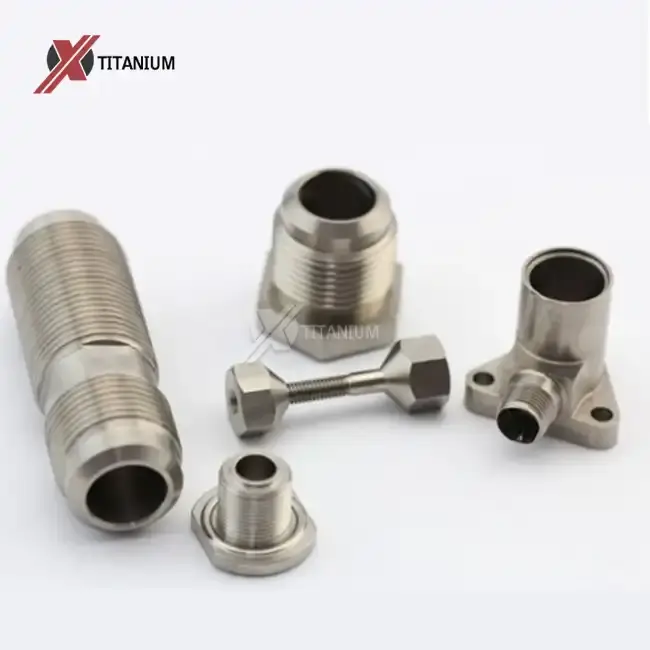
Understanding Custom Titanium Bicycle Parts and Their Benefits
What Makes Titanium Genuinely Different?
Titanium has an elastic modulus of about 110 GPa, which is about half of steel's. This physical property gives the load some give, which absorbs high-frequency road vibration before it gets to the rider's hands and spine. During a four-hour endurance ride, that difference can be seen in how tired you are at the end. Aluminum has a clear fatigue limit and small cracks form over time. Grade 5 titanium, on the other hand, keeps its mechanical qualities forever as long as the stress stays below its yield level. This isn't just a marketing claim; it's been shown to happen in metals that meet ASTM B348 standards.
The Role of Customization in Premium Frame Design
Components that are already made limit shape. Standard stock parts can't be used when a brand's industrial designer calls for a non-standard bottom bracket shell shape or an integrated cable-routing dropout. Custom CNC-machined titanium parts solve this problem by being able to fit accurate measurements—within ±0.005 mm on bearing seats—while keeping the alloy's natural resistance to rust in place thanks to its self-forming TiO₂ passive layer. The end result is a part that fits the design perfectly, not one that is based on what a catalog has to offer.
Top Uses of Custom Titanium Parts in Premium Bicycle Frames
Titanium parts are used in all types of high-performance riding, and each type of use takes advantage of a different material benefit. In high-end frame builds, these parts provide the most measurable value in the following areas.
The main places where titanium CNC parts make a big difference are listed below:
-
Head tubes and bottom bracket shells: Custom-machined titanium head tubes are a key example of custom titanium bicycle parts that allow frame builders to specify non-standard angles and internal diameters for T47 or BSA threading. The alloy's strength means wall thickness can be reduced without structural compromise, saving weight at a structurally critical junction. A well-machined titanium BB shell maintains thread integrity under the sustained torque loads of modern cranksets far longer than its aluminum counterpart.
-
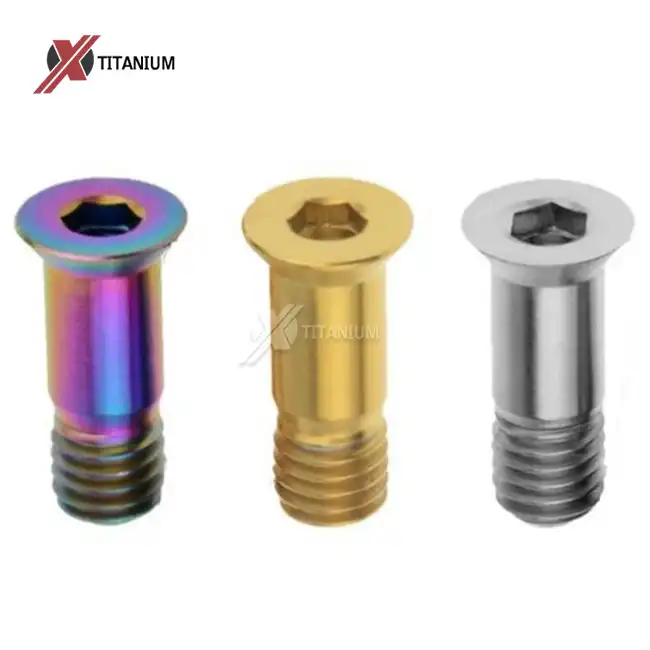
Seat post clamps and saddle rail hardware: These small components endure constant micro-movement. Titanium's resistance to fretting corrosion—which destroys aluminum interfaces under repetitive micro-load cycling—makes it the material of choice for clamps on carbon fiber frames. Anodized titanium clamps in gold, blue, purple, or black also serve a visible brand differentiation function at the seat tube junction.
- Stem bolts and handlebar fasteners: At 6–8 grams per bolt, titanium fasteners replace steel at a fraction of the weight. More critically, they resist galvanic corrosion when threaded into carbon fiber or aluminum cockpit components. For a full-titanium fastener kit across a complete build, weight savings of 40–80 grams are realistic and documented.
- Axle hardware and drivetrain interfaces: E-bike and high-torque drivetrain applications generate sustained wattage loads that strip standard aluminum threads. Custom Grade 5 titanium torque arms and freehub bodies handle these loads reliably. Several OEM brands have moved proprietary torque arm designs into titanium specifically because no other lightweight material survives the duty cycle.
All of these uses explain why companies that make bikes that cost between $5,000 and $10,000 make titanium parts standard instead of an option. The parts are worth the price because they last a long time and keep working well for the whole life of the product.
How to Choose the Right Custom Titanium Bicycle Parts for Your Procurement Needs?
Matching Grade to Application
Grade 5 (Ti-6Al-4V) is used for CNC-machined solid parts like bolts, axles, machined shells, and clamps that need to have high tensile and yield strengths. On the other hand, Grade 9 (Ti-3Al-2.5V) is more flexible and is the standard for smooth made tubing in handlebars and frame tubes. If you specify the wrong grade for an application, it will either cost too much or not last long enough. Before production starts, a qualified manufacturer will give DFM (Design for Manufacturability) advice and point out grade mismatches before the tooling is cut.
Evaluating a Supplier's Technical Capability
Buying decisions for custom titanium bicycle parts go through a development cycle that lasts for 4 to 6 months. It costs a lot to switch to the wrong provider in the middle of that run. To effectively narrow the field, the following criteria are used:
- Multi-axis CNC capability (3-axis, 4-axis, 5-axis) for complex surface geometries
- CMM-verified dimensional reports and CPK data on critical features
- XRF material verification to confirm alloy grade before machining
- NDA execution prior to sharing design files
- Documented surface treatment options: polishing, anodizing, PVD nitriding, bead blasting
- Prototype delivery within 3–5 weeks for first-article approval
If a supplier can't offer all six, they shouldn't make it past the shortlist stage for strategic OEM partnerships.
Maintenance and Longevity: Keeping Custom Titanium Bicycle Parts at Peak Performance
Titanium is resistant to corrosion, so it doesn't need as much maintenance as steel and aluminum. When the metal is scratched, the inactive oxide layer reforms itself on its own. This means that damage to the surface from trail debris or tool marks does not cause rust to start. Still, there are two maintenance protocols that can't be changed. Before putting the titanium parts together, an anti-seize solution made of nickel or copper paste needs to be put on the thread contacts between the parts. Titanium-on-titanium threading that doesn't use lubrication can cause galls, which is a cold-welding problem where the mating surfaces seize up permanently. This is not a flaw in the product; it is a well-known tribological property of the alloy that any skilled mechanic will take into account when putting it together.
High-stress parts like axles and bottom bracket shells need to be checked for fatigue cracks on a regular basis. Dye penetrant inspection (DPI) can find cracks on the surface that you can't see with the naked eye. For race teams with heavy duty cycles, DPI on important machined parts once a year is a good practice that protects both safety and the investment in the part.
Procurement Insights: Where and How to Source Custom Titanium Bicycle Parts?
Finding high-quality custom titanium bicycle parts takes more than just comparing prices. Whether a partnership works from 50-piece prototypes to quarterly production volumes depends on how deep the supplier's manufacturing capabilities are. These include being able to track raw materials, having in-house CNC capacity, surface treatment facilities, and quality documentation.
Baoji, China has become the world's center for making titanium products, making up a big part of the world's titanium production. Manufacturers based there have direct access to raw materials and decades of experience with machining. This ecosystem is where Baoji Chuanglian New Metal Material Co., Ltd. works. They have more than ten years of experience making titanium precision parts for medical, aerospace, marine, and cycling uses. The company is ISO 9001 certified, follows full inspection protocols, and gives documentation that shows how materials were used from the raw billet to the finished part.
Chuanglian helps OEM brands with the whole process of making a new product. They offer DFM advice, first-article CNC prototypes in 3–5 weeks, multi-round design optimization, small-batch trial production (50–200 pieces), and a scalable monthly or quarterly supply. You can anodize the surface in titanium natural, gold, blue, green, purple, black, and rainbow. You can also shine, nitride, and apply PVD coats to wear-critical areas.
Conclusion
Custom titanium bicycle parts offer measurable performance benefits that justify their place in high-end frame builds: they are strong, lightweight, resistant to corrosion, have an infinite fatigue life, and give you design freedom that no catalog component does. For brands making products that sell for $3,000 to $10,000 or more, choosing precision-machined titanium parts is a smart move that makes every part of the product better. The qualities of the material are well known; the challenge is to find a manufacturing partner with the technical know-how to reliably and privately turn design purpose into production-ready parts.
FAQ
Q1: What is the difference between Grade 5 and Grade 9 titanium for bicycle parts?
A: Better tensile strength (930 MPa) is found in Grade 5 (Ti-6Al-4V), which is the standard for CNC-machined solid parts like bolts, axles, and bottom bracket shells. Grade 9 (Ti-3Al-2.5V) is more flexible and is used to make shapes for arms and frame tubes. Choosing the right grade for each job has a direct effect on the weight and fatigue life.
Q2: Why do titanium threads require anti-seize compound?
A: Titanium has a tribological effect called galling, which means that when two titanium surfaces touch, they cold-weld together under tighter pressure. This can be avoided by using nickel-based or copper anti-seize paste before putting the parts together. It is normal practice, not a flaw in the way it was made.
Q3: What surface finishes are available on custom titanium components?
A: You can choose from brushed, natural, gold, blue, green, purple, black, and colorful anodizing, shining, and bead blasting. Anodizing doesn't add a coating layer; it changes the oxide layer that's already there while keeping the tolerances for size.
Q4: How long does a custom titanium component development cycle take?
A: Expect three to five weeks from the first DFM discussion to the first CNC sample of the article. Depending on how complicated the design is and how many times it is changed, full development through small-batch trial production usually takes 14 to 20 weeks.
Q5: What quality documentation should a supplier provide?
A: You can expect XRF reports to confirm the material, CMM data for measuring, CPK reports on important features, records of thread inspections that go or don't go, and full material tracking certificates. All of these things can be done with the help of ISO 9001 approval.
Partner With Chuanglian for Custom Titanium Bicycle Parts Manufacturing
Every OEM project that Chuanglian works on is backed by more than a decade of experience with precise titanium cutting. As a custom titanium bicycle parts maker, we offer full-cycle development support, including DFM consultation, fast prototyping, small-batch and large-scale production. Our in-house ISO 9001 quality systems, NDA protection, and multi-finish anodizing all make this possible. To start the next phase of product development, email our tech team at info@cltifastener.com or djy6580@aliyun.com.
References
1. ASTM International. ASTM B348: Standard Specification for Titanium and Titanium Alloy Bars and Billets. ASTM International, 2019.
2. Donachie, Matthew J. Titanium: A Technical Guide. 2nd ed. ASM International, 2000.
3. Peters, M., and C. Leyens. Titanium and Titanium Alloys: Fundamentals and Applications. Wiley-VCH, 2003.
4. Cycling Industry News. Material Trends in Premium Bicycle Manufacturing. Cycling Industry News, 2022.
5. Boyer, Rodney R. "An Overview on the Use of Titanium in the Aerospace Industry." Materials Science and Engineering: A, vol. 213, no. 1–2, Elsevier, 1996, pp. 103–114.
6. BikeBiz. The Rise of Titanium Hardware in High-End Bicycle Builds. BikeBiz, 2023.
Learn about our latest products and discounts through SMS or email