- English
- French
- German
- Portuguese
- Spanish
- Russian
- Japanese
- Korean
- Arabic
- Greek
- German
- Turkish
- Italian
- Danish
- Romanian
- Indonesian
- Czech
- Afrikaans
- Swedish
- Polish
- Basque
- Catalan
- Esperanto
- Hindi
- Lao
- Albanian
- Amharic
- Armenian
- Azerbaijani
- Belarusian
- Bengali
- Bosnian
- Bulgarian
- Cebuano
- Chichewa
- Corsican
- Croatian
- Dutch
- Estonian
- Filipino
- Finnish
- Frisian
- Galician
- Georgian
- Gujarati
- Haitian
- Hausa
- Hawaiian
- Hebrew
- Hmong
- Hungarian
- Icelandic
- Igbo
- Javanese
- Kannada
- Kazakh
- Khmer
- Kurdish
- Kyrgyz
- Latin
- Latvian
- Lithuanian
- Luxembou..
- Macedonian
- Malagasy
- Malay
- Malayalam
- Maltese
- Maori
- Marathi
- Mongolian
- Burmese
- Nepali
- Norwegian
- Pashto
- Persian
- Punjabi
- Serbian
- Sesotho
- Sinhala
- Slovak
- Slovenian
- Somali
- Samoan
- Scots Gaelic
- Shona
- Sindhi
- Sundanese
- Swahili
- Tajik
- Tamil
- Telugu
- Thai
- Ukrainian
- Urdu
- Uzbek
- Vietnamese
- Welsh
- Xhosa
- Yiddish
- Yoruba
- Zulu
How to properly install a countersunk washer for a flush finish?
To properly install a titanium countersunk washer, you need to pay attention to the details, choose the right tools, and know how the material works. The first step is to make sure that the angle of the countersunk hole fits the washer's cone shape, which is usually 90° or 100° according to aircraft standards. Place the washer so that the hole and its curved surface line up exactly. Then, put the countersunk screw through the middle of the washer. Using measured tools, slowly apply pressure while keeping an eye on even compression until the screw head is flush with the surface. This method stops surface protrusions, spreads stress evenly across composite or metal panels, and keeps the aerodynamic or hydrodynamic shape that is needed in medical device, aircraft, and marine systems.
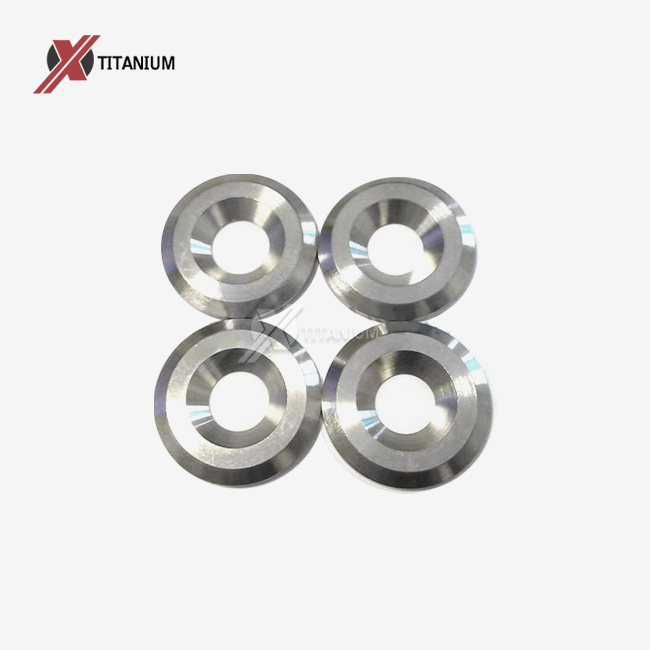
Understanding Titanium Countersunk Washers and Their Benefits
Learn about titanium countersunk washers and what they can do for you.
Titanium countersunk screws are a precision-engineered answer for systems that need to be both structurally sound and look great. These parts have a cylindrical bearing surface that is made to fit perfectly with countersunk screws. This makes a smooth finish that gets rid of any surface flaws. The engineering behind these washers solves several problems at once: they increase the bearing area to protect the substrate, they work with the angular shape of countersunk screws, and they use titanium's natural advantages to achieve performance that isn't possible with other materials.
Material Grades and Performance Characteristics
The way titanium countersunk washers work depends a lot on the type of material that is chosen. Titanium Grade 2 is commercially pure and has a density of 4.51 g/cm³. Its tensile strength is 275 MPa and its yield strength is 250 MPa. This grade works really well in places where rust is common and chemical protection is more important than raw mechanical power. Grade 5 (Ti-6Al-4V) titanium metal, on the other hand, has much better mechanical qualities. Its tensile strength is 895 MPa and its yield strength is 828 MPa. There is also a big difference in hardness, with Grade 2 being 160 HV and Grade 5 being 349 HV. This range of performance lets engineers choose the best mix between being able to shape, saving weight, and carrying weight for each application.
Industry Applications and Value Proposition
Aerospace companies use countersunk titanium parts in body panel systems that need to have a perfectly smooth surface for aerodynamic reasons. The washers spread out localized stress across carbon fiber composites. This keeps them from delaminating under repeated loads while keeping their 45% weight edge over steel alternatives. Titanium is good for marine building because it doesn't rust in saltwater, which is especially useful for deck tools and ship parts where rust would leak and make them less waterproof. Medical device makers use these screws for surgery tool systems and internal parts because titanium is biocompatible and doesn't magnetize. Each application field looks for the best mix of useful performance and long-term dependability to justify the original investment in materials.
Challenges in Installing Countersunk Washers for a Flush Finish
Using titanium countersunk washers to get a perfect smooth finish comes with a number of technical challenges that can lower the quality of the assembly if they are not handled properly. To spread loads evenly, the cone-shaped junction between the washer and the base needs to make full touch around the whole edge. Any imbalance creates stress clusters that can start cracks in weak supports or make fasteners come loose when they are vibrated. When working with titanium parts, the fitting process is more difficult because the material tends to gall. Galling is a type of bond wear that happens when titanium surfaces slide against each other under pressure.
Material-Specific Installation Risks
Titanium is hard to install because it doesn't conduct heat well and is very strong. When pressure is applied without enough lube, the friction-generated heat can't escape quickly, which causes welding to happen between the surfaces that are in touch. This galling effect can damage threads or stop screws in a way that can't be fixed. Another major risk is thread stripping, which happens when taps and dies wear out quickly during installation because titanium is so hard. This creates metal debris that contaminates the joint. Over-tightening makes these problems worse by exceeding the material's yield strength. This deforms the material permanently, stopping the washer from keeping the right preload for the lifetime of the assembly.
Surface Preparation and Alignment Criticality
The preparation of the base is what determines if the finished assembly will have the flush finish that was wanted. For countersunk holes, the angles must be precisely cut to match the cylindrical shape of the screw. Deviations of as little as two degrees can stop the seat from fully seating, leaving gaps that build up stress and make the surface uneven. Also, burrs or grinding dust around the edge of the hole will make it impossible for the washer to sit properly. Surface cleaning affects both how well something works mechanically and how well it resists corrosion. This is because contaminants under the cleaner can start trench corrosion even in titanium's passive oxide layer.
Step-by-Step Guide to Installing Titanium Countersunk Washers
When you use the right assembly method, you can turn possible problems into regularly successful setups. The process needs organized care during the planning, carrying out, and checking stages.
Pre-Installation Preparation and Component Selection
First, make sure that the titanium countersunk washer's dimensions match those of both the bolt and the countersunk hole. Check your construction plans to see how to measure the outside diameter, inside diameter, and thickness. Chuanglian makes CNC-machined washers in sizes from M3 to M20 for specific uses. These washers can have outer widths from 6mm to 50mm and thicknesses from 0.5mm to 5mm. Make sure the grade of the material matches the stress levels and environment that it will be exposed to.
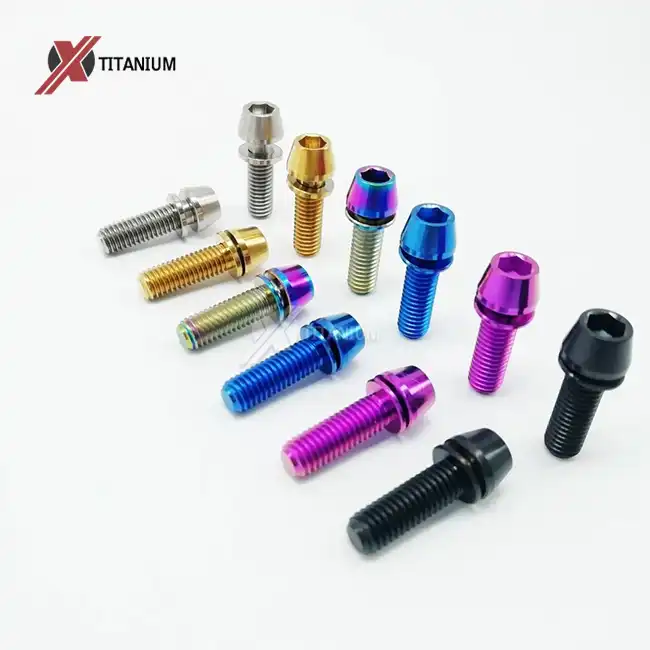
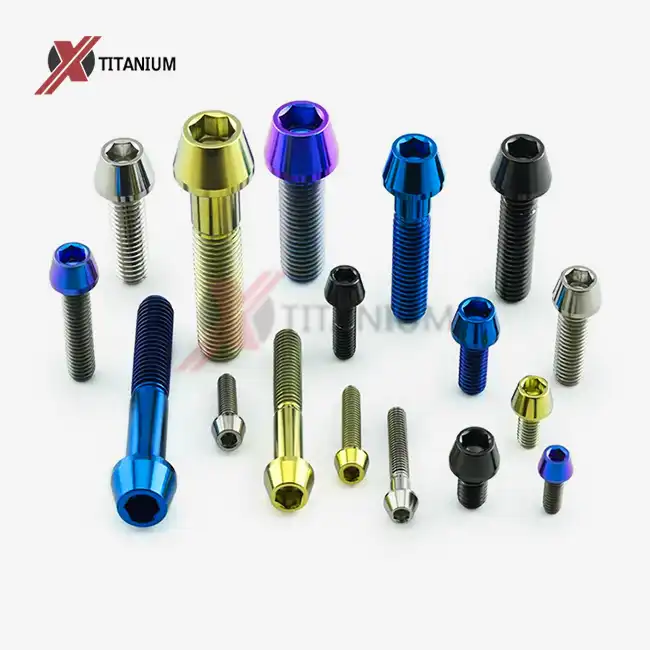
For example, Grade 5 is best for structure uses that need high tensile strength, and Grade 2 is best for chemical processing environments that need the highest rust resistance. Choose the right surface treatments based on their purpose: polishing creates smooth bearing surfaces, anodizing provides better corrosion protection in certain colors (natural titanium, gold, blue, green, purple, black, or rainbow), or nitriding makes the surface harder for applications that will see a lot of wear.
Surface Cleaning and Hole Inspection
Isopropyl alcohol or another acceptable fluid should be used to clean the countersunk hole and the washer very well to get rid of any machine grease, handle residue, or particle contamination. Look closely at the countersunk hole with a magnifying glass to make sure that the angle fits the washer's cone shape and that there are no burrs, chips, or other surface flaws. Check the hole's depth and width with a countersink tool to make sure they meet the requirements. Any problems need to be fixed with more cutting before moving on, since trying to force-fit parts hurts both the base and the washer.
Controlled Installation Process
Put a thin, even layer of an anti-seize solution made just for titanium on the threads of the bolt and the bearing surfaces of the washer. Lubricants made from molybdenum disulfide work well, but mixtures made from nickel should not be used in high-temperature situations. Place the washer into the countersunk hole by hand, making sure that the cylindrical side touches the hole evenly all the way around. Put the countersunk screw through the washer's center hole and hand-thread it a few times to make sure it's in the right place before applying power.
Use a torque wrench that has been measured and has stepwise settings that are right for titanium screws. To apply torque, move it forward by about 25% of the goal number each time through the joint pattern. This slow tightening lets materials gradually squeeze together and shows up any imbalance before too much force does damage. Keep an eye on how the screw head falls toward the washer surface and make sure there is even tension all the way around. It's important that the screw head touches the washer evenly and keeps pulling it flush with the surface of the base without twisting or binding it.
Post-Installation Verification and Maintenance
Once you've reached the required pressure level, look at the joint to make sure the screw head is either flush with or just below the surface. Use a straight edge or depth gauge to find out how far the shape is off from what you want it to be. Try inserting a feeler gauge around the edge to make sure there are no gaps between the washer and the countersunk surface. Any gap means the washer isn't fully seated, which will affect its performance. Write down the installation torque values and the order in which they were applied for quality control records. This is especially important in medical or military settings where strict tracking requirements apply.
Comparing Titanium Countersunk Washers With Alternatives
The choice of materials has a big effect on how well a system works in the long run, how much upkeep it needs, and the total cost of ownership. Knowing the pros and cons of titanium countersunk washers versus other materials helps you make smart purchasing choices that are in line with project needs.
Titanium Versus Stainless Steel Analysis
When it comes to starting costs, stainless steel countersunk screws, especially 316-grade versions, are cheaper and easier to find at most wholesalers. The material is resistant to rust well enough in many industrial settings, and it can be machined easily, which makes the manufacturing process simpler. But because titanium is only 4.51 g/cm³ dense, stainless steel's density of about 8.0 g/cm³ makes it 80% heavier. This difference in mass has a direct effect on the assembly's running costs over its service life in aircraft uses where every gram affects fuel economy and payload capability. Additionally, stainless steel doesn't work well with carbon fiber composites or metal structures when joined together, which could speed up rusting at the joint area in naval or chemical processing settings.
Titanium Versus Aluminum Considerations
With a density of about 2.7 g/cm³, aluminum countersunk screws save a lot of weight and are lighter than titanium options. The lower cost and better heat transfer of the material make it useful in some situations. But aluminum's mechanical qualities make it less useful in high-stress parts. Its yield strength is usually between 40 MPa and 500 MPa, which is much lower than titanium's range of 250–828 MPa. Aluminum can't be used in multi-material systems that are popular in current composite buildings because it can rust when mixed with metals that aren't the same. Because the material isn't very hard, it tends to "compress set" when it's loaded for a long time. This means that it loses pressure slowly over time, which lets the bolts come free.
How to Procure Quality Titanium Countersunk Washers for Your Business?
When choosing where to get good titanium countersunk washers for your company, you need to do more than just compare prices. The technical skills, quality systems, and dependability of the supplier's supply chain have a direct effect on your output plans and the quality of the products you make.
Supplier Qualification and Certification Verification
Manufacturers with a good reputation keep certificates that show they follow quality control methods specific to their business. AS9100 approval means that the quality controls and tracking processes are up to aircraft standards. ISO 9001 approval is a basic level of quality management system proof that can be used in any industry. Medical device makers should look for providers that have ISO 13485 approval, which shows that they follow the rules for medical devices.
Material test records that list the chemical make-up, mechanical qualities, and size compliance of a material are necessary for keeping track of it in important situations. Baoji Chuanglian New Metal Material is based in Baoji City, which is known as the "City of Titanium" because it has so many experts in handling titanium. They have been making titanium parts for over ten years and can support unique specs with CNC cutting.
Customization Capabilities and Lead Time Management
Standard inventory of titanium countersunk washers usually includes popular sizes from M3 to M20, but for many uses, special sizes, surface treatments, or angled shapes are needed. Check to see if possible providers can do CNC milling and are willing to work with special requests without having unreasonable minimum order numbers. Production wait times depend on the type of material that is available, how complicated the surface treatment is, and how much capacity is being used at the moment.
Processing factors for pure titanium and Grade 5 metal are different, which changes the schedule for production. Surface processes, such as anodizing to get certain colors or nitriding to make things harder, add processing steps that make delivery times longer. Framework deals with qualified sellers give you priority access when capacity is limited, and agreed-upon prices show that you're committed to ongoing volume.
Total Cost of Ownership and Value Analysis
The initial buying price is only one part of what it costs to own something. Because titanium countersunk screws are so resistant to rust, they don't need protective coats that are more expensive and take more time to maintain than steel options. The longer service life cuts down on how often it needs to be replaced and the work costs that come with taking it apart and putting it back together again. In transportation uses, less weight means better fuel economy. In fixed setups, less structure support is needed. These reasons usually make titanium's higher cost worth it when looking at the whole duration of the part instead of just the cost of buying it.
Conclusion
To get a perfect smooth finish with titanium countersunk washers, you need to know how the material's qualities, fitting method, and application needs affect each other. Titanium countersunk screws work better than any other material in harsh conditions where long-term dependability, resistance to rust, and high strength-to-weight ratio make the investment worthwhile. These precision parts work at their best when they are installed according to the right steps, which include carefully cleaning the surface, applying controlled pressure, and checking the work afterward.
The choice between Grade 2 and Grade 5 titanium, as well as the right surface processes, must be based on the stresses of the job and the surroundings. It's important for procurement strategies to look at more than just price comparisons when it comes to suppliers. This is because quality and shipping reliability have a direct effect on how well products work and how efficiently they are made.
FAQ
What torque specifications should be applied when installing titanium countersunk washers?
The required torque is based on the size of the fastener, the type of material, and the length of the thread contact. Because it has a different elastic stiffness, Grade 5 titanium countersunk washers usually need 15-20% less force than steel fasteners of the same type. Check the fastener's manufacturer's instructions and use measured tools to apply force in steps. Always use the right anti-seize chemicals to keep friction coefficients stable while tightening and stop galling.
Can titanium countersunk washers be used with stainless steel fasteners?
Even though titanium countersunk washers and stainless steel fasteners work well together physically, they can cause galvanic rusting in electrolyte conditions. Titanium is more cathodic than stainless steel, which could speed up the rusting of the steel bolt. This mixture might work in dry places, but for naval, chemical processing, or outdoor installs, you should use titanium screws with titanium nuts to keep the galvanic balance and get the best rust protection.
How do surface treatments affect countersunk washer performance?
Surface treatments for titanium countersunk washers, such as anodizing, make a controlled metal layer that makes something more resistant to rust and lets you use color coding to make it easier to find. Type II anodizing makes smaller plates that can be used in close-tolerance situations. Type III hard anodizing, on the other hand, makes the surface harder to protect it from wear. Polishing smooths out rough surfaces, which makes them easier to use and look better. Nitriding spreads nitrogen into the surface, making it much harder without changing its shape. This makes it perfect for high-cycle wear applications.
Partner with a Trusted Titanium Countersunk Washer Manufacturer
Chuanglian focuses on making titanium countersunk washers that are precisely machined to meet the high standards needed in aircraft, marine, medical devices, and high-performance industry settings. With our CNC milling skills, we can make unique titanium countersunk washers from Grade 2 and Grade 5 materials. The surfaces can be polished, anodized in six color choices, or nitrided to make them more resistant to wear. We're based in Baoji City and have been handling titanium for more than ten years.
We follow strict quality control methods that make sure materials can be tracked from the time they are raw materials to the time they are inspected for quality. Our normal sizes range from M3 to M20, and we can also make designs that are completely unique to your assembly needs. For more information, material certificates, and quotes, please email our expert team at info@cltifastener.com or djy6580@aliyun.com. As a dedicated titanium countersunk washer provider, we offer quick contact, reasonable prices for both prototypes and large production runs, and dependable shipping plans that help you meet your project deadlines.
References
1. Boyer, R., Welsch, G., & Collings, E.W. (1994). Materials Properties Handbook: Titanium Alloys. ASM International, Materials Park, Ohio.
2. Donachie, M.J. (2000). Titanium: A Technical Guide, 2nd Edition. ASM International, Materials Park, Ohio.
3. Lutjering, G., & Williams, J.C. (2007). Titanium: Engineering Materials and Processes, 2nd Edition. Springer-Verlag, Berlin Heidelberg.
4. Schutz, R.W., & Watkins, H.B. (1998). Recent Developments in Titanium Alloy Application in the Energy Industry. Materials Science and Engineering: A, Volume 243, Issues 1-2, Pages 305-315.
5. Veiga, C., Davim, J.P., & Loureiro, A.J.R. (2012). Properties and Applications of Titanium Alloys: A Brief Review. Reviews on Advanced Materials Science, Volume 32, Pages 133-148.
6. Rack, H.J., & Qazi, J.I. (2006). Titanium Alloys for Biomedical Applications. Materials Science and Engineering: C, Volume 26, Issue 8, Pages 1269-1277.
Learn about our latest products and discounts through SMS or email