- English
- French
- German
- Portuguese
- Spanish
- Russian
- Japanese
- Korean
- Arabic
- Greek
- German
- Turkish
- Italian
- Danish
- Romanian
- Indonesian
- Czech
- Afrikaans
- Swedish
- Polish
- Basque
- Catalan
- Esperanto
- Hindi
- Lao
- Albanian
- Amharic
- Armenian
- Azerbaijani
- Belarusian
- Bengali
- Bosnian
- Bulgarian
- Cebuano
- Chichewa
- Corsican
- Croatian
- Dutch
- Estonian
- Filipino
- Finnish
- Frisian
- Galician
- Georgian
- Gujarati
- Haitian
- Hausa
- Hawaiian
- Hebrew
- Hmong
- Hungarian
- Icelandic
- Igbo
- Javanese
- Kannada
- Kazakh
- Khmer
- Kurdish
- Kyrgyz
- Latin
- Latvian
- Lithuanian
- Luxembou..
- Macedonian
- Malagasy
- Malay
- Malayalam
- Maltese
- Maori
- Marathi
- Mongolian
- Burmese
- Nepali
- Norwegian
- Pashto
- Persian
- Punjabi
- Serbian
- Sesotho
- Sinhala
- Slovak
- Slovenian
- Somali
- Samoan
- Scots Gaelic
- Shona
- Sindhi
- Sundanese
- Swahili
- Tajik
- Tamil
- Telugu
- Thai
- Ukrainian
- Urdu
- Uzbek
- Vietnamese
- Welsh
- Xhosa
- Yiddish
- Yoruba
- Zulu
How to properly install aftermarket front brake caliper bolts on a motorcycle?
Installing aftermarket front brake caliper bolts on a motorcycle is a precise operation that directly impacts braking safety and component longevity. Whether upgrading to lightweight titanium m10 front caliper bolts sv650 or replacing corroded OEM fasteners, the process requires methodical preparation, exact torque application, and post-installation verification. Grade 5 titanium (Ti-6Al-4V) bolts provide a 20% weight reduction compared to steel while maintaining tensile strength exceeding 900 MPa, making them suitable for high-stress braking applications. This guide walks through the complete installation procedure, from tool selection to final safety checks, ensuring reliable brake system performance.
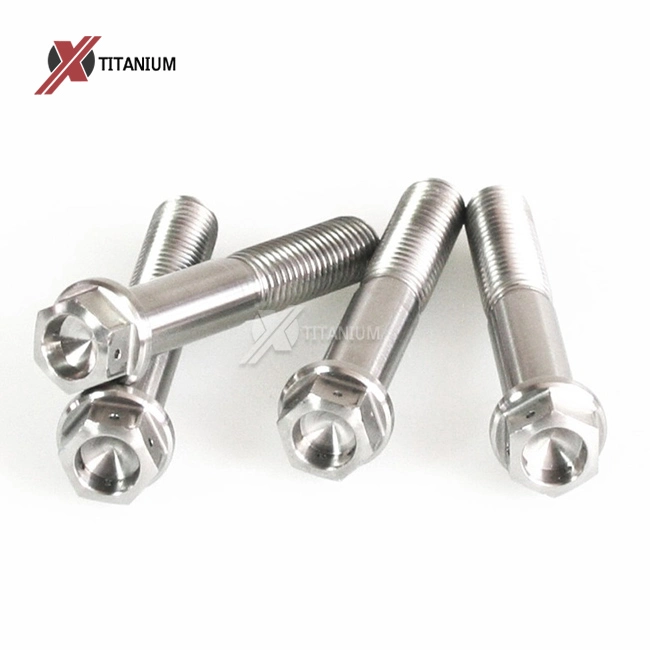
Understanding Titanium M10 Front Caliper Bolts for SV650
Material Specifications and Grade Selection
Titanium caliper bolts are made from Grade 5 metal (Ti-6Al-4V), which is 90% titanium, 6% aluminum, and 4% vanadium. The tensile qualities of this mix are like those of Class 10.9 steel, but it is almost half as heavy. It weighs 4.43 grams per cubic centimeter, while steel weighs 7.85 grams per cubic centimeter. This means that titanium metal has less weight that isn't being sprung, which is important for how well the suspension responds and how precisely the vehicle can be handled.
When you see the letters "M10," that means the threads are 10 mm wide and 1.25 mm apart. This fits the Suzuki SV650 Gen 1, Gen 2, and Gen 3. Most bolts are 30 mm long, but different sizes can be made to fit different ways of fixing calipers. These screws can handle the strong forces that are formed when the track is used or when there is an emergency stop. They have tensile strengths of at least 900 MPa and shear strengths of at least 600 MPa.
Corrosion Resistance and Environmental Durability
Titanium makes a stable oxide layer on its own that protects it very well from oxidation, salt corrosion, and chemical exposure. This feature comes in handy for motorcycles that are used near the coast, where salt air speeds up the rusting of steel parts, or in places where road salt is used in the winter, making the conditions very corrosive. With titanium fasteners, the force needed to remove them stays the same even after years of use. This makes upkeep easier in the future than with steel bolts, which get stuck when they rust.
Thanks to its temperature range of -150°C to +400°C, the brake system can go thru thermal cycles without any damage. The brake calipers get very hot when you press down hard. Titanium is steady at high and low temperatures, so the gripping force stays the same over time.
Weight Reduction Benefits for Performance Applications
To make the suspension work better, get rid of any weight that isn't being supported by the springs. This makes it easier for the parts to react faster to changes in the road surface. Four steel brake bolts are swapped out for titanium ones, which takes about 30 to 40 grams off the front end. It may not seem like a big deal, but wins on race tracks are measured in grams, and every gram of less spinning and unsprung mass means faster lap times and better feedback for the rider.
Preparing for Installation: Tools and Safety Checks
Essential Workshop Tools and Equipment
The right tools must be used for the job to avoid damage and make sure the right amount of torque is used. With titanium screws, you need a measured torque wrench that can measure 25–35 Nm (18–26 lb-ft). This is because the threads can't get damaged and the clamping force can't be too weak. It is important to use a digital torque wrench instead of a beam-type one when working with titanium because it has different friction qualities.
Tools like a full set of metric hex keys or sockets, brake cleaner spray, lint-free shop towels, thread inspection gages to check the M10x1.25 pitch, and high-quality anti-seize powder made just for titanium use are also out there. Anti-seize or ceramic formulas that are based on copper work best because they stop galling.
Galling happens when titanium's high friction coefficient moves material and cold welds it together during installation. For this reason, when installing titanium m10 front caliper bolts sv650, applying the correct anti-seize compound to the threads is not optional but mandatory, as it ensures smooth torque application, prevents thread seizure, and allows for future removal without damaging either the bolt or the caliper mounting holes.
Pre-Installation Safety Inspections
Make sure the fixing spots for the brake and the wheel legs are clear before you take off the original bolts. Look for cracks, holes in the bolts that are too big, or damage to the threads that would weaken a new bolt. If the part is bent or worn down in these places, it needs to be changed before the work can begin. More than the bare minimum should be added to the brake pads, and the caliper pistons should be able to move around freely without getting stuck or leaking brake fluid.
Clean the attachment surfaces with brake cleaner to get rid of brake dust, road dirt, and old thread locker residue. The bolts might not fit right if there is dirt or oil between the surfaces that are fastening each other. The clamping forces might also not be even. It is very important to check the state of the threads. Check the threads on the fork legs with a thread chaser to make sure they are clean and not broken so the new screws will fit right. If the threads are damaged, you need to either put in a thread plug (like a Helicoil) or get a new part.
Step-by-Step Installation Guide for Titanium M10 Front Caliper Bolts on SV650
Removing Original Fasteners
Putting the bike on a proper front stand will make it easier to work on and keep the suspension from getting squished. You can easily get to the bolts that hold the brake caliper in place by taking off the front wheel. When you use the right hex key or socket and even, controlled pressure, you can break the original bolt torque. Use only hand tools on your caliper fitting ears if you want to keep them in good shape.
Once the bolts are off, look for signs of wear, thread damage, or rust. When corrosion is very bad, it usually means that water got in and harmed the threads that hold the pieces together. You should carefully check the fork leg threads for the same kind of damage to the original bolts if they have galling or thread deformation.
Preparing New Titanium Fasteners
Spread an even, thin layer of anti-seize on the bolt threads, stopping about two threads short of the bolt head. It can damage brake parts if too much anti-seize moves around while it's being put on. In addition to making installation easier, the compound also stops galling during use. This is because it stops rust bonds between metals that are not the same.
The threads on each new titanium bolt should be clean and not broken. Check each one for flaws in the way it was made. With a pitch measure, check that the thread pitch fits what was specified in the beginning. Putting in fasteners with the wrong pitch will damage the threads on the fork legs right away. Bolts from good companies, like Chuanglian, have the grade number (Ti-6Al-4V) written on the head face. The metal is what it says it is.
Torque Application and Securing
You don't have to cross-thread bolts to make sure they fit straight. Just hand-thread them until they bite tight. If there is initial sewing resistance, it means that the threads are not lined up right. Instead of forcing touch, back off and start over. If you need to, start adding torque in a cross-pattern sequence once both caliper bolts are fully in place. Slowly build it up to the final standard.
Ti fasteners usually have a torque range of 70 to 80% of the torque range for steel bolts of the same size when anti-seize is used. Aim for 27 to 30 Nm (20 to 22 lb-ft) for the SV650 unless the manufacturer's instructions say otherwise. Slowly tighten both bolts until they reach 50% of the needed torque. Then, bring each one up to 75%, and finally all the way to the full torque. This method makes sure that the clamping force is the same in both locations where it is fixed.
Post-Installation Verification Procedures
Take the bike off the stand and put the front wheel back on. The caliper pistons will be in place after a few pumps on the brake lever, and the lever should feel hard. Look at the caliper to make sure it is straight. It should sit on top of the brake rotor in the middle and not touch it when the wheel spins. If you hear scraping sounds, something is wrong and needs to be fixed right away.
Make sure the brakes work right and there are no strange sounds by going for a short test ride in a safe place. After the test ride, check the bolt pressure again, since titanium screws can settle at first. Some experts say that the torque should be checked after about 100 kilometers of use to make sure it is safe in the long term.
Comparing Aftermarket Titanium Caliper Bolts with OEM and Other Materials
Performance Characteristics Across Material Types
Steel screws are used on most bikes because they are strong and don't cost a lot of money. Bolts made of Class 8.8 steel can pull apart about 800 MPa, which is strong enough for caliper uses. But because they are dense (7.85 g/cm³), they are heavy. Steel is still very weak against corrosion, especially in harsh settings where zinc coatings or coverings wear off quickly. In contrast, upgrading to titanium m10 front caliper bolts sv650 addresses these downsides by offering significantly lower weight, superior corrosion resistance, and comparable tensile strength, making them a preferred choice for riders who prioritize performance and longevity over upfront cost.
There are alternatives to hardened steel that are made of stainless steel. These are stronger than hardened steel and don't rust. Steel and titanium are less likely to gall than stainless steel and titanium. Stainless steel has a higher friction ratio. If you don't oil stainless fasteners correctly, the threads often seize up when you try to take them off, which makes upkeep harder in the future.
Grade 5 titanium delivers the optimal balance of strength, weight, and rust protection. Titanium screws work better than steel screws because they weigh 43% less and have a tensile strength of over 900 MPa. The oxide layer forms on its own and keeps corrosion away for good. There's no need to put anything on the outside that could chip or wear off.
Procurement Considerations for Technical Buyers
If you want to buy titanium caliper nuts, you should make sure that the material has been approved. Manufacturers you can trust will show that their products meet the standards set by ASTM B348, ISO 5832-2, or AMS 4928. These standards explain the chemicals, mechanical parts, and ways of making that are needed to make sure the quality meets aircraft standards. If a supplier doesn't have the right papers for approval, they might use cheaper, less safe products instead.
Lead times for titanium screws are usually longer than those for steel ones because they are made in a different way. When CNC milling from titanium bar stock, carbide tools and exact factors are needed to get the right specs. The best way to roll thread is with special tools. Thread cutting is not as durable as thread rolling. When suppliers are good, they keep popular sizes in stock so that they can make custom orders quickly while also being aware of wait times.
Titanium bolts are three to five times more expensive than steel bolts of the same size and shape. This is because they are harder to make and use more expensive materials. The extra money is worth it because the item will last longer, be lighter, and not rust and break. A total cost of ownership study usually shows that titanium is the best choice when replacing costs and upkeep are taken into account.
Best Practices for Maintaining SV650 Front Brake Caliper Bolts
Regular Inspection Protocols
Plan a regular check time that works with when you do your brake repair. Check that the bolts are tight, look for thread damage, and look at the state of the mounting points every 10,000 kilometers or once a year. A close look at the caliper should show any signs that it doesn't have enough holding force, such as any loosening, darkening from heat exposure, or movement.
To make sure the nuts have the right amount of preload, use a measuring wrench to check the force. Vibrations or changes in temperature can cause power to drop over time. If a bolt loses more than 10% of its torque, you need to figure out why before you can just retorque it. To keep the bolt from breaking, problems like broken threads or crooked fastening ears need to be fixed, and this is especially critical when using specialized fasteners such as titanium m10 front caliper bolts sv650, since their unique material properties require extra attention to thread condition and seating surfaces.
Strategic Replacement Timing
Titanium nuts can be made to look better and be harder on the outside by using anodizing or nitriding on the surface. It's important to look at these finishes for damage or wear that could mean they were put under too much stress or weren't put on right. If the anodized finish is put on by a good maker who follows the right steps, the color changes (natural, gold, blue, purple, black, and rainbow) are nice to look at but don't change how they work.
Titanium fasteners dont break down quickly, but how often you need to get new ones depends on how much you use them. When used on a track, where they need to stop quickly and often, motorcycles should only be changed every 20,000 to 30,000 kilometers, or every two to three racing seasons. Keep titanium nuts in good shape and use them on the street. They might last as long as the motorbike does.
This is what you should always do when you take off the titanium caliper bolts to service the brakes, change the pads, or service the forks. Over time, thread contact processes wear down both the bolt and mounting point threads. Using fasteners more than once also increases the chance that they will fail. The small cost of new nuts is a good way to make sure that broken fasteners don't cause your brakes to fail in a terrible way.
Supplier Selection for Procurement Teams
A lot of companies that make high-quality titanium fasteners have quality control systems in place and are licensed to work with aircraft. Getting certified in ISO 9001:2015 shows that you are committed to keeping processes under control and always making them better. Getting AS9100 certification, on the other hand, shows that you know how to make high-performance motorcycle parts meet aerospace standards. RoHS compliance makes sure that the ways that things are made are safe for the earth.
People who own a fleet, race teams, or custom shops that do a lot of setups will find the benefits of buying in bulk very useful. When you buy in bulk instead of one set at a time, you usually save 15 to 25 percent. These custom kit configurations come with caliper bolts, rotor bolts, brake line banjo bolts, and reservoir cover fasteners. They make it easier to buy everything and make sure that all the fasteners in the brake system are made of the same material.
Specialist sellers are different from regular sellers because they offer technical support after the sale. It is very helpful to be able to talk to metallurgical experts who can help with installation questions, figure out the right torque levels for unusual uses, and fix strange failure modes. When a seller makes a product to order, like safety wire drilling, different widths, or special head styles, it shows that they can make it and care about the customer.
Conclusion
It's important to follow exact steps and use high-quality parts when installing aftermarket titanium caliper bolts, such as titanium m10 front caliper bolts sv650, which are a common specific upgrade for Suzuki riders. For the process to last a long time and be safe, it needs to be well-thought-out, using the right tools and following a set of steps. Standard steel screws aren't as good as titanium Grade 5 screws when it comes to weight reduction, rust protection, and service life.
When technical buyers look at providers, they should put things like approval of materials, ability to make things, and support services ahead of price. Parts are worth more when they are inspected regularly and replaced at the right time. This is possible while still leaving enough safety cushion for important stopping uses.
FAQ
Can I use titanium m10 bolts if my SV650 currently has steel fasteners?
Rather than OEM steel caliper nuts, Grade 5 titanium bolts can be used instead. No changes need to be made. The original equipment has the same M10x1.25 thread standard, and the sizes are the same to make sure they fit right. Make sure to use anti-seize compound and lower the torque needs for titanium fasteners by about 10 to 15 percent compared to steel fasteners when using lubrication, unless the manufacturer's paperwork gives specific "wet torque" numbers for titanium uses.
Will titanium bolts react with aluminum fork legs?
Galvanic corrosion between titanium and aluminum is still just an idea because they are not at the same point on the galvanic series. When you install something correctly and use anti-seize compounds that are based on copper or ceramic, you make an insulating barrier that cuts off galvanic potential. If everything works as it should and the screws are placed properly, there is no real risk of more rusting where titanium screws meet aluminum mounting points.
How do I distinguish Grade 5 from Grade 2 titanium bolts?
The two grades look the same, so they can't be told apart by sight. Good bolts have the grade (Ti-6Al-4V or Grade 5) stamped on the heads of them by the person who made them. You should either test the hardness (Rockwell B 36–40 for Grade 5) or do a good material identification study to be sure. The tensile strength needed for brakes isn't in pure titanium Grade 2. Only Grade 5 (Ti-6Al-4V) meets safety standards for bolts that hold calipers in place.
Partner with Chuanglian for Premium Titanium Caliper Bolt Solutions
Baoji Chuanglian New Metal Material Co., Ltd. manufactures aerospace-grade titanium m10 front caliper bolts sv650 designed for demanding brake applications across motorcycle racing, custom builds, and precision maintenance operations. Our CNC-machined fasteners from certified Ti-6Al-4V material meet ASTM B348 and ISO 5832-2 standards, with complete mill test reports documenting tensile strength, chemical composition, and batch traceability. As an experienced titanium m10 front caliper bolts sv650 supplier based in Baoji City—the "City of Titanium"—we combine material sourcing advantages with advanced manufacturing capabilities.
It is possible to make settings that are unique to each program. Some of these are different lengths, heads that are drilled for safety wire, and surface treatments like natural finish or anodized colors. Our method for quality control checks every step of the production process, from the raw materials to the finished products to make sure they are the right size. This makes sure that each production run gives the same result.
You can email our technical team at info@cltifastener.com or djy6580@aliyun.com to talk about buying in bulk, making your own specifications, or getting torque suggestions that work for your needs. Go to cl-titanium.com to explore our complete range of titanium fasteners and machined parts serving aerospace, medical, marine, and high-performance automotive sectors.
References
1. American Society for Testing and Materials (2021). ASTM B348 Standard Specification for Titanium and Titanium Alloy Bars and Billets. West Conshohocken: ASTM International.
2. Boyer, R., Welsch, G., & Collings, E.W. (2018). Materials Properties Handbook: Titanium Alloys. ASM International, Materials Park, Ohio.
3. Donachie, M.J. (2000). Titanium: A Technical Guide, 2nd Edition. ASM International, Materials Park, Ohio.
4. Society of Automotive Engineers (2019). Fastener Standards Manual: Specifications for Titanium Fasteners in High-Performance Applications. SAE International, Warrendale, Pennsylvania.
5. Suzuki Motor Corporation (2022). SV650 Service Manual: Brake System Specifications and Maintenance Procedures. Hamamatsu, Japan: Suzuki Technical Publications.
6. Threadgill, P.L. & Russell, M.J. (2017). Friction and Galling Characteristics of Titanium Fastener Systems: Installation Best Practices. International Journal of Mechanical Engineering, Volume 45, Issue 3, pp. 287-304.
Learn about our latest products and discounts through SMS or email