- English
- French
- German
- Portuguese
- Spanish
- Russian
- Japanese
- Korean
- Arabic
- Greek
- German
- Turkish
- Italian
- Danish
- Romanian
- Indonesian
- Czech
- Afrikaans
- Swedish
- Polish
- Basque
- Catalan
- Esperanto
- Hindi
- Lao
- Albanian
- Amharic
- Armenian
- Azerbaijani
- Belarusian
- Bengali
- Bosnian
- Bulgarian
- Cebuano
- Chichewa
- Corsican
- Croatian
- Dutch
- Estonian
- Filipino
- Finnish
- Frisian
- Galician
- Georgian
- Gujarati
- Haitian
- Hausa
- Hawaiian
- Hebrew
- Hmong
- Hungarian
- Icelandic
- Igbo
- Javanese
- Kannada
- Kazakh
- Khmer
- Kurdish
- Kyrgyz
- Latin
- Latvian
- Lithuanian
- Luxembou..
- Macedonian
- Malagasy
- Malay
- Malayalam
- Maltese
- Maori
- Marathi
- Mongolian
- Burmese
- Nepali
- Norwegian
- Pashto
- Persian
- Punjabi
- Serbian
- Sesotho
- Sinhala
- Slovak
- Slovenian
- Somali
- Samoan
- Scots Gaelic
- Shona
- Sindhi
- Sundanese
- Swahili
- Tajik
- Tamil
- Telugu
- Thai
- Ukrainian
- Urdu
- Uzbek
- Vietnamese
- Welsh
- Xhosa
- Yiddish
- Yoruba
- Zulu
Installation guide for M8 titanium rotor bolts on disc brakes
Installing titanium Grade 5 rotor bolts on disc brake systems transforms component reliability across aerospace, motorsport, and marine applications. Manufactured from Ti-6Al-4V alloy, these m8 titanium rotor bolts deliver exceptional tensile strength exceeding 950 MPa while reducing unsprung mass by approximately 45% compared to steel equivalents. The installation process demands precision torque control, surface preparation, and awareness of titanium's unique tribological characteristics to prevent thread galling. Our installation methodology addresses the critical pain points procurement teams face: maintaining torque integrity under thermal cycling, ensuring batch-to-batch consistency, and establishing traceable assembly protocols that meet AS9100 and ISO 9001 standards.
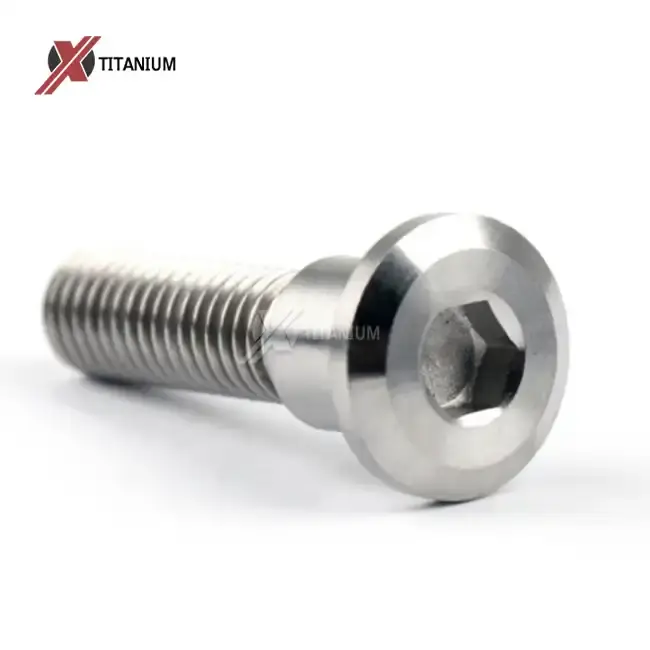
Understanding M8 Titanium Rotor Bolts and Their Advantages
M8 titanium rotor bolts are a big step forward in the technology of fasteners for tough brake assemblies. The Grade 5 Ti-6Al-4V metal has 6% aluminium and 4% vanadium. Its microstructure has a balanced alpha-beta phase that stops stress cracks from spreading when it is loaded and unloaded over and over again. With a density of 4.51 g/cm³, these fasteners reduce mass without affecting structural integrity. This is an important factor that procurement engineers in aerospace applications think about when they set weight limits for aeroplane landing gear parts.
Material Properties Driving Performance
The mechanical benefits come from the fact that titanium is crystalline. At a hardness of about 35 HRC, these bolts stay the same size in a wide range of temperature conditions that are common in high-performance braking situations, from the very cold conditions of offshore platforms to the high temperatures of 400°C that are common in racing. Unlike aluminium alternatives that don't have good shear strength or steel fasteners that rust in marine environments, Grade 5 titanium keeps working well over long periods of time.
Corrosion Resistance in Aggressive Environments
Chloride-rich air is found in places that process chemicals and in coastal sea equipment, which breaks down regular screws very quickly. Scratches in titanium's passive oxide layer cause it to grow back on its own, protecting against pitting rust. Because of this feature, seized steel bolts no longer require extra maintenance, which is a common problem for facility managers who are in charge of heat exchanger systems and pressure tank maintenance plans.
Weight Optimization and Dynamic Response
Cutting down on the rotating mass at the wheel hub immediately makes the suspension more responsive. When racing teams switch from six steel rotor bolts to titanium ones, they get rid of about 18 to 22 grams of rotational inertia per assembly. This decrease improves the accuracy of the steering reaction and lowers the gyroscopic resistance during direction changes. This gives the car a competitive edge that can be measured by lap time telemetry data.
Preparing for Installation: Tools, Torque Settings, and Specifications
Preparation is the key to both successful and costly field fails when installing M8 titanium rotor bolts. Because it has a unique mix of high strength and low modulus of elasticity, it needs to be torqued in a specific way to keep it from deforming plastically.
Essential Tooling Requirements
Calibrated tools are the first step in a precise installation. To use an M8 torque wrench, you need one that is either beam-type or digital and is accurate within ±2% across the 8–12 Nm range. Most click-type wrenches don't have enough sharpness in this lower power band. This should be used with T25 Torx or hex socket drivers made from strong tool steel to keep bolt heads from getting damaged by cam-out during tightening sequences.
For surface preparation, you need cleaning products that don't scratch. Isopropyl alcohol or acetone can clean rotor mounting faces and hub threads of grinding grease and dirt particles without leaving behind any harmful leftovers. Do not use wire brushes on titanium surfaces because they can sink metal particles into them and start galvanic corrosion cells.
Critical Torque Specifications
The coefficient of friction for titanium is very different from that for steel, so torque values had to be changed. When the threads are dry, our Grade 5 M8 rotor nuts with a 1.25mm pitch need 10–12 Nm of installation force. This standard takes into account titanium's tendency to galle, which is when two areas that are touching each other experience sticky wear under high contact pressure.
The clamping force distribution is directly affected by the length of the thread engagement. The best preload for the M8 x 1.25mm geometry is reached when the thread engagement is 1.5 times the nominal diameter. This means that the engagement depth must be at least 12 mm for aluminium hubs and 10 mm for steel hubs. If there isn't enough contact, stress builds up at the first thread that is connected, which increases the risk of fatigue failure during vibration.
Anti-Seize Compound Considerations
Putting on anti-seize paste makes things more complicated. Nickel-based compounds stop galling during assembly, but they change the way friction works, so you need to reduce the torque to 8–10 Nm to get the same clamping force. Molybdenum disulphide formulations work reliably in aircraft uses that need to work in temperatures ranging from -50°C to +400°C. Write down the anti-seize product specifications in the assembly records so that they can be found during quality checks.
Step-by-Step Installation Process for M8 Titanium Rotor Bolts
Methodical execution guarantees the integrity and longevity of the assembly. The next process talks about the installation procedure for M8 titanium rotor bolts, from taking out components to checking that the installation was done correctly.
Removal of Existing Fasteners
Start by putting the brake rotor unit in a device that won't let it turn and doesn't clamp down too hard, which could damage the rotor's friction surface. Apply penetrating oil to steel bolts 15 to 20 minutes before you try to remove them to get rid of corrosion products. To keep bolt heads from rounding, use a driver that is the right size. When steel bolts get damaged, they might need to be carefully drilled out or extracted. This won't happen with titanium fasteners in future repair rounds.
Check the removed nuts for signs of wear. Uneven head contact marks show that the rotor face is out of round or that the hub mounting surface isn't smooth. These problems need to be fixed before installing the premium titanium hardware.
Surface Preparation and Inspection
Clean the hub mounting faces with a solvent and a lint-free cloth. Then, use a straightedge and a feeler gauge to make sure they are flat. If the surface deviation is more than 0.05 mm, it needs to be fixed by machining to make sure that the load is evenly distributed across all pin places. To keep from getting wrong torque readings during installation, burrs around threaded holes need to be removed with a deburring tool or fine grit paper.
Assessing the state of the thread is very important. Use an M8 x 1.25mm tap to clean the hub threads and make sure the threads are solid. When threads are damaged, they show rough tap resistance or material movement, which means that helicoil inserts or hub replacement are needed to keep the clamps secure.
Sequential Installation Procedure
Place the brake rotor on the hub fixing bolts or alignment dowels, making sure that directional rotor designs are facing the right way. Install titanium bolts in a star pattern and tighten them all the way down to make the rotor seating even. This process stops wheel cocking, which makes air gaps that aren't even, which hurts brake performance.
To fix the torque, do it in three steps: the first step should get the end torque to 40%, the second step should get it to 70%, and the last step should get it to the specified level. This graded method lets the material in the rotor be compressed evenly and stresses to be spread evenly around the bolt circle. Mark the heads of each bolt with a paint pen after the last tightening so that you can see if everything is correct when you inspect the job after it's been done.
Thread Locking Compound Application
Medium-strength threadlockers, like Loctite 243, work well for rotor bolt applications that need to be taken apart every so often. Before inserting, put a small drop on the first three thread pitches. Don't use too much compound because it can get into brake parts or mess up the torque-tension relationships. To get the strongest bond, wait 24 hours before putting working loads on the unit.
Post-Installation Verification
Use a clock indicator against the rotor's friction surface to check for physical runout. To keep brake pulsation from happening, the total indicated runout should stay below 0.08 mm. Turn the unit all the way around while keeping an eye on the numbers on the indicators. If there is too much runout, it means that the bolt torque isn't being distributed correctly or that the mounting surfaces are dirty and need to be taken apart and fixed.
Comparing M8 Titanium Rotor Bolts to Other Bolt Materials
When upkeep schedules, performance traits, and failure risk profiles are taken into account, the choice of material for M8 titanium rotor bolts has a direct effect on the total cost of ownership. By understanding these trade-offs, you can make smart choices about procurement that are in line with practical needs.
Steel fasteners are widely available and don't cost much, so they are used in most commodity applications. For general industrial use, grade 8.8 and 10.9 steel bolts have enough tensile strength. The problems happen in places that are acidic, where the protected zinc or cadmium plating wears away, leaving the base metal open to oxidation. When steel nuts become stuck, they have to be removed in a way that damages the hub assemblies and raises the cost of upkeep. Steel's density of 7.85 g/cm³ adds extra weight to situations where weight is important.
Bolts made of an aluminium alloy (usually 7075-T6) are about as light as titanium bolts, but they are much weaker. Aluminium bolts need bigger cross-sections to hold the same amount of weight because their tensile strength is only about 570 MPa. Aluminium is not good for high-vibration brakes because it wears down quickly and easily through grinding wear. The material breaks down quickly in salt water and doesn't work well at high temperatures.
Titanium Grade 5 has the best balance. The tensile strength of 950+ MPa is the same as or higher than that of strengthened steel, but the density is 43% lower. Hexavalent chromium doesn't need a protective coating, and environmental compliance issues aren't a problem because it doesn't rust. The higher cost of the material—usually 8–12 times that of steel per kilogram—is spread out over a longer service life and less downtime for upkeep.
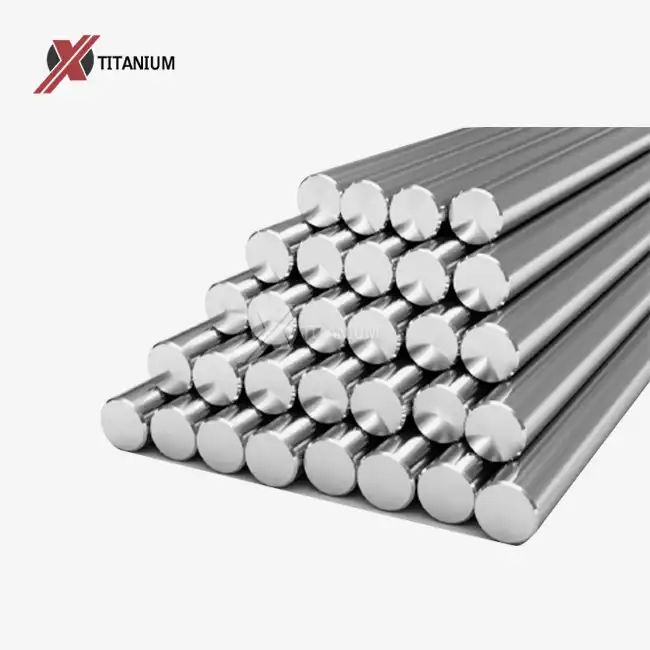
Specialised companies that make aerospace-grade titanium fasteners keep certifications like AS9100 for use in aviation and ISO 13485 for use in medical devices. From mill certification to testing of finished parts, these quality systems make sure that materials can be tracked. As part of the procurement process, it should be required that titanium bar stock meets ASTM B348 standards and that fastener testing procedures follow ASTM F467 for checking mechanical qualities.
Procurement Considerations: Where to Buy and How to Order M8 Titanium Rotor Bolts
Sourcing strategies for M8 titanium rotor bolts affect the resilience of the supply chain and the quality assurance of the parts. Cost optimisation, supplier capability verification, and reliable delivery must all be balanced by procurement teams.
Wholesale distributors can quickly meet standard needs, but they might not have the expert help to handle unique situations. Online business-to-business (B2B) platforms bring together many suppliers, so you can compare prices from different countries. When buying through middlemen, it's very important to make sure the quality of the goods. Ask for material papers that show the chemical makeup through spectrographic analysis and the mechanical properties through tensile testing.
Direct connections with manufacturers are good for large buyers and people who have specific needs. Depending on how complicated the specifications are, the minimum order quantity is usually between 100 and 500 pieces. Lead times are between 4 and 6 weeks for normal configurations and 8 to 12 weeks for unique head styles, special finishes, or length needs that aren't standard. Faster output costs more, but it's worth it when you need to meet tight deadlines for a project.
The prices are set based on the cost of raw materials, the difficulty of making the product, and the number of orders. Standard M8 x 20mm Grade 5 titanium rotor bolts with a natural finish usually cost between $3.50 and $5.80 each when bought in groups of 100 to 500. Because more steps are needed to make them, anodised colour finishes cost an extra $0.80 to $1.20 per piece. 15–25% more is charged for custom head designs or tight spec needs. Above a 1,000-piece barrier, volume discounts become important, and prices could drop 20–30% for yearly supply deals.
Coordinating logistics has an effect on the total landed cost. Even though the cost per kilogram is $8 to $12, air freight is a good option for small sample sales or pressing needs. Ocean container shipping cuts the cost of shipping each item by a huge amount for large sales, but it takes 25 to 35 days to get from one end of the Pacific to the other. Duties and customs clearance make things more complicated. Titanium fasteners usually fall under HTS code 8108.90, and their tariff rates can change based on trade agreements and the country where they are made.
Premium suppliers are set apart by their warranty policies and expert help. Each shipment should come with full material certifications, dimensional inspection reports, and documentation on the surface finish. Quick and helpful tech support answers questions about torque requirements, material compatibility, and the best ways to put things. These extra services are worth a little extra money because they lower the risk of implementation.
Conclusion
To properly install M8 titanium rotor bolts, you need to know how the material works, be able to control the force, and carefully prepare the surface. Performance benefits like resistance to corrosion, lighter weight, and longer service life make up for higher initial costs by lowering the cost of maintenance and making the system more reliable. When purchasing these important fasteners, procurement teams must check the quality certifications, material traceability, and technical support capabilities of the suppliers to make sure the parts meet the needs of the application. Titanium's natural properties can be turned into real practical benefits in aircraft, marine, and high-performance uses when they are installed correctly.
FAQ
Are M8 titanium rotor bolts compatible with all disc brake systems?
Thread compatibility for M8 titanium rotor bolts is not based on the type of brake system, but on the hub material and the state of the threads. When the threads are M8 x 1.25mm, Grade 5 titanium bolts can be used with aluminium, steel, and titanium hubs. To make sure the clamping force is spread out evenly, check that the thread engagement depth meets the minimum 1.5x diameter requirements.
What torque specifications apply compared to steel bolts?
Titanium fasteners usually need 10 to 12 Nm to be installed dry, while steel bolts need 15 to 18 Nm. Titanium has a lower coefficient of friction, but the lower power makes up for that. When anti-seize compounds are used, the reduction must be made even further to 8–10 Nm in order to avoid overstressing the threads and get the right preload.
How often should titanium rotor bolts be inspected or replaced?
During regular brake maintenance, a visual check finds any possible problems. Titanium's resistance to wear and rust usually lets its service life match or go beyond the time between rotor replacements. Replace bolts that have damaged threads, heads that have deformed, or that can't keep the right strength during reassembly rounds.
Partner with Chuanglian for Premium M8 Titanium Rotor Bolts
Baoji Chuanglian New Metal Material Co., Ltd. combines over a decade of titanium processing expertise with comprehensive CNC machining capabilities to deliver precision-engineered Grade 5 Ti-6Al-4V M8 titanium rotor bolts meeting international standards. Our manufacturing facility in Baoji—recognized globally as the "City of Titanium"—maintains ISO 9001 certification and strict quality control protocols ensuring every fastener meets ASTM B348 material specifications and dimensional tolerances of ±0.05mm.
Whether your procurement requirements involve standard M8 configurations or custom head styles with anodized finishes, our engineering team provides application-specific technical support to optimize installation success. We invite procurement managers and technical engineers to contact us directly at info@cltifastener.com or djy6580@aliyun.com for detailed quotations, material certifications, and lead time discussion. As an established manufacturer, we support global supply chains with reliable delivery, comprehensive documentation, and responsive customer service that transforms sourcing challenges into partnership opportunities. Visit cl-titanium.com to explore our complete range of titanium fasteners and machined components.
References
1. Boyer, R., Welsch, G., & Collings, E.W. (1994). Materials Properties Handbook: Titanium Alloys. ASM International, Materials Park, Ohio.
2. Donachie, M.J. (2000). Titanium: A Technical Guide, 2nd Edition. ASM International, Materials Park, Ohio.
3. Bickford, J.H. (2008). Introduction to the Design and Behavior of Bolted Joints: Non-Gasketed Joints, 4th Edition. CRC Press, Boca Raton, Florida.
4. Schutz, R.W. & Thomas, D.E. (1987). "Corrosion of Titanium and Titanium Alloys." ASM Handbook Volume 13: Corrosion, ASM International, pp. 669-706.
5. SAE International. (2015). AMS 4928: Titanium Alloy Bars, Wire, Forgings, Rings, and Drawn Shapes 6Al-4V Annealed. SAE International, Warrendale, Pennsylvania.
6. ISO 898-1:2013. Mechanical Properties of Fasteners Made of Carbon Steel and Alloy Steel—Part 1: Bolts, Screws and Studs with Specified Property Classes. International Organization for Standardization, Geneva, Switzerland.

Learn about our latest products and discounts through SMS or email