- English
- French
- German
- Portuguese
- Spanish
- Russian
- Japanese
- Korean
- Arabic
- Greek
- German
- Turkish
- Italian
- Danish
- Romanian
- Indonesian
- Czech
- Afrikaans
- Swedish
- Polish
- Basque
- Catalan
- Esperanto
- Hindi
- Lao
- Albanian
- Amharic
- Armenian
- Azerbaijani
- Belarusian
- Bengali
- Bosnian
- Bulgarian
- Cebuano
- Chichewa
- Corsican
- Croatian
- Dutch
- Estonian
- Filipino
- Finnish
- Frisian
- Galician
- Georgian
- Gujarati
- Haitian
- Hausa
- Hawaiian
- Hebrew
- Hmong
- Hungarian
- Icelandic
- Igbo
- Javanese
- Kannada
- Kazakh
- Khmer
- Kurdish
- Kyrgyz
- Latin
- Latvian
- Lithuanian
- Luxembou..
- Macedonian
- Malagasy
- Malay
- Malayalam
- Maltese
- Maori
- Marathi
- Mongolian
- Burmese
- Nepali
- Norwegian
- Pashto
- Persian
- Punjabi
- Serbian
- Sesotho
- Sinhala
- Slovak
- Slovenian
- Somali
- Samoan
- Scots Gaelic
- Shona
- Sindhi
- Sundanese
- Swahili
- Tajik
- Tamil
- Telugu
- Thai
- Ukrainian
- Urdu
- Uzbek
- Vietnamese
- Welsh
- Xhosa
- Yiddish
- Yoruba
- Zulu
OEM Titanium Exhaust Bolts: Specs, Tolerances, and Sourcing Tips
If you manufacture or brand motorcycle exhaust systems, choosing the right fasteners is not a minor detail — it is a structural decision. A titanium exhaust bolt made from Grade 5 Ti-6Al-4V alloy delivers tensile strength up to 1,200 MPa, weighs 40% less than comparable steel fasteners, and resists thermal degradation at temperatures up to 500°C. For OEM procurement teams sourcing exhaust flange bolts, header bolts, or aftermarket replacement hardware, understanding exact specifications, thread tolerances, and supplier evaluation criteria can protect both product integrity and brand reputation.
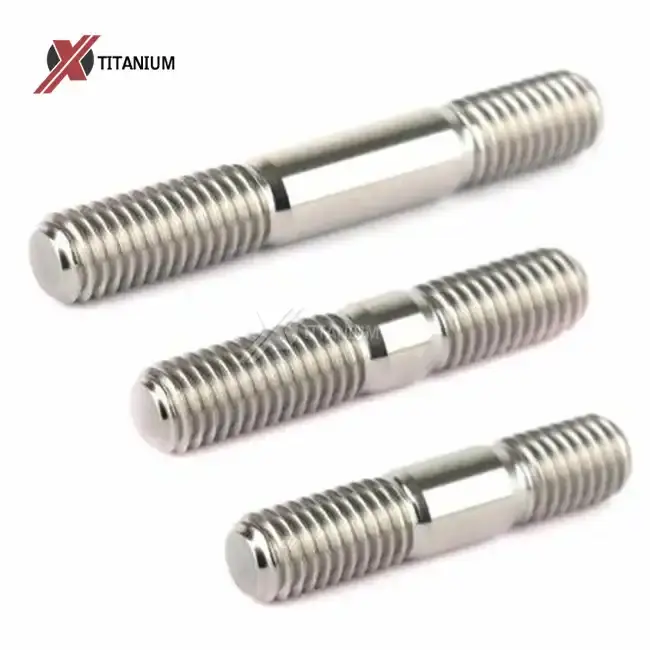
Understanding OEM Titanium Exhaust Bolts: Key Specs and Benefits
What Grade 5 Titanium Offers That Others Cannot?
Grade 5 Ti-6Al-4V is the standard for high-stress fastener uses in the business. It has a yield strength of 1,100 MPa and a very low mass thanks to the aluminum and vanadium alloying elements. When an exhaust system goes back and forth between room temperature and 500°C, the bolt has to keep its holding force without permanently stretching. This can be done with Grade 5 titanium, but not with Grade 2 economically pure titanium or normal stainless steel. Because titanium gear stays strong even when heated and cooled many times, high-end exhaust line names like Akrapovič and Yoshimura use it.
Critical Specifications and Tolerances
Chenglian makes OEM exhaust bolts that meet the following checked standards:
- Material: Ti-6Al-4V (ASTM B348 Grade 5), verified by spectrographic PMI testing
- Size range: M6 to M36; M8 and M10 are the most common exhaust flange configurations
- Tensile strength: 1,200 MPa minimum
- Yield strength: 1,100 MPa minimum
- Hardness: 350 HV (Vickers)
- Thread tolerance class: 6g per ISO 965, using rolled threads to preserve grain-flow fatigue resistance
- Temperature resistance: Sustained performance up to 500°C (932°F)
- Weight reduction: Approximately 40% lighter than equivalent steel bolts
- Compliance: ISO 9001 quality management; AMS 4928 aerospace-grade titanium alloy standard
A quality mark that can't be skipped for a titanium exhaust bolt is thread rolling instead of cutting. Rolled threads keep the material's grain structure, which gives them a measurably longer fatigue life in high-vibration exhaust settings. This is one of the things that sets precision OEM providers apart from commodity vendors.
Comparing Titanium Exhaust Bolts with Alternatives: Making the Right Choice
Titanium vs. Stainless Steel: The Real Trade-Off
Exhaust nuts made of stainless steel cost less up front. But procurement workers who look at the total cost over the whole tenure come to a different opinion. It is common for stainless steel screws on exhaust manifolds to seize, which means they heat bond to the flange and can't be removed without damaging the manifold or spending a lot of money. The passive oxide layer on Grade 5 titanium completely stops this from happening. This eliminates the risk of rust welding and greatly lowers the cost of maintenance labor over the product's useful life.
When it comes to weight, titanium bolts are about 40% lighter than steel bolts of the same size. When a builder puts in twelve to sixteen bolts on a full exhaust system, that decrease in total weight makes a big difference in the system's claimed weight advantage, which is a straight selling point in the aftermarket. Anodized aluminum bolts are even lighter, but aluminum can't handle temperatures above 200°C in the exhaust without losing strength. They can't be used instead of header or mid-pipe flanges. At the end of the day, it's clear that Grade 5 titanium screws are the better technical and business choice for OEM exhaust uses that involve high temperatures and a lot of vibration.
Sourcing OEM Titanium Exhaust Bolts: Procurement and Supplier Insights
How to Evaluate a Titanium Exhaust Bolt Supplier
Finding partnerships with titanium exhaust bolt manufacturers requires more than just looking at price per piece. Once a product is on the market, the following factors protect OEM buyers from quality problems:
- Material verification: Demand PMI (Positive Material Identification) reports confirming Al 6% / V 4% composition. Substitution of Grade 2 for Grade 5 is a known risk in commodity procurement.
- Thread inspection protocol: Suppliers should use Go/No-Go gauges on every production batch to confirm ISO 6g thread class compliance.
- Mechanical testing: Request tensile test certificates and hardness test results per production lot, not per material heat only.
- Anti-galling treatment: Titanium threads gall against dissimilar metals under high clamping pressure. Specify copper-based or nickel-based anti-seize coating, or confirm the customer applies it at assembly. Some OEM builders specify silver-based compounds for extreme-temperature zones above 450°C.
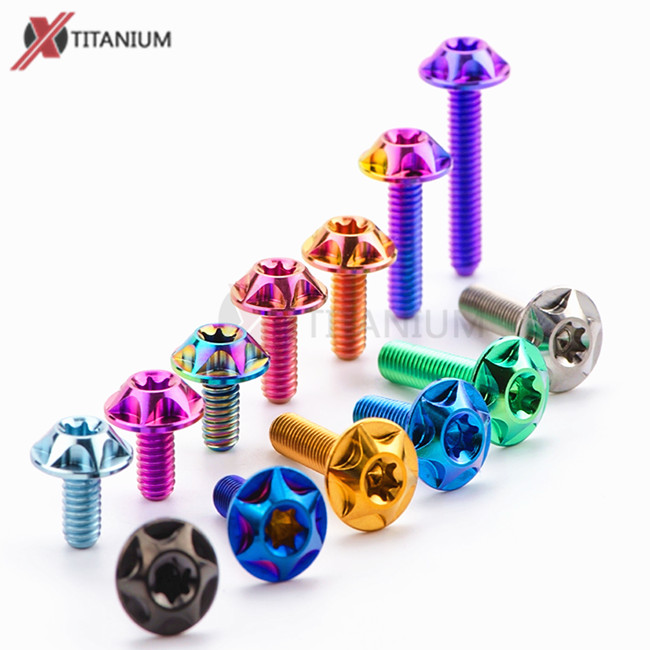
- Surface finish options: Chuanglian offers polishing, anodizing, and nitriding. Note that standard anodizing produces vivid colors — gold, blue, green, purple, black, rainbow — but color stability above 300°C is limited. Natural titanium (mill finish or polished) or PVD nitriding is the recommended specification for exposed header environments.
Baoji, China, is known around the world as the "City of Titanium" and has the most titanium machining equipment of any city in the world. Chuanglian lives there and runs more than a dozen CNC machines. He has more than ten years of experience making titanium fasteners for clients in motorsport, aerospace, and marine industries around the world.
MOQ, Lead Times, and Custom Orders
Chuanglian's standard OEM orders for exhaust bolts start at 500 to 1,000 pieces for initial sample proof runs and grow to quarterly volume orders. CNC machining can be used to make parts with custom head shapes, non-standard shank lengths, and unique flange configurations. Usually, it takes three to four weeks from the approval of the drawing to the delivery of the first item. This is in line with most OEM development plans. Since prices go down as volume goes up, placing blanket orders every three months is a cost-effective way for brands with regular yearly demand to buy things.
Installation, Maintenance, and Longevity of Titanium Exhaust Bolts
Torque Settings and Anti-Seize Application
When titanium exhaust bolt fasteners are installed correctly, they last their whole useful life. Before installation, you must use an anti-seize compound based on copper or nickel on all threads. This is not an option. Titanium tends to galle, which means that dry installation against a stainless steel plate can firmly bond threads even when the assembly is torqued. When anti-seize is used, titanium bolts can be torqued to about 80% to 90% of the manufacturer's steel standard for the same diameter. This is because the lube lowers the friction coefficient and changes the relationship between torque and clamp force.
During fitting, don't use impact tools. With the right hex key or socket and a torque wrench that has been measured, you can keep the head from rounding and make sure that the clamping force is the same in all flange places. Once the first heat cycle is over, re-torque to the required level; thermal seating is standard and expected. There isn't much routine repair. At every service interval, look for signs of galling in the threads. Torque-to-yield steel fasteners need to be changed after only one use, but titanium nuts that don't bend can be used again and again.
Conclusion
Choosing the right exhaust fastener can affect how reliable the system is, how easy it is to service, and how trustworthy the brand is. Titanium exhaust bolt made from Grade 5 titanium can handle the high temperatures, high loads, and rust that come with exhaust conditions. However, they are heavier than other options, which is something that should not be considered when making a high-quality product. The standards are clear, the buying factors can be used, and the installation steps are easy to understand. Standardizing on confirmed Ti-6Al-4V fasteners by OEM exhaust makers cuts down on warranty claims, boosts customer happiness, and makes goods more competitive.
FAQ
Q1: Does a titanium exhaust bolt require anti-seize compound?
A: Yes, all the time. Titanium often galls, which is a type of cold welding, when threaded against metals that are not the same. High-temperature anti-seize that is based on copper or nickel is required for accurate torque application and easy removal during maintenance.
Q2: Will anodized color survive exhaust temperatures?
A: Anodizing in the standard way fades quickly above 300°C. At header temperatures, a natural titanium finish or PVD nitriding will last longer. Many people who buy titanium aftermarket like the way it looks when it changes color naturally from gold to blue due to heat.
Q3: What thread sizes cover most motorcycle exhaust flanges?
A: M8 and M10 fit most exhaust manifold and mid-pipe flange uses. Chuanglian's CNC machining service can make parts with custom lengths and head shapes that aren't standard.
Q4: Can titanium bolts be reused after removal?
A: Yes. Torque-to-yield steel fasteners don't work within their elastic range, but Grade 5 titanium bolts do when they are placed properly. They can be used again and again as long as the threads don't show any galling or warping when you look at them.
Q5: What is a realistic lead time for OEM sample orders?
A: Samples of the first article usually ship three to four weeks after the drawing is approved, and production batches follow a similar time frame.
Partner with Chuanglian for Your Titanium Exhaust Fastener Supply
Genuine Grade 5 titanium exhaust bolts are supplied by Chuanglian to OEM exhaust manufacturers in the US, Europe, and other places. Our CNC-machined fasteners are made to meet ISO 9001 and AMS 4928 standards. You can track all of the materials used to make them, and we can make them in any shape or size, from M6 to M36. Get in touch with our technical team right away to talk about your needs, ask for samples, or get a quote on a bulk order. You can email us at info@cltifastener.com or djy6580@aliyun.com.
References
1. ASTM International. ASTM B348: Standard Specification for Titanium and Titanium Alloy Bars and Billets. ASTM International, 2019.
2. ASM International. Titanium: A Technical Guide, 2nd Edition. ASM International, 2000.
3. SAE International. AMS 4928: Titanium Alloy Bars, Wire, Forgings, Rings, and Drawn Shapes. SAE International, 2021.
4. Bickford, John H. An Introduction to the Design and Behavior of Bolted Joints, 4th Edition. CRC Press, 2007.
5. Donachie, Matthew J. Titanium: A Technical Guide. ASM International, 2000.
6. ISO. ISO 965-1: General Purpose Metric Screw Threads — Tolerances. International Organization for Standardization, 2013.
Learn about our latest products and discounts through SMS or email