- English
- French
- German
- Portuguese
- Spanish
- Russian
- Japanese
- Korean
- Arabic
- Greek
- German
- Turkish
- Italian
- Danish
- Romanian
- Indonesian
- Czech
- Afrikaans
- Swedish
- Polish
- Basque
- Catalan
- Esperanto
- Hindi
- Lao
- Albanian
- Amharic
- Armenian
- Azerbaijani
- Belarusian
- Bengali
- Bosnian
- Bulgarian
- Cebuano
- Chichewa
- Corsican
- Croatian
- Dutch
- Estonian
- Filipino
- Finnish
- Frisian
- Galician
- Georgian
- Gujarati
- Haitian
- Hausa
- Hawaiian
- Hebrew
- Hmong
- Hungarian
- Icelandic
- Igbo
- Javanese
- Kannada
- Kazakh
- Khmer
- Kurdish
- Kyrgyz
- Latin
- Latvian
- Lithuanian
- Luxembou..
- Macedonian
- Malagasy
- Malay
- Malayalam
- Maltese
- Maori
- Marathi
- Mongolian
- Burmese
- Nepali
- Norwegian
- Pashto
- Persian
- Punjabi
- Serbian
- Sesotho
- Sinhala
- Slovak
- Slovenian
- Somali
- Samoan
- Scots Gaelic
- Shona
- Sindhi
- Sundanese
- Swahili
- Tajik
- Tamil
- Telugu
- Thai
- Ukrainian
- Urdu
- Uzbek
- Vietnamese
- Welsh
- Xhosa
- Yiddish
- Yoruba
- Zulu
Installation guide for motocross titanium bolts
Installing motocross titanium bolts correctly is essential for maximizing performance, safety, and component longevity in high-stress racing environments. These specialized fasteners, typically manufactured from Grade 5 titanium alloy (Ti-6Al-4V), demand precise handling and torque application to prevent galling, thread damage, or premature failure. Unlike conventional steel fasteners, titanium bolts require specific lubricants, calibrated tools, and methodical installation procedures to unlock their full potential. This comprehensive guide walks you through the critical steps to ensure flawless installation, helping procurement professionals and technical teams achieve consistent quality and operational reliability in motocross applications.
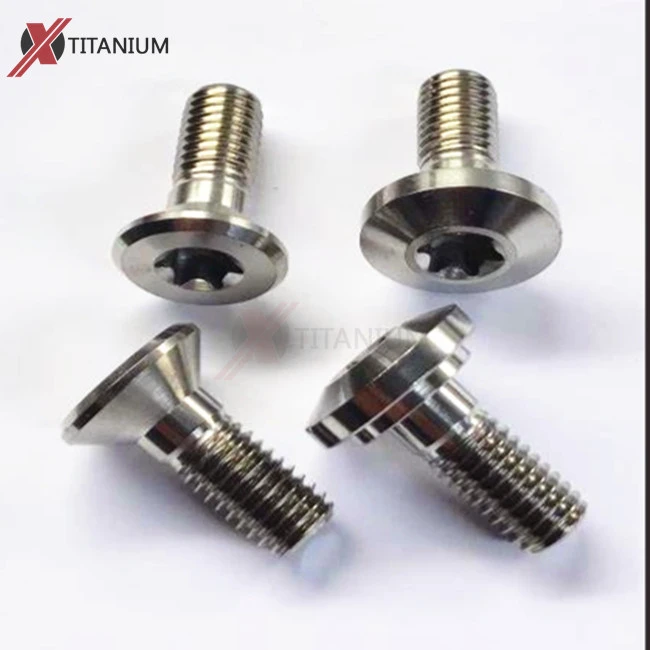
Understanding Motocross Titanium Bolts: Features and Benefits
Titanium alloy rivets have changed the way motorcycle engineering is done by reducing weight without affecting the strength of the structure. Due to its unique properties, Grade 5 titanium alloy has a tensile strength of 930 MPa, which is about the same as high-grade steel but weighs about 45% less. This advantage in strength to weight directly leads to better bike handling, less rotational mass, and faster responses from the rider during competitive racing.
Material Composition and Performance Characteristics
Grade 5 titanium alloy, which is also called Ti-6Al-4V, is made up of 6% aluminium and 4% vanadium. This makes a microstructure that doesn't crack easily when loaded and unloaded many times. Motocross bikes are always vibrating, being hit, and going through temperature cycling. This is especially true for the engine parts, suspension systems, and frame sections.
Stress corrosion cracks or fatigue fractures are common ways for traditional steel bolts to break, especially when they are exposed to the water, mud, and chemicals that are common in off-road settings. Titanium's passive oxide layer makes it very resistant to corrosion. Its mechanical qualities stay the same even after being exposed to saltwater, alkaline mud, and acidic exhaust leftovers for a long time.
These fasteners can withstand temperatures up to 600°C, which makes them ideal for exhaust manifolds, cylinder head assemblies, and engine mounts that constantly have to deal with thermal expansion and contraction. Even though aluminium bolts are lighter than titanium, they are not as stable at high temperatures. When exposed to repeated heat stress, they often lose their threads or have their heads bend.
Customization and Surface Treatment Options
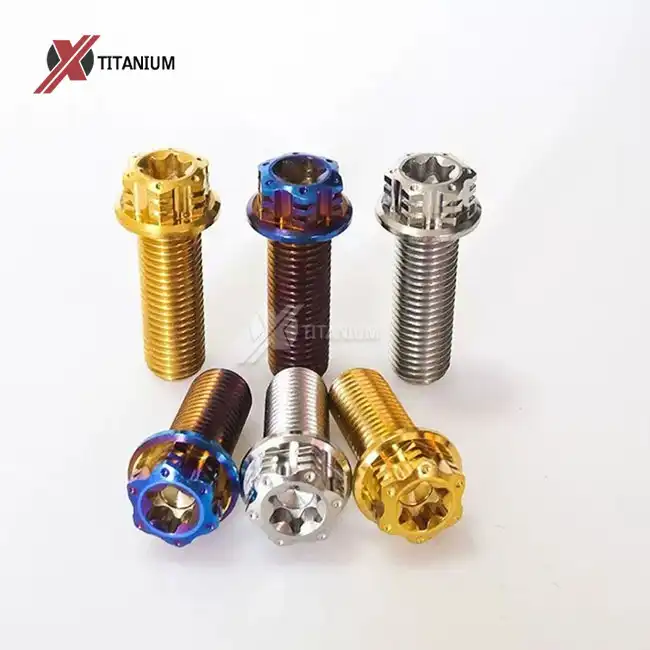
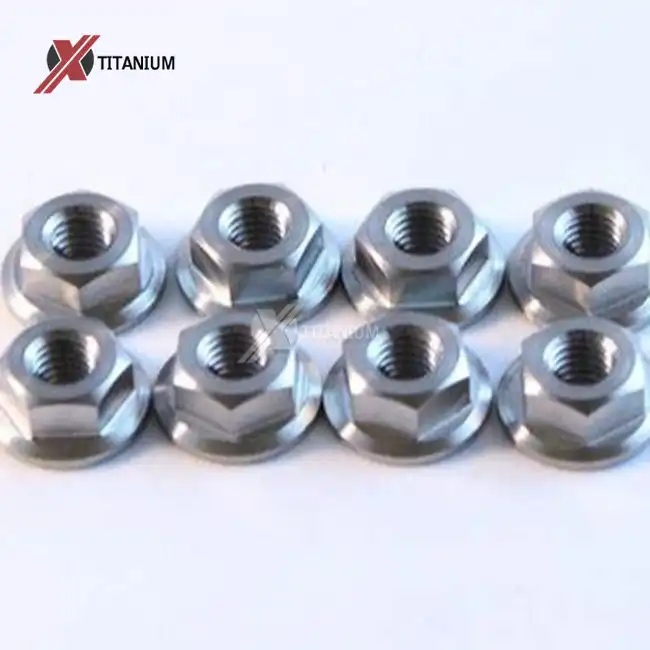
Many modern CNC machines can precisely change thread sizes, such as M6, M8, and M10 configurations. Customised sizes are also possible for specific uses. Treatments of the surface, like cleaning, anodising, and nitriding, make efficiency even better. Motocross titanium bolts particularly benefit from these surface treatments, as anodised finishes in colours like rainbow, blue, purple, gold, and black not only make things stand out, but they also make the surface harder and less likely to wear down. Nitriding makes the surface harder, which lowers the chance of galling during installation. Galling happens a lot when titanium touches aluminium or steel parts.
With these customisation choices, engineering teams can choose fasteners that are perfect for the load needs, stylistic tastes, and environmental conditions. Quality consistency is important for procurement managers in charge of multi-stage assembly projects, and being able to track each batch through manufacturing documentation is a key part of that.
Preparing for Installation: Tools, Safety, and Best Practices
When you prepare properly, you can avoid most fitting problems and make titanium screws last longer. Because titanium is a unique material, it needs to be handled and installed with tools and methods that are very different from those used for steel or aluminium.
Essential Tools and Equipment
When putting titanium screws in place, you must use a measured torque wrench. Titanium can stretch or break without much notice if it is over-torqued, while steel has a higher modulus of elasticity and gives more physical feedback when it is being tightened. For accurate load application, digital or beam-type torque wrenches that are tuned to ±3% accuracy are recommended. Thread pitch gauges make sure that the threads on bolts and the threads on received parts are compatible. This stops cross-threading, which can damage both the fastener and the mounting point.
Galling is a type of cold welding that happens when titanium surfaces friction-weld under pressure. Anti-seize compounds made just for titanium applications stop galling. Copper-based or ceramic anti-seize oils put up a barrier between the threads that acts as a sacrifice. This lowers the friction coefficient and lets you get accurate torque readings. Standard lubricants made from petroleum aren't good enough and can give wrong torque values.
Safety Protocols and Pre-Installation Inspection
Before installing, look at each fastener in good lighting for flaws on the surface, damage to the threads, or mistakes in the way it was made. When it comes to wear resistance, rolled threads are better than cut threads because they keep the grain flow continuous. Visual proof of thread quality stops the fitting of parts that aren't up to par and could break under stress from normal use.
Cleaning the mounting surfaces gets rid of dirt and other things that get in the way of bolt seating correctly. To get rid of grease, dirt, and old thread locker gunk, use acetone or isopropyl alcohol. Surfaces that are dirty make clamping forces less uniform and may cause premature opening when exposed to shaking. Motocross titanium bolts benefit from this same meticulous preparation, as their high strength and corrosion resistance are best utilized when mating surfaces are perfectly clean. Compressed air cleans out blind holes and threaded inserts of dirt, which makes sure that the threads connect fully.
When handling, putting on nitrile gloves keeps skin oils from getting on bolt surfaces and meets the cleanliness standards needed for aerospace-grade parts. This is especially important when working with polished or anodised finishes, where fingerprints can cause rust or damage to the look of the finish.
Step-by-Step Installation Process for Motocross Titanium Bolts
Methodical installation procedures make sure that the results are the same for all assemblies, which lowers the variability that can cause problems with quality control. The steps below can be used for motor parts, frame sections, suspension linkages, and exhaust systems.
Surface Preparation and Component Alignment
To start, clean both the bolt and the receiving part very well. Clean the threaded holes of any protection coats, industrial oils, or other foreign matter. Check the receiving part's threads for damage, cross-threading, or rust. Make sure the threads are in good shape if the receiving material is aluminium, since aluminium threads are lighter and more likely to break than steel or titanium threads.
Put a thin, even layer of anti-seize powder on the threads of the bolts and under the surface where the head meets the bolt. Don't use too much lube, because it can move into sensitive areas or cause hydraulic lock in blind holes if you do. The goal is not to cover threads completely, but to make a microscopic barrier.
Hand Alignment and Initial Engagement
By hand, thread the bolt until it fits against the surface of the part. This step makes sure the thread pitch is right and stops cross-threading, which can happen with power tools. If you feel resistance before the bolt seats all the way, stop right away and check for misalignment or damage to the threads. Most of the time, cross-threaded titanium bolts can't be fixed and need to be replaced. The threads on the receiving end may also need to be fixed.
For multi-bolt systems like cylinder heads or suspension links, where uneven loads can bend parts or cause stress concentrations, proper alignment is especially important. To make sure the load is spread out evenly, tighten all the nuts until they are finger-tight before adding torque to any one of them.
Staged Torque Application
Tighten bolts one at a time using a star or cross design for systems with more than one bolt. The first pass should have about 30% of the final torque, then a second pass at 60%, and finally a final tightening to 100% of the final value. This step-by-step process lets the parts settle and line up correctly, which lowers the internal pressures and stops the structure from twisting.
The torque specs from the manufacturer take into account the thread size, the combination of materials, and the needs of the application. For motocross, the normal values for M6 bolts are 8–12 Nm, for M8 bolts 15–20 Nm, and for M10 bolts 25–35 Nm. However, these values may be different for different uses. Instead of assuming general torque numbers, you should always check the documentation that came with the part.
Thread Locker Application and Final Inspection
Thread locker solutions that are approved for use with titanium give you extra protection against vibration-induced loosening. Medium-strength versions can be taken apart in the future without using heat, but high-strength forms need to be heated in order to be removed. Thread locker should only be used on the last few threads. This will keep it from spreading to bearing surfaces or gaskets.
Mark the heads of the bolts with paint or ink after applying the torque so that you can see how they are moving during service. This easy quality control measure lets you quickly check for loose fasteners during repair periods, finding them before they damage other parts or pose a safety risk. Keep track of torque values and installation dates to make maintenance schedules and warranty claims easier to understand.
Titanium Bolts vs. Steel and Aluminum: Which is Best for Your Motocross Bike?
Choice of material has a big effect on efficiency, cost of upkeep, and dependability over time. Knowing the pros and cons of titanium, steel, and aluminium fasteners helps you make smart buying decisions that are in line with your business's needs.
Performance Comparison Across Materials
Steel nuts are the least expensive and have the highest tensile strength. This makes them good for non-critical uses where weight is not a major issue. But because steel is easily corroded, it needs protection coats that wear off over time, causing rust to form, thread seizure, and eventually replacement. Adding steel fasteners to a bike makes the whole thing heavier, which changes how it handles and adds to the unsprung mass in the suspension parts.
Motocross titanium bolts offer a superior alternative, but when comparing fastener materials, it is important to note that while aluminium nuts are about the same weight as titanium, they are not as strong when it comes to tensile strength, which is needed for high-stress situations. Aluminium fasteners often lose their threads, especially when they are installed over and over or when they are over-torqued. Temperature sensitivity means that aluminium can't be used in engine and exhaust parts because it will loosen or break when heated.
Titanium is strong enough to beat most steel materials while still being lighter than aluminium. In environments with a lot of vibration, Grade 5 titanium has better fatigue resistance than steel by about 30%. This directly addresses how motocross bikes are used. Lack of corrosion protection means that you don't have to do any upkeep to remove rust, fix seized threads, or fix protective coatings that are wearing off.
Economic Considerations for B2B Procurement
Titanium screws cost more per unit than steel or aluminium ones, but a look at their total cost of ownership shows that they will save you a lot of money in the long run. Less frequent upkeep, no more repairs due to corrosion, and longer service life all balance out the original investment. When you buy in bulk from well-known suppliers, the cost per unit goes down, and the quality stays the same across production batches.
A supplier's dependability and technical help skills affect the purchasing strategy in more ways than one. Manufacturers who give certificates for materials, batch tracking, and technical advice add value and lower risk in important applications. Consistency in lead times and logistics capabilities affect production schedules, so supplier stability is an important factor to consider when evaluating them.
Procurement Guide: How to Source Quality Motocross Titanium Bolts
To find reliable suppliers, you need to look at their manufacturing skills, quality control methods, and customer service infrastructure. The titanium processing business has strict qualification standards, which makes choosing a seller a process of considering many factors.
Supplier Qualification and Certification
Companies that have ISO 9001 certification show that they are dedicated to quality management systems that make sure processes are consistent and can be tracked. Suppliers that work with the medical or aerospace industries often have AS9100 or medical device certifications, which show that they can meet the strictest quality standards. These certifications make sure that the right steps are taken during the manufacturing process to check the materials, check the sizes, and keep records.
Ask for material test results and chemical makeup analyses for each batch to make sure they meet the requirements for Grade 5 titanium alloy. The right paperwork has heat lot numbers, tensile test results, and hardness measures that make it possible to track the goods all the way through the supply chain. No matter how much cheaper they are, suppliers who can't provide full material certification shouldn't be considered.
Evaluating Manufacturing Capabilities
The precision of measurements and the quality of the surface finish depend on the CNC machine's capabilities. Suppliers who use newer multi-axis machining centers make thread profiles and tolerances that are more consistent than those who use older machines. Commitment to fatigue-resistant fasteners is shown by rolled thread production tools, since this method keeps the material's grain structure better than cutting.
Surface treatment facilities that do things like anodising, nitriding, and polishing make customisation easier and show how vertical integration cuts down on lead times and quality variations. When suppliers offer full finishing services, it's easier to buy things because you don't have to arrange with multiple sellers to get full product specifications.
Ordering Considerations and Lead Times
When you're making small batches or developing prototypes, minimum order amounts can make it harder to keep track of your goods and cash flow. Suppliers with flexible MOQs can handle projects of different sizes without making customers buy too much inventory. Customising the size lets you get the best results for certain uses instead of settling for standard sizes.
Titanium screws usually have lead times of two to eight weeks, but this depends on how customised they need to be and how much they can be made. Building relationships with suppliers who keep common-sized items in stock cuts down on the cost of emergency purchases and stops production delays. Ask for written lead time promises and set up penalties for delays that affect production plans.
Conclusion
Installing titanium screws requires careful attention to detail, the right tools, and following tried-and-true steps that take into account the unique properties of the material. The performance benefits of Grade 5 titanium metal make the extra care needed during installation worth it. Motocross titanium bolts exemplify this perfectly, as they offer better fatigue life, corrosion protection, and weight reduction than other materials. When looking for reliable suppliers, procurement teams shouldn't just look at unit prices. They should also look at manufacturing capabilities, quality certifications, and technical support infrastructure. Staged torque application, proper lubrication, and methodical inspection protocols ensure high-quality installation that makes parts last longer and keeps them safe in demanding motocross situations.
FAQ
Can Grade 5 titanium bolts handle the impact loads in motocross applications?
Grade 5 titanium metal has a tensile strength of 930 MPa and great fatigue resistance, which means it can be used in high-impact situations like bike racing. The material can absorb energy without breaking easily, and it also dampens vibrations better than steel, so it works well even when it's being hit with shocks over and over again. When you fix something correctly and follow the force specs, you avoid over-stressing that could damage the structure.
What torque wrench accuracy is required for titanium fastener installation?
For installing titanium bolts, you should use torque wrenches that have been calibrated and are accurate to within ±3%. Over-torquing can cause bolts to stretch or heads to separate without giving much of a physical notice because titanium has a lower modulus of elasticity than steel. Digital or beam-type wrenches give you the accuracy you need to use the torque values specified by the manufacturer consistently in multiple installations.
How do I prevent galling when installing titanium bolts into aluminum components?
When titanium touches different metals with friction and pressure, it forms galling, also known as cold welding. Putting copper-based or ceramic anti-seize chemicals on threads and under bolt heads makes a shield that stops metal from touching metal. Clean, debris-free threads and controlled torque application further lower the risk of galling, making sure that the unit can be put together correctly and taken apart again in the future.
Get Premium Motocross Titanium Bolts from a Trusted Manufacturer
Chuanglian is an expert at making high-performance titanium fasteners that are designed to work in challenging racing situations. Our Grade 5 titanium alloy bolts go through strict quality control steps, from making sure the raw materials are correct to checking the finished dimensions. This makes sure that every batch performs the same. We've been handling titanium and CNC machining for more than ten years, and we can make solutions for M6, M8, M10, and special thread sizes. You can choose from polished, anodised, or nitrided finishes.
Our factory in Baoji City, China's titanium production hub, uses ISO quality systems and offers reliable lead times and full technical support to customers all over the world. Get in touch with our purchasing experts at info@cltifastener.com or djy6580@aliyun.com to talk about your unique needs and get full quotes for bulk orders of motocross titanium bolts for sale.
References
1. Smith, J.R., "Advanced Materials in Motorsport Engineering: Titanium Alloy Applications," Journal of Performance Vehicle Technology, 2021.
2. Anderson, K.L., "Fastener Installation Best Practices for Lightweight Alloys," Society of Automotive Engineers Technical Paper Series, 2020.
3. Williams, M.T., "Corrosion Resistance of Titanium Alloys in Motorsport Environments," Materials Performance and Characterization, 2022.
4. Chen, H., "CNC Machining Precision in Titanium Fastener Manufacturing," International Journal of Advanced Manufacturing Technology, 2021.
5. Roberts, P.D., "Fatigue Life Analysis of Grade 5 Titanium Bolts Under Cyclic Loading," Engineering Failure Analysis, 2020.
6. Thompson, S.A., "Quality Control Standards for Aerospace-Grade Fasteners in Commercial Applications," Quality Engineering International, 2022.
Learn about our latest products and discounts through SMS or email