- English
- French
- German
- Portuguese
- Spanish
- Russian
- Japanese
- Korean
- Arabic
- Greek
- German
- Turkish
- Italian
- Danish
- Romanian
- Indonesian
- Czech
- Afrikaans
- Swedish
- Polish
- Basque
- Catalan
- Esperanto
- Hindi
- Lao
- Albanian
- Amharic
- Armenian
- Azerbaijani
- Belarusian
- Bengali
- Bosnian
- Bulgarian
- Cebuano
- Chichewa
- Corsican
- Croatian
- Dutch
- Estonian
- Filipino
- Finnish
- Frisian
- Galician
- Georgian
- Gujarati
- Haitian
- Hausa
- Hawaiian
- Hebrew
- Hmong
- Hungarian
- Icelandic
- Igbo
- Javanese
- Kannada
- Kazakh
- Khmer
- Kurdish
- Kyrgyz
- Latin
- Latvian
- Lithuanian
- Luxembou..
- Macedonian
- Malagasy
- Malay
- Malayalam
- Maltese
- Maori
- Marathi
- Mongolian
- Burmese
- Nepali
- Norwegian
- Pashto
- Persian
- Punjabi
- Serbian
- Sesotho
- Sinhala
- Slovak
- Slovenian
- Somali
- Samoan
- Scots Gaelic
- Shona
- Sindhi
- Sundanese
- Swahili
- Tajik
- Tamil
- Telugu
- Thai
- Ukrainian
- Urdu
- Uzbek
- Vietnamese
- Welsh
- Xhosa
- Yiddish
- Yoruba
- Zulu
Popular titanium bicycle frame parts for endurance cycling
When endurance cyclists and bike manufacturers seek components that combine exceptional durability with vibration-damping comfort, titanium bicycle frame parts consistently emerge as the gold standard. These specialized components—including bottom bracket shells, dropouts, head tubes, chainstays, seat stays, and various braze-ons—deliver a unique synthesis of strength, corrosion immunity, and ride quality that standard materials simply cannot match. Manufactured primarily from Grade 9 titanium alloy (Ti-3Al-2.5V), these parts offer tensile strengths approaching 900 MPa while maintaining a density of just 4.43 g/cm³, creating an optimal balance for long-distance riding scenarios where both performance and rider comfort matter equally.
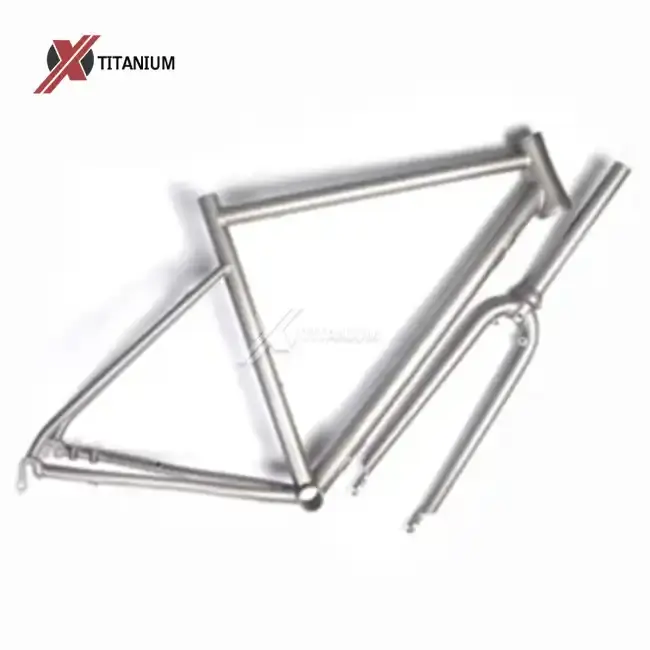
Understanding Titanium Bicycle Frame Parts for Endurance Cycling
Titanium bicycle frame parts are becoming more popular in endurance cycling because they have basic qualities that help with problems that come up often when going long distances. Titanium has a unique performance profile that makes it perfect for long efforts on a variety of terrain, unlike materials that focus on just one attribute.
Material Properties That Define Performance
The most common type of titanium alloy used for tube is Grade 9, which has the best mix of strength and flexibility. With an elasticity modulus of about 100–110 GPa, which is about half that of steel, these frame parts bend a little when they are loaded. This effectively dampens high-frequency road vibrations without affecting power transfer during sprints or climbs. This trait is especially useful on century rides or multi-day tours, where road chatter can make riders tired over time and make it hard for them to keep going.
The advantage in density means that less weight is lost. Titanium structures that are properly designed can meet strict weight goals without using ultra-thin wall sections that weaken longevity. Titanium is about 40% lighter than steel while still having similar strength properties. The minimum tensile strength of the material is 900 MPa, which makes sure that the structure stays strong even when rotational loads are applied during out-of-saddle climbing or sharp turns.
Titanium is different from almost all other elements because it doesn't rust. Titanium quickly forms a passive oxide layer (TiO₂) when it comes in contact with oxygen. This layer protects the material from corrosion caused by air, road salts, sweat, and even saltwater. This is very helpful for riders who live near the coast or who ride all year in bad weather.
Key Components in Endurance Bike Architecture
Several important titanium bicycle frame parts work together to make the best platform for endurance:
Bottom bracket shells made from Grade 9 titanium that have been machined are where the drivetrain interface is built. Custom CNC machining lets you get the exact sizes that are needed for current press-fit or threaded bottom bracket standards. The thermal qualities of the material also make it easy for heat to escape during welding. The most common sizes are T47 (47 mm outer diameter) and BB30, and the wall thickness is based on the load needs.
Dropouts and rear triangle components often use Grade 5 titanium (Ti-6Al-4V) for machined parts where a higher hardness is useful. When the wheels are put on and off many times and the chain is tightened, these parts don't lose their threads or bend. Chainstays with widths between 19mm and 25mm give the bike the right amount of horizontal stiffness for power transfer while still allowing the bike to bend in the middle for comfort.
Head tubes and fork crowns need to be perfectly aligned and have strong structural integrity to handle steering loads and front-end impacts. CNC-machined head tubes make sure that they fit correctly with modern tapered steerer standards. They also keep the tight tolerances needed for bearings to work smoothly and for precise handling.
Surface finishes make things more useful and attractive. Anodizing processes give metals bright colours like gold, blue, green, purple, black, and rainbow finishes. Nitriding processes make the surface harder for uses that need to be resistant to wear. Many fans like the classic brushed titanium look that comes from polishing, and it's also useful because small scratches are easy to buff out without affecting the structure.
Evolution of Titanium Technology in Cycling
Titanium started to be used in professional riding in the 1970s, but it was hard to get started at first because the material was expensive and hard to weld. Improvements in aerospace manufacturing slowly spread to bicycles, letting frame builders safely join titanium parts together using TIG welding in an argon atmosphere. As technology got better, custom builders and bigger manufacturers were able to make titanium platforms that worked the same way every time.
Manufacturing titanium parts has changed a lot since CNC machines came out. Precision tolerances that could only be reached by hand-fitting can now be kept across production runs. This lets OEM manufacturers specify exact sizes for their own frame designs. Because of this change in making, titanium parts are now easier for medium-sized companies that want to give unique products in markets that are already very competitive to get.
Comparing Titanium Frame Parts to Other Materials in Endurance Cycling
When procurement professionals know how titanium bicycle frame parts compare to other materials, they can make better specification decisions that are in line with target markets and price positioning.
Strength-to-Weight Analysis Across Materials
Aluminium alloys are cheaper to make and can be used in existing production methods. However, because aluminium has a lower modulus of elasticity, tubes need to be wider or have walls that are thicker to be as stiff. This often leads to frames that transfer more road shaking, which can make riders tired on long rides. Aluminium also has a problem called cumulative fatigue failure. Unlike titanium, which has an almost infinite fatigue life under normal cycling loads, aluminium parts get weaker over time through stress cycles, which eventually cause them to fail catastrophically.
Carbon fibre composites are very stiff in certain ways, and makers can change how they behave in different directions by using laminate engineering. But carbon's susceptibility to damage from impacts makes lifetime worries for long-lasting uses. A impact or frame hit that doesn't seem serious can cause internal delamination that can't be seen, which could cause the structure to fail suddenly. There aren't many and expensive ways to fix composite structures, but titanium parts can take a lot of pressure and usually show obvious deformation before they break, which aren't present in composite structures.
Steel alloys, especially Chromoly types, have some of the same good ride qualities and repairability as titanium. Because steel isn't as dense as other materials, it needs smaller wall sections to hold the same weight, and because it corrodes easily, it needs protective coatings that add weight and require more upkeep. Steel is cheaper, which makes it appealing to value-conscious buyers, but titanium is better because it doesn't rust, which is a big plus for people who live near water or store their bikes in damp places.
Long-Term Cost of Ownership
Titanium parts are more expensive than aluminium or steel parts, but they are often better for uses that care about quality over the long term. The material's resistance to rust means that it doesn't need to be refinished, and its stress properties mean that frames made from it can last for decades without breaking down. This durability is especially helpful for custom builds and limited-production models whose reputation depends on how well they last.
Maintenance needs are better for steel in almost every way. Frames don't need protective coats, so they don't need to be painted over or refinished. Because the material is hard, it doesn't damage threads in braze-on bosses and other places where fasteners meet. Applying copper- or nickel-based anti-seize chemicals to titanium bolt threads is the only regular safety measure that is needed to stop galling, which is when titanium-to-titanium friction under pressure can fuse the threads together.
Selecting the Right Titanium Bicycle Frame Parts for Endurance Cycling
When deciding to buy titanium bicycle frame parts, you have to look at a lot of technical and business factors to make sure they fit with how the product is positioned and how it can be made.
Material Grade Selection and Specifications
Grade 9 titanium (Ti-3Al-2.5V) is the standard for tubes because it is very flexible and can be cold-formed easily. This also makes it easier to get good welds. There is 3% aluminium and 2.5% vanadium in the metal, which gives it a tensile strength of about 900 MPa and enough flexibility (at least 10%) to handle impact loads without breaking. Because this grade meets ASTM B338 and ASTM B348 standards, you can be sure that the material will be the same from one production batch to the next.
When higher hardness is needed for machined parts, Grade 5 titanium (Ti-6Al-4V) is often specified. This alloy is very strong, which makes it good for dropouts, bottom bracket shells, and other precise parts. However, because it is so brittle, it can't be used for drawn tubing. Knowing the differences between these grades helps buying teams choose the right materials for each type of component.
Customization Capabilities and Dimensional Options
Standard sets of dimensions are good places to start when talking about specifications. Seat stays usually have widths between 16 mm and 22 mm, and their length is adjusted to fit the needs of the frame shape. Top tubes have diameters ranging from 25 mm to 32 mm, which lets designers balance how the structure looks with how it works. Chainstays are usually between 19mm and 25mm in diameter. The diameter choice is based on how much tire clearance is needed and how stiff you want the side walls to be.
You can change more than just the basic sizes; you can also add butting shapes, which change the wall thickness along the length of the tube to better distribute weight while keeping strength in high-stress areas. CNC machines can make complicated junction shapes that work with modern through-axle standards, internal wire routing, and unique design features that set product lines apart in competitive markets.
Supplier Evaluation Criteria
In addition to price comparisons, choosing trusted titanium component suppliers involves looking at a number of different aspects of their capabilities. Manufacturing sites should show that they know how to do processes that are only possible with titanium, like TIG welding with the right argon protection. Discolouration that happens during welding—silver or straw tones show good technique, while blue or purple tones show oxygen contamination that can make alpha case layers brittle—shows that the process control was done well.
Having quality management methods that are in line with industry standards gives people more trust. ISO 9001 certification shows that a basic quality framework is being followed, while AS9100 certification shows that processes are being followed with the rigour needed for high-performance applications. Suppliers should give material papers that show the makeup of the alloy and its mechanical qualities so that it can be checked that it meets the requirements for the grades given.
Testing skills set advanced providers apart from basic manufacturers. Ultrasonic inspection finds holes or other irregularities inside machined parts. Hardness testing makes sure that the right amount of heat was applied and finds areas that are weak. Chemical composition analysis supports grade standards. This is especially important when looking for new sources or checking up on existing ones on a regular basis.
Leading Manufacturers and Supplier Networks
Established companies that make titanium bicycle parts tend to be located in areas with a strong aerospace supply chain. This is because these areas have access to specialised welding skills and raw materials, which give them a competitive edge. Baoji Chuanglian New Metal Material Co., Ltd. is an example of a seller that can do a lot of different things, from handling raw materials to precision CNC machining and surface treatments. Based in Baoji City, which is known as the "City of Titanium," these companies use local knowledge and streamlined supply lines to make sure that the quality of their products stays high across all production levels, from small prototypes to mass production.
Instead of working with companies that only do one type of manufacturing, procurement teams should build relationships with providers that can do a variety of things. Integrated suppliers can coordinate the production of tubing, machined parts, and surface treatments all within the same quality system. This makes coordination easier and makes sure that all the parts in the frame kit work with each other.
Maintenance, Longevity, and Cost Considerations of Titanium Frame Parts
Knowing the needs throughout a product's lifecycle helps buyers correctly figure out the total cost of ownership and explain the worth of titanium bicycle frame parts to customers further down the line.
Maintenance Best Practices
Titanium naturally resists corrosion, so it doesn't need as much regular maintenance as other materials. Frames only need to be cleaned every so often with water and a light soap. Harsh chemicals and abrasive cleaners should be avoided because they can damage anodized finishes but not the titanium itself. Because of the way metal is naturally made, frames never need to be refinished or coated to keep their structural integrity.
Preventing galling in threaded connections is the most important part of maintenance. When torque is applied to titanium bolts that are threaded into titanium bosses, oxide layer friction can happen, which could cause the threads to bond. To stop this from happening, you must strictly use anti-seize compounds that are based on copper or nickel during assembly operations. This should be written in the building directions and drilled into technicians during training.
Scratches on the surface are more of an eyesore than a structural problem. Scratches in painted surfaces let rust form on the metal below, but scratches in titanium don't affect its durability. Scotch-Brite pads can be used to mix in small surface marks, giving the surface a smooth look without the need for special tools or skills. This makes the product last longer and keep its selling value, which are both important factors for high-end goods.
Durability and Fatigue Life Characteristics
Titanium's metallurgical properties make its fatigue life virtually infinite when normal cycling loads are applied. In contrast to aluminium, which develops tiny cracks over time due to repeated stress, properly welded titanium will always keep its structural integrity. Because of this, titanium parts are great for rental cars, travelling, and other situations where the parts will be used a lot over time and could damage aluminium structures.
Impact resistance is another thing that sets titanium apart from composite materials. While hits to carbon fibre may cause internal delamination that can't be seen, impacts to titanium parts either don't damage them or cause obvious deformation that makes it clear when they are under too much stress. This predictable mode of failure lowers worries about responsibility and lets warranty support be sure.
Lifecycle Cost Analysis
Titanium parts usually cost 50–200% more to buy at first than aluminium parts of the same size and 20–80% more than mid-range carbon fibre parts, though this depends on the complexity of the specifications and the amount of production. This higher price is because the raw materials are more expensive, the manufacturing process is more complicated, and the materials are usually only made in smaller quantities than mass-market materials.
Long-term value calculations change the economics so that titanium is a better choice for applications that care about quality. A titanium frame that lasts 20 years or more without polishing, structural repairs, or replacement costs less over the course of a year than an aluminium frame that needs to be replaced every 5 to 8 years or a carbon frame that gets damaged in small accidents. This estimate is especially strong for unique builds, limited-edition models, and high-end product lines where durability helps build brand recognition.
Retaining resale value makes lifetime economics even better. Well-kept titanium frames have high secondary market values because they last forever structurally and look great for a long time. This feature is important for both end users who are thinking about upgrading and makers who are running trade-in or buyback programs.
Ordering and Procuring Titanium Bicycle Frame Parts for Endurance Cycling
Improving the way you buy titanium bicycle frame parts makes sure you have a steady supply of goods, good quality, and good inventory management that works with your production plans and cash flow needs.
Minimum Order Quantities and Lead Time Planning
Titanium component sellers usually set MOQs that take into account the costs of setting up specialised manufacturing processes and the economics of buying materials. Standard parts, like dropouts or bottom bracket shells, may have MOQs of 50 to 100 pieces depending on the standard. Custom geometries, on the other hand, usually need 100 to 500 pieces as a minimum to support the costs of making the tools and programming them. When procurement teams know these limits, they can structure orders more efficiently and avoid expensive small-lot surcharges.
Lead times vary a lot depending on how complicated the parts are and how full the supplier's capacity is. Standard machined parts from well-known sources usually ship 4 to 8 weeks after the order is placed. Custom tube sets or parts with complex shapes may take 10 to 16 weeks. Usually, rush output is possible, but it costs more—usually an extra 20 to 40 percent for faster handling. These dates are built into product development cycles and seasonal inventory buildup schedules that use good procurement planning.
Quality Assurance Protocols
Setting clear quality standards stops conflicts that cost a lot of money and makes sure that parts work as they should. Critical measurements should be shown on technical models along with the right tolerances. For general dimensions, ISO 2768-m is usually used, while tighter tolerances are needed for interference fits like headset cup seats. The material specs should list recognised standards (like ASTM B338 and ASTM B348) and list the tests records that are needed.
As the inspection procedures come in, they should check that the dimensions are correct for important features, look for visible flaws in the welds, and make sure that the surface treatments are done correctly where needed. Statistical sampling plans weigh the cost of inspections against the level of risk that can be tolerated. For example, 100% inspection is required for critical safety components, but AQL-based sampling can be used for non-critical features. By setting these rules during the seller qualification process, there will be no confusion during the production steps.
Customization and OEM Manufacturing Options
A lot of titanium suppliers offer OEM manufacturing services that let brands choose their own unique shapes, finishes, and markings that make their products stand out. Custom bottom bracket shell measurements, unique dropout designs, and labelled head tube badges give bikes their own unique looks and may also include practical improvements that meet the needs of the target market.
For unique parts, the cost of tools can range from almost nothing for simple CNC fittings to a lot of money for complicated forging dies or specialised welding jigs. During the procurement process, it is important to be clear about who owns the tools, when they will be paid for, and if there are any limits on supplier ties or regional markets. Clear terms in contracts keep disagreements from happening and safeguard investments in intellectual property.
Logistics and International Shipping Considerations
Titanium parts have a high value-to-weight ratio, which makes air freight a good option for packages that need to get there quickly. However, ocean freight is much cheaper for planned inventory restocking. The rules for packaging should make sure that the parts stay safe while they're being shipped without adding too much weight that makes the freight cost go up. Foam-lined boxes or custom-cut fillers keep surfaces from getting damaged while keeping the size of the package small.
Different countries have different rules about what paperwork is needed to import goods, but business bills, packing lists, and certificates of origin are common ones. In some areas, materials need to be certified or have test results that show they meet certain requirements. Customs delays that throw off production plans can be avoided by knowing these requirements and making sure the provider can provide the necessary paperwork.
After-sales support capabilities influence long-term supplier relationship value. Quick technical support can help with questions about building or problems that come up out of the blue with compatibility. Being willing to send small amounts of replacement parts or quickly make parts when they are needed shows that you care about the partnership in more ways than just fulfilling orders.
Conclusion
Because they are specifically made for endurance riding, titanium bicycle frame parts offer a compelling mix of performance traits. Because of its strength, resistance to corrosion, ability to dampen vibrations, and resistance to fatigue, the material makes bicycles that last decades instead of years and are comfortable and reliable to ride. Titanium has higher starting costs than common materials, but it has better lifecycle economics for high-quality uses where durability and performance support a higher price. To do good procurement, you need to look at sellers' technical skills, quality systems, and focus on building partnerships instead of just price. This way, you can make sure you can get parts that meet strict standards and help your brand's image last.
FAQ
Why isn't Grade 5 titanium used for complete frame construction?
Grade 5 titanium (Ti-6Al-4V) is very strong and hard, but it is also very brittle, which makes drawing smooth tubes very hard and not worth the money. Manufacturers only use Grade 5 for precisely made parts like head tubes, dropouts, and bottom bracket shells because it is very hard and stops thread wear and structural deformation. Grade 9 titanium (Ti-3Al-2.5V) is used for tubing because it is flexible and can be cold-formed to make solid weld joints that are needed for frame building.
Do titanium frame components require paint or protective coatings?
Titanium's natural oxide layer completely stops corrosion, so it doesn't need any paint or other protective coatings. Frames usually have brushed or bead-blasted finishes that are easy to keep up by rubbing small scratches away with Scotch-Brite pads. By using only metal, this method cuts down on weight, makes upkeep easier, and gives the product a unique look that titanium fans love.
How does titanium weight compare to carbon fiber?
High-performance carbon fibre parts usually have lower actual weights than titanium parts with the same level of strength. Titanium is not chosen for its low weight, but for its high resistance to impacts, long wear life, ability to be repaired, and unique vibration-damping properties. The material works great in situations where durability and ride quality are more important than being as light as possible.
Partner with Chuanglian for Premium Titanium Bicycle Frame Parts
Baoji Chuanglian New Metal Material Co., Ltd. is ready to help you buy titanium bicycle frame parts because they can make a wide range of products and strictly inspect the quality of each one. Our shop specialises in CNC machining of Grade 9 titanium parts. We can make them to any size, treat the surface in a number of different ways, and keep track of them all the way from the raw material to the final inspection.
Whether you need a small number of prototypes to help you build a new product or a lot of them for mass production, our engineering team will work with you to make sure that the specs are best for performance and ease of production. Get in touch with our technical experts at info@cltifastener.com or djy6580@aliyun.com to talk about your needs and find out why top bicycle companies trust Chuanglian to provide them with titanium bicycle frame parts.
References
1. American Society for Testing and Materials. (2021). Standard Specification for Seamless and Welded Titanium and Titanium Alloy Tubes for Condensers and Heat Exchangers, ASTM B338-21.
2. Donachie, M.J. (2000). Titanium: A Technical Guide, 2nd Edition. Materials Park, OH: ASM International.
3. Lutjering, G. & Williams, J.C. (2007). Titanium: Engineering Materials and Processes, 2nd Edition. Berlin: Springer-Verlag.
4. Schutz, R.W. & Watkins, H.B. (1998). Recent developments in titanium alloy application in the energy industry. Materials Science and Engineering A, 243(1-2), 305-315.
5. Titanium Metals Corporation. (2019). Guide to Titanium Alloy Selection for Bicycle Frame Applications. Technical Report Series, Volume 47.
6. Wilson, D.G. & Papadopoulos, J. (2004). Bicycle Science, 3rd Edition. Cambridge, MA: MIT Press.
Learn about our latest products and discounts through SMS or email