- English
- French
- German
- Portuguese
- Spanish
- Russian
- Japanese
- Korean
- Arabic
- Greek
- German
- Turkish
- Italian
- Danish
- Romanian
- Indonesian
- Czech
- Afrikaans
- Swedish
- Polish
- Basque
- Catalan
- Esperanto
- Hindi
- Lao
- Albanian
- Amharic
- Armenian
- Azerbaijani
- Belarusian
- Bengali
- Bosnian
- Bulgarian
- Cebuano
- Chichewa
- Corsican
- Croatian
- Dutch
- Estonian
- Filipino
- Finnish
- Frisian
- Galician
- Georgian
- Gujarati
- Haitian
- Hausa
- Hawaiian
- Hebrew
- Hmong
- Hungarian
- Icelandic
- Igbo
- Javanese
- Kannada
- Kazakh
- Khmer
- Kurdish
- Kyrgyz
- Latin
- Latvian
- Lithuanian
- Luxembou..
- Macedonian
- Malagasy
- Malay
- Malayalam
- Maltese
- Maori
- Marathi
- Mongolian
- Burmese
- Nepali
- Norwegian
- Pashto
- Persian
- Punjabi
- Serbian
- Sesotho
- Sinhala
- Slovak
- Slovenian
- Somali
- Samoan
- Scots Gaelic
- Shona
- Sindhi
- Sundanese
- Swahili
- Tajik
- Tamil
- Telugu
- Thai
- Ukrainian
- Urdu
- Uzbek
- Vietnamese
- Welsh
- Xhosa
- Yiddish
- Yoruba
- Zulu
User guides for torque specifications on titanium disc brake plug bolts
Proper torque application on titanium fasteners is critical for maintaining safety and performance in high-stakes industrial applications. When dealing with titanium disc brake plug bolts, precision matters: correct torque ensures optimal clamping force, prevents thread damage, and maintains structural integrity across demanding environments. Titanium Disc Brake Plug Bolt components—especially those manufactured from Ti-6Al-4V (Grade 5) alloy—require specific torque handling protocols due to titanium's unique mechanical properties, including its propensity for galling and sensitivity to over-tightening. This guide provides procurement managers, engineers, and quality assurance teams with practical, actionable torque specifications and installation techniques to maximize bolt lifespan and system reliability.
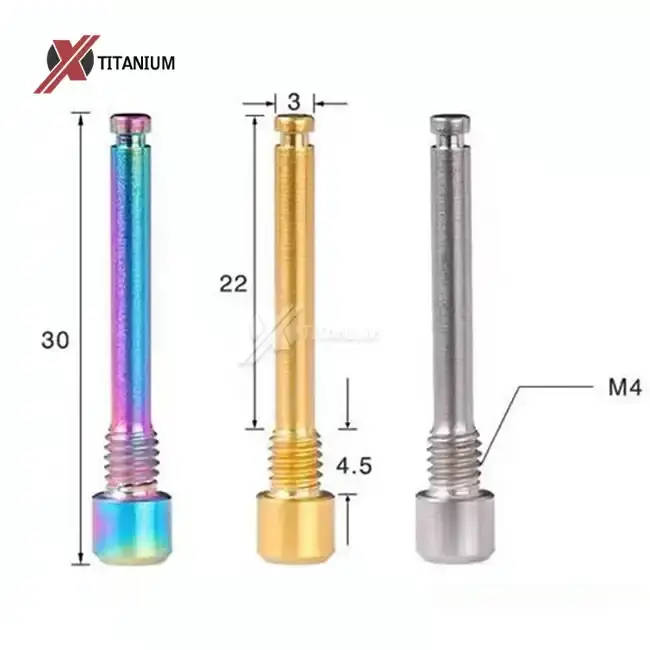
Understanding Titanium Disc Brake Plug Bolts and Their Torque Requirements
Titanium brake fasteners are a big step forward in very important safety parts used in aerospace, motorsport, marine, and high-performance cars. These special bolts do two things: they hold caliper units in place and seal the paths that hydraulic fluids follow in brake systems. Titanium alloy fasteners have a much better strength-to-weight ratio than regular steel fasteners. They are about 40% lighter than steel equivalents while still having tensile strengths of over 950 MPa in Grade 5 material.
Material Properties and Their Impact on Torque
There are properties of the Ti-6Al-4V mixture that directly affect how torque behaves. With a density of 4.43 g/cm³ and a hardness range of 30 to 36 HRC, these screws need to be put in place with great care. Due to its lower modulus of elasticity than steel, titanium deforms a little more when it is loaded, so bolts of the same size usually need 10-15% less torque to apply the same clamping force.
By knowing these differences, you can avoid common failure causes. Too much torque on titanium fasteners can cause thread deformation or catastrophic bolt failure, while not enough torque can cause them to loosen up during shaking, which is especially bad in high-frequency brake applications where heat cycling adds to the stress.
Critical Applications Requiring Precise Torque Control
The integrity of the brake system depends on how well the fasteners work. In aircraft uses, titanium brake parts go through qualification testing according to AS9100 standards. Destructive batch sampling is used to make sure that the torque specifications are met. In the same way, fasteners in coastal settings can rust from saltwater, so titanium's natural oxide barrier is important. However, this barrier can only be used if the fitting torque keeps it intact without causing tiny cracks.
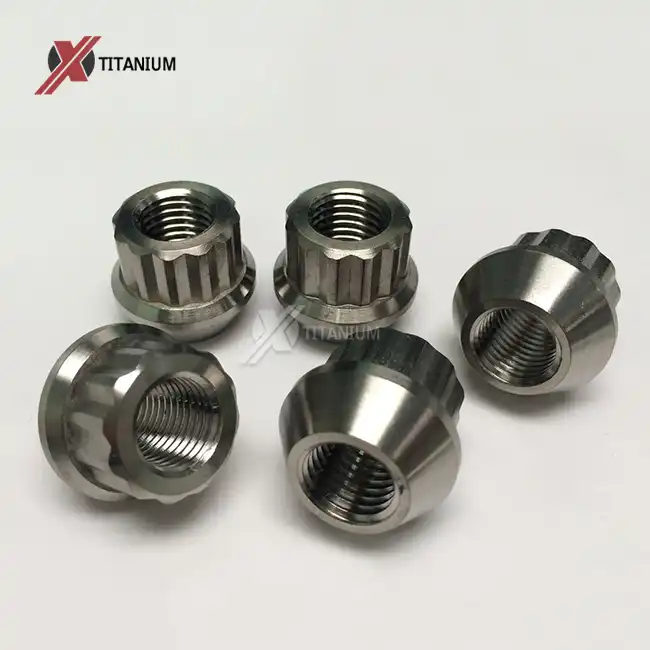
Racing motorbike makers use titanium caliper nuts to lower the amount of weight that isn't being sprung, which makes the suspension respond better. In this case, the driving qualities and driver safety are directly linked to the accuracy of the torque. No matter if it's for chemical processing equipment, offshore platforms, or medical device parts, the torque standards need to be right for the job and the surroundings.
How to Accurately Install Titanium Disc Brake Plug Bolts: A Step-by-Step Torque Guide
To install Titanium Disc Brake Plug Bolts correctly, you need to plan and do things in a methodical way. Titanium parts are not flexible like steel nuts; if you are not careful, they will galling, thread seizure, or failure before they should.
Pre-Installation Inspection and Tool Selection
Carefully check each bolt before you start installing. The quality of the thread is very important. Look at the threads under a microscope for burrs, debris, or production flaws. Use 6g tolerance class go/no-go gauges to check the accuracy of the thread pitch and make sure it fits properly with the other parts. The areas that hold the calipers must be clean, flat, and free of any rust or brake fluid that could mess up the torque reading.
Choosing the right tool has a big effect on how reliable the results are. Beam-type or digital torque wrenches that have been calibrated are more accurate than click-type wrenches, which can become out of calibration over time. Check calibration papers that are less than six months old, especially when working with torque ranges of 5 to 15 Nm, which are typical for M6 to M8 titanium brake bolts.
Recommended Torque Values by Bolt Size
Specifications for torque depend on the thread width, pitch, and the purpose. The following are standard suggestions for Grade 5 titanium brake bolts:
M5 x 0.8: 4.5 to 5.5 Nm
M6 x 1.0: 7.5 to 10 Nm
M8 x 1.25: 14 to 16 Nm
M10 x 1.5: 22 to 25 Nm
If there is no lubricant on the thread, these numbers are based on it being dry. When anti-seize materials are used, which is highly suggested for titanium, torque should be cut by about 20% to make up for the lower friction coefficients.
Proper Tightening Sequence and Technique
Instead of trying to reach the end specification in one move, apply torque gradually over a number of steps. The best way to do it is in three steps: first, finger-tighten the fitting, then apply 50% of the final torque, and finally, apply the full torque. This method spreads stress out evenly, which keeps the thread from sticking.
Use a star or cross-pattern series when more than one bolt is needed to hold a single part. This method keeps the mating surface from warping and makes sure that the clamping pressure is the same all over it. Allow 30 to 60 seconds between applying the final pressure and measuring to make sure it's correct, because titanium shows some stress relaxation right after installation.
Preventing Galling Through Proper Lubrication
The most common problem with installations is galling, which is when cold welding happens between titanium surfaces under pressure. When oxide layers break down during rotation, thread surfaces stick together very closely, which leads to seizure. To stop this from happening, use anti-seize products based on Molybdenum Disulfide or lubricants based on nickel that are rated for high temperatures.
Use only a small amount of lubricant on the male threads and avoid using too much that could get into the brake systems. Clean the female threads but don't grease them. This uneven method protects against galling and keeps the expected torque-tension relationships that are important for safety-critical uses.
Titanium vs Other Materials: Torque and Performance Comparison
To make good purchasing decisions, you need to have a good grasp of the important performance trade-offs. When you compare titanium to other fastener materials, you can see that it has certain benefits and things to think about that affect pressure requirements and lifetime costs.
Strength and Weight Characteristics
Grade 5 titanium has an ultimate tensile strength of about 950 MPa and is much lighter than steel alloys. Fasteners made of aerospace-grade steel, like 4130 chromoly, are about twice as heavy but have the same strength. This extra weight has a direct effect on how the vehicle moves, how much fuel it uses, and how much it can carry. These are all very important factors in aircraft and racing, where every gram counts.
Even more weight can be saved with aluminum alloys, especially 7075-T6. However, strength is lost. Tensile strengths for aluminum brake bolts are usually around 570 MPa, which means they need bigger diameters to carry the same amount of weight. This size rise often cancels out the weight savings and makes installation harder in brake assemblies with limited room.
Corrosion Resistance and Environmental Durability
Titanium's natural oxide layer protects it from rusting very well in a wide range of conditions. Marine uses profit the most from titanium fasteners because they keep their structural integrity forever when exposed to saltwater, while over time, stainless steel types pit and crack. It is also helpful for titanium to be used in chemical production conditions that are acidic or alkaline.
Some types of stainless steel, like 316L, don't rust, but they need more torque because they are denser and have different friction properties. In corrosive environments, steel fasteners also need to be inspected and replaced more often, which raises the total cost of ownership even though they cost less at first.
Cost-Benefit Analysis for Long-Term Procurement
Fasteners made of titanium are very expensive—usually 8–12 times as much as similar steel parts. Lifecycle study, on the other hand, shows strong value arguments. In many situations, the initial cost is more than covered by the benefits of less frequent upkeep, no longer having to replace parts because of rust, and lighter operation.
Differences in maintenance intervals are especially important. In marine settings, steel brake bolts might need to be replaced every 18 to 24 months. Titanium parts, on the other hand, can usually be used for the length of the equipment—possibly decades if the systems are well taken care of. When looking at bolt specifications, purchasing managers have to weigh the initial costs against the long-term benefits of dependability, avoiding downtime, and saving time and money on labor.
Selecting the Right Torque Specifications: Factors for B2B Buyers and Engineers
It's not enough to just look at general reference charts when choosing a torque standard. There are many factors that affect the best values for different uses, so it's important to do a lot of research and talk to suppliers. Titanium Disc Brake Plug Bolt is a prime example—its unique material properties and application-specific demands mean that relying on generic torque tables can lead to under‑tightening or galling, so you must verify every specification with your component manufacturer.
Interpreting Manufacturer and OEM Data
Original equipment makers give power specifications that were made after a lot of testing and confirmation. These numbers take into account the shapes of the parts, the way the materials are paired, and the operational loads that are unique to each design. When OEM specifications are available, always use them first because they show engineering validation that is specific to your application.
When OEM data isn't available, which can happen with custom parts or old equipment, use the properties of the material and the shape of the bolts to figure out the force. Standard methods include the width of the bolt, the thread size, the required preload, and the friction coefficient. Hire fastener suppliers with a lot of knowledge and a technical team that can help with engineering for specific needs.
Environmental and Load Adjustment Factors
The operating conditions have a big effect on the right torque values. For high-temperature uses, like brake systems that go through repeated thermal cycling, torque specifications need to be changed to account for thermal expansion. Titanium has a coefficient of thermal expansion of 8.6 μm/m·K, which is different from aluminum's (23 μm/m·K) and steel's (12 μm/m·K). This difference in coefficients of thermal expansion changes gripping force.
It's important to pay extra attention to vibration surroundings. When used in racing, fasteners are subjected to long-term high-frequency oscillations that can cause them to loosen even if the original pressure is correct. When there is a lot of vibration, you might want to use extra ways to hold things in place, like safety wire, thread-locking compounds made for titanium, or self-locking insert nuts.
Industry Standards and Certification Requirements
In many areas, torque standard paperwork is driven by regulatory compliance. Aerospace parts have to meet SAE standards and AS9100 quality control systems. They need to be fully traceable, from records of the approval of the raw materials to records of the fitting torque. The same level of strictness is needed for medical device applications under ISO 13485 frameworks.
When buying certified applications, make sure that the quality systems of the suppliers you're considering meet the standards of your industry. Ask for Positive Material Identification (PMI) reports that confirm the makeup of Ti-6Al-4V, mechanical property certifications that show the tensile strength and hardness values, and physical inspection reports that prove the threads are accurate. These papers provide audit trails that are needed to follow the rules and make sure that the parts that are received meet the technical requirements.
Supplier Engagement for Custom Requirements
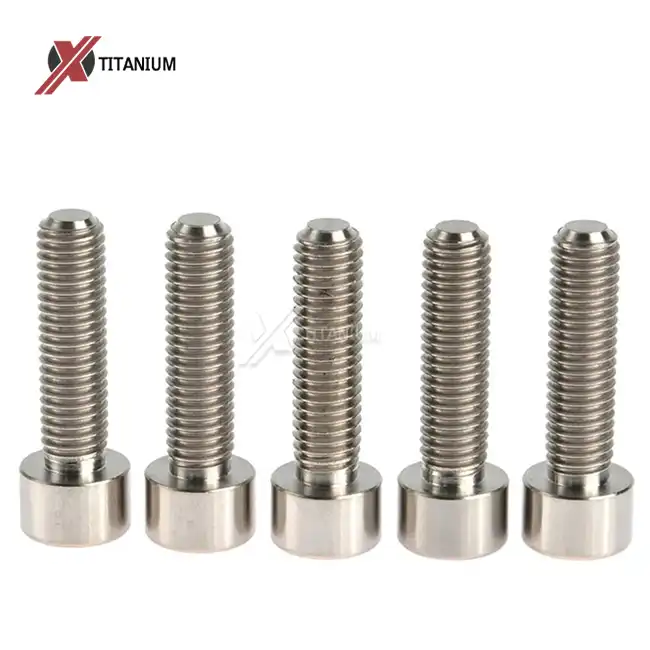
When you buy a lot of titanium screws, working directly with the suppliers helps. Reliable manufacturers, such as Chuanglian, have engineering teams that know how to turn application needs into precise specifications. Talk about the torque effects early on in the design process when you order custom brake bolts with certain thread shapes, head styles, or surface treatments.
Surface processes have a big effect on how torque behaves. Anodized styles make the surface harder and give you more choices for how it looks, but they also change the friction properties a little compared to natural titanium. PVD finishes make things even harder, which might mean that the torque needs to be changed. By being clear with providers about the situations you want to use the product in, they can suggest the best surface treatments and torque requirements.
Maintenance and Troubleshooting: Ensuring Long-Term Reliability with Proper Torque Management
Installation is only the start of managing fasteners over their whole life. Regular checks and ongoing repair keep the system safe and working well for as long as it is used.
Routine Inspection Protocols
Set up inspection plans that are right for the seriousness of the application. In high-stress racing situations, torque checks might need to be done after every race, but industrial gear works consistently with checks every three months. During checks, look at the bolt heads to see if they are warped, discolored, or corroded. Titanium Disc Brake Plug Bolt is a critical component in this context—corrosion is rare with titanium, but it can happen when it is paired with metals that don't react well with it without proper separation, so regular visual inspections of this specific bolt are especially important to catch early signs of galvanic reaction or surface damage.
To check retention, use torque tools that have been measured. Fasteners that keep 90–95% of their original pressure stay tight enough. Values below this level show loosening that needs to be looked into. Check more than one bolt in an assembly. Loosening that happens in one place is a sign of a problem that is limited to that area, while loosening that happens consistently across all screws is a sign of problems with the specifications or the installation.
Re-Torque Requirements and Timing
Re-torque methods are often helpful for the first fitting. During the first few cycles of loading, titanium fasteners experience a short relaxation of stress as microscopic surface irregularities compress. Set up re-torque checks 24 to 48 hours after installation, especially for safety-critical uses. This second check makes sure that the fasteners stay within the specifications after the first set-up.
Long-term re-torque intervals rely on how the machine is being used. Thermal cycling speeds up the relaxation response to stress, which could mean that verification should happen more often. On the other hand, longer gaps are possible in places with stable temperatures and little shaking. Write down all the steps you take to check the torque. This will help you find patterns in the wear and tear and plan for preventative maintenance.
Identifying and Addressing Torque-Related Failures
Under-torqued screws tend to loosen up, which can be seen by rotating the bolt heads relative to their starting places. Take action right away—continuing to use the vehicle with loose brake bolts could cause it to fail catastrophically. Take it off, check the threads for damage, clean it well and then put it back on using the right steps. If it happens again, look into what caused it: not enough initial torque, too much vibration, or thread-locking compounds that don't work well together.
Over-torqued problems show up in different ways. When there is visible thread distortion, bolt head deformation, or total fastener breakage, it means that the fitting force was too high. Titanium is not as flexible as steel, so over-torqued bolts don't give you much of a warning before they suddenly break. Replace broken bolts right away; trying to use over-stressed titanium parts again will almost certainly fail catastrophically during operation.
Leveraging Supplier Technical Support
After the initial sale, good fastener makers offer ongoing expert support. When failures or questions about specifications can't be explained, you should involve the engineering teams of your suppliers. Companies like Chuanglian keep technical staff that knows how titanium fasteners work in a variety of settings and can help with problems and suggest ways to make specifications better.
Keep lines of contact open with providers throughout the lifecycle of the product. Share practical input, results of failure analyses, and changes to the way fasteners are used that could affect how well they work. This collaborative approach lets things keep getting better while also building relationships with suppliers that make long-term procurement more reliable.
Conclusion
When you control the torque correctly, titanium brake bolts go from being simple parts to reliable, long-lasting safety elements. To get the most out of these advanced fasteners, you need to know about their material properties, follow strict installation steps, and keep up with ongoing verification protocols. Titanium Disc Brake Plug Bolt exemplifies this perfectly—titanium has a lot of great properties that show in its torque specifications, but only when each individual bolt is treated with the precise care and consistency that its design demands.
When used properly, Grade 5 titanium bolts offer unmatched strength, corrosion resistance, and weight savings in a wide range of demanding industrial uses. When procurement teams invest in the right training, standardized tools, and partnerships with suppliers, their companies are better prepared to take full advantage of titanium fastener technology while still upholding the highest safety standards.
FAQ
What is the standard torque range for M6 titanium disc brake plug bolts?
When it's dry, M6 Titanium Disc Brake Plug Bolts made from Grade 5 Ti-6Al-4V usually need 7.0 to 8.5 Nm of torque. When anti-seize lubricant is used, which is highly suggested to avoid galling, this standard should be lowered by about 20%, with the goal of 5.6 to 6.8 Nm. Always check the manufacturer's instructions for the job you need to do, because the best values depend on the thread engagement length, the materials used, and the surface treatment.
How do torque settings differ between titanium and steel brake bolts?
To get the same preload, titanium fasteners usually need 10-15% less torque than steel bolts of the same size. This difference happens because titanium has a lower amount of elasticity, which means it deforms more when it is loaded. Due to its higher stiffness, steel needs more power to produce the same gripping force. Instead of thinking that titanium and steel screws can be used interchangeably, you should always look at the torque specifications for each material.
How often should you re-torque titanium brake bolts?
To account for stress relaxation, the first re-torque check should happen 24 to 48 hours after installation. After that, the frequency of inspections depends on how bad the application is. For racing uses, checks need to be done after every race, while checks every three months are enough to make sure that industrial gear works properly. Conditions with a lot of vibration or thermal cycling need to be checked more often than conditions where things are stable.
Partner with Chuanglian for Premium Titanium Disc Brake Plug Bolt Solutions
Precision-engineered titanium fasteners that meet the strict needs of aircraft, automotive, marine, and industrial uses are what Baoji Chuanglian New Metal Material Co., Ltd. does best. Our Grade 5 Ti-6Al-4V brake nuts are CNC-machined and have a tensile strength of over 950 MPa while being 40% lighter than steel options. Our custom solutions are perfect for your technical needs and aesthetic needs because they come with a wide range of surface treatment options, such as anodizing, PVD coating, and natural finishes in many colors.
Our factory is in Baoji City, which is known as the "City of Titanium" in China. We have strict quality control measures in place to make sure that every Titanium Disc Brake Plug Bolt manufacturer provides uniform performance and dependability. Our engineering team gives you thorough torque specifications, installation instructions, and ongoing technical help to make sure that the fasteners work best in your situation. Get in touch with our buyers at info@cltifastener.com or djy6580@aliyun.com to talk about your titanium fastener needs. You can look through our full product catalog at cl-titanium.com and learn how Chuanglian's knowledge turns buying industrial fasteners into long-term partnerships based on quality, accuracy, and dependability.
References
1. Boyer, R., Welsch, G., & Collings, E.W. (1994). Materials Properties Handbook: Titanium Alloys. ASM International, Materials Park, Ohio.
2. SAE International. (2018). Aerospace Standard AS9100D: Quality Management Systems - Requirements for Aviation, Space, and Defense Organizations. SAE International, Warrendale, Pennsylvania.
3. Budinski, K.G. & Budinski, M.K. (2010). Engineering Materials: Properties and Selection (9th Edition). Pearson Education, Upper Saddle River, New Jersey.
4. American Society of Mechanical Engineers. (2015). ASME B1.1-2003 (R2018): Unified Inch Screw Threads. ASME Standards, New York.
5. Donachie, M.J. (2000). Titanium: A Technical Guide (2nd Edition). ASM International, Materials Park, Ohio.
6. Society of Automotive Engineers. (2017). SAE J429: Mechanical and Material Requirements for Externally Threaded Fasteners. SAE International Standards, Warrendale, Pennsylvania.
Learn about our latest products and discounts through SMS or email